Translated · Show originalShow translation
On Unfamiliar Terrain
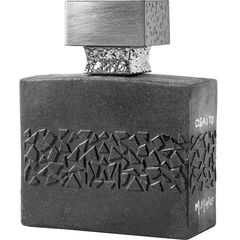
A maritime scent from the house of Micallef? That happens rarely, as we know Jean Claude Astier primarily as a master of the oriental-opulent direction. To be precise, it happened 10 years ago in the men’s fragrance range with the perfume Avant Garde. The temporal distance between the two scents is not the only significant difference.
Although only listed as a top note, a salty yet subtly lingering aquatic note shapes the entire scent journey of Osaïto. In the opening, I can still perceive a very nice interplay with grapefruit, but afterwards, I must admit, I smell nothing more than that maritime accord against an indistinct background without any distinct statement.
The water accord is of a classic nature; it somehow still lingers in the nose from long ago. It is salty, more iridescent than fresh, and manages to evoke quite different sensations in me. There is respectability, distance, and coolness on one hand, but then also corporeality and closeness. While the aquatic scents of the mass market quickly make me turn away from the wearer, I’m not quite sure about Osaïto.
And it is precisely this state of suspension between attraction and repulsion that can generate attention, not only for the scent but also for the person wearing it. In this sense, Osaïto is a superbly composed perfume.
That I otherwise smell almost nothing is peculiar to me. Is it just me experiencing this? Osaïto is clearly to be attributed to the fine, subtle fragrances. Everything else used here seems to serve only the purpose of showcasing the delicate aquatic note. This was quite different 10 years ago when a daring combination with chocolate notes did full justice to the perfume's name.
Unless I have indeed been struck by scent blindness in the case of Osaïto, I would assign the perfume to a puristic approach, which is not typically associated with the house of Micallef.
With Osaïto, Jean Claude Astier demonstrates his skill on unfamiliar terrain. There are worlds between Osaïto and the aquatics of the mass market. Osaïto can also appeal to those perfume lovers who usually steer clear of aquatic scents.

Translated · Show originalShow translation
Art from Skill
With some fragrances, it is almost forbidden to ask about the notes, and Roja Dove's current Vetiver is one of them. Litsea Cubeba, rose, and guaiac wood are unimportant, as they confuse more than they could explain.
In recent years, the market has certainly not been lacking in new Vetiver releases. Yet hardly a fragrance exists without a significant caveat. Either the perfumer neglects to balance the scratchy, bitter, and rough side of the note, or it involves combinations with other notes or accords treated equally. The classic Vetiver cologne, on the other hand, leads a shadowy existence.
I was not even aware that Roja Dove had a very classic Vetiver on offer and is now re-releasing it in 2016. Vetiver pour Homme is so classic that one hardly wants to say much about it. Those looking for something special, a brilliant artistic idea, or a completely individual expression are in the wrong place here. However, this is just right for those who find Frédéric Malle's Vétiver Extraordinaire a bit too dark, Lubin's Le Vetiver a touch too generic, and who feel reminded of laundry detergent musk by Guerlain's Vetiver Extreme. Roja Dove's Vetiver pour Homme stands amidst the veritable competition and effortlessly earns the title of the Vetiver perfume "in itself."
There is absolutely nothing to criticize here. There is spice, there is depth, there is dark green beauty, and also masculine eroticism, all in the right measure. I must agree with my predecessor's statement that this is probably the most elegant Vetiver currently available on the market. On the other hand: what does that really mean? Behind the original Vetiver scent that Guerlain unfortunately discontinued in 2000, they all pale in comparison.
Roja Dove seems to know how much the Vetiver veterans among fragrance enthusiasts crave quality - in terms of pricing, he goes beyond any normal measure. For 50 ml of the best Vetiver on the market, almost €440 is demanded, and for the sample size (7.5 ml), about €70. One must keep an eye out for perfumeries and department stores that carry the Roja brand, where one can snag a spritz.
Sometimes, perfumes behave like fancy racing bikes. At a certain level, every additional 100g of weight savings incurs an extra cost of €100. However, those who do not want or cannot spend that much money on Roja's Vetiver pour Homme need not despair. Even for just €75, one can get something very fine from Guerlain or Lubin.
Translated · Show originalShow translation
A Fragrance Quote
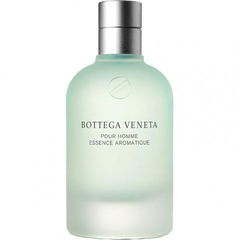
The Bottega Veneta men's fragrance is, for me, one of the best new releases of recent years in the mid-range segment. Committed to a puristic style, it is more aromatic than herbal, yet discreet and understated. Like few others, its concept combines attractiveness and allure with simplicity and wearability. Those looking for a perfume for everyday use will find it perfectly suited here.
While the subsequent flankers may hardly surpass the first fragrance in the series, the question remains whether they can match it. The bright bottle of the new Essence Aromatique signals that this time it could go in a fresher direction.
The first impression is citrusy-herbaceous, striking, and very, very familiar - a reunion with an old acquaintance? A few shelves over it stands, confirming in direct comparison: the opening is Armani's Eau pour Homme!
The quintessential Armani had its heyday in the 80s and 90s, and of course, the 2013 remake could not quite live up to nostalgic memories. That Eau was a real stinker, with basil and lemon, still very typical of the time of Aromatic Fougères. However, the version available today is still quite potent, as is fitting for a contemporary fragrance.
In Essence Aromatique, Amandine Clerc-Marie employs this accord quite differently than Roger Pellégrino did back then. For her, the tone is three levels softer. It presents itself in the top note, only to send restrained impulses down to the base. This is powdery-woody and quickly makes its presence known. Its understated nature is thematically connected to the other two fragrances in the series. The fact that the fragrance development is already over after two hours could have been considered in the naming, perhaps with the addition of "Cologne".
Amandine Clerc-Marie has earned her stripes by placing a classic accord in a completely modern framework, perhaps introducing it anew to a younger audience. Personally, however, I have never felt the need to rub myself with basil and lemon. Armani's Eau - in whatever form - is therefore not part of my collection.
Translated · Show originalShow translation
Surprisingly Traditional
It suits the brand Salvatore Ferragamo well to draw on the classic Italian perfumery. It is the Zagaras, brought to Cologne by Johann Maria Farina and exported from there to the whole world, that stand at the beginning of modern perfume art. And it is the note of Neroli or orange blossom that defines these Eau de Colognes so strongly that they are loved by some and derided by others as grandma perfume.
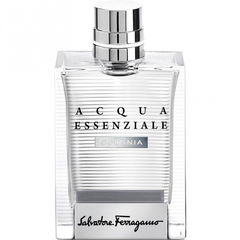
Such a classic note in a modern men's fragrance is a pleasant surprise. However, there is a significant caveat. The orange blossom in Acqua Essenziale Colonia is merely the stepping stone for a scent that quickly develops in a completely different direction.
Acqua Essenziale Colonia is a bright-spicy fragrance. In the heart and base, it is characterized by a scent material that can be described with notes like coriander seeds, possibly also sage. Personally, I do not like it at all, so Acqua Essenziale Colonia does not work for me.
However, the fragrance is well crafted and the concept makes sense to me. I am very positively struck by the fact that the Neroli note solely shapes the top. It fades quickly, yet it manages to share some of its character with what follows. This suggests that Acqua Essenziale Colonia may indeed have used orange oil and not some eternally lasting synthetic substitute. Who knows?
Acqua Essenziale Colonia is a light fragrance, with an unusual combination of two accords. It stands out just enough from the mediocrity of many men’s fragrances in the mid-price range, as far as mass taste might still tolerate.
Translated · Show originalShow translation
Green Smoke over the Bosporus
Perfumes from Turkey have always sparked interest on Parfumo. While they mostly come from affordable fragrances, some have managed to evoke associations with long-discontinued favorites. With Nishane, a brand with this background is now venturing into the high-priced niche perfumery. Does Nishane live up to this claim?
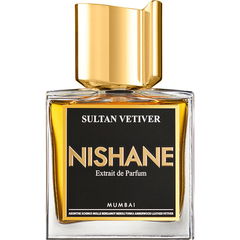
With vetiver, I am always won over, so "Sultan Vetiver" had to be on my skin. Unlike some others that bear this name, the extract of this grass root has not been skimped on here. A rather smoky vetiver accord characterizes this fragrance from start to finish. Thus, Sultan Vetiver distinguishes itself from the classic-elegant style (e.g., Guerlain) that tends to cover up the rough and perhaps smoky side of this grass root, like many "modern" vetivers do.
The perfumer couldn't quite decide on the design of the top note. With neroli, Vetiver Sultan leans towards the classics, where the top is usually citrus-fresh. However, the note referred to as absinthe presents a bright, spicy freshness (juniper berry came to my mind), which can be understood as an alternative to the citrus monotony found in some perfumes. It is very unusual to find both combined - but why not?
The development doesn't linger long on the top. The central motif is a smoky vetiver accord, combined with modern notes from the woody-leathery spectrum. This should particularly appeal to fans of purist perfumes following Terre d'Hermès, the Dsquared fragrances, or the men's scents from Ramon Monegal.
The scent impression that arises from this is likely to be unique. Whether it ultimately pleases is something everyone must decide for themselves.
It is often observed that a herbaceous scent is given an oriental touch through tonka, vanilla, or related notes. This adds volume and broadens the fragrance. In Sultan Vetiver, this is especially the case in the heart note. While I wouldn't want to portray it as negatively as my predecessor did, I can understand the potato association. I perceive Sultan Vetiver as somewhat mealy over certain stretches.
After about two hours, Sultan Vetiver drifts towards the base. I now smell more vetiver in its familiar form. One or two ambitious notes are already noticeably weakening. Almost, the Sultan becomes somewhat likable to me on the final stretch.
Even if the Sultan doesn't quite hit my taste - it is not poorly made. Interesting for those willing to test is the uniqueness of the combination of fragrance materials found here. I still consider the high price of around €160 to be justifiable, given that it seems there has not been any skimping on vetiver oils and acetates.