Ergoproxy
Reviews
Filter & Sort
Detailed
Translated · Show original
The Lost Classic Rediscovered.
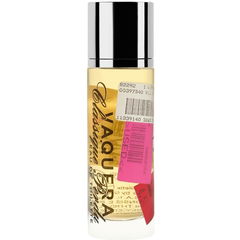
It shouldn't be new that I have a fondness for the brand Comme des Garçons (my tablet can't handle the accent on the C). It's the brand that always has me most excited about new releases. Compared to other brands, this is rather rare. Sure, with Zero and 10, the brand has thrown two real misses onto the market for me, but Max Richter got me back on board.
Now they have entered into another collaboration, this time with the fashion label Vacqera, and I actually thought that the fragrance would only be available in their store. Far from it, the fragrance is offered worldwide in the CdG range.
I won't go into the clothing from Vacqera here. Just to say, visually it doesn't get more classic than that.
With the fragrance Classique Perdu, I have a different opinion, as I believe I can definitely recognize a classic structure here, which for my feeling is that of a Fougère.
Naturally, this is characteristically not an entirely natural scent, which requires a certain openness to aroma chemistry from the willing test subjects.
The pyramid makes sense, aside from the sandalwood in the base.
The fragrance opens with an almost demanding mix of the green of tomato leaf and the acidity of blackcurrant. Lavender briefly flashes in the course, and a diffusely chemically appearing note can confidently be interpreted as felt-tip pen.
Over time, the clary sage emerges more and more, and the fragrance now takes on a certain quality of classic men's perfumery, but the floral components prevent it from becoming too masculine.
In the base, for me, the moss substitute dominates, along with resin and a hint of leather. The fragrance never becomes sandy for me while wearing it.
I find the longevity to be good, and the fragrance has a moderate projection for me. Although it is rather green and fresh, it works surprisingly well in cold temperatures, like today.
The Parfumo Intersport that I appreciate compared the fragrance to Cool Water. I can't agree with that. I've never liked the classic from Davidoff, and I always found the scent unbearable, even on others. Moreover, Classique Perdu also lacks the extra portion of Calone that was characteristic of Davidoff. But that is, of course, subjective and not worth discussing in the end. Ultimately, the fragrance is a reminiscence of the scents of the early 90s for me.
I have to say something about the outer packaging of the fragrance.
There is good trash and trash, and here I feel they have opted for the latter. A veritable plastic orgy surrounds the small bottle. The Styrofoam chips, in particular, have been unpleasant for me. This is really no longer up to date.
Measured against the now omnipresent Ambrox-whatever scents, with Classique Perdu, the so-called classic has not been lost in terms of name, but rather rediscovered.
Now they have entered into another collaboration, this time with the fashion label Vacqera, and I actually thought that the fragrance would only be available in their store. Far from it, the fragrance is offered worldwide in the CdG range.
I won't go into the clothing from Vacqera here. Just to say, visually it doesn't get more classic than that.
With the fragrance Classique Perdu, I have a different opinion, as I believe I can definitely recognize a classic structure here, which for my feeling is that of a Fougère.
Naturally, this is characteristically not an entirely natural scent, which requires a certain openness to aroma chemistry from the willing test subjects.
The pyramid makes sense, aside from the sandalwood in the base.
The fragrance opens with an almost demanding mix of the green of tomato leaf and the acidity of blackcurrant. Lavender briefly flashes in the course, and a diffusely chemically appearing note can confidently be interpreted as felt-tip pen.
Over time, the clary sage emerges more and more, and the fragrance now takes on a certain quality of classic men's perfumery, but the floral components prevent it from becoming too masculine.
In the base, for me, the moss substitute dominates, along with resin and a hint of leather. The fragrance never becomes sandy for me while wearing it.
I find the longevity to be good, and the fragrance has a moderate projection for me. Although it is rather green and fresh, it works surprisingly well in cold temperatures, like today.
The Parfumo Intersport that I appreciate compared the fragrance to Cool Water. I can't agree with that. I've never liked the classic from Davidoff, and I always found the scent unbearable, even on others. Moreover, Classique Perdu also lacks the extra portion of Calone that was characteristic of Davidoff. But that is, of course, subjective and not worth discussing in the end. Ultimately, the fragrance is a reminiscence of the scents of the early 90s for me.
I have to say something about the outer packaging of the fragrance.
There is good trash and trash, and here I feel they have opted for the latter. A veritable plastic orgy surrounds the small bottle. The Styrofoam chips, in particular, have been unpleasant for me. This is really no longer up to date.
Measured against the now omnipresent Ambrox-whatever scents, with Classique Perdu, the so-called classic has not been lost in terms of name, but rather rediscovered.
45 Comments
Translated · Show original
Are Friends Electric
For me, music and perfume have a lot in common. There are different styles and ways to arrange compositions. And just like in music, there are preferences and aversions.
When it comes to scents as well as music, I have never been dogmatic. I can appreciate a wide range of genres. And like with perfume, I have never understood why some people tend to see their taste as the pinnacle of good and try to impose it on others. But I don't want to delve into that further here.
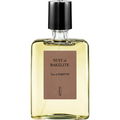
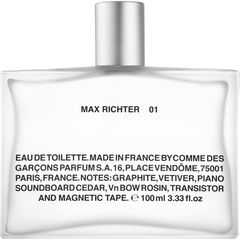
Regarding perfumes, I also have a strong preference for well-made synthetics in music. For me, the synthesizer sounds of the late 70s were something like a revelation. Besides Kraftwerk, it was mainly the early albums of The Human League and Gary Newman's song "Are Friends Electric" that laid the foundation for my love of New Wave, and somehow the scent fits the mood of the fragrance Max Richter by Comme des Garcons.
Unfortunately, I am not very familiar with the works of the namesake composer, which is why I cannot associate any of his pieces with the scent. Now, let's talk about the fragrance.
The scent opens for me with the heart note. A mix of pepper and allspice is present, but the spices lack sharpness and fire, and already here the fragrance has a certain coldness, and the color gray comes to mind. Cumin or even ylang-ylang play no role for me at any time.
Over time, I can sense marigold. At the same time, the heart note takes on a rubbery quality. Additionally, the scent becomes slightly dusty for me. That could be from the cedar.
In the base, a more greenish than earthy patchouli is added. Furthermore, the scent appears to me to be slightly bitter and medicinal.
Something like licorice or even a hint of Black Afgano is not present for me at any time, but every nose works differently. The notes indicated on the outer box, like tape or other fancy stuff, make no sense to me here. But I would have certainly found that amusing.
The scent lasts well on me overall, and the scent aura remains moderate, meaning you have to get quite close to the wearer to perceive the fragrance.
After the two total failures Zero and Odeur 10 in my opinion, this is finally a scent in the CdG tradition for me.
When it comes to scents as well as music, I have never been dogmatic. I can appreciate a wide range of genres. And like with perfume, I have never understood why some people tend to see their taste as the pinnacle of good and try to impose it on others. But I don't want to delve into that further here.
Regarding perfumes, I also have a strong preference for well-made synthetics in music. For me, the synthesizer sounds of the late 70s were something like a revelation. Besides Kraftwerk, it was mainly the early albums of The Human League and Gary Newman's song "Are Friends Electric" that laid the foundation for my love of New Wave, and somehow the scent fits the mood of the fragrance Max Richter by Comme des Garcons.
Unfortunately, I am not very familiar with the works of the namesake composer, which is why I cannot associate any of his pieces with the scent. Now, let's talk about the fragrance.
The scent opens for me with the heart note. A mix of pepper and allspice is present, but the spices lack sharpness and fire, and already here the fragrance has a certain coldness, and the color gray comes to mind. Cumin or even ylang-ylang play no role for me at any time.
Over time, I can sense marigold. At the same time, the heart note takes on a rubbery quality. Additionally, the scent becomes slightly dusty for me. That could be from the cedar.
In the base, a more greenish than earthy patchouli is added. Furthermore, the scent appears to me to be slightly bitter and medicinal.
Something like licorice or even a hint of Black Afgano is not present for me at any time, but every nose works differently. The notes indicated on the outer box, like tape or other fancy stuff, make no sense to me here. But I would have certainly found that amusing.
The scent lasts well on me overall, and the scent aura remains moderate, meaning you have to get quite close to the wearer to perceive the fragrance.
After the two total failures Zero and Odeur 10 in my opinion, this is finally a scent in the CdG tradition for me.
56 Comments
Translated · Show original
Was it ahead of its time?
The German traditional brand Barbor was known to me more for its skincare cosmetics than for its fragrances. Nevertheless, the brand has launched several scents over its existence, which probably never played a significant role in terms of sales for the brand. According to the website, there seems to be no current perfume from the brand available.
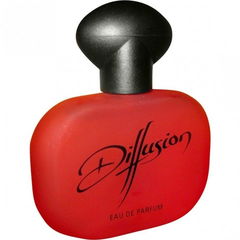
If we can believe the database here, then Diffusion was probably the first fragrance of the brand. At least it is the one with the earliest release date, namely 1975.
When comparing the bottle design and the scent with the popular fragrances of that time, it doesn't really fit into the 70s. In my opinion, the entire presentation fits much more into the 80s. Was Diffusion perhaps ahead of its time?
So, how does Diffusion smell? In one word: floral!
A pyramid is not listed, so it’s time for some cheerful guessing of the scent notes on my part.
One thing upfront, as red as the bottle suggests, Diffusion does not smell remotely like that to me. If I had to assign a color to the scent, it would be a juicy yellow. But that’s my personal impression.
The opening is actually rather shy and surprisingly not at all aldehydic, like almost all fragrances from that era. With a lot of goodwill, one could interpret a hint of citrus fruit.
After a few minutes, the scent then opens up and becomes lushly floral.
The fragrance is now dominated by a chord of flowers, and in my opinion, tuberose plays the leading role. However, not a sweet chewing gum tuberose. The note is less sweet and has an underlying greenish quality, in my opinion. The chord reminds me a bit of Chloé as it was launched by Lagerfeld in the early 80s, or of "Illégale (Eau de Parfum) | Alyssa Ashley." Of course, one would have to compare this in the end to see if my impressions really align.
Towards the base, the scent becomes a bit softer and greenish earthy, without completely losing the tuberose. I suspect there’s some oak moss, musk, and perhaps sandalwood in there.
The longevity on my skin is about 10 hours. The sillage depends on the dosage but never becomes overwhelming.
I would have worn Diffusion with pleasure in the past, but nowadays the scent is far too floral and classic for me. Sooner or later, the bright red bottle will probably leave me again.
For those who love floral vintage fragrances, I recommend giving it a test if the opportunity arises.
If we can believe the database here, then Diffusion was probably the first fragrance of the brand. At least it is the one with the earliest release date, namely 1975.
When comparing the bottle design and the scent with the popular fragrances of that time, it doesn't really fit into the 70s. In my opinion, the entire presentation fits much more into the 80s. Was Diffusion perhaps ahead of its time?
So, how does Diffusion smell? In one word: floral!
A pyramid is not listed, so it’s time for some cheerful guessing of the scent notes on my part.
One thing upfront, as red as the bottle suggests, Diffusion does not smell remotely like that to me. If I had to assign a color to the scent, it would be a juicy yellow. But that’s my personal impression.
The opening is actually rather shy and surprisingly not at all aldehydic, like almost all fragrances from that era. With a lot of goodwill, one could interpret a hint of citrus fruit.
After a few minutes, the scent then opens up and becomes lushly floral.
The fragrance is now dominated by a chord of flowers, and in my opinion, tuberose plays the leading role. However, not a sweet chewing gum tuberose. The note is less sweet and has an underlying greenish quality, in my opinion. The chord reminds me a bit of Chloé as it was launched by Lagerfeld in the early 80s, or of "Illégale (Eau de Parfum) | Alyssa Ashley." Of course, one would have to compare this in the end to see if my impressions really align.
Towards the base, the scent becomes a bit softer and greenish earthy, without completely losing the tuberose. I suspect there’s some oak moss, musk, and perhaps sandalwood in there.
The longevity on my skin is about 10 hours. The sillage depends on the dosage but never becomes overwhelming.
I would have worn Diffusion with pleasure in the past, but nowadays the scent is far too floral and classic for me. Sooner or later, the bright red bottle will probably leave me again.
For those who love floral vintage fragrances, I recommend giving it a test if the opportunity arises.
43 Comments
Translated · Show original
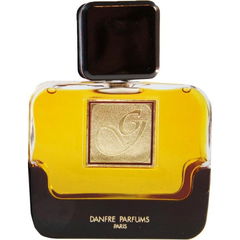
Who was Danfre anyway...
Gérard Danfre?! Never heard of him! Who was that supposed to be?
That was the question I asked myself before I blindly ordered the small bottle for a small price.
I was all the more excited when the fragrance arrived. It was unpacked after a 24-hour resting period and immediately sprayed on with enthusiasm.
What wafted around my nose was a classic, typically 70s Chypre (could also be from the 60s) with everything that belonged to that time.
A crackling, aldehyde-laden top note with herbal green nuances (I’m guessing coriander) and a hint of citrus opens the fragrance dance.
Gradually, the heart note emerges in the form of a rather harsh floral accord. Here too, it’s time for some cheerful guessing of scent notes. Jasmine? Obligatory for the time. Rose? Could be. Hyacinth? Might be responsible for the spiciness. The fragrance lingers longer in this stage before the base takes over. Additionally, I have a pleasantly
fine soapy note in my nose.
Then G surprises me with something I only noticed while wearing it.
Of course, oakmoss is present here, and I would also guess musk and dry sandalwood. Suddenly, I had the feeling of having a hint of Magie Noire by Lancôme, as it smelled before what I consider a failed reformulation, in my nose. Not 100 percent, of course, but somehow similar. At least, I remember the great classic being somewhat alike.
The longevity is very good for an EdP of that time. The sillage is a bit stronger at first but then settles into a moderate level.
G is a typical vintage scent in the Chypre style. Nothing hip or niche here. It’s classic and rather a bit stricter. Or as someone once commented on a Chypre of similar make: "The scent is cool unsexy." So ideal for anyone who likes to celebrate a Miss Rottenmeier moment.
You can still get the fragrance for a small price; let’s see how long that lasts.
I’m still left wondering, who exactly was this Danfre?

That was the question I asked myself before I blindly ordered the small bottle for a small price.
I was all the more excited when the fragrance arrived. It was unpacked after a 24-hour resting period and immediately sprayed on with enthusiasm.
What wafted around my nose was a classic, typically 70s Chypre (could also be from the 60s) with everything that belonged to that time.
A crackling, aldehyde-laden top note with herbal green nuances (I’m guessing coriander) and a hint of citrus opens the fragrance dance.
Gradually, the heart note emerges in the form of a rather harsh floral accord. Here too, it’s time for some cheerful guessing of scent notes. Jasmine? Obligatory for the time. Rose? Could be. Hyacinth? Might be responsible for the spiciness. The fragrance lingers longer in this stage before the base takes over. Additionally, I have a pleasantly
fine soapy note in my nose.
Then G surprises me with something I only noticed while wearing it.
Of course, oakmoss is present here, and I would also guess musk and dry sandalwood. Suddenly, I had the feeling of having a hint of Magie Noire by Lancôme, as it smelled before what I consider a failed reformulation, in my nose. Not 100 percent, of course, but somehow similar. At least, I remember the great classic being somewhat alike.
The longevity is very good for an EdP of that time. The sillage is a bit stronger at first but then settles into a moderate level.
G is a typical vintage scent in the Chypre style. Nothing hip or niche here. It’s classic and rather a bit stricter. Or as someone once commented on a Chypre of similar make: "The scent is cool unsexy." So ideal for anyone who likes to celebrate a Miss Rottenmeier moment.
You can still get the fragrance for a small price; let’s see how long that lasts.
I’m still left wondering, who exactly was this Danfre?

47 Comments
Translated · Show original
Heidrun
I still remember exactly where I first came into contact with the wonderful Parure by Guerlain. It was in a small bathroom in the apartment of a former dear colleague. There stood the oval splash bottle with the stopper, which somehow always looked like a Hershey Kiss to me.
Since I didn't know the fragrance, I asked if I could test it, which Heidrun allowed. And I was immediately captivated. The next day, at the end of the workday, Heidrun handed me a gift with the words: "It just suits you better than it does me" and winked at me. I should also mention that Heidrun had a preference for men's fragrances like Lauder for Man, Jazz, or Grey Flannel.
Since that day, Parure was a staple in my fragrance collection until it was discontinued.
By chance, I now had the opportunity to test the Extrait of Parure. What still surprises me is that the Extrait is not listed here as a version.
Since I own the EdT, I thought I would apply both versions in parallel and I would like to try to illustrate the differences.
As is usual with Guerlain, there are small, fine differences between the versions of a perfume, without completely changing the character. For me, it is more like photographing a person with different lighting to convey various facets of the person to the observer.
What unites both versions is the extra generous portion of oak moss and the elegant leather note in the base.
The opening of the EdT is a bit fresher and more citrusy, while the Extrait feels somewhat unripe and fruitier to me. Pepper is subtly integrated and does not really stand out.
I perceive the heart note of the Extrait as significantly more floral and somehow more sensual, whereas I find the EdT to be somewhat harsher, almost more masculine in its floral accord. The EdT never becomes balsamic, in contrast to the Extrait.
Additionally, the heart note of the Extrait seems to last longer.
In the base, the difference for me lies in the use of rose. It comes through a bit more in the EdT. I find the Extrait deeper and somewhat more leather-focused.
The longevity is excellent for both versions, in my opinion. Both last 24 hours on me. And the sillage is good, but feels slightly better with the EdT.
The bottle of the Extrait is, or rather was, a work of art.
Parure has always been more of a fragrance for connoisseurs, not a megaseller like Shalimar or Mitsouko. I think that was also the reason why the fragrance was discontinued. The ban on oak moss was probably a welcome excuse to take the fragrance off the market.
As my life path led me to Hamburg, unfortunately, the contact with my colleague faded. She must be in her 80s by now, if she is still alive. In any case, I always think of my wonderful colleague when I wear Parure. I will enjoy my remaining bottle of EdT until the last drop. And who knows, maybe Guerlain will bring this olfactory gem back someday.
I deleted my first comment on Parure in favor of this one.
Parure is and remains one of the best fragrances ever for me.
Since I didn't know the fragrance, I asked if I could test it, which Heidrun allowed. And I was immediately captivated. The next day, at the end of the workday, Heidrun handed me a gift with the words: "It just suits you better than it does me" and winked at me. I should also mention that Heidrun had a preference for men's fragrances like Lauder for Man, Jazz, or Grey Flannel.
Since that day, Parure was a staple in my fragrance collection until it was discontinued.
By chance, I now had the opportunity to test the Extrait of Parure. What still surprises me is that the Extrait is not listed here as a version.
Since I own the EdT, I thought I would apply both versions in parallel and I would like to try to illustrate the differences.
As is usual with Guerlain, there are small, fine differences between the versions of a perfume, without completely changing the character. For me, it is more like photographing a person with different lighting to convey various facets of the person to the observer.
What unites both versions is the extra generous portion of oak moss and the elegant leather note in the base.
The opening of the EdT is a bit fresher and more citrusy, while the Extrait feels somewhat unripe and fruitier to me. Pepper is subtly integrated and does not really stand out.
I perceive the heart note of the Extrait as significantly more floral and somehow more sensual, whereas I find the EdT to be somewhat harsher, almost more masculine in its floral accord. The EdT never becomes balsamic, in contrast to the Extrait.
Additionally, the heart note of the Extrait seems to last longer.
In the base, the difference for me lies in the use of rose. It comes through a bit more in the EdT. I find the Extrait deeper and somewhat more leather-focused.
The longevity is excellent for both versions, in my opinion. Both last 24 hours on me. And the sillage is good, but feels slightly better with the EdT.
The bottle of the Extrait is, or rather was, a work of art.
Parure has always been more of a fragrance for connoisseurs, not a megaseller like Shalimar or Mitsouko. I think that was also the reason why the fragrance was discontinued. The ban on oak moss was probably a welcome excuse to take the fragrance off the market.
As my life path led me to Hamburg, unfortunately, the contact with my colleague faded. She must be in her 80s by now, if she is still alive. In any case, I always think of my wonderful colleague when I wear Parure. I will enjoy my remaining bottle of EdT until the last drop. And who knows, maybe Guerlain will bring this olfactory gem back someday.
I deleted my first comment on Parure in favor of this one.
Parure is and remains one of the best fragrances ever for me.
71 Comments