
Federduft
Reviews
Filter & Sort
Detailed
Translated · Show original
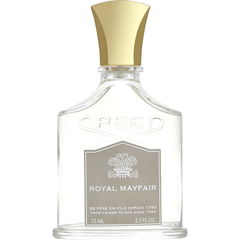
A walk in the park - Royal Mayfair by Creed
“Doesn't one always think of the past, in a garden?”
Eleanor in Kew Gardens by Virginia Woolf
It makes me strangely melancholic.
Strangely, because neither in the notes nor in the composition of this fragrance is there a melancholic undertone. Jamaican lime, Scottish highland pine, English rose. Canadian cedar, Australian eucalyptus, and oranges from the Bahamas.
Well, perhaps there is melancholy after all, the melancholy of a bygone era and a faded empire...
I perceive the fragrance notes almost in isolation at the beginning. Almost overripe lime, the mild fruit resin of juniper berries. The duality of camphor-sharpness and herb-sweet balm of fresh pine sap. Cool rose, candied with dew. Tuberose1) in camouflage mode, dazzling me with its mimesis of honeysuckle and wilting lily of the valley, luring me away from the heart of the rose.
Warm, subtle cedarwood and a mischievous eucalyptus, sometimes flirting florally and boldly with tuberose, sometimes baring chlorinated2) teeth. In between, surprisingly intimate musk.
No, this is not the fragrance picture of Royal Mayfair that I had naively sketched in my usual way.
No forest, no pine grove. No wild-romantic landscape, no untamed nature. And yet it makes me inhale deeper, as if I were stepping out of a smog-filled metropolis into an old park.
This breath brings my perspective into alignment.
It expands it, from that of the ant following pheromone trails in the crowd, to the central perspective of the flâneur in this venerable garden.
It is the string of the Royal Botanical Gardens in Kew that the fragrance strikes in my memory. Here, in this ‘oasis
in the desert of brick and mortar Greater London’ 3), in this piece of nature, albeit created by human hands, one can breathe deeply with all senses. Ancient Lebanon4)-cedars stand here, familiar and unfamiliar trees in great variety. There are representatives of pine from all continents. In one of the beautiful, temple-like greenhouses made of white-painted iron and sparkling glass, an impressive eucalyptus tree thrives, and if one is lucky, agave polianthes blooms alongside Humboldt lilies in the area of the dry tropics.
Countless plants and picturesque arrangements can be admired, and perhaps even the rose dedicated to the Duke of Windsor5) blooms in the rose garden, which is offered as a reference for the English rose in Royal Mayfair.
Enough of the dawdling in the autumn garden of my memory and back to the presence of the fragrance.
It takes further in-depth consideration until I finally manage the perspective shift and can integrate the fragments into an elegant painting.
Juniper, pine, and lime merge into the surprisingly pleasant tonic water with dry, herbaceous gin. Mossy-medical and, to my delight, only reflecting the ethereal top notes of the drink. 6)
The cedar carries an aromatic crown on a slender yet solid trunk, after a lovingly maintained, sparingly yet exquisitely filled humidor.
But what touches my heart is the same, floral pulsation of Royal Mayfair. Here, I am enveloped by the unique, intimate perfume of a kiss on the cool cheek of a dearly familiar person, fragrant with a hint of rose soap, kissed by wind and weather.
In addition, the eucalyptus meanders through the entire picture like a gurgling, sparkling stream, connecting the different layers, setting a metallic accent with the tuberose reminiscent of remnants of smog (after all, we are still in the city), contributing to a transparent spaciousness with the pine, and moistening the earth at the roots of the cedar.
The top notes are a sprightly, albeit quite like the drink that inspired them, rather short-lived pleasure, even if elements flash again throughout the fragrance and contribute to the clear, cool impression. The heart, to my delight, is also perceptible independently, whether on skin, feather, or fabric, while the base, although very close to the skin, impressively lingers as a hint of “cedarwood wardrobe” on fabric.
Royal Mayfair is not a fragrance for a forest dweller (generic masculine), but neither is it exclusively for the gentry (generic feminine).
Elegant, but best without urban chic. Subtle, yet with a tangible presence. By no means sexy, just immediately sensual. Wear it as you like.
However, it is a fragrance that I would prefer to enjoy on someone I am intimately familiar with rather than wear myself.
* No comment containing relevant information for purchase or testing decisions, just my impression plus *earworm for Norleans
1) This may also be due to my simultaneous, rather fruitless engagement with another, very tuberose-heavy fragrance
2) checked again: I also find this chlorinated note here like in a eucalyptus globulus oil in my collection
3) A. R. Hope Moncrieff, Kew Gardens
4) with certainty, a few Canadian specimens can also be found with careful searching...
5) ironically, this is a tea hybrid bred in Germany
6) Alcohol notes are among my nemeses.
Eleanor in Kew Gardens by Virginia Woolf
It makes me strangely melancholic.
Strangely, because neither in the notes nor in the composition of this fragrance is there a melancholic undertone. Jamaican lime, Scottish highland pine, English rose. Canadian cedar, Australian eucalyptus, and oranges from the Bahamas.
Well, perhaps there is melancholy after all, the melancholy of a bygone era and a faded empire...
I perceive the fragrance notes almost in isolation at the beginning. Almost overripe lime, the mild fruit resin of juniper berries. The duality of camphor-sharpness and herb-sweet balm of fresh pine sap. Cool rose, candied with dew. Tuberose1) in camouflage mode, dazzling me with its mimesis of honeysuckle and wilting lily of the valley, luring me away from the heart of the rose.
Warm, subtle cedarwood and a mischievous eucalyptus, sometimes flirting florally and boldly with tuberose, sometimes baring chlorinated2) teeth. In between, surprisingly intimate musk.
No, this is not the fragrance picture of Royal Mayfair that I had naively sketched in my usual way.
No forest, no pine grove. No wild-romantic landscape, no untamed nature. And yet it makes me inhale deeper, as if I were stepping out of a smog-filled metropolis into an old park.
This breath brings my perspective into alignment.
It expands it, from that of the ant following pheromone trails in the crowd, to the central perspective of the flâneur in this venerable garden.
It is the string of the Royal Botanical Gardens in Kew that the fragrance strikes in my memory. Here, in this ‘oasis
in the desert of brick and mortar Greater London’ 3), in this piece of nature, albeit created by human hands, one can breathe deeply with all senses. Ancient Lebanon4)-cedars stand here, familiar and unfamiliar trees in great variety. There are representatives of pine from all continents. In one of the beautiful, temple-like greenhouses made of white-painted iron and sparkling glass, an impressive eucalyptus tree thrives, and if one is lucky, agave polianthes blooms alongside Humboldt lilies in the area of the dry tropics.
Countless plants and picturesque arrangements can be admired, and perhaps even the rose dedicated to the Duke of Windsor5) blooms in the rose garden, which is offered as a reference for the English rose in Royal Mayfair.
Enough of the dawdling in the autumn garden of my memory and back to the presence of the fragrance.
It takes further in-depth consideration until I finally manage the perspective shift and can integrate the fragments into an elegant painting.
Juniper, pine, and lime merge into the surprisingly pleasant tonic water with dry, herbaceous gin. Mossy-medical and, to my delight, only reflecting the ethereal top notes of the drink. 6)
The cedar carries an aromatic crown on a slender yet solid trunk, after a lovingly maintained, sparingly yet exquisitely filled humidor.
But what touches my heart is the same, floral pulsation of Royal Mayfair. Here, I am enveloped by the unique, intimate perfume of a kiss on the cool cheek of a dearly familiar person, fragrant with a hint of rose soap, kissed by wind and weather.
In addition, the eucalyptus meanders through the entire picture like a gurgling, sparkling stream, connecting the different layers, setting a metallic accent with the tuberose reminiscent of remnants of smog (after all, we are still in the city), contributing to a transparent spaciousness with the pine, and moistening the earth at the roots of the cedar.
The top notes are a sprightly, albeit quite like the drink that inspired them, rather short-lived pleasure, even if elements flash again throughout the fragrance and contribute to the clear, cool impression. The heart, to my delight, is also perceptible independently, whether on skin, feather, or fabric, while the base, although very close to the skin, impressively lingers as a hint of “cedarwood wardrobe” on fabric.
Royal Mayfair is not a fragrance for a forest dweller (generic masculine), but neither is it exclusively for the gentry (generic feminine).
Elegant, but best without urban chic. Subtle, yet with a tangible presence. By no means sexy, just immediately sensual. Wear it as you like.
However, it is a fragrance that I would prefer to enjoy on someone I am intimately familiar with rather than wear myself.
* No comment containing relevant information for purchase or testing decisions, just my impression plus *earworm for Norleans
1) This may also be due to my simultaneous, rather fruitless engagement with another, very tuberose-heavy fragrance
2) checked again: I also find this chlorinated note here like in a eucalyptus globulus oil in my collection
3) A. R. Hope Moncrieff, Kew Gardens
4) with certainty, a few Canadian specimens can also be found with careful searching...
5) ironically, this is a tea hybrid bred in Germany
6) Alcohol notes are among my nemeses.
6 Comments
Translated · Show original
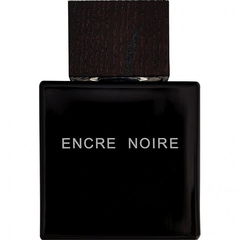
Federnlesen Encre Noir Eau de Toilette
It is cool and overcast today. An undecided October morning that, when the mist transforms into high fog, can also unfold into one of those bright late autumn days.
Most shrubs and trees have already shed their copper and amber attire, and the shabby leaves cover the meadow with a brown-speckled patchwork carpet.
From the window of my (witch's) kitchen in the basement, I have a wonderful view from a mole's perspective into our garden.
I am wearing Encre Noir and watching the clever Carrion Crows (Corvus corone) and Magpies (Pica pica) hiding and consuming a ration of peanuts. Just a few years ago, I decided to treat these birds not merely as nest robbers and troublemakers, but like the other songbirds in our garden.
They are no longer chased away, can help themselves at the feeding stations, and indulge in plums and apples. There are nuts for them, surplus (or even extra) boiled eggs, and occasionally a chicken neck and tail.
My perspective has changed, and I have discovered beautiful, fascinating creatures. "Now she's talking about her birds again, well, if she doesn't have a screw loose," some might think, not entirely without justification.
I am wearing Encre Noir:
The fragrance notes are monothematic.
Cypress, vetiver, cashmeran.
Smoky, dark, black.
The plumage of a Carrion Crow is monochrome.
Without recognizable markings, at best described as a modest tailcoat by the more discerning observer.
Dreary, dark, black.
If you give these seemingly grim fellows just a little more than casual attention, it can be incredibly enlightening.
An unexpected ray of sunshine makes the previously dull plumage shimmer with accents of deep violet and shiny green gold, changing in the blue of Damascus steel.
Black painting in the most iridescent colors. °°
I am wearing Encre Noir.
It is illuminating how vetiver is broken into different spectra.
Bergamot flares up, herby-green, still dew-damp lemon monarda.
Flickering smoke from woody sage stems, carelessly tossed onto the blazing garden fire.
The resinous stickiness of a freshly crushed juniper berry between my fingers and the soft spice of well-dried larch wood. That tobacco aroma which clung to my grandfather's handkerchief. A highlight of bitter cocoa perceived in some patchouli.
The coolness of long shadows on a sunny late autumn day.
A glimmer of graphite when sharpening a good pencil and the brittle vanillin of a decades-old book. °°°
All these refractions are scattered by this perfume and spread out before me like iridescent black wings.
The Eau de Toilette was tested on my skin, my well-worn favorite sweater, and stylishly on a crow's feather (of course, a molted feather from a wild bird). On my skin, the development of the scent was the quickest and shortest-lived, with the smoky notes being the most prominent. On fabric, the longevity was significantly better, and the earthy, patchouli-related components dominated. On the feather, the citrus and resin reflections shone, and the progression was overall more moderate and enduring. No erratic development, more
the steady rise and fall of large wings. I find it fascinating how iridescent it appears despite its seemingly dark base. Encre Noir is a scent that, just like corvids, polarizes. The beauty lies, as always, in the eye (or rather, in the nose) of the beholder.
Regarding gender assignment: Even raven ladies wear black!
° a book by Johanna Romberg
°° borrowed from Helmut Peters
°°° here the chimera of cashmeran is probably speaking to me
°°°°° comment without a meaningful fragrance description leading to a test or purchase decision
Most shrubs and trees have already shed their copper and amber attire, and the shabby leaves cover the meadow with a brown-speckled patchwork carpet.
From the window of my (witch's) kitchen in the basement, I have a wonderful view from a mole's perspective into our garden.
I am wearing Encre Noir and watching the clever Carrion Crows (Corvus corone) and Magpies (Pica pica) hiding and consuming a ration of peanuts. Just a few years ago, I decided to treat these birds not merely as nest robbers and troublemakers, but like the other songbirds in our garden.
They are no longer chased away, can help themselves at the feeding stations, and indulge in plums and apples. There are nuts for them, surplus (or even extra) boiled eggs, and occasionally a chicken neck and tail.
My perspective has changed, and I have discovered beautiful, fascinating creatures. "Now she's talking about her birds again, well, if she doesn't have a screw loose," some might think, not entirely without justification.
I am wearing Encre Noir:
The fragrance notes are monothematic.
Cypress, vetiver, cashmeran.
Smoky, dark, black.
The plumage of a Carrion Crow is monochrome.
Without recognizable markings, at best described as a modest tailcoat by the more discerning observer.
Dreary, dark, black.
If you give these seemingly grim fellows just a little more than casual attention, it can be incredibly enlightening.
An unexpected ray of sunshine makes the previously dull plumage shimmer with accents of deep violet and shiny green gold, changing in the blue of Damascus steel.
Black painting in the most iridescent colors. °°
I am wearing Encre Noir.
It is illuminating how vetiver is broken into different spectra.
Bergamot flares up, herby-green, still dew-damp lemon monarda.
Flickering smoke from woody sage stems, carelessly tossed onto the blazing garden fire.
The resinous stickiness of a freshly crushed juniper berry between my fingers and the soft spice of well-dried larch wood. That tobacco aroma which clung to my grandfather's handkerchief. A highlight of bitter cocoa perceived in some patchouli.
The coolness of long shadows on a sunny late autumn day.
A glimmer of graphite when sharpening a good pencil and the brittle vanillin of a decades-old book. °°°
All these refractions are scattered by this perfume and spread out before me like iridescent black wings.
The Eau de Toilette was tested on my skin, my well-worn favorite sweater, and stylishly on a crow's feather (of course, a molted feather from a wild bird). On my skin, the development of the scent was the quickest and shortest-lived, with the smoky notes being the most prominent. On fabric, the longevity was significantly better, and the earthy, patchouli-related components dominated. On the feather, the citrus and resin reflections shone, and the progression was overall more moderate and enduring. No erratic development, more
the steady rise and fall of large wings. I find it fascinating how iridescent it appears despite its seemingly dark base. Encre Noir is a scent that, just like corvids, polarizes. The beauty lies, as always, in the eye (or rather, in the nose) of the beholder.
Regarding gender assignment: Even raven ladies wear black!
° a book by Johanna Romberg
°° borrowed from Helmut Peters
°°° here the chimera of cashmeran is probably speaking to me
°°°°° comment without a meaningful fragrance description leading to a test or purchase decision
4 Comments
Translated · Show original
If you like pina coladas...
If you are wondering what the Pina Colada song (I’m sure most of you know it,
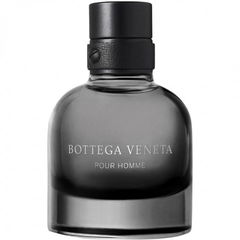
at least since Guardians of the Galaxy ; ) ) has to do with Bottega Veneta pour Homme: Nothing.
Except for the fact that men and women often like the same things, but don’t talk about it, thus missing out on a wonderful opportunity due to mutual ignorance.
What does this have to do with Bottega Veneta pour Homme? Per se nothing.
Bottega Veneta pour Homme was one of those fragrances that I specifically picked out based on the essences contained in it. A strong labdanum fetish dominated my cravings at that time
and the other listed fragrance notes also have a firm place on my list
of favorite stimulants. (Balsam fir, at least since the starry night by Annick Goutal, to which Bottega Veneta also reminds me of at times). The classification as woody-fresh only fueled my desire even more - in one of my incarnations, I must have lived a life as a woodworm. (Wood scent in many forms: shavings, bark mulch, that smoky aroma when wood is sanded... etc., etc., etc. makes my nostrils quiver with interest...). Now, the experienced perfume lovers among you will say, “a perfume is always more than the sum of its parts” and “fragrance pyramids are not everything.” Besides, one could just hold the bottles of essential oils under their nose. True. I would never dare to argue otherwise. And yet there are these, let’s call them fetish nuances, that one is continually drawn to. And there are more combinations than a pine needle has. What does this have to do with Bottega Veneta pour Homme? Not much - except that for me, the intersection of the individual notes creates a wonderful olfactory cinema. I perceive it as an unmistakable “head-free scent,” a fragrance for breathing and letting go. A scent like the still snow-cold wind in the outdoors (author's note: outdoors is the last phase of winter or the early phase of early spring) that whistles from my home mountains.
A scent that gives me a similar feeling as standing under one of those centuries-old tree cathedrals that still exist in our jungle area. Head thrown back and yet not grasping the true size. Furthermore, I like how the labdanum leaves exactly this
“burnt wood dust” note on my skin. I enjoy the herbal edge and simultaneous velvetiness of the clary sage (which, by the way, grows wild in my garden and is very familiar and appreciated), the ambivalence of the allspice with its four-part harmony of cloves, nutmeg, cinnamon, and pepper. I like the resinous, ethereal freshness of pine and balsam fir, the almost sacred juniper. I appreciate that Bottega Veneta is not what one would call a powerhouse yet is just enduring enough for me to still perceive its balsamic nature on my arm while falling asleep. In short: I like both the individual parts of this fragrance and all the associations it evokes in its entirety.
If you like.... If you also enjoy these things, then you will love this fragrance.
And if I were interested in gender markers in fragrances, I would have missed this wonderful opportunity.
Glad we talked about it.
at least since Guardians of the Galaxy ; ) ) has to do with Bottega Veneta pour Homme: Nothing.
Except for the fact that men and women often like the same things, but don’t talk about it, thus missing out on a wonderful opportunity due to mutual ignorance.
What does this have to do with Bottega Veneta pour Homme? Per se nothing.
Bottega Veneta pour Homme was one of those fragrances that I specifically picked out based on the essences contained in it. A strong labdanum fetish dominated my cravings at that time
and the other listed fragrance notes also have a firm place on my list
of favorite stimulants. (Balsam fir, at least since the starry night by Annick Goutal, to which Bottega Veneta also reminds me of at times). The classification as woody-fresh only fueled my desire even more - in one of my incarnations, I must have lived a life as a woodworm. (Wood scent in many forms: shavings, bark mulch, that smoky aroma when wood is sanded... etc., etc., etc. makes my nostrils quiver with interest...). Now, the experienced perfume lovers among you will say, “a perfume is always more than the sum of its parts” and “fragrance pyramids are not everything.” Besides, one could just hold the bottles of essential oils under their nose. True. I would never dare to argue otherwise. And yet there are these, let’s call them fetish nuances, that one is continually drawn to. And there are more combinations than a pine needle has. What does this have to do with Bottega Veneta pour Homme? Not much - except that for me, the intersection of the individual notes creates a wonderful olfactory cinema. I perceive it as an unmistakable “head-free scent,” a fragrance for breathing and letting go. A scent like the still snow-cold wind in the outdoors (author's note: outdoors is the last phase of winter or the early phase of early spring) that whistles from my home mountains.
A scent that gives me a similar feeling as standing under one of those centuries-old tree cathedrals that still exist in our jungle area. Head thrown back and yet not grasping the true size. Furthermore, I like how the labdanum leaves exactly this
“burnt wood dust” note on my skin. I enjoy the herbal edge and simultaneous velvetiness of the clary sage (which, by the way, grows wild in my garden and is very familiar and appreciated), the ambivalence of the allspice with its four-part harmony of cloves, nutmeg, cinnamon, and pepper. I like the resinous, ethereal freshness of pine and balsam fir, the almost sacred juniper. I appreciate that Bottega Veneta is not what one would call a powerhouse yet is just enduring enough for me to still perceive its balsamic nature on my arm while falling asleep. In short: I like both the individual parts of this fragrance and all the associations it evokes in its entirety.
If you like.... If you also enjoy these things, then you will love this fragrance.
And if I were interested in gender markers in fragrances, I would have missed this wonderful opportunity.
Glad we talked about it.
5 Comments
Translated · Show original
Makassar on Valentine's Day or the Barber of Casablanca
After shoveling snow in the morning and enduring the gray, dreary weather of the day, there was a longing in the evening for more colorful, sunnier shores.
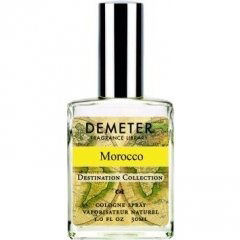
Morocco is, for me, a synonym for wanderlust of a similar quality to Janosch's Panama. The travel guide for this comes from the Demeter Library of Fragrance: Morocco from the Destination Collection -
The scent had been tested a few times, sporadically worn as a "sleep scent." In my memory, it was shelved somewhere between the epic Dahlia by Jesus del Pozo, the elegant version of Meharees, quotes from Feminite du bois, and Bois Marocain for Dummies, with the note "mostly harmless."
And then ignorance hit me with a floral fist right in the nose. Not at all corresponding to my expected scent profile.
No stroll through a painted souk with spices offered for sale in open baskets. No sweet-spicy mint tea. Not even the slightest hint of dry Saharan air. Instead, a real powerhouse of numbing, toxic tropical flowers. Overgrown and waxy, oily and shiny.
I must not have paid enough attention to the travel guide, and the day trip did not lead to Djemaa el Fna, but to the 'Valley of Roses.' Only roses are present, so baroque, even brash at times, not. Accompanied by a sweet, almost shy jasmine, contrary to its usual nature, no more than a footnote. Neroli, a scribbled note at the edge.
I was firmly stuck, playing Hercule Poirot, without his famous nose.
The small gray cells for scent recognition seemed anesthetized. They are not lilies, too little pollen-sharp. Cloves, contrary to the first association, more in their spice form.
Spices, yes. A fine powder, very lovely. No robust cinnamon, no invigorating pepper. Sweet, cardamom, anise. Or is it the triad of pimento?
The perfume encyclopedia was consulted, under the keyword fragrance notes I read: Spices. Great. And in between, the little Belgian detective made his appearance on my mental stage, smoothing an imaginary, resistant hair in his brilliantine-shiny hairstyle.
The evening progressed without enlightenment. Sleep, as long as I couldn't assign this scent to any botanical source, seemed unlikely, especially since Morocco - for a cologne published by Demeter - proved surprisingly long-lasting. The website of Demeter was consulted as another source, and what did I find there? Spices. "Freshly ground Moroccan spices in a 1000-year-old open-air market." Enlightening. And exactly what I had originally expected. No word about the floral component I was searching for. As further inspiration, they also mentioned a song by Crosby, Stills & Nash. Marrakesh Express. I didn't know it. With nimble fingers, I searched for the lyrics (the song itself, by the way, is not really my thing) and what did it say: "I smell the garden in your hair"
Hair! Hair! Hair oil! Strongly scented hair oil! Makassar! An age-old hair cosmetic traditionally scented with ylang-ylang! Ylang-ylang! Just imagine all the exclamation marks as little light bulbs that finally lit up for me. The dear soul finally found its peace and
decided the next morning to verify the scent of ylang-ylang with the existing bottle of essential oil. This clue turned out to be the solution to the puzzle. Well, my trip to Morocco didn't go as planned, but it was exciting and educational for me.
Sometimes it is not so easy to get to the bottom of scents without a component list or directions. Sometimes you expect one thing and find something completely unexpected. But isn't that the exciting part of olfactory road trips?
Morocco is a very floral, almost floriental scent, with a hint of fine spices.
That's roughly how I imagine it was in the 1930s in Casablanca sitting at the barber's, hearing the noisy hustle and bustle of the market outside, the flowing garments of the halaq
emanating a delicate scent of cardamom and pimento. And Hercule winks at you with makassar-scented hair in the speckled mirror conspiratorially.
Morocco is, for me, a synonym for wanderlust of a similar quality to Janosch's Panama. The travel guide for this comes from the Demeter Library of Fragrance: Morocco from the Destination Collection -
The scent had been tested a few times, sporadically worn as a "sleep scent." In my memory, it was shelved somewhere between the epic Dahlia by Jesus del Pozo, the elegant version of Meharees, quotes from Feminite du bois, and Bois Marocain for Dummies, with the note "mostly harmless."
And then ignorance hit me with a floral fist right in the nose. Not at all corresponding to my expected scent profile.
No stroll through a painted souk with spices offered for sale in open baskets. No sweet-spicy mint tea. Not even the slightest hint of dry Saharan air. Instead, a real powerhouse of numbing, toxic tropical flowers. Overgrown and waxy, oily and shiny.
I must not have paid enough attention to the travel guide, and the day trip did not lead to Djemaa el Fna, but to the 'Valley of Roses.' Only roses are present, so baroque, even brash at times, not. Accompanied by a sweet, almost shy jasmine, contrary to its usual nature, no more than a footnote. Neroli, a scribbled note at the edge.
I was firmly stuck, playing Hercule Poirot, without his famous nose.
The small gray cells for scent recognition seemed anesthetized. They are not lilies, too little pollen-sharp. Cloves, contrary to the first association, more in their spice form.
Spices, yes. A fine powder, very lovely. No robust cinnamon, no invigorating pepper. Sweet, cardamom, anise. Or is it the triad of pimento?
The perfume encyclopedia was consulted, under the keyword fragrance notes I read: Spices. Great. And in between, the little Belgian detective made his appearance on my mental stage, smoothing an imaginary, resistant hair in his brilliantine-shiny hairstyle.
The evening progressed without enlightenment. Sleep, as long as I couldn't assign this scent to any botanical source, seemed unlikely, especially since Morocco - for a cologne published by Demeter - proved surprisingly long-lasting. The website of Demeter was consulted as another source, and what did I find there? Spices. "Freshly ground Moroccan spices in a 1000-year-old open-air market." Enlightening. And exactly what I had originally expected. No word about the floral component I was searching for. As further inspiration, they also mentioned a song by Crosby, Stills & Nash. Marrakesh Express. I didn't know it. With nimble fingers, I searched for the lyrics (the song itself, by the way, is not really my thing) and what did it say: "I smell the garden in your hair"
Hair! Hair! Hair oil! Strongly scented hair oil! Makassar! An age-old hair cosmetic traditionally scented with ylang-ylang! Ylang-ylang! Just imagine all the exclamation marks as little light bulbs that finally lit up for me. The dear soul finally found its peace and
decided the next morning to verify the scent of ylang-ylang with the existing bottle of essential oil. This clue turned out to be the solution to the puzzle. Well, my trip to Morocco didn't go as planned, but it was exciting and educational for me.
Sometimes it is not so easy to get to the bottom of scents without a component list or directions. Sometimes you expect one thing and find something completely unexpected. But isn't that the exciting part of olfactory road trips?
Morocco is a very floral, almost floriental scent, with a hint of fine spices.
That's roughly how I imagine it was in the 1930s in Casablanca sitting at the barber's, hearing the noisy hustle and bustle of the market outside, the flowing garments of the halaq
emanating a delicate scent of cardamom and pimento. And Hercule winks at you with makassar-scented hair in the speckled mirror conspiratorially.
1 Comment
Translated · Show original
A Jam Recipe
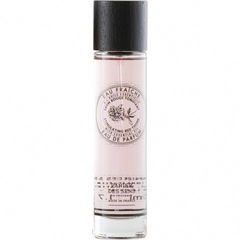
Norlean's pet blog inspired me to wear Thyme Rouge by Panier de Sens once again. This fragrance was acquired when I, buoyed by the discovery that our budgerigars enjoy thyme for more than just eating, was on the lookout for thyme-infused perfumes. I harbored the esoteric hope that some of their enthusiasm for the herb might rub off on me. So "Red Thyme" sounded just right.
Red is the thread that runs through this fragrance. Deep, playing into purples, like just barely overripe red gooseberries. Red gooseberries, hurriedly harvested along with small leaves and stems in the midday heat, before they ultimately fall victim to either the sun's glare or the blackbirds.
This impression is so tart-fruity and slightly sticky that I would most like to lick my fingers to clean them of the juice from the already slightly softened berries. Red, like stains from the juice of the last currants on my apron, which I, since I was already at it, tossed into the bowl.
The scent of sun-warmed fruits becomes cooler. I have left the hot garden with its mostly faded peonies and am sitting in the pleasantly dim kitchen in the basement during summer.
The harvest is cleaned, freed from leaves and stems, ready to be made into jam.
Thyme sneaks in as an afterthought. For my dismay (my budgerigars, by the way, don’t care - they prefer the real herb that can be nibbled on), it is nothing more than that. A herbal-woody hint, the idea of adding a pinch of dried thyme to gooseberry jam to soften the fruity drop impression and emphasize the tartness of the berries a little more.
Thyme Rouge is a completely natural-sounding fragrance - herb-refreshing-fruity, unobtrusive and effortless to wear.
More red berries than the thyme that gives it its name, yet appetizing.
More cologne than perfume, yet zesty.
This year, unless the blackbirds get to it first, I will also add a few thyme leaves to my gooseberry jam; I have a feeling it will be delicious.
Red is the thread that runs through this fragrance. Deep, playing into purples, like just barely overripe red gooseberries. Red gooseberries, hurriedly harvested along with small leaves and stems in the midday heat, before they ultimately fall victim to either the sun's glare or the blackbirds.
This impression is so tart-fruity and slightly sticky that I would most like to lick my fingers to clean them of the juice from the already slightly softened berries. Red, like stains from the juice of the last currants on my apron, which I, since I was already at it, tossed into the bowl.
The scent of sun-warmed fruits becomes cooler. I have left the hot garden with its mostly faded peonies and am sitting in the pleasantly dim kitchen in the basement during summer.
The harvest is cleaned, freed from leaves and stems, ready to be made into jam.
Thyme sneaks in as an afterthought. For my dismay (my budgerigars, by the way, don’t care - they prefer the real herb that can be nibbled on), it is nothing more than that. A herbal-woody hint, the idea of adding a pinch of dried thyme to gooseberry jam to soften the fruity drop impression and emphasize the tartness of the berries a little more.
Thyme Rouge is a completely natural-sounding fragrance - herb-refreshing-fruity, unobtrusive and effortless to wear.
More red berries than the thyme that gives it its name, yet appetizing.
More cologne than perfume, yet zesty.
This year, unless the blackbirds get to it first, I will also add a few thyme leaves to my gooseberry jam; I have a feeling it will be delicious.
4 Comments