
Fegefeuer
Reviews
Filter & Sort
Detailed

Translated · Show original
Purgatory Is a Place on Earth
Creating perfumes is a bit like abstract art. Scents are mixed in various quantities to form a holistic work, where the individual components lose their independence and create something new. It is up to the observer to interpret and decipher the beauty. Often, one can only distinguish between different nuances ad hoc, but subjective perception will always change. Like a painting by Pollock, the effect will always be different, and that is certainly intentional and to some extent also beyond one's control. One must let go, for the work now belongs to the observer.
In contrast to contemporary fragrances, Bois d'Encens expresses itself like a Renaissance painting, in accordance with the age of its inspiration. It is clear what it is and what it wants to be. The intention does not escape anyone. It creates nothing unprecedented but recreates what is already all too familiar. Here, one cannot endlessly analyze, but only criticize the craftsmanship and execution, for the meaning is laid bare.
The top note is hyper-realistic, freshly ground black pepper, but not the industrial, one-dimensional spice of everyday life. Like high-quality Kampot pepper, it has many underlying facets that manifest through mint and eucalyptus, accompanied by a citrusy bite. I am continually fascinated by how authentic the prelude is.
As the imposing fireworks settle, the altar boy swings the censer down the aisle, the pastor preaches about redemption and the blood shed for our sins. One kneels in self-pain on the narrow, uncomfortable wooden bench. Hands are folded, some clench them tightly. Eyes closed or directed towards heaven, although the imposing masonry obstructs the view, as if Peter has closed the gate. The stained glass breaks the light, and the incense leaves an ominous haze in the air. The older the pious followers are, the more intensely they seem to pray. One can read the Our Father from their restless lips if one has forgotten the words.
And time and again, the black pepper reveals itself amidst the ceremony before it flees again. When it appears, it stings like a knife wound, yet it is so soothingly warming and does not judge us. Like a blasphemous comment, it makes us doubt, directing our gaze to the oven beneath our knees. Is it the temptation we are warned against? After all, Lucifer was also an angel before he fell like rain from heaven.
The memory of the Sundays one was dragged to church is like a waking dream. Although my prayers were never answered, the existence of the purifying purgatory was for me, and I lost all faith, Bois d'Encens still captivates me. The question for me is not whether I want to smell like a Christian sermon, but whether I want to celebrate the craftsmanship. Form takes precedence over function, and the execution is masterful.
In contrast to contemporary fragrances, Bois d'Encens expresses itself like a Renaissance painting, in accordance with the age of its inspiration. It is clear what it is and what it wants to be. The intention does not escape anyone. It creates nothing unprecedented but recreates what is already all too familiar. Here, one cannot endlessly analyze, but only criticize the craftsmanship and execution, for the meaning is laid bare.
The top note is hyper-realistic, freshly ground black pepper, but not the industrial, one-dimensional spice of everyday life. Like high-quality Kampot pepper, it has many underlying facets that manifest through mint and eucalyptus, accompanied by a citrusy bite. I am continually fascinated by how authentic the prelude is.
As the imposing fireworks settle, the altar boy swings the censer down the aisle, the pastor preaches about redemption and the blood shed for our sins. One kneels in self-pain on the narrow, uncomfortable wooden bench. Hands are folded, some clench them tightly. Eyes closed or directed towards heaven, although the imposing masonry obstructs the view, as if Peter has closed the gate. The stained glass breaks the light, and the incense leaves an ominous haze in the air. The older the pious followers are, the more intensely they seem to pray. One can read the Our Father from their restless lips if one has forgotten the words.
And time and again, the black pepper reveals itself amidst the ceremony before it flees again. When it appears, it stings like a knife wound, yet it is so soothingly warming and does not judge us. Like a blasphemous comment, it makes us doubt, directing our gaze to the oven beneath our knees. Is it the temptation we are warned against? After all, Lucifer was also an angel before he fell like rain from heaven.
The memory of the Sundays one was dragged to church is like a waking dream. Although my prayers were never answered, the existence of the purifying purgatory was for me, and I lost all faith, Bois d'Encens still captivates me. The question for me is not whether I want to smell like a Christian sermon, but whether I want to celebrate the craftsmanship. Form takes precedence over function, and the execution is masterful.
3 Comments
Translated · Show original
The Mouth of the Ocean
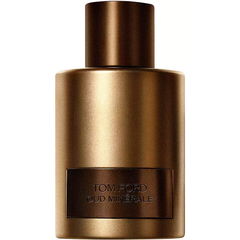
Tom Ford was not a name I was familiar with in the world of perfume before self-proclaimed fashion influencers praised it. Oud was now on everyone's lips and left a bitter aftertaste. It was briefly what Ed Hardy was in my youth - an expensive trend. But now I find myself intrigued, as Bitter Peach sounds so delicious and Tobacco Vanille is constantly celebrated. That’s why I awaited my sample of Oud Minérale with great curiosity. The name captivated me. It combines two notes that I really like.
After the euphoric tearing open of the envelope, my arms were moistened and I immediately stood at the mouth of the ocean. It’s cool in the morning and the waves, with their last strength, reach the shore, crashing against my creamed legs. The salt from the water, clouded by the stirred-up sand, rises up and I swim out. Seaweed and seagrass flavor the deep blue abyss beneath me, before I want to return to land.
The sun is at its highest point. I don’t know how long I must have been in the sea. Exhausted, I sit on a long-ago washed-up desolate tree trunk. The saltwater dries on my skin and the excess hydrates the wood. The salt-stained wood embraces me for my company. In the distance, there is a fire that I cannot see. Someone is preparing the catch and heartily squeezing lemons into the flames. The sea air harmoniously blends with the smoke and spices. The signal for me to say goodbye to the lapis lazuli-colored horizon. And when I lie in bed at night, I still smell the salt and the memory of the ocean lingers on my skin.
An extraordinarily beautiful scent that remains consistently fresh and aquatic, even though these notes are usually so fleeting. Like ripening wine, it becomes more intense over time and the wood becomes more present, giving a bitter accent. Just when I thought it was only close to the skin, the scent tugged at my nose with memories. Even in the evening, Oud Minérale robbed me of sleep because my arm under my head still smelled of it and held me hostage. At night, I didn’t want to swim in the sea anymore - scent waterboarding!
Unfortunately, I must admit that I can understand the perfume's positioning. It lacks that certain something that would allow this scent to be called Private Blend. Damn well made, but without that je ne sais quoi. So I am glad that it is a sample and not a blindly purchased bottle.
After the euphoric tearing open of the envelope, my arms were moistened and I immediately stood at the mouth of the ocean. It’s cool in the morning and the waves, with their last strength, reach the shore, crashing against my creamed legs. The salt from the water, clouded by the stirred-up sand, rises up and I swim out. Seaweed and seagrass flavor the deep blue abyss beneath me, before I want to return to land.
The sun is at its highest point. I don’t know how long I must have been in the sea. Exhausted, I sit on a long-ago washed-up desolate tree trunk. The saltwater dries on my skin and the excess hydrates the wood. The salt-stained wood embraces me for my company. In the distance, there is a fire that I cannot see. Someone is preparing the catch and heartily squeezing lemons into the flames. The sea air harmoniously blends with the smoke and spices. The signal for me to say goodbye to the lapis lazuli-colored horizon. And when I lie in bed at night, I still smell the salt and the memory of the ocean lingers on my skin.
An extraordinarily beautiful scent that remains consistently fresh and aquatic, even though these notes are usually so fleeting. Like ripening wine, it becomes more intense over time and the wood becomes more present, giving a bitter accent. Just when I thought it was only close to the skin, the scent tugged at my nose with memories. Even in the evening, Oud Minérale robbed me of sleep because my arm under my head still smelled of it and held me hostage. At night, I didn’t want to swim in the sea anymore - scent waterboarding!
Unfortunately, I must admit that I can understand the perfume's positioning. It lacks that certain something that would allow this scent to be called Private Blend. Damn well made, but without that je ne sais quoi. So I am glad that it is a sample and not a blindly purchased bottle.
2 Comments
Translated · Show original
From Cradle to Grave
The ideal of beauty is chewed over by society, predetermined, and brought to a collective judgment. It should be flawless and must not offend. Skin should be unblemished, textiles not faded, jeans without holes, and fragrances must harmoniously serenade the passing masses.
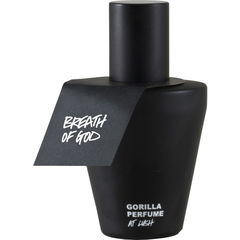
Yet it is precisely these flaws that celebrate finitude and tell stories, which are the colors of an otherwise blank canvas. Breath of God unites life and death and tells a wonderful story. For the composition consists of two fragrance oils that were sold exclusively online. The oil "Inhale" is fruity and floral, like freshly blooming roses and ripe fruit, reflecting birth and life. "Exhale," on the other hand, is woody and smoky, like the ash that is the unrecognizable remnant and dust of death. The oxygen we need for our vitality turns into carbon dioxide, which kills us in excessive amounts. Thus, God inhales life and exhales death.
Breath of God is therefore not a beautiful fragrance, as it carries within it all that reminds us of our transience, and this dark shadow almost completely devours what has been breathed into the composition as life. The perfume is everything at once and yet none of it. It is the fire that draws us in with curiosity, and yet we burn ourselves on its flame, but it is also these scars that tell of a rich existence. No stone left unturned, no chance wasted. For without flaws, only what has been untouched remains preserved.
The perfume suddenly opens with a biting cold tar before soapy notes reveal themselves, clean and unblemished. In the midst blooms a rose, which later burns and leaves behind cold smoke. The poetic development can be answered with the riddle of the Sphinx: What being goes on four legs in the morning, on two at noon, and on three in the evening? Man from cradle to grave.
Breath of God is a blooming meadow and a burnt fruit tree, the freshly asphalted road next to the sun-scorched grass, yet what remains after the fire is ash and smoke. This smoke lingers for a few hours before it dissipates, and as dark as it ends, it must be said: There would be no shadow if there were no light.
From the time I briefly worked at Lush, I must warn that longevity and sillage will vary for everyone. Since synthetics are avoided, it is left to the skin how the fragrance is perceived. Which notes ultimately stand out and how it develops cannot unfortunately be generalized. What can be said, however, is that it will offend, and people will either hate it or love it. It is indeed not flawless and not beautiful.
Yet it is precisely these flaws that celebrate finitude and tell stories, which are the colors of an otherwise blank canvas. Breath of God unites life and death and tells a wonderful story. For the composition consists of two fragrance oils that were sold exclusively online. The oil "Inhale" is fruity and floral, like freshly blooming roses and ripe fruit, reflecting birth and life. "Exhale," on the other hand, is woody and smoky, like the ash that is the unrecognizable remnant and dust of death. The oxygen we need for our vitality turns into carbon dioxide, which kills us in excessive amounts. Thus, God inhales life and exhales death.
Breath of God is therefore not a beautiful fragrance, as it carries within it all that reminds us of our transience, and this dark shadow almost completely devours what has been breathed into the composition as life. The perfume is everything at once and yet none of it. It is the fire that draws us in with curiosity, and yet we burn ourselves on its flame, but it is also these scars that tell of a rich existence. No stone left unturned, no chance wasted. For without flaws, only what has been untouched remains preserved.
The perfume suddenly opens with a biting cold tar before soapy notes reveal themselves, clean and unblemished. In the midst blooms a rose, which later burns and leaves behind cold smoke. The poetic development can be answered with the riddle of the Sphinx: What being goes on four legs in the morning, on two at noon, and on three in the evening? Man from cradle to grave.
Breath of God is a blooming meadow and a burnt fruit tree, the freshly asphalted road next to the sun-scorched grass, yet what remains after the fire is ash and smoke. This smoke lingers for a few hours before it dissipates, and as dark as it ends, it must be said: There would be no shadow if there were no light.
From the time I briefly worked at Lush, I must warn that longevity and sillage will vary for everyone. Since synthetics are avoided, it is left to the skin how the fragrance is perceived. Which notes ultimately stand out and how it develops cannot unfortunately be generalized. What can be said, however, is that it will offend, and people will either hate it or love it. It is indeed not flawless and not beautiful.
10 Comments
Translated · Show original
The Beginning of the End or How I Learned to Love Fragrances
As a young adult, fragrances were of no great relevance to me. The usual suspects from Jean Paul Gaultier or whatever was in the shower gift set was my perfume. Somehow, wearing fragrances was part of the joys of adulthood, but just as I reached for toothpaste without a second thought, olfactory pleasures were worth no more than a fleeting consideration.
Once I became interested in fashion and cared about which brands I wore - probably out of youthful narcissism - I was eager to know what Comme des Garçons was doing. Japanese fashion was, after all, the holy grail at that time, but the fragrances were not yet available in every perfumery.
Over 10 years ago, I traveled to Amsterdam and had to scour every fashion store that sold the textiles I had previously only known from digital images. The goal was to be able to sniff Wonderwood by Comme des Garçons, and a small, inconspicuous shop carried every fragrance from the Japanese fashion house.
They told us about the idea behind Odeur 53 and the concept for Series 3: Incense, and suddenly fragrances made sense. They were no longer just what young men were sold as a necessity for dating, but an art form that one sprays on their skin in a fine mist, and then came the grand debut: “Can I try Wonderwood?” I was instantly in love, a fire ignited within me that I still carry to this day.
The scent immediately transported me to an untouched spruce forest. The branches crack under my steps and the leaves rustle in my rhythm. The cypress trees invigorate the air, and every breath is full of energy. The mountain air carries the minerality to me, and the arboretum mingles in the wind. A light smoke welcomes me from afar, and what remains is a nurturing warmth of wood and wild, unspoiled herbs that never leaves my side. A fragrance that does not leave the forest all year round and always has its place.
From that moment on, I wore Wonderwood until today. It became my signature, and people associated the scent with me. Friends and casual acquaintances eagerly asked for the name of the fragrance. In romantic relationships, my pillow was in high demand during my absence. I have emptied multiple bottles and always returned to Wonderwood. The perfume lasts all day on me, and the sillage is a veil that elegantly follows you step by step.
The DNA is, as I know today, typical for Comme des Garçons. It does not have that typical synthetic alcohol note of other (cheaper) designer perfumes; it often creates a clear image and evokes specific moments and places. Even when used, you do not notice any synthetics. The fragrances are as authentic as allowed in compromise with longevity.
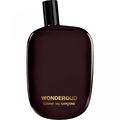
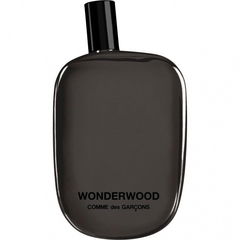
Wonderwood is for me what the first trip to the cinema or the first sip of wine is for many. My understanding of art was born when I smelled it. No outfit was complete unless I wrapped myself in a story from the bottle that looks as if it had spent decades in a river before taking on this form. Shaped by time and currents until it lost all its edges and corners. A sculpture that only Mother Nature could have created.
This perfume has opened my eyes and senses and will always be a part of me.
Once I became interested in fashion and cared about which brands I wore - probably out of youthful narcissism - I was eager to know what Comme des Garçons was doing. Japanese fashion was, after all, the holy grail at that time, but the fragrances were not yet available in every perfumery.
Over 10 years ago, I traveled to Amsterdam and had to scour every fashion store that sold the textiles I had previously only known from digital images. The goal was to be able to sniff Wonderwood by Comme des Garçons, and a small, inconspicuous shop carried every fragrance from the Japanese fashion house.
They told us about the idea behind Odeur 53 and the concept for Series 3: Incense, and suddenly fragrances made sense. They were no longer just what young men were sold as a necessity for dating, but an art form that one sprays on their skin in a fine mist, and then came the grand debut: “Can I try Wonderwood?” I was instantly in love, a fire ignited within me that I still carry to this day.
The scent immediately transported me to an untouched spruce forest. The branches crack under my steps and the leaves rustle in my rhythm. The cypress trees invigorate the air, and every breath is full of energy. The mountain air carries the minerality to me, and the arboretum mingles in the wind. A light smoke welcomes me from afar, and what remains is a nurturing warmth of wood and wild, unspoiled herbs that never leaves my side. A fragrance that does not leave the forest all year round and always has its place.
From that moment on, I wore Wonderwood until today. It became my signature, and people associated the scent with me. Friends and casual acquaintances eagerly asked for the name of the fragrance. In romantic relationships, my pillow was in high demand during my absence. I have emptied multiple bottles and always returned to Wonderwood. The perfume lasts all day on me, and the sillage is a veil that elegantly follows you step by step.
The DNA is, as I know today, typical for Comme des Garçons. It does not have that typical synthetic alcohol note of other (cheaper) designer perfumes; it often creates a clear image and evokes specific moments and places. Even when used, you do not notice any synthetics. The fragrances are as authentic as allowed in compromise with longevity.
Wonderwood is for me what the first trip to the cinema or the first sip of wine is for many. My understanding of art was born when I smelled it. No outfit was complete unless I wrapped myself in a story from the bottle that looks as if it had spent decades in a river before taking on this form. Shaped by time and currents until it lost all its edges and corners. A sculpture that only Mother Nature could have created.
This perfume has opened my eyes and senses and will always be a part of me.
6 Comments