
Mörderbiene
Reviews
Filter & Sort
Detailed
Translated · Show original
'With a Sharp Eye, According to Connoisseurs...'
 Pour Monsieur Eau de Toilette,
  Eau Sauvage Eau de Toilette,
  Eau du Sud,
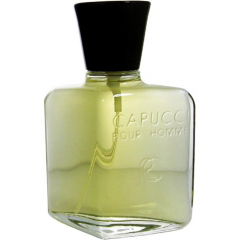
  Aéroplane and many others, they all fit into the same category as Capucci pour Homme - that of classic men's chypres.
While the French come across as finely textured and distinguished, the Italian is, however, more down-to-earth. This is largely due to its spice component, which gives it a bit of edge: between the typical citrus opening and the green moss base, there is a note of pepper along with some herbs and flowers, which is why I see it more as a men's fragrance in direct comparison.
In this category, I feel completely at ease, and naturally, I also find Capucci pour Homme exceptionally good, as it is a solid and above all affordable representative.
So here, for the first time, I am giving a rating in the 'Price-Performance Ratio' category. I admit I find this category somewhat challenging, as its component 'Performance' is always strongly influenced by personal taste in my eyes.
However, Capucci pour Homme is certainly one of the best perfumes you can buy for under €15 - in times when almost everyone seems to feel the need to jump on a 'luxury' train characterized only by high prices, I find that incredible.
21 Comments
Translated · Show original
Jules D., or: With the Rolls to Paris-Dakar
The Paris-Dakar Rally, which was to become one of the most important long-distance and desert rallies, was still a small, family outing from the city to the coast in 1981, in its third year.
The highlight at that time: a registered Rolls-Royce at the start.
Two Frenchmen had the absurd and surely somewhat alcohol-fueled idea to convert the Rolls-Royce Corniche Fixed Head Coupé of one of them, who had complained about its unreliability, into a rally vehicle.
This crazy idea was then taken much more seriously and ambitiously, and only an accident repair prevented a good finish - the Rolls was temporarily in 13th place overall.
In Crewe at Rolls-Royce, however, they forgot all British humor and wanted nothing to do with this project - even the use of the brand name Rolls-Royce was prohibited. Consequently, the car was named Jules by the hastily recruited sponsor Christian Dior after his then-current men's collection.
And with Jules Dior and Jules Rolls-Royce (hereafter Jules D. and Jules R.-R.), two fitting partners have found each other.
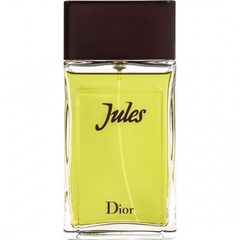
Jules D. is both a rebellious adventurer and a gallant charmer of soapy elegance, who could also be seen at a stiff dinner party (in discreet dosage!) and would surely count among the more entertaining guests there. The scent is a typical powerhouse of the 80s, which, alongside all the dark green spiciness, still retains a delicate structure with floral freshness.
This powerhouse starts off spicy and quite rough, but becomes softer and more harmonious towards the heart. There, an almost sweet violet note joins in, which, however, cannot overshadow the angular framework. The finish is long and characterized by dirty, coarse leather.
While Jules D. is a typical child of its time, Jules R.-R. was an exceptional phenomenon in every respect and remained singular. But the pairing is right - a lifted Rolls-Royce with off-road tires and rally stripes, that is wonderfully out of date today.
Jules R.-R. also received a late legitimization: with the introduction of the Cullinan, whose justification for existence might be even more disputed, it was even used for marketing.
The highlight at that time: a registered Rolls-Royce at the start.
Two Frenchmen had the absurd and surely somewhat alcohol-fueled idea to convert the Rolls-Royce Corniche Fixed Head Coupé of one of them, who had complained about its unreliability, into a rally vehicle.
This crazy idea was then taken much more seriously and ambitiously, and only an accident repair prevented a good finish - the Rolls was temporarily in 13th place overall.
In Crewe at Rolls-Royce, however, they forgot all British humor and wanted nothing to do with this project - even the use of the brand name Rolls-Royce was prohibited. Consequently, the car was named Jules by the hastily recruited sponsor Christian Dior after his then-current men's collection.
And with Jules Dior and Jules Rolls-Royce (hereafter Jules D. and Jules R.-R.), two fitting partners have found each other.
Jules D. is both a rebellious adventurer and a gallant charmer of soapy elegance, who could also be seen at a stiff dinner party (in discreet dosage!) and would surely count among the more entertaining guests there. The scent is a typical powerhouse of the 80s, which, alongside all the dark green spiciness, still retains a delicate structure with floral freshness.
This powerhouse starts off spicy and quite rough, but becomes softer and more harmonious towards the heart. There, an almost sweet violet note joins in, which, however, cannot overshadow the angular framework. The finish is long and characterized by dirty, coarse leather.
While Jules D. is a typical child of its time, Jules R.-R. was an exceptional phenomenon in every respect and remained singular. But the pairing is right - a lifted Rolls-Royce with off-road tires and rally stripes, that is wonderfully out of date today.
Jules R.-R. also received a late legitimization: with the introduction of the Cullinan, whose justification for existence might be even more disputed, it was even used for marketing.
18 Comments
Translated · Show original
Murder Bee Bait
My regular readers know about my ambivalent relationship with Penhaligon's; for everyone else, just this much: we have a history. In any case, I drown my frustration over the majority of new releases since 2016 with my rapidly dwindling stocks of the classic scents that have been discontinued.
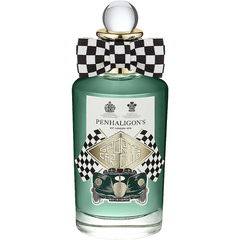
But the marketing people at Penhaligon's wouldn't be the marketing people at Penhaligon's if they didn't know how to reel in a disgruntled and disappointed bee once again - The bait: an old car on the bottle.
Although Sir William Lyons - the founder of Jaguar - was not a fan of motorsport, he recognized the advertising effectiveness and initially tolerated the secretly initiated project by employees to develop a factory racing car. This decision would prove to be spot on. The Jaguar XK-C (also known as C-Type), first deployed in 1951, benefited from the pairing of the proven engine of the XK120 with a newly developed tubular frame covered in thin aluminum skin. The initially 200 hp faced a weight of less than 1,000 kg, and later even another 100 kg was trimmed off while the power was increased to about 230 hp. A chassis with double wishbones and torsion bars at the front and rear ensured excellent road handling. In combination with the good brakes, it allowed drivers to play cat and mouse with the more powerful Ferraris. The 24 Hours of Le Mans was won in 1951, 1953, 1955, 1956, and 1957, and in Grand Prix racing, the later Formula 1, Jaguar secured pole position with the C-Type at the legendary race in Monaco in 1952. Thus, the C-Type became not only a notable success for Jaguar but one of the great icons of motorsport. One of the few surviving examples (of originally 53) changed hands for twelve million dollars at an auction in 2015.
So what does the Jaguar C-Type have to do with the new fragrance from Penhaligon's? Well, it prominently features its likeness, and both are certainly not among the most affordable of their kind - furthermore, they also share their color.
The new one from Penhaligon's is green: cypress green, mint green, eucalyptus green, pepper green, maybe a bit of British racing green.
The sharpness of the pepper and the musky soft eucalyptus contrast pleasantly with each other; the poles are not too far apart. Sports Car Club remains consistently fresh; the menthol note is noticeable but subtle and well woven, with a slight hint of sweetness running through the fragrance in the background.
In the base, the green fades quietly, and fortunately, I don't notice much of an artificial long finish.
Conclusion: the price could perhaps be debated, but the scent is quite well done - a nice green for the green fragrance lovers.
So, dear marketing people at Penhaligon's: until the next old car!
But the marketing people at Penhaligon's wouldn't be the marketing people at Penhaligon's if they didn't know how to reel in a disgruntled and disappointed bee once again - The bait: an old car on the bottle.
Although Sir William Lyons - the founder of Jaguar - was not a fan of motorsport, he recognized the advertising effectiveness and initially tolerated the secretly initiated project by employees to develop a factory racing car. This decision would prove to be spot on. The Jaguar XK-C (also known as C-Type), first deployed in 1951, benefited from the pairing of the proven engine of the XK120 with a newly developed tubular frame covered in thin aluminum skin. The initially 200 hp faced a weight of less than 1,000 kg, and later even another 100 kg was trimmed off while the power was increased to about 230 hp. A chassis with double wishbones and torsion bars at the front and rear ensured excellent road handling. In combination with the good brakes, it allowed drivers to play cat and mouse with the more powerful Ferraris. The 24 Hours of Le Mans was won in 1951, 1953, 1955, 1956, and 1957, and in Grand Prix racing, the later Formula 1, Jaguar secured pole position with the C-Type at the legendary race in Monaco in 1952. Thus, the C-Type became not only a notable success for Jaguar but one of the great icons of motorsport. One of the few surviving examples (of originally 53) changed hands for twelve million dollars at an auction in 2015.
So what does the Jaguar C-Type have to do with the new fragrance from Penhaligon's? Well, it prominently features its likeness, and both are certainly not among the most affordable of their kind - furthermore, they also share their color.
The new one from Penhaligon's is green: cypress green, mint green, eucalyptus green, pepper green, maybe a bit of British racing green.
The sharpness of the pepper and the musky soft eucalyptus contrast pleasantly with each other; the poles are not too far apart. Sports Car Club remains consistently fresh; the menthol note is noticeable but subtle and well woven, with a slight hint of sweetness running through the fragrance in the background.
In the base, the green fades quietly, and fortunately, I don't notice much of an artificial long finish.
Conclusion: the price could perhaps be debated, but the scent is quite well done - a nice green for the green fragrance lovers.
So, dear marketing people at Penhaligon's: until the next old car!
19 Comments
Translated · Show original
Black as the night, hot as love, sweet and bitter as life
I have long left Creed very much to the side. The deceitful marketing propaganda has repulsed me too much.
Creed is indeed an old company, and the titles of court supplier are also quite genuine - although Creed did not supply anyone with perfume until the seventies of the twentieth century, regardless of whether they were blue-blooded or otherwise.
The years of appearance of the perfumes, supposedly dating back to the eighteenth century, are sheer nonsense.
Likewise, the pretty stories about various perfumes are nothing more than that: stories.
Despite all this, one must credit Creed with having created very classically oriented perfumes in a quality that is almost unknown today.
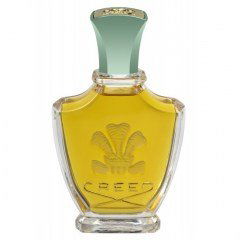
Black as the night, hot as love, sweet and bitter as life - this saying is sometimes heard in response to the question about coffee.
Irisia is certainly not black, but Irisia has fire, and Irisia is sweet, and there is also a good portion of bitterness.
I encounter a Chypre that consciously relies on sweetness for the first time with Irisia - it is indeed used moderately, but it runs consistently through the entire scent progression.
The traditionally citrusy Chypre opening here reminds one of the sugary water of canned mandarins - with a certain freshness and sprightliness that, however, takes a backseat to the dominant sweetness - receives a strong contrast with a rich galbanum note, and transitions into a interplay of rose and tuberose, which is equally characterized by radiant, clear sweetness. The tuberose note, which confidently takes center stage, always remains far from the boundaries of the indolic or rubbery and rests on a warm, balsamic, and above all sweet base, where the use of real amber indeed comes into the realm of the probable, and which can also be found in a more austere variant in Miss Dior.
Actually not a fan of sweet scents, I can only explain the subjective attractiveness of Irisia alongside its high quality by the fact that here the cookie, candy, and other gourmand notes have been omitted.
For me, Irisia is one of the most beautiful scents that a woman can adorn herself with.
Creed, with such scents you may gladly do penance. You are forgiven.
Creed is indeed an old company, and the titles of court supplier are also quite genuine - although Creed did not supply anyone with perfume until the seventies of the twentieth century, regardless of whether they were blue-blooded or otherwise.
The years of appearance of the perfumes, supposedly dating back to the eighteenth century, are sheer nonsense.
Likewise, the pretty stories about various perfumes are nothing more than that: stories.
Despite all this, one must credit Creed with having created very classically oriented perfumes in a quality that is almost unknown today.
Black as the night, hot as love, sweet and bitter as life - this saying is sometimes heard in response to the question about coffee.
Irisia is certainly not black, but Irisia has fire, and Irisia is sweet, and there is also a good portion of bitterness.
I encounter a Chypre that consciously relies on sweetness for the first time with Irisia - it is indeed used moderately, but it runs consistently through the entire scent progression.
The traditionally citrusy Chypre opening here reminds one of the sugary water of canned mandarins - with a certain freshness and sprightliness that, however, takes a backseat to the dominant sweetness - receives a strong contrast with a rich galbanum note, and transitions into a interplay of rose and tuberose, which is equally characterized by radiant, clear sweetness. The tuberose note, which confidently takes center stage, always remains far from the boundaries of the indolic or rubbery and rests on a warm, balsamic, and above all sweet base, where the use of real amber indeed comes into the realm of the probable, and which can also be found in a more austere variant in Miss Dior.
Actually not a fan of sweet scents, I can only explain the subjective attractiveness of Irisia alongside its high quality by the fact that here the cookie, candy, and other gourmand notes have been omitted.
For me, Irisia is one of the most beautiful scents that a woman can adorn herself with.
Creed, with such scents you may gladly do penance. You are forgiven.
9 Comments
Translated · Show original
Graublüher
I must somewhat agree with my predecessor: I like to test blind at first, without looking here right away. And my first impression was that of tuberose.
However, it was the impression of a strongly alienated tuberose, stripped of its joyfully radiant opulence.
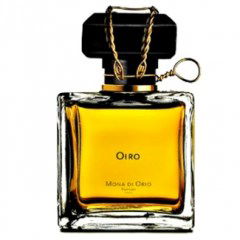
Oiro is a compact white floral scent, whose floral notes in the mid-ground seem to be flanked by resins and smoke.
In terms of composition, it reminds me of my old Galimards from the sixties. Here, too, prominent white florals explore the boundary to the indolic.
If I didn't know better, I could imagine that I might have categorized Oiro in that era. I appreciate when contemporary creations pleasantly bypass trends and prevailing tastes.
While these old scents sing with strong, cheerful voices of Savoir-Vivre, thanks to their opulent fruity floral sweetness - which always remains bearable - Oiro, however, remains surprisingly dry throughout. I cannot agree with the perfume enthusiasts who classify Oiro as sweet.
It is precisely this resinous-smoky component - I suspect frankincense and vetiver - that elevates the white florals into a serious, darkened, and almost 'gray' mood. This is further emphasized by the fact that the scent shows little inner dynamism. Due to the lack of sweetness, I can also easily imagine these white florals on men.
I haven't encountered such a 'gray' interpretation of white florals before, so I find the concept at least intriguing.
Whether I like it or not, I have not yet decided conclusively - usually a good sign...
However, it was the impression of a strongly alienated tuberose, stripped of its joyfully radiant opulence.
Oiro is a compact white floral scent, whose floral notes in the mid-ground seem to be flanked by resins and smoke.
In terms of composition, it reminds me of my old Galimards from the sixties. Here, too, prominent white florals explore the boundary to the indolic.
If I didn't know better, I could imagine that I might have categorized Oiro in that era. I appreciate when contemporary creations pleasantly bypass trends and prevailing tastes.
While these old scents sing with strong, cheerful voices of Savoir-Vivre, thanks to their opulent fruity floral sweetness - which always remains bearable - Oiro, however, remains surprisingly dry throughout. I cannot agree with the perfume enthusiasts who classify Oiro as sweet.
It is precisely this resinous-smoky component - I suspect frankincense and vetiver - that elevates the white florals into a serious, darkened, and almost 'gray' mood. This is further emphasized by the fact that the scent shows little inner dynamism. Due to the lack of sweetness, I can also easily imagine these white florals on men.
I haven't encountered such a 'gray' interpretation of white florals before, so I find the concept at least intriguing.
Whether I like it or not, I have not yet decided conclusively - usually a good sign...
13 Comments