
Oldfactive
Reviews
Filter & Sort
Detailed
Translated · Show original
The Smoky Tea Society
When a brand advertises with a slogan like "In Smoke We Trust," it has my attention. I'm quite simple that way. I read smoke, I smell it.
Beaufort London is the brand founded by Prodigy drummer Leo Crabtree, which, in addition to fragrances, also focuses on spirits. In both cases, they do not take the easy route.
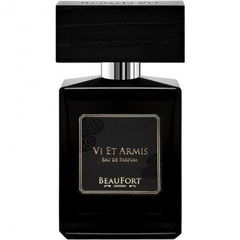
Vi et Armis (Latin for "by force of arms") was previously called "East India," thus referencing the British trading company, the East India Company, founded in 1600. This company shipped all conceivable goods. Apparently, Beaufort had to part ways with this name relatively quickly for legal reasons. However, it couldn't have been more fitting.
For Beaufort fragrances (with exceptions), we have the typical smoke in the foreground. While other brands use it as a supporting actor, smoke acts as the main character in Vi et Armis. The first breath fills the lungs with piercing smoke. There are no compromises here. Dominating the opening is a hefty portion of black pepper, which also bites in the nose and complements the warm spice of cardamom. The smoke covers the remaining notes in this phase of the fragrance like a cloak, making it difficult to discern the individual notes in this thick haze. But that is precisely what makes the allure of Beaufort fragrances for me. It doesn't make it easy; the nose is challenged, and it takes some time to "see" through this dense smoke. Deep in the background, beneath all this smoke, we find a tea note that becomes increasingly present over time and works its way to the forefront. To me personally, it smells like a tea with a citrusy touch. As the scent develops, a slightly alcoholic note is added, refining the tea and creating a subtly sweet symbiosis with the smoke. Personally, I sometimes have trouble distinguishing a tea note from a dry tobacco leaf. However, in the late drydown, I perceive a note that differs from the previous tea note, which is why I would lean towards a drier tobacco here. The oud, as such, cannot be deciphered individually in this entire construct. It likely helps to connect with the smoky aspects of birch and frankincense.
The genius of Vi et Armis lies in the conceptual design of the fragrance. In my opinion, this is an olfactory masterpiece. The basic idea was evidently to recreate the scent of a ship transporting various goods (tea, spices, alcohol) that gets caught in a battle at sea. And that is masterfully staged.
When it comes to longevity, you don't have to worry with Beaufort fragrances. I can easily perceive Vi et Armis with 2 sprays throughout a complete workday.
Due to the pleasant tea note, the fragrance is, in my eyes, more wearable than, for example, a Tonnerre from the same house. However, you do need a pronounced fondness for smoky or more extreme fragrances to enjoy Vi et Armis.
With "In Smoke We Trust," they made bold claims, but ultimately delivered. Vi et Armis is a conceptually masterfully balanced fragrance that brings together many extremes as well as its opposites and invites you on an exciting ship journey olfactorily.
Beaufort London is the brand founded by Prodigy drummer Leo Crabtree, which, in addition to fragrances, also focuses on spirits. In both cases, they do not take the easy route.
Vi et Armis (Latin for "by force of arms") was previously called "East India," thus referencing the British trading company, the East India Company, founded in 1600. This company shipped all conceivable goods. Apparently, Beaufort had to part ways with this name relatively quickly for legal reasons. However, it couldn't have been more fitting.
For Beaufort fragrances (with exceptions), we have the typical smoke in the foreground. While other brands use it as a supporting actor, smoke acts as the main character in Vi et Armis. The first breath fills the lungs with piercing smoke. There are no compromises here. Dominating the opening is a hefty portion of black pepper, which also bites in the nose and complements the warm spice of cardamom. The smoke covers the remaining notes in this phase of the fragrance like a cloak, making it difficult to discern the individual notes in this thick haze. But that is precisely what makes the allure of Beaufort fragrances for me. It doesn't make it easy; the nose is challenged, and it takes some time to "see" through this dense smoke. Deep in the background, beneath all this smoke, we find a tea note that becomes increasingly present over time and works its way to the forefront. To me personally, it smells like a tea with a citrusy touch. As the scent develops, a slightly alcoholic note is added, refining the tea and creating a subtly sweet symbiosis with the smoke. Personally, I sometimes have trouble distinguishing a tea note from a dry tobacco leaf. However, in the late drydown, I perceive a note that differs from the previous tea note, which is why I would lean towards a drier tobacco here. The oud, as such, cannot be deciphered individually in this entire construct. It likely helps to connect with the smoky aspects of birch and frankincense.
The genius of Vi et Armis lies in the conceptual design of the fragrance. In my opinion, this is an olfactory masterpiece. The basic idea was evidently to recreate the scent of a ship transporting various goods (tea, spices, alcohol) that gets caught in a battle at sea. And that is masterfully staged.
When it comes to longevity, you don't have to worry with Beaufort fragrances. I can easily perceive Vi et Armis with 2 sprays throughout a complete workday.
Due to the pleasant tea note, the fragrance is, in my eyes, more wearable than, for example, a Tonnerre from the same house. However, you do need a pronounced fondness for smoky or more extreme fragrances to enjoy Vi et Armis.
With "In Smoke We Trust," they made bold claims, but ultimately delivered. Vi et Armis is a conceptually masterfully balanced fragrance that brings together many extremes as well as its opposites and invites you on an exciting ship journey olfactorily.
11 Comments
Translated · Show original
Licorice Oud
You might be tired of hearing this, but there’s another "Oud Wood"-inspired fragrance out there. And in China, a sack of rice has fallen over. However, the Black Oud by Zousz is actually worth a few words.
The independent brand from the UK is primarily known for men's grooming products (beard care, etc.). However, they couldn't avoid creating their own perfume, and thus the fragrance Black Oud was launched in 2020.
We don't need to beat around the bush, as the Black Oud makes it clear right away who its inspiration was. However, the fragrance is not a simple 1:1 copy of the well-known Oud Wood DNA from Tom Ford; instead, it expands on this basic idea and comes with a nice twist. The scent opens with a prominent dose of pepper, which remains quite noticeable for the first few minutes before receding to make way for cardamom. Here, you can probably see the biggest parallels to the original from Tom Ford. The oud (certainly a synthetic accord) then slowly takes its place between the creamy sandalwood (without becoming lactonic) and a soft, velvety leather. This "cozy" leather gives the Black Oud enough contrast compared to the original to avoid being seen as a mere copy. The leather is relatively softly defined in this case, remaining quite pleasant throughout and never feeling demanding or exhausting. With the patchouli, Black Oud gains a slightly earthy-chocolatey note. In the drydown, the fragrance becomes a bit sweeter, with vanilla and tonka bean providing enough warmth for the colder season to feel secure with this scent.
In the middle phase of the fragrance, another note emerges that piques my interest and somehow captivates me. It feels like a sweet licorice note that reminds me of my childhood. Additionally, there’s a faint "plastic" note lingering deep in the background, which also reminds me of something from my early childhood. Whether it was a type of toy or candy, I still can't quite define it.
With about 8 hours of longevity, Black Oud holds its own. For the first 2 hours, it projects quite strongly before becoming a bit more intimate.
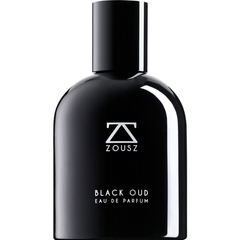
The bottle fits comfortably in the hand with its rounded shape, is relatively heavy, and is equipped with a decent sprayer. However, those with "fingerprint phobia" should steer clear of the bottle.
In the end, Black Oud is a clearly Oud Wood-inspired fragrance that brings enough of its own ideas to the table with the pleasant leather note and this slight licorice vibe to avoid being considered a boring copy of a popular DNA. It is priced relatively fairly (around €55-65 for 100ml EdP) and impresses not only with a good price-performance ratio but also with decent longevity.
The independent brand from the UK is primarily known for men's grooming products (beard care, etc.). However, they couldn't avoid creating their own perfume, and thus the fragrance Black Oud was launched in 2020.
We don't need to beat around the bush, as the Black Oud makes it clear right away who its inspiration was. However, the fragrance is not a simple 1:1 copy of the well-known Oud Wood DNA from Tom Ford; instead, it expands on this basic idea and comes with a nice twist. The scent opens with a prominent dose of pepper, which remains quite noticeable for the first few minutes before receding to make way for cardamom. Here, you can probably see the biggest parallels to the original from Tom Ford. The oud (certainly a synthetic accord) then slowly takes its place between the creamy sandalwood (without becoming lactonic) and a soft, velvety leather. This "cozy" leather gives the Black Oud enough contrast compared to the original to avoid being seen as a mere copy. The leather is relatively softly defined in this case, remaining quite pleasant throughout and never feeling demanding or exhausting. With the patchouli, Black Oud gains a slightly earthy-chocolatey note. In the drydown, the fragrance becomes a bit sweeter, with vanilla and tonka bean providing enough warmth for the colder season to feel secure with this scent.
In the middle phase of the fragrance, another note emerges that piques my interest and somehow captivates me. It feels like a sweet licorice note that reminds me of my childhood. Additionally, there’s a faint "plastic" note lingering deep in the background, which also reminds me of something from my early childhood. Whether it was a type of toy or candy, I still can't quite define it.
With about 8 hours of longevity, Black Oud holds its own. For the first 2 hours, it projects quite strongly before becoming a bit more intimate.
The bottle fits comfortably in the hand with its rounded shape, is relatively heavy, and is equipped with a decent sprayer. However, those with "fingerprint phobia" should steer clear of the bottle.
In the end, Black Oud is a clearly Oud Wood-inspired fragrance that brings enough of its own ideas to the table with the pleasant leather note and this slight licorice vibe to avoid being considered a boring copy of a popular DNA. It is priced relatively fairly (around €55-65 for 100ml EdP) and impresses not only with a good price-performance ratio but also with decent longevity.
8 Comments
Translated · Show original
The Good Ones Always Leave Too Soon
Many fragrances simply leave us too early. The Gucci Pour Homme 2, for example, was taken from us far too soon. The community still mourns the much too early demise of Dior Fahrenheit Absolute. And then there are fragrances that are taken from us, which most people didn't even notice were gone.
The Versace Man is one of those candidates. First released in 2003 and then discontinued about 15 years later. Did the perfume world really suffer a significant loss here? Let's find out together.
Versace has become known to me primarily through mainstream and often relatively affordable fragrances. Dylan Blue comes to mind. Or a Versace Eros. However, this brand also has a knack for unusual scents, as shown at the latest with "The Dreamer".
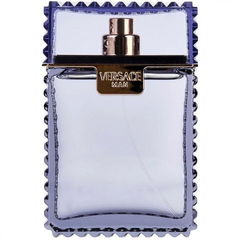
The Versace Man is one of those great exceptions. We have here an oriental tobacco scent that, in its composition, should clearly be assigned more to the niche category. The fragrance starts with a beautifully zesty and fresh bergamot and a good portion of black pepper. The pepper gives the bergamot, alongside its citrus aspects, a certain sharpness and profile. In the heart, the oriental touch clearly comes to the forefront. With cardamom, which also brings a fundamental spiciness, we have primarily saffron, which pushes the Versace Man in a distinctly oriental direction. Additionally, from the middle of the fragrance, I get associations with grape juice, which wonderfully connects with the spicy aspects of the scent. Interestingly, the Versace Oud Noir (often mentioned in the same breath as Tom Ford's Oud Wood) clearly draws on the fundamental DNA of the Versace Man. When you smell both fragrances side by side, you quickly notice the similarities. In both scents, saffron in combination with cardamom is the driving force. While the Oud Noir takes a slightly different path into a woodier and oud-inspired direction many years later (2013 to be precise), the Versace Man has a first-class tobacco scent in the drydown. The tobacco here is supported by a minimal smoky labdanum. Despite the amber in the base, the Versace Man never drifts into a too sweet or pleasing direction. While many current tobacco fragrances tend to become sweeter and evoke a Christmas market feel, the Versace Man remains absolutely stylish and rather reminds one of an older lounge, where you listen to good jazz in comfortable armchairs and let the day wind down peacefully.
I wouldn't have expected a fragrance like the Versace Man from a house like Versace. It simply smells too mature, almost too niche, and definitely more expensive than one would assume.
The longevity is about 7 hours on a solid level for a "designer fragrance".
Unfortunately, the availability is a different story. The only source for bottles is either groups on social networks where fragrances are traded or sold, or the detour through eBay, where the bottles now go for around €100. Given the quality of the fragrance and its rather extraordinary scent profile, I would still consider this price justified.
Therefore, I would answer the question posed at the beginning with a clear YES. With the Versace Man, we were indeed taken an excellent fragrance that is unlikely to be expected from Versace in this manner again.
The Versace Man is one of those candidates. First released in 2003 and then discontinued about 15 years later. Did the perfume world really suffer a significant loss here? Let's find out together.
Versace has become known to me primarily through mainstream and often relatively affordable fragrances. Dylan Blue comes to mind. Or a Versace Eros. However, this brand also has a knack for unusual scents, as shown at the latest with "The Dreamer".
The Versace Man is one of those great exceptions. We have here an oriental tobacco scent that, in its composition, should clearly be assigned more to the niche category. The fragrance starts with a beautifully zesty and fresh bergamot and a good portion of black pepper. The pepper gives the bergamot, alongside its citrus aspects, a certain sharpness and profile. In the heart, the oriental touch clearly comes to the forefront. With cardamom, which also brings a fundamental spiciness, we have primarily saffron, which pushes the Versace Man in a distinctly oriental direction. Additionally, from the middle of the fragrance, I get associations with grape juice, which wonderfully connects with the spicy aspects of the scent. Interestingly, the Versace Oud Noir (often mentioned in the same breath as Tom Ford's Oud Wood) clearly draws on the fundamental DNA of the Versace Man. When you smell both fragrances side by side, you quickly notice the similarities. In both scents, saffron in combination with cardamom is the driving force. While the Oud Noir takes a slightly different path into a woodier and oud-inspired direction many years later (2013 to be precise), the Versace Man has a first-class tobacco scent in the drydown. The tobacco here is supported by a minimal smoky labdanum. Despite the amber in the base, the Versace Man never drifts into a too sweet or pleasing direction. While many current tobacco fragrances tend to become sweeter and evoke a Christmas market feel, the Versace Man remains absolutely stylish and rather reminds one of an older lounge, where you listen to good jazz in comfortable armchairs and let the day wind down peacefully.
I wouldn't have expected a fragrance like the Versace Man from a house like Versace. It simply smells too mature, almost too niche, and definitely more expensive than one would assume.
The longevity is about 7 hours on a solid level for a "designer fragrance".
Unfortunately, the availability is a different story. The only source for bottles is either groups on social networks where fragrances are traded or sold, or the detour through eBay, where the bottles now go for around €100. Given the quality of the fragrance and its rather extraordinary scent profile, I would still consider this price justified.
Therefore, I would answer the question posed at the beginning with a clear YES. With the Versace Man, we were indeed taken an excellent fragrance that is unlikely to be expected from Versace in this manner again.
4 Comments
Translated · Show original
The Sandalwood Phobia
There is hardly a fragrance ingredient that I hate as deeply as sandalwood. This creamy, often lactonic smelling wood haunts me even in my nightmares. So it makes sense to buy a sandalwood scent from Louis Vuitton.
I associate sandalwood with my worst olfactory experience to date. Out of ignorance, I once tried Black Phantom by Kilian and was driving in the car while wearing it. When the sweat started to run down my forehead and a kind of nausea overcame me that I had never experienced before in an olfactory sense, I knew I was smelling the worst scent of all time. Burnt milk on the ceramic cooktop was then my association, and to this day I get goosebumps when I think about that experience. My experiences with sandalwood are therefore of a negative nature.
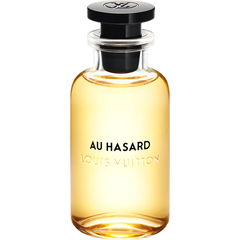
I received Au Hasard as a sample with my order of Orage and was relatively sure upon first sniff that Au Hasard wouldn't captivate me. The only problem is when such a scent doesn't leave you alone, thoughts circle around it, and you keep being drawn back to the fragrance. After a few days, the sample was empty as I wore the scent every day. The fragrance opens with a beautifully juicy and realistic mandarin that carries hardly any sweetness and tends to drift almost towards the sour. Petitgrain complements this with a bitter citrus note and rounds off this extremely fresh and invigorating opening. My great luck with Au Hasard is the way sandalwood is used. Fortunately, it is not a lactonic sandalwood that reminds me of neither milk nor fig. The sandalwood does have a certain creaminess, which is typical for sandalwood. However, it integrates wonderfully into the fragrance, complementing it at the necessary points and not taking center stage. To me, the sandalwood here appears slightly sweet, evoking an association with fresh, slightly sweet wood shavings in a workshop. The sour characteristics of the mandarin, ambrette, and petitgrain are noticeable to me throughout the entire fragrance journey, enveloping one in a cloak of citrus moments. I don’t know many fragrances that exert such a strong pull on me and draw me in.
The longevity is a solid 7-8 hours on my skin. If a fragrance can accompany me in this way throughout the workday, that is more than enough for me.
While Au Hasard has not cured my sandalwood phobia, it has shown me that this fragrance ingredient can also take on very beautiful aspects.
I associate sandalwood with my worst olfactory experience to date. Out of ignorance, I once tried Black Phantom by Kilian and was driving in the car while wearing it. When the sweat started to run down my forehead and a kind of nausea overcame me that I had never experienced before in an olfactory sense, I knew I was smelling the worst scent of all time. Burnt milk on the ceramic cooktop was then my association, and to this day I get goosebumps when I think about that experience. My experiences with sandalwood are therefore of a negative nature.
I received Au Hasard as a sample with my order of
Orage and was relatively sure upon first sniff that Au Hasard wouldn't captivate me. The only problem is when such a scent doesn't leave you alone, thoughts circle around it, and you keep being drawn back to the fragrance. After a few days, the sample was empty as I wore the scent every day. The fragrance opens with a beautifully juicy and realistic mandarin that carries hardly any sweetness and tends to drift almost towards the sour. Petitgrain complements this with a bitter citrus note and rounds off this extremely fresh and invigorating opening. My great luck with Au Hasard is the way sandalwood is used. Fortunately, it is not a lactonic sandalwood that reminds me of neither milk nor fig. The sandalwood does have a certain creaminess, which is typical for sandalwood. However, it integrates wonderfully into the fragrance, complementing it at the necessary points and not taking center stage. To me, the sandalwood here appears slightly sweet, evoking an association with fresh, slightly sweet wood shavings in a workshop. The sour characteristics of the mandarin, ambrette, and petitgrain are noticeable to me throughout the entire fragrance journey, enveloping one in a cloak of citrus moments. I don’t know many fragrances that exert such a strong pull on me and draw me in.The longevity is a solid 7-8 hours on my skin. If a fragrance can accompany me in this way throughout the workday, that is more than enough for me.
While Au Hasard has not cured my sandalwood phobia, it has shown me that this fragrance ingredient can also take on very beautiful aspects.
5 Comments
Translated · Show original
The Elderly, Wealthy Russian Woman
1000€. That takes your breath away. For that price, others buy a used car, go on vacation, or both. The question is how credible I am when I bought a fragrance for 600€ list price a few weeks ago? The explanation is simple. The Xerjoff Homme costs 600€ for 100ml at list price, but I only paid "only" 440€. That is a personal pain threshold that I only tolerate in extremely rare cases. For this price, a fragrance must impress me sustainably, not let go, and captivate me. A simple "smells good" is no longer enough.
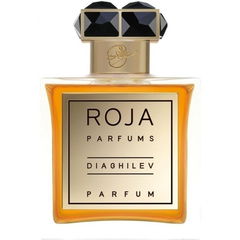
So when I say that the Diaghilev is not worth this price tag, that is, of course, highly subjective. However, I will try to substantiate my point of view a bit.
I have never fully understood Roja's pricing policy in particular. We are talking about luxury goods, no question about it. But it seems that Roja Dove knows no limits here. I kindly received a sample of the Diaghilev from a dear Parfumo (AlexW). Greetings and thanks once again to you.
The Diaghilev is a classic chypre as it should be. And here we already have the first problem. Roja Dove has drawn inspiration from "models" that have existed for decades and has now published his definition of a chypre with the Diaghilev. The only downside is that a fragrance like Mitsouko does not smell worse, costs less, and also has the advantage of being the original release. The Diaghilev starts off similarly citrusy to the Mitsouko. I perceive the lemon most strongly. Nice and zesty, hardly any sweetness, and wonderfully staged. The fragrance then becomes too fruity for my taste with a strong focus on peach. Already here, the Diaghilev drifts too much into the agreeable for me and becomes too feminine. This impression intensifies when the remaining floral elements emerge. In the base, the fragrance tries to change this progression a bit, to give the scent more edges and corners. But even when the fragrance pyramid reads after a spicy peak with all sorts of weight, the Diaghilev remains on a leash and is not released. There is no trace of animalic notes despite civet, cumin, and leather. Although the Diaghilev gains a bit of profile towards the end, it still cannot deny its rather conservative orientation.
The longevity, on the other hand, leaves nothing to be desired. 12-14 hours, the fragrance is extremely noticeable. What is personally almost too "loud" for me, I would have preferred in the fragrance profile instead.
Who will buy the Diaghilev? People for whom 1000€ for a fragrance is no problem and who therefore do not have to eat dry bread every evening for the next 6 months. Those who have the financial means and want to buy the Diaghilev should do so. However, one should not approach the fragrance with the expectation that for 1000€ one gets a scent that one has never smelled before. Because the Diaghilev is nothing that has not already existed in this form. Ultimately, it is nothing more than a status symbol to say "I wear a 1000€ fragrance."
Many try to justify such expensive fragrances with the quality of the ingredients. However, in my opinion, this equation does not add up. No one can tell me that they can smell the quality of individual ingredients in this dense fragrance structure. No one will say, "this bergamot oil smells significantly more valuable here in relation to the kilo price than in a fragrance that costs only a tenth of the Diaghilev." You simply cannot smell that with this multitude of notes. This quality could most likely be smelled if one focuses on a single fragrance ingredient and smells it in isolation. So that you have 2 different oils of bergamot in front of you and can directly compare and say that sample A smells more high-quality than sample B. So please stop always coming up with these hypocritical arguments of the sort "but you can smell the quality." They simply do not hold up beyond a certain point.
In the end, the Diaghilev could not convince me, regardless of the price. After the nice opening, the fragrance drifts too strongly into a feminine direction for me, which does not correspond to my fragrance habits in any way. If I am being very harsh, I would say that the Diaghilev smells like an elderly, wealthy Russian woman. And I personally do not want to be perceived that way.
So when I say that the Diaghilev is not worth this price tag, that is, of course, highly subjective. However, I will try to substantiate my point of view a bit.
I have never fully understood Roja's pricing policy in particular. We are talking about luxury goods, no question about it. But it seems that Roja Dove knows no limits here. I kindly received a sample of the Diaghilev from a dear Parfumo (AlexW). Greetings and thanks once again to you.
The Diaghilev is a classic chypre as it should be. And here we already have the first problem. Roja Dove has drawn inspiration from "models" that have existed for decades and has now published his definition of a chypre with the Diaghilev. The only downside is that a fragrance like Mitsouko does not smell worse, costs less, and also has the advantage of being the original release. The Diaghilev starts off similarly citrusy to the Mitsouko. I perceive the lemon most strongly. Nice and zesty, hardly any sweetness, and wonderfully staged. The fragrance then becomes too fruity for my taste with a strong focus on peach. Already here, the Diaghilev drifts too much into the agreeable for me and becomes too feminine. This impression intensifies when the remaining floral elements emerge. In the base, the fragrance tries to change this progression a bit, to give the scent more edges and corners. But even when the fragrance pyramid reads after a spicy peak with all sorts of weight, the Diaghilev remains on a leash and is not released. There is no trace of animalic notes despite civet, cumin, and leather. Although the Diaghilev gains a bit of profile towards the end, it still cannot deny its rather conservative orientation.
The longevity, on the other hand, leaves nothing to be desired. 12-14 hours, the fragrance is extremely noticeable. What is personally almost too "loud" for me, I would have preferred in the fragrance profile instead.
Who will buy the Diaghilev? People for whom 1000€ for a fragrance is no problem and who therefore do not have to eat dry bread every evening for the next 6 months. Those who have the financial means and want to buy the Diaghilev should do so. However, one should not approach the fragrance with the expectation that for 1000€ one gets a scent that one has never smelled before. Because the Diaghilev is nothing that has not already existed in this form. Ultimately, it is nothing more than a status symbol to say "I wear a 1000€ fragrance."
Many try to justify such expensive fragrances with the quality of the ingredients. However, in my opinion, this equation does not add up. No one can tell me that they can smell the quality of individual ingredients in this dense fragrance structure. No one will say, "this bergamot oil smells significantly more valuable here in relation to the kilo price than in a fragrance that costs only a tenth of the Diaghilev." You simply cannot smell that with this multitude of notes. This quality could most likely be smelled if one focuses on a single fragrance ingredient and smells it in isolation. So that you have 2 different oils of bergamot in front of you and can directly compare and say that sample A smells more high-quality than sample B. So please stop always coming up with these hypocritical arguments of the sort "but you can smell the quality." They simply do not hold up beyond a certain point.
In the end, the Diaghilev could not convince me, regardless of the price. After the nice opening, the fragrance drifts too strongly into a feminine direction for me, which does not correspond to my fragrance habits in any way. If I am being very harsh, I would say that the Diaghilev smells like an elderly, wealthy Russian woman. And I personally do not want to be perceived that way.
10 Comments