
Vetiverlover
Reviews
Detailed
Translated · Show original
Completely Underestimated
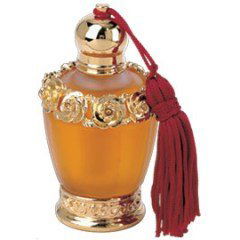
A few years ago, I bought the oil in the small 3 ml bottle, and later the 30 ml spray (with a sensational sprayer; it’s fantastic!). The scent of Saat Safa is wonderful. Right from the start, there is quite a bit of rose - the fragrance notes officially listed here on Parfumo are incorrect; they are accurately stated on Fragrantica - underpinned by spicy wood and moss. The scent changes little over the course of hours: the rose fades slightly, and the wood emerges as a warm factor with a minimal sweetness. Amber, patchouli, and earthy moss are included. The oud present is, of course, synthetic, but it doesn’t have any barnyard or baby diaper undertones; instead, it gives the composition depth (and longevity?). The sillage is okay, but not very strong. On my skin, where many fragrances generally don’t last long due to dryness, two sprays are still strongly present after more than 5 hours, smelling warm-floral and spicy, and after 8 hours, it’s a close-to-skin scent. After 15 hours, a warm scent was still detectable right on the skin. I compared the fragrance alongside other Al-Rehab scents and perfumes from oriental manufacturers like Rasasi, Al Haramain, or Swiss Arabian, and I can say that it holds up absolutely against significantly more expensive perfumes, but of course, that’s a matter of taste. I recommend trying the 30 ml spray if you can appreciate floral wood. It costs less than 10 €. The rose-oud wave seems to have passed already, and I’m definitely lagging behind with my praise. Perhaps there will be a revival. That would be nice, so that production isn’t discontinued due to lack of demand.
Translated · Show original
A Delayed Discovery
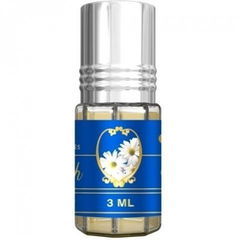
Four years ago, I discovered oriental fragrance oils and subsequently purchased many small 3 ml bottles of Al Rehab from various vendors. Tried and discarded. Most of them contain Oud, of course not real oil, but synthetic, probably even in different variations. I was a newbie when it came to Oud; it fascinated me but didn't really appeal to me at the same time. Now, four years later, I have retrieved them from the cool cellar where I stored the various perfumes and tried them again: I perceive the scent of Aroosah as something completely different than before! Has the oil "matured"? Probably not the oil, but myself or my nose. I suspect that I perceive things differently today and also take the time to immerse myself in the scent, to explore its different facets and to trace the changes over time. And then I learned another difference. Many oils smell sharp and off-putting on the skin when you press your nose directly into them, especially if you do it too quickly, whereas the air around me, the scent trail I leave behind, smells delicious. Most Al Rehab oils and sprays need some time to develop, quite different from perfumes from, for example, Lattafa, which are IMMEDIATELY accessible and pleasant. Perhaps they are designed for immediate effect, and many do not want to disturb with edges and corners.
Aroosah starts very strong, with a certain sharpness, something floral-herb-bitter. This is probably mainly the chamomile or chamomile tea. But there are also initially sharp or "pointed" smelling white flowers. The floral aspect remains throughout the entire scent journey, the herb-bitter note also lingers for a long time, and I perceive this as a unique characteristic of this fragrance. Unmistakable. And after a few hours, a woody-warm tone slowly overlays the mixture, becoming slightly sweeter, but not very strong. I find that the bitter notes and the very slight sweetness at the end make Aroosah very wearable for men without any risk. For those who do not want to smell only of dark wood and leather or - the other end of the male scale - fruity-citrusy freshness, but also enjoy floral scents, Aroosah is recommended. I do not want to hide that Aroosah does not smell modern. The mainstream fragrances that today permeate even well-frequented pedestrian zones and correspond to the "trend" are completely different. Aroosah has a different concept and probably comes from another time: I think of the 80s and 90s. Parfumo lists 443 perfumes from Al Rehab. No company history or date of origin is mentioned, but it takes decades to develop such a variety of scents. Most of them are probably extinct today. I suspect that Aroosah is also more of a classic and the fact that it has not been discontinued but is still produced due to the continuous demand from its loyal customers says something about the quality and appreciation of this perfume.
So come on, dear Parfumos, pull out 3 to 4 Euros from your wallets and grab a small bottle and above all: Report back on your discovery journey!
Aroosah starts very strong, with a certain sharpness, something floral-herb-bitter. This is probably mainly the chamomile or chamomile tea. But there are also initially sharp or "pointed" smelling white flowers. The floral aspect remains throughout the entire scent journey, the herb-bitter note also lingers for a long time, and I perceive this as a unique characteristic of this fragrance. Unmistakable. And after a few hours, a woody-warm tone slowly overlays the mixture, becoming slightly sweeter, but not very strong. I find that the bitter notes and the very slight sweetness at the end make Aroosah very wearable for men without any risk. For those who do not want to smell only of dark wood and leather or - the other end of the male scale - fruity-citrusy freshness, but also enjoy floral scents, Aroosah is recommended. I do not want to hide that Aroosah does not smell modern. The mainstream fragrances that today permeate even well-frequented pedestrian zones and correspond to the "trend" are completely different. Aroosah has a different concept and probably comes from another time: I think of the 80s and 90s. Parfumo lists 443 perfumes from Al Rehab. No company history or date of origin is mentioned, but it takes decades to develop such a variety of scents. Most of them are probably extinct today. I suspect that Aroosah is also more of a classic and the fact that it has not been discontinued but is still produced due to the continuous demand from its loyal customers says something about the quality and appreciation of this perfume.
So come on, dear Parfumos, pull out 3 to 4 Euros from your wallets and grab a small bottle and above all: Report back on your discovery journey!
2 Comments
Translated · Show original
Serious and Subtle Scent
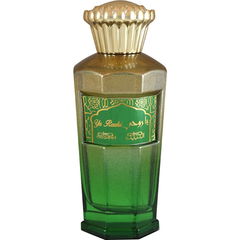
At first floral and already somewhat heavy. Not sweet at all. Dry flowers, nothing radiant. Floral scents linger for a while and the impression of the woody-spicy dark gradually prevails. No wonder, as the top notes already contain Cypriol, Labdanum, Rosewood, and Cardamom, which are not fresh. The scent is subtle (not in the sense of weak), but unobtrusive, not loud at all. It feels very well-composed and rather masculine. Compared to, for example, Oud 24 hours, this scent is more serious, not so friendly, soft, sweetly pleasing, and immediately endearing. I had to approach it slowly to appreciate it. It is well made, and I have often read that with Nabeel fragrances, you never really "make a mistake." The bottle is incredibly heavy.
Translated · Show original
Pleasant Resin
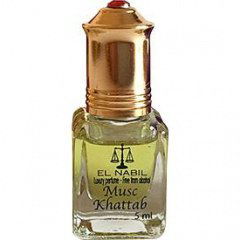
It's a pity that this rather woody-resinous scent is no longer produced. It lasts a very long time and is more masculine than the also discontinued fragrance Musc Mumaiz from the El-Nabil range, which is also long-lasting but a bit sweeter. Nevertheless, it is very wearable for men. Fortunately, the last packages have an expiration date: Made in 2012, good until 2016. However, they are still fine now. Perhaps best stored in the refrigerator.