Translated · Show originalShow translation
Revision 001
A couple of my perfume friends and fragrance buddies know that my passion primarily lies with scents that feature a lot of oud. They are probably just as surprised as I am that in the past few months, some changes have occurred regarding my fragrance passion, and my oud-heavy collection has been completely revised.
From (real) agarwood, civet, castoreum, and birch tar to vanilla, rum, and benzoin.
From gnarly, dark, and animalic to gourmand, sweet, and spicy.
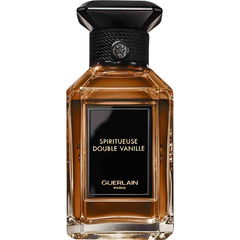
That’s exactly why Spiritueuse Double Vanille had to join my collection.
This fragrance has been on the market for some time, and with over 1200 reviews, there’s surely nothing new to write for lovers of this scent DNA. Therefore, my review is more aimed at those who may also be experiencing changes in their fragrance cosmos and are not yet familiar with this type of scent.
SDV is not a complex fragrance that one can analyze for hours. (Definitely less exhausting than spending the whole evening with my arm under my nose cataloging the various ouds of an Ensa banger). Linear and focused on the essentials, SDV can best be described as: rum and vanilla. What truly impresses me here, however, is the quality, weight, and elegance of the fragrance. Everything flows seamlessly into one another. Nothing pinches or tugs. Nothing that doesn’t fit, no 20-minute top note disaster, as I had to endure with so many of my former fragrances while rolling my eyes.
Since I live in a subtropical climate zone, I can confidently say that the hot temperatures of up to 45° give this fragrance a more intense radiance and depth than would be the case in a temperate zone.
I primarily perceive the boozy, smoky, and of course the unmatched, heavy vanilla. And that’s exactly what I need with this DNA to enjoy SDV versatilely at the office, during dinner, or simply in my relaxation routine (shower-pajamas-sofa).
The longevity of the base notes is phenomenal.
To not jeopardize my friendships with my OUDies both in and outside of Parfumo, it should be noted that agarwood, castoreum, civet, smoke, and animalic notes are still a part of me, and I continue to appreciate and enjoy these ingredients and fragrance directions very much.
Translated · Show originalShow translation
Masterpiece
It is astonishing and impressive to me how it manages to harmonize this number of raw materials without the Palladium feeling overloaded. The fragrance has been in my possession for 8 months, and I actually know all the ingredients used in their natural form. Nevertheless, I have not yet succeeded in dissecting this "grandeur." @MGO: I'm working on it!
Top:
Palladium starts citrus-green and slightly bitter (Bergamot, Petitgrain, Lemon, Galbanum). The Assam Oud used is already noticeable in the opening, and together with Osmanthus (I love it), it provides a pleasant sweet-animalic pleasure. Myrrh and incense, used in the top note, were new to me. Surprisingly, it fits well, as both raw materials are not particularly dominant but very long-lasting. Thus, a light hint of an incense accord runs through the entire fragrance.
Heart:
I recognize Jasmine Sambac (that's not hard)! Labdanum and the use of resins create a balsamic and warm interplay. Pepper and nutmeg are used subtly. Amber and, of course, my favorite Assam Oud are perceptible in the background.
Base:
Champaca, geranium, rose, and ylang-ylang I usually only know from top and heart notes. In the case of Palladium, these ingredients were used very subtly in the base, and I feel that this softens the birch tar, civet, and hyraceum a bit. Thus, everything feels a bit more elegant and not so sharp. But that is just my personal feeling. Sandalwood is noticeable and now complements the previously mentioned myrrh-incense combo wonderfully. Additionally, the labdanum already used in the heart note now, together with benzoin and vanilla in the base, provides a wonderful amber finish.
Thank you for this masterpiece!
Translated · Show originalShow translation
Gasping for Breath
During my little short vacation in London last week, a visit to Harrods' "Salon de Parfums" was, of course, a must. On the 6th floor, strangelove nyc, Henry Jacques, and of course Roja Dove are all present, and as luck would have it, I actually had the opportunity to meet Roja in person.
I felt like a little boy and had to take a moment to catch my breath and search for the right words so I wouldn’t come across as a total fool. It’s probably the respect I have for him that led to my initial gasping for breath ;)
Anyway, we started chatting, and he actually took the time to guide me through his creations. Yes, of course he does that, and it’s certainly part of his sales strategy. However, at that moment, that was completely secondary to me. Rather, I enjoyed being treated as a customer in such a way that no wishes or questions were left unanswered. I felt absolutely wonderful!
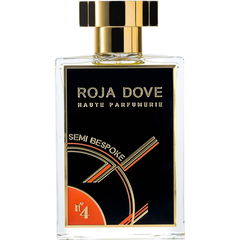
Semi-Bespoke 4 is a very beautiful fragrance, very finely crafted and natural. I have the feeling that all the ingredients come across much more clearly and intensely than in the "standard" Rojas. However, this might also be due to Mr. Dove using a variety of “fancy words” during his “sales pitch.” Doesn’t matter, the opening, with its zesty citrus fruits, is something special. The heart notes suggest a strongly floral DNA, which is not the case, as cinnamon, patchouli, and sandalwood from the base join in quite early on.
The drydown is a dream of creamy-woody notes, a slightly powdery iris, and a varied play between earthy-bitter patchouli and sweet vanilla.
The fragrance costs around €875, which is, of course, well beyond my budget. I am also sure that there are many very good alternatives with a similar DNA that cost significantly less. Nevertheless, it was an experience and a pleasure to enjoy a feeling of luxury in a truly extraordinary store, including Roja Dove. Wishlist!
Translated · Show originalShow translation
EU 1955 - today
Some time ago, I read a review here on Parfumo where an oriental fragrance was evaluated. The author had difficulty warming up to the scent, as he believed that the DNA of oriental fragrances did not fit the culture of the Western Hemisphere. The poor guy had to endure quite a bit of criticism for this statement.
Despite my great passion for oriental (especially OUD) fragrances, I see it similarly, and there are a variety of oriental creations that simply do not fit, for me personally, in regions with deciduous and coniferous forests and temperatures, seasonally, below freezing. I am aware that I will not receive applause from die-hard oriental fragrance lovers for this statement.
I am often met with a scowl and asked:
“What fragrances and ingredients are, please, in olfactory harmony with, for example, European culture????”
Field widow flowers? Wild garlic? Bee orchid? Wood anemone or poppy?
No, of course not!
However, wonderful neroli is obtained from Spanish orange blossoms. Verbena occurs in temperate climates, and juicy, zesty lemons have been cultivated in Europe since the 13th century. This allows for the realization of this wonderful EU top note.
Cardamom originally comes from South India and falls outside the EU framework. Coriander, on the other hand, is found in Bulgaria, Croatia, and Slovenia. Basil and ginger unfortunately do not originate right outside my East Westphalian front door, yet this green-spicy 25% EU heart note impresses.
European oak moss and cedarwood dominate the EU base, and it no longer matters that vetiver has its origins in Asia.
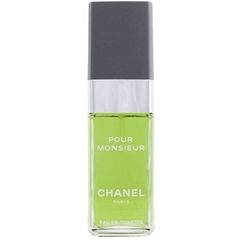
Thus, I suspect that in 1955, Henri Robert's goal, who was born in Grasse by the way, was to create a chypre that fits in temperate climates and can be worn in both warm and cold temperatures without losing its radiance and performance, and which has belonged to the “must-have” fragrances of a man both then and now.
The answer to the question should thus be somewhat clarified.
Chanel - Pour Monsieur!
Translated · Show originalShow translation
Homage to Ancient Japanese Traditions
Neriko (pastille) refers to incense materials and was used in ancient Japan by aristocrats and government officials to perfume their garments. Neriko was traditionally prepared on a base of plum flesh or honey and processed into small pellets with a mixture of fragrant woods (OUD), spices, and herbs. The Neriko pellets were then buried underground for several years to mature. Neriko is never ignited or burned directly on charcoal. Rather, it is gently heated and is among the oldest uses of OUD in Japanese tradition. *
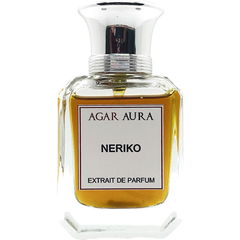
Neriko - Extrait de Parfum is dedicated to this Japanese tradition.
The fragrance impresses with raw and wild Ouds that blend with buttery soft sandalwood. The slightly gourmand heart notes of plums and apricots give Neriko a wonderful creamy-sweet DNA. In the base, spices as well as warm and bright smoke join in, providing a very authentic and natural OUD experience.
*Source: https://agaraura.com/neriko.html