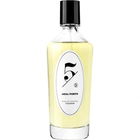
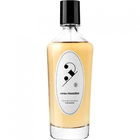
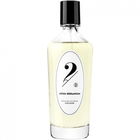
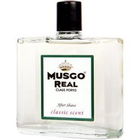
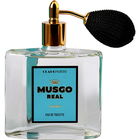
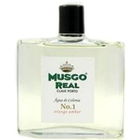
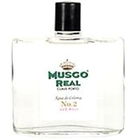
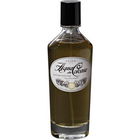
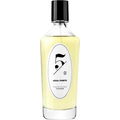
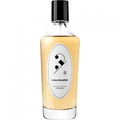
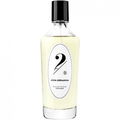
The products of the companies Claus Porto, founded in 1887, and the 'parent company' ACH. BRITO & Co., which followed in 1918, are frequently encountered in Portugal. The ubiquitous Patti soap (1929) can be found in almost every small mercería, Lavanda (1929), or the classic aftershave Musgo Real (1936) likely appear in grandfatherly bathroom cabinets as often as 4711 or Tosca did in Germany a few decades ago. When a new wave of tourism and gentrification finally took hold of the structures of Lisbon and Porto about ten years ago, shops opened that stylized nostalgic retro scenarios of 'the past', one could get the impression that this image consists mainly of Bordallo Pinheiro's majolica ceramics, vases from Caldas da Rainha, canned sardines, and picturesque packaging of ACH. BRITO soaps. As is often the case with such distortions of reality, there is a grain of truth here: ACH. BRITO invested in a lithographic workshop as early as 1953, took care of sophisticated graphic designs for packaging, and produced these for port wine manufacturers and the national tobacco company.
With this historical setup, ACH. BRITO and Claus Porto have been repositioned repeatedly since the mid-90s, and in 2018 - for the 100th anniversary, there was another rebranding and a series of new fragrances 'Agua de Colonia' under Lyn Harris and French design. History repeats itself, one might think; the influences of British businessmen and French court protocols in Portugal are numerous. It is no coincidence that one of the large, long-established pastelarias in Lisbon is named Versailles. It is understandable that a down-to-earth brand like Claus Porto does not engage the 'local' colorful dog Matos, but it is less clear why the visual aspect does not come from one of the good design offices in Porto.
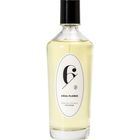
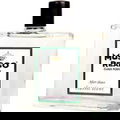
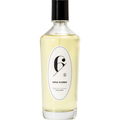
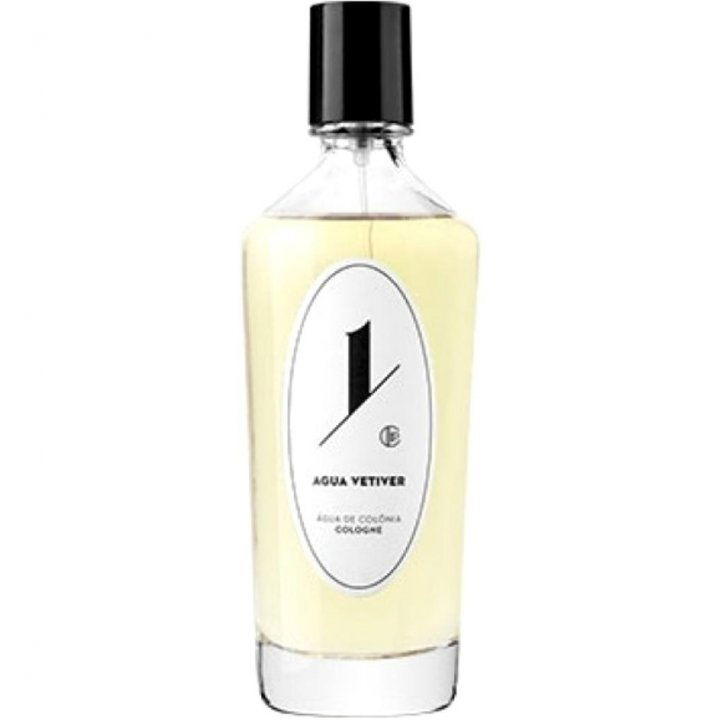
Agua Vetiver was the first of the five perfumes designed by Lyn Harris so far. Agua de Colonia might be read more as a reference to an overall light character, rather than as a Cologne identity. The scent, according to the instructions, is inspired by spontaneous summer weather changes in the Alentejo region, one of the six historical 'provinces' of Portugal, this vast part of the country beyond (south of) the Tejo, a diverse area from the Atlantic coast to high plateaus where it can get quite cold in winter and relentlessly hot in summer. And all of this in a fragrance titled Vetiver. I beg your pardon, Lyn, how many bottles of delicious Alentejo wine were tasted in this business meeting? Vetiver is often used when it comes to wanderlust, mosquito repellent, and colonial goods; Portugal is a country where much was shipped and where a lot has also remained, but vetiver and Alentejo? Aside from these backstories and suggestions, Agua Vetiver quickly reveals itself as what Lyn Harris, perhaps stemming from her work at Robertet, does well - a delicate fragrance, focusing on a handful of notes with a dose of effective modulation and uniqueness. Agua Vetiver focuses on a sweet licorice - anise - lavender note that envelops the vetiver. The combination of anise + vetiver was first introduced by Maurice Roucel with Kenzo Air (2003), an early candidate for soft vetivers, which, due to its compact formula (i.e., fewer ingredients than marketed notes), is Roucel's favorite among his own creations. Jean-Michel Duriez relied on a similar modulator in Yohji Homme (1999), albeit in a vetiver-free context. Other lightweight vetivers like Series 4: Cologne - Vettiveru/Vettiveru2 (2002/2018) or Vétiver Tonka (2004) are not too far off, but the vetiver in Agua Vetiver presents itself as less almost-gourmand than Vétiver Tonka, and less cardamom-nutty than Vettiveru. The start, similar to that of Theorema Uomo (2001), is grassy yet more realistic, freshly mown and predominantly driven by galbanum - at this moment, vetiver is not yet discernible. When it does appear shortly thereafter, enveloped by some anise & licorice-like notes, almost creamy, with a hint of lavender, minimal pine needles, and more pronounced eucalyptus support, one has already arrived in the central area of Agua Vetiver. The further developments towards a base appear less spectacularly ambried, which fits well with the overall soft appearance. The vetiver note is bright, dry, slightly sweet, and perhaps more vetiveryl acetate than an oil, definitely ethereal, with no trace of deep vetiver roots or moisture. Not a complex vetiver, but that does not bother in combination with the other components; the lovely Fat Electrician (2009) also comes to mind, albeit distantly.
Does the decision in favor of an eucalyptus note, the tree species that was endlessly cultivated thanks to Portugal's paper industry lobby and is always at the forefront during catastrophic wildfires, correspond to an Anglo-Saxon pragmatic realism? In the Alentejo, there have been increasing initiatives in recent years to minimize the growth of this plant and to focus more on endemic species. The combination of eucalyptus and licorice vaguely resembles a related note that played an important role in the first version of Body Kouros (2000), appearing here more subtly, and, thanks to vetiver, also more stringent. Despite some inconsistencies that are part of such narratives, Agua Vetiver effortlessly joins the soft vetivers that emerged between 2002 - 2010 and offers enough differentiation to speak of its own, classic yet contemporary interpretation of this ingredient. Well done!



 Top Notes
  Galbanum
 Lavender
 Bergamot
 Heart Notes
  Haitian vetiver
 Eucalyptus
 Pine needle
 Base Notes
  Cedar
Cedar Irish moss
 Amber
Amber



 Jeob
Jeob Konst121
 SirLancelot
 Verbena
 Stulle
 Yatagan
 SchatzSucher
 Mokka
Mokka Flakon11e
 Mourant