

 Top Notes
  Hyacinth
 Aldehydes
 Fruity notes
 Bergamot
 Lemon
Lemon Green notes
 Xerographic Earlobe
 Heart Notes
  Ylang-ylang
 Lily of the valley
 Jasmine
 Rose
Rose Iris
Iris Violet
 Base Notes
  Vetiver
 Civet
Civet Musk
Musk Sandalwood
 Amber
Amber Benzoin
 Tonka bean
 Vanilla

Ergoproxy
1130 Reviews
Translated · Show original

Ergoproxy
Top Review
2
Timeless Japanese Aesthetics
I find it somewhat remarkable that the major Japanese cosmetics brands have not been able to achieve any lasting success in the perfume sector in Europe with products under their own name.
I suspect it could be because when developing and testing new perfumes, they orient themselves to the habits and preferences in Japan or Asia.
Strong and heavy scents are, if I am still correctly informed, still frowned upon, which could also be due to the population density. One takes into account the feelings of others.
I must admit that the fragrances that Shiseido currently has on the market in Germany are all too generic for me. Not bad, but also no highlights. They used to be much bolder, as I have noted several times.
Well, compared to the fragrances popular in the Western world, the creations were all more restrained and somewhat idiosyncratic, but the scents back then were not boring.
Like Murasaki, I also owe my discovery of Saso to the lovely Florblanca, and she hit the mark with this wonderful gift.
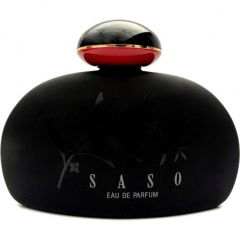
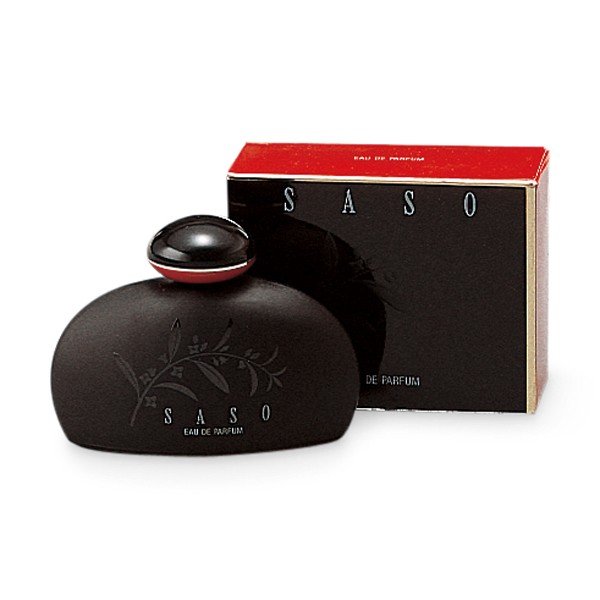
Saso is a beautiful, classically green chypre fragrance with, for Japanese standards, good longevity, subtle projection, and what I consider to be a Japanese characteristic.
Saso has a classic three-part fragrance structure, and each phase has its own charm.
The top note is aldehydic, pleasantly soapy, and greenish bitter. I wouldn't describe the scent as particularly fruity here, even though these notes are listed in the pyramid. Even though hyacinth is mentioned, the top note reminds me more of honeysuckle.
The soapy quality does diminish somewhat over time, but it doesn't completely disappear in the heart note. The floral accord that now emerges is rather bitter and mature. None of the flowers stands out dominantly. An interesting slightly bitter undertone is something I can only perceive when sniffing directly at the scented spot.
With the base, Saso then completely retreats to the skin. For me, sandalwood and vetiver are the defining notes here, and I would have also guessed moss. The sweet and balsamic notes serve more as a support for the woody green accord and do not carry much weight olfactorily.
The longevity is around 8 hours, but it lasts longer on clothing.
As already mentioned, Saso is not a fragrance powerhouse with an expansive sillage, and that would not suit this composition either. The scent is timeless, stylish, mature, and fits excellently into the (perhaps somewhat idealized) image I have of Japanese aesthetics.
After Murasaki, Saso will be my favorite Japanese No. 2.
Now I would like to refresh my scent memory of the excellent Inouï, but that will probably remain a wish.
I suspect it could be because when developing and testing new perfumes, they orient themselves to the habits and preferences in Japan or Asia.
Strong and heavy scents are, if I am still correctly informed, still frowned upon, which could also be due to the population density. One takes into account the feelings of others.
I must admit that the fragrances that Shiseido currently has on the market in Germany are all too generic for me. Not bad, but also no highlights. They used to be much bolder, as I have noted several times.
Well, compared to the fragrances popular in the Western world, the creations were all more restrained and somewhat idiosyncratic, but the scents back then were not boring.
Like Murasaki, I also owe my discovery of Saso to the lovely Florblanca, and she hit the mark with this wonderful gift.
Saso is a beautiful, classically green chypre fragrance with, for Japanese standards, good longevity, subtle projection, and what I consider to be a Japanese characteristic.
Saso has a classic three-part fragrance structure, and each phase has its own charm.
The top note is aldehydic, pleasantly soapy, and greenish bitter. I wouldn't describe the scent as particularly fruity here, even though these notes are listed in the pyramid. Even though hyacinth is mentioned, the top note reminds me more of honeysuckle.
The soapy quality does diminish somewhat over time, but it doesn't completely disappear in the heart note. The floral accord that now emerges is rather bitter and mature. None of the flowers stands out dominantly. An interesting slightly bitter undertone is something I can only perceive when sniffing directly at the scented spot.
With the base, Saso then completely retreats to the skin. For me, sandalwood and vetiver are the defining notes here, and I would have also guessed moss. The sweet and balsamic notes serve more as a support for the woody green accord and do not carry much weight olfactorily.
The longevity is around 8 hours, but it lasts longer on clothing.
As already mentioned, Saso is not a fragrance powerhouse with an expansive sillage, and that would not suit this composition either. The scent is timeless, stylish, mature, and fits excellently into the (perhaps somewhat idealized) image I have of Japanese aesthetics.
After Murasaki, Saso will be my favorite Japanese No. 2.
Now I would like to refresh my scent memory of the excellent Inouï, but that will probably remain a wish.
12 Comments