


12/21/2025
Mairuwa
79 Reviews
Translated · Show original
Mairuwa
Helpful Review
8
The Mysterious Smile of the Big Cat
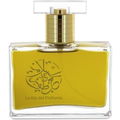
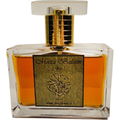
The title of my review is, of course, somewhat imprecise. It should actually be "Civet Cat," or better yet, "Civet." I chose "Big Cat" solely for the sound of the word. And the mysterious smile is, of course, attributed to the Gioconda, which was at least partially the inspiration for the name. The other half of the name comes from the client of this bespoke perfume - a certain Mona Long from Aspen, Colorado. On the pages of La Via del Profumo, Laura Donna describes how she became the midwife of the fragrance: Together with Long, she initially analyzed her scent preferences, and after identifying mandarin, tuberose, and especially civet as her favorite notes, she referred her to Abdessalaam Attar, the founder and perfumer of La Via del Profumo, who ultimately created her signature scent and later incorporated it into the in-house collection. Abdessalaam Attar is a "nom de nez," behind which hides the olfactory autodidact Dominique Dubrana, who hails from France and lives in Italy. Abdessalaam - servant of peace. The background of the artist's name also includes that Dubrana traveled through Africa and the Arab world for 10 years and, during this cultural experience, eventually converted to Sufi Islam.
It is interesting what Dubrana says about creating scents as commissioned work: "Making perfumes is easy; you need only two things, good ingredients and a clear idea. This is why making perfumes for real people is so important. In custom blending, the other person is the clear idea you need." Of course, there is a lot of understatement in such a statement, but in the case of "Mona Lisa," it seems that Dubrana found the creation to be quite effortless. The very first draft he sent to Mona Long apparently not only met her expectations immediately but has also developed over now more than 15 years into a consistently produced staple in the collection of La Via del Profumo.
Civet, tuberose, and mandarin. Only these three main notes are specified; otherwise, the manufacturer prefers to leave the pondering over the riddle of Mona Lisa to the customer. And that is not so easy, as the scent is densely woven and, with its velvety aura, feels more like a single entity than one might think, where a succession of mandarin as the opening, tuberose in the heart, and civet at the base could be discerned. I find it remarkable that especially civet and tuberose, both of which can be very dominant, seem to tame each other here. I personally perceive a distinct animalic quality, but I cannot identify a decidedly urinous character (unlike my critically glancing son) - perhaps I simply have a more pronounced tolerance for it. Conversely, the floral element is clearly felt, without the otherwise often almost narcotically heavy character of tuberose dominating everything here. On the contrary, the slightly dramatic and thus somewhat diva-like aloof flower appears here in the light of civet as almost intimate and familiar. This intimate quality of the civet animalic seems to have been particularly important to Mona Long in the fragrance. According to an anecdote shared by Laura Donna, Long felt very lonely at the airport after moving out of her parents' house as a young woman, but found comfort in the civet scent of her luggage, as she unexpectedly recognized her familiar personal scent there.
In this context, another quote from Dominique Dubrana should be mentioned, which seems enlightening regarding his use of plant-based in conjunction with animalic fragrance materials: "A fragrance made entirely of ingredients from plants meets only a part of our soul’s needs. We need the presence of plants so much that we bring them into our houses when they are absent in our streets. We do exactly the same with animals, we take pets. We need the company of both of them for our psychological and emotional equilibrium. Together they ARE nature."
The main characters in the fragrance "Mona Lisa" form a unity that is only subtly rounded off by the supporting characters (ambrette seeds? musk?), creating an almost dreamlike balance. And it is perhaps this balance, the state of complementing and taming each other, in which strong characters remain recognizable on one hand but simultaneously hold back and submit to the whole, that constitutes the secret of this "Mona Lisa." The special effect of the smile on the face in Leonardo's master portrait is attributed to the sfumato technique, where soft shadows and transitions create blurriness depending on the angle of view, masking and blending the smile, but then also allowing it to emerge clearly again, creating a seductive, passionate expression. Similarly, in the fragrance "Mona Lisa," the contours blur when one focuses on individual notes and tries to isolate them. As soon as one engages with the fragrance as a whole again, they unexpectedly reappear, but not isolated, rather as part of a unity that can enchant and captivate just as much as the famous namesake.
My thanks for the sample go to Sapho.
It is interesting what Dubrana says about creating scents as commissioned work: "Making perfumes is easy; you need only two things, good ingredients and a clear idea. This is why making perfumes for real people is so important. In custom blending, the other person is the clear idea you need." Of course, there is a lot of understatement in such a statement, but in the case of "Mona Lisa," it seems that Dubrana found the creation to be quite effortless. The very first draft he sent to Mona Long apparently not only met her expectations immediately but has also developed over now more than 15 years into a consistently produced staple in the collection of La Via del Profumo.
Civet, tuberose, and mandarin. Only these three main notes are specified; otherwise, the manufacturer prefers to leave the pondering over the riddle of Mona Lisa to the customer. And that is not so easy, as the scent is densely woven and, with its velvety aura, feels more like a single entity than one might think, where a succession of mandarin as the opening, tuberose in the heart, and civet at the base could be discerned. I find it remarkable that especially civet and tuberose, both of which can be very dominant, seem to tame each other here. I personally perceive a distinct animalic quality, but I cannot identify a decidedly urinous character (unlike my critically glancing son) - perhaps I simply have a more pronounced tolerance for it. Conversely, the floral element is clearly felt, without the otherwise often almost narcotically heavy character of tuberose dominating everything here. On the contrary, the slightly dramatic and thus somewhat diva-like aloof flower appears here in the light of civet as almost intimate and familiar. This intimate quality of the civet animalic seems to have been particularly important to Mona Long in the fragrance. According to an anecdote shared by Laura Donna, Long felt very lonely at the airport after moving out of her parents' house as a young woman, but found comfort in the civet scent of her luggage, as she unexpectedly recognized her familiar personal scent there.
In this context, another quote from Dominique Dubrana should be mentioned, which seems enlightening regarding his use of plant-based in conjunction with animalic fragrance materials: "A fragrance made entirely of ingredients from plants meets only a part of our soul’s needs. We need the presence of plants so much that we bring them into our houses when they are absent in our streets. We do exactly the same with animals, we take pets. We need the company of both of them for our psychological and emotional equilibrium. Together they ARE nature."
The main characters in the fragrance "Mona Lisa" form a unity that is only subtly rounded off by the supporting characters (ambrette seeds? musk?), creating an almost dreamlike balance. And it is perhaps this balance, the state of complementing and taming each other, in which strong characters remain recognizable on one hand but simultaneously hold back and submit to the whole, that constitutes the secret of this "Mona Lisa." The special effect of the smile on the face in Leonardo's master portrait is attributed to the sfumato technique, where soft shadows and transitions create blurriness depending on the angle of view, masking and blending the smile, but then also allowing it to emerge clearly again, creating a seductive, passionate expression. Similarly, in the fragrance "Mona Lisa," the contours blur when one focuses on individual notes and tries to isolate them. As soon as one engages with the fragrance as a whole again, they unexpectedly reappear, but not isolated, rather as part of a unity that can enchant and captivate just as much as the famous namesake.
My thanks for the sample go to Sapho.
8 Comments
 Sapho
Sapho