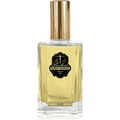
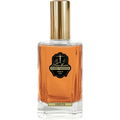
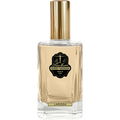
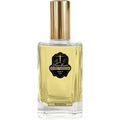
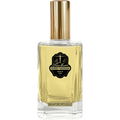
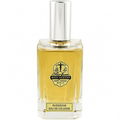
Surprise: I would have thought that many more fragrances would be named after dances.
After dances, especially couple dances, the most sensual of all movements tolerated in public by general social standards, with the whole spectrum of courtship, controlled closeness, controlled distance. It was not uncommon for me to see obese people who knew how to float in a flowing and elegant manner and suddenly appeared entrancingly sensual and rousingly happy.
So I would have expected a lot more perfumes that picked up the names of dances and made use of them. Well, the 'waltz' can be called three times, 'waltz' and 'valse' a few more times, also the highly erotic 'tango', which translates the dialogue of dominance and devotion into strictly structured and formal movements, occurs a few times, as does the 'samba'. The lascivious 'Rumba', on the other hand, only appears six times, perhaps because the dance is more sensual than its name suggests, but still.
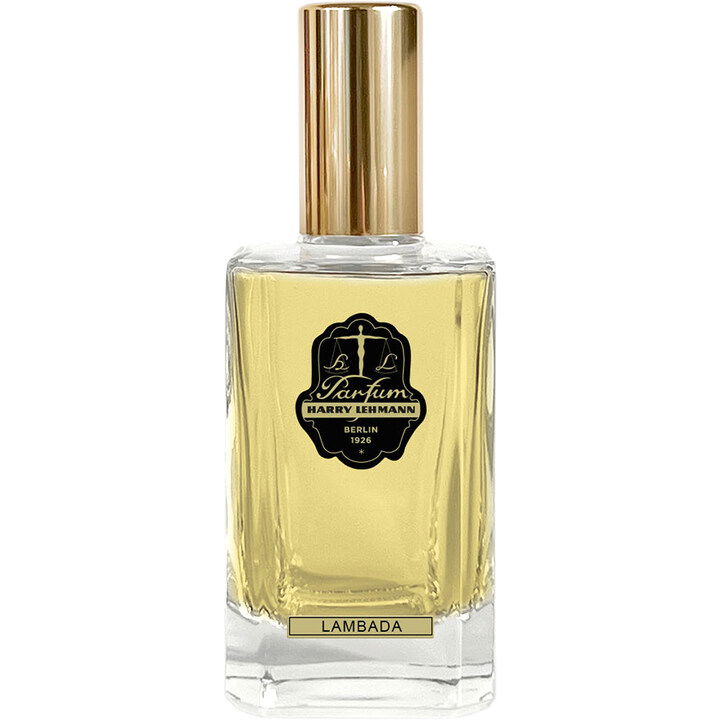
A "Lambada", on the other hand, actually exists only once, namely in the version by Harry Lehmann. That's not quite true, there is a second somewhat crude hit, about which almost nothing is known at all, furthermore with a mysterious "Paolo Conti" - not "Conte" in the name. We can probably neglect that one
Maybe that's just as well, because my memory of this dance is not a completely unclouded one.
Sometime - was it the '90s? - we all suddenly danced the Lambada, this tight and almost stationary danced and completely unashamedly sensual rotating sex application, you had to manage that somehow back then, as dancers and as danced. Woe betide you if you danced lambada with the wrong partner, I remember situations of downright bottomless embarrassment, in which I had to let myself be jerked over the parquet by (on their part probably also quite desperate) stiff-hiped and helpless body lice, or even dance partners who quite obviously found me highly sexy (and also made no effort whatsoever not to let me feel this circumstance in all clarity) - but I didn't. Ahhh, head cinema!
The smell is not embarrassing. But neither is it highly erotic, it is much, much more harmless than the name would suggest. It belongs to the somewhat sweeter and softer Lehmänner, and I am absolutely sure - because of the scent and not only because of the name - that it cannot come from the beginnings of the house of Lehmann. It completely lacks the somewhat shaggy independence and recognizability that characterizes the earlier fragrances. I think "Lambada" is really a child of its time, the 90s, maybe even of the earlier 00s.
Lehmann's Lambada starts with a soft and bizarre freshness, even a little bit herbaceous. Lemon balm is mentioned, that fits, lemon balm maybe, which often gives me a hint of lemon and grape sugar bars. In addition, almost from the beginning a soft, chubby and tender sweet warmth.
This warmth (tonka? vanilla?) carries the fragrance for the longest time, along with a quite massive floral in the heart, which I cannot determine in more detail. The fragrance becomes more ambry and slightly spicy over time, I can't make out powder, at least it doesn't dominate me. Fortunately the sweetness, which even becomes quite clear in the course of time, remains on the sticky side at all times, which is also typical for the floral valleys of this time.
In this respect, this fragrance is definitely recommended for testing by friends* of classic and contemporary floral valleys who are interested in a not too independent, rather ideal-typical representative of its genus. Unisex, even though the fragrance was certainly composed for women at the time.
Last but not least:
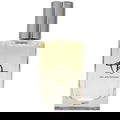
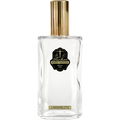
I do not know if Lambada had to be reformulated last year. Anyway, my bottle was bought before that, in November 2018. H&S are - as always with Lehmann - very tidy.



 Amber
Amber Bergamot
 Bitter orange
 Cedar
Cedar Leather
 Lemon
Lemon Lime
Lime Neroli
 Patchouli
 Spicy notes
 Vanilla