
Adagietto
Reviews
Filter & Sort
Detailed
Translated · Show original
Concept vs. Expectations
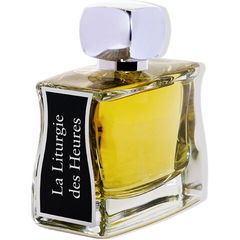
Niche fragrances are often burdened with expectations: They are supposed to be not only absolutely unique, always exuding exceptional quality, but also suitable for everyday wear without any issues. Moreover, they should be "artistically" demanding and consistently executed, which often leads to "concept fragrances": scents that are not simply meant to smell, for example, elegant-woody, fresh, or warm-oriental, but that are supposed to convey a very specific scene, a very particular image.
La Liturgie des Heures (a very fitting name) aims to capture the scene of a monastery in a Mediterranean landscape. This clearly sets it apart from fragrances like Cardinal, Avignon & co, which have a much more abstract concept and generally address the theme of incense or church.
So far, I have not encountered a fragrance that implements its concept on paper as consistently as La Liturgie des Heures. Nevertheless, or perhaps precisely because of this, it seems unable to fully meet expectations here.
I am somewhat surprised that the top note is mostly mentioned only as a footnote: The fragrance opens with such a brutal cypress note that I initially felt the urge to wash it off during my first test. The cypress appears extremely intensely green and bitter, creating an impression that is rather unnatural, though not synthetic.
Fortunately, this top note quickly softens, and a soft-resinous and balsamic incense note emerges. From the very beginning, it is accompanied by a slightly bitter, waxy myrrh that quickly gains the upper hand. In fact, La Liturgie des Heures is not primarily an incense fragrance for me. While the described myrrh dominates the heart note, a distinctly sweet-resinous-earthy labdanum gradually comes into play, dominating the drydown of the fragrance and becoming almost somewhat monothematic towards the end.
However, the heart note has a peculiarity: I distinctly perceive the scent of burning or just extinguished candles here. Whether this should fall under the listed note "incense" is something I will leave open. For me, this note is unmistakably present.
On the other hand, I hardly perceive patchouli and musk; instead, the aforementioned labdanum dominates the base.
It seems to me that the listed fragrance notes lead some reviewers to expect an incense fragrance like Cardinal or Avignon. When comparing La Liturgie des Heures to such fragrances, it indeed appears less radiant and bright, but earthier, darker, and smokier. However, this expectation does not do justice to the fragrance: Here, the scent concept (monastery in a Mediterranean landscape) is implemented as consistently as almost nowhere else: cypress in the opening, waxy myrrh and candle scent in the heart, and in the base, labdanum reminds one of the cistus in the surroundings. However, this very consistency somewhat works against the fragrance in my perception and symbolically highlights the "problem" of such "intellectual" niche fragrances. La Liturgie des Heures presents various notes side by side that fit into the scent concept or the intended image. This image only materializes (if at all) if one knows about it beforehand. The fragrance notes all seem high-quality and are well executed (with the exception of the cypress). However, for me, they do not form a coherent whole and do not evoke a beautiful scent image. Instead, they simply stand next to each other for conceptual reasons, making the fragrance overall feel quite forced and cerebral. Nevertheless, the fragrance serves as a reminder that a high artistic ambition does not necessarily make perfume better and that, above all, a fragrance should simply smell good.
La Liturgie des Heures (a very fitting name) aims to capture the scene of a monastery in a Mediterranean landscape. This clearly sets it apart from fragrances like Cardinal, Avignon & co, which have a much more abstract concept and generally address the theme of incense or church.
So far, I have not encountered a fragrance that implements its concept on paper as consistently as La Liturgie des Heures. Nevertheless, or perhaps precisely because of this, it seems unable to fully meet expectations here.
I am somewhat surprised that the top note is mostly mentioned only as a footnote: The fragrance opens with such a brutal cypress note that I initially felt the urge to wash it off during my first test. The cypress appears extremely intensely green and bitter, creating an impression that is rather unnatural, though not synthetic.
Fortunately, this top note quickly softens, and a soft-resinous and balsamic incense note emerges. From the very beginning, it is accompanied by a slightly bitter, waxy myrrh that quickly gains the upper hand. In fact, La Liturgie des Heures is not primarily an incense fragrance for me. While the described myrrh dominates the heart note, a distinctly sweet-resinous-earthy labdanum gradually comes into play, dominating the drydown of the fragrance and becoming almost somewhat monothematic towards the end.
However, the heart note has a peculiarity: I distinctly perceive the scent of burning or just extinguished candles here. Whether this should fall under the listed note "incense" is something I will leave open. For me, this note is unmistakably present.
On the other hand, I hardly perceive patchouli and musk; instead, the aforementioned labdanum dominates the base.
It seems to me that the listed fragrance notes lead some reviewers to expect an incense fragrance like Cardinal or Avignon. When comparing La Liturgie des Heures to such fragrances, it indeed appears less radiant and bright, but earthier, darker, and smokier. However, this expectation does not do justice to the fragrance: Here, the scent concept (monastery in a Mediterranean landscape) is implemented as consistently as almost nowhere else: cypress in the opening, waxy myrrh and candle scent in the heart, and in the base, labdanum reminds one of the cistus in the surroundings. However, this very consistency somewhat works against the fragrance in my perception and symbolically highlights the "problem" of such "intellectual" niche fragrances. La Liturgie des Heures presents various notes side by side that fit into the scent concept or the intended image. This image only materializes (if at all) if one knows about it beforehand. The fragrance notes all seem high-quality and are well executed (with the exception of the cypress). However, for me, they do not form a coherent whole and do not evoke a beautiful scent image. Instead, they simply stand next to each other for conceptual reasons, making the fragrance overall feel quite forced and cerebral. Nevertheless, the fragrance serves as a reminder that a high artistic ambition does not necessarily make perfume better and that, above all, a fragrance should simply smell good.
2 Comments
Translated · Show original
Nomen est omen
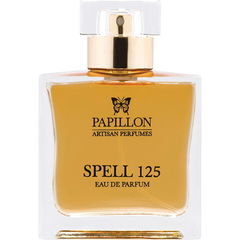
I could have guessed it: That the name of the fragrance refers to a saying from the Egyptian Book of the Dead, I had read here, but otherwise did not pay much attention to it. However, it already reveals a lot about the scent, whether intended or not, I will leave open.
My interest was piqued by the listed fragrance notes: I know and love green Omani Hojari frankincense in its natural form. It smells exceptionally clear, bright-resinous to almost citrusy and reminds me of eucalyptus and coniferous woods. A perfume that captures this scent even somewhat could hardly be rated lower than an 8. Accordingly, my expectations for Spell 125 were high. In particular, the combination with cedar and fir seemed absolutely logical to me and excellently suited to "support" the frankincense scent a bit.
Unfortunately, reality looks different. Frankincense is clearly noticeable in Spell 125 (although far less prominent than I had expected), the impressively bright-fresh clarity of green frankincense was unfortunately not captured here at all. Rather, I perceive Spell 125 from the very beginning as somewhat musty, as if the frankincense had been "stretched" with inferior incense. Fir and cedar, which in my imagination harmonized excellently with the frankincense, do not improve the scent much in reality according to my perception. Instead of a green-fresh coniferous forest note, I perceive these two notes (without being able to distinguish them clearly) as slightly green-sour. As a result, they also fail to "lift the veil" off the somewhat musty frankincense and give the scent an ethereal clarity. Instead, I get a musty-sour overall accord that can certainly be described as "morbid." After a few hours, the scent becomes warmer, a rather high-quality amber note emerges and makes the fragrance sweet and cozy, while the musty-sour accord transforms into a warm resinousness. In my opinion, this base note is quite successful, even if nothing truly extraordinary.
The "intention" of the fragrance remains a mystery to me: The defining, musty-sour accord does not lead the scent in the direction of a high-quality, oriental frankincense fragrance nor towards a successful "coniferous" or "coniferous forest scent." Rather, the fragrance seems indecisively to fluctuate between sauna infusion and morbid "tomb chamber atmosphere." In light of the name of the fragrance, I cannot rule out that this was exactly intended. If so, the implementation of this concept is quite successful, as the scent definitely still falls within the realm of wearability, and I do not want to deny a recognizable quality to the individual notes. However, whether I would like to smell like this is another question, which I unfortunately have to answer clearly with no.
My interest was piqued by the listed fragrance notes: I know and love green Omani Hojari frankincense in its natural form. It smells exceptionally clear, bright-resinous to almost citrusy and reminds me of eucalyptus and coniferous woods. A perfume that captures this scent even somewhat could hardly be rated lower than an 8. Accordingly, my expectations for Spell 125 were high. In particular, the combination with cedar and fir seemed absolutely logical to me and excellently suited to "support" the frankincense scent a bit.
Unfortunately, reality looks different. Frankincense is clearly noticeable in Spell 125 (although far less prominent than I had expected), the impressively bright-fresh clarity of green frankincense was unfortunately not captured here at all. Rather, I perceive Spell 125 from the very beginning as somewhat musty, as if the frankincense had been "stretched" with inferior incense. Fir and cedar, which in my imagination harmonized excellently with the frankincense, do not improve the scent much in reality according to my perception. Instead of a green-fresh coniferous forest note, I perceive these two notes (without being able to distinguish them clearly) as slightly green-sour. As a result, they also fail to "lift the veil" off the somewhat musty frankincense and give the scent an ethereal clarity. Instead, I get a musty-sour overall accord that can certainly be described as "morbid." After a few hours, the scent becomes warmer, a rather high-quality amber note emerges and makes the fragrance sweet and cozy, while the musty-sour accord transforms into a warm resinousness. In my opinion, this base note is quite successful, even if nothing truly extraordinary.
The "intention" of the fragrance remains a mystery to me: The defining, musty-sour accord does not lead the scent in the direction of a high-quality, oriental frankincense fragrance nor towards a successful "coniferous" or "coniferous forest scent." Rather, the fragrance seems indecisively to fluctuate between sauna infusion and morbid "tomb chamber atmosphere." In light of the name of the fragrance, I cannot rule out that this was exactly intended. If so, the implementation of this concept is quite successful, as the scent definitely still falls within the realm of wearability, and I do not want to deny a recognizable quality to the individual notes. However, whether I would like to smell like this is another question, which I unfortunately have to answer clearly with no.
2 Comments
Translated · Show original
Golden Velvet
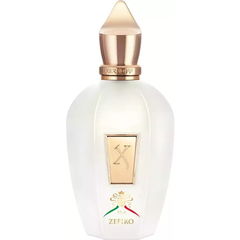
The brand Xerjoff meets with a divided echo here: For some, it is a fragrance house with legendary status, where masterpiece after masterpiece is lined up in its portfolio. For others, it is rather a somewhat pretentious attempt to define the niche fragrance field through inflated prices and marketing-focused pseudo-luxury. While I can understand this criticism to some extent, it is specifically Zefiro that ensures Xerjoff still holds a good position with me. Zefiro not only combines a beautiful and very unique scent character with absolutely everyday wearability, but it is also, in my perception, exceptionally well crafted. But let's start from the beginning:
In the first 15-20 seconds after spraying, the notes listed here as top notes create an unusual accord. I primarily perceive elemi resin, something sweet-herbaceous (likely davana), and a grape-like note. Before one can really consider what to make of this combination, it has already disappeared again. This top note seems thematically separated from the rest of the fragrance. However, due to its very short duration, it fortunately does not manage to imprint or influence the scent in any way. Only the bright, pleasant resinousness of the elemi bridges the beginning of the "actual fragrance".
After those few seconds, the fragrance then opens with a hint of spicy-unsweet cardamom, a subtle clove, and a very pronounced cinnamon note. This is clearly in the foreground at the beginning and is really well executed: Instead of a gourmand or Christmas market character, it presents a distinctly woody quality. One is almost forcefully reminded that cinnamon is nothing other than tree bark. Additionally, there is the typical ethereal sharpness of fresh cinnamon, which will be the starting point for the brilliant scent progression of Zefiro.
This ethereal character ensures that the cinnamon note transitions so subtly into an incense note that one hardly notices it. One only realizes at a certain point that one can no longer perceive cinnamon; otherwise, the fragrance seems to remain linear. Incense clearly represents the most important note of Zefiro, and everything else is ultimately tailored to the incense note. It appears very high-quality, soft-resinous, and, compared to classic incenses like "Cardinal" or "Avignon," is above average smoky. In my perception, this is primarily due to the woody accompanying notes of cinnamon and oud, which keep Zefiro from becoming too resinous-ethereal and "sauna-like." This, however, makes me perceive the fragrance as somewhat "more ecclesiastical" than, for example, "Cardinal," which always triggers a distinct sauna association for me.
In the further course, Zefiro achieves the feat of a maximally subtle transition once again: woody-smoky, yet very gentle oud joins in and integrates so excellently into the fragrance that one initially hardly notices it again. This incense-oud combination lasts surprisingly long and ensures (despite all gentleness) that Zefiro remains a full-bodied fragrance until the end and does not leave just a sweet, indefinable residue after a few hours.
The triad of cinnamon-incense-oud (with a clear emphasis on incense) thus forms the defining framework of the fragrance. That this does not reinvent the wheel goes without saying, but what is made of it is all the more astonishing: Despite these seemingly dark and heavy notes, Zefiro remains bright, very airy, and above all extraordinarily soft in character. This is primarily thanks to the other fragrance notes, which, alongside cinnamon, incense, and oud, never stand out directly but significantly shape the character of the fragrance. Honey and iris are particularly noteworthy here, playing a role over long stretches of the fragrance progression. Honey ensures that Zefiro never appears "gray" or off-puttingly smoky, but always has a warm, "golden" appearance without becoming noticeably sweet. Iris makes the fragrance exceptionally noble and velvety soft and accessible. The incense never comes across as harsh, and even the biggest oud skeptics need not fear Zefiro. Instead of an oriental steam hammer, one gets golden Italian velvet to spray on.
Since Zefiro retains this character throughout the entire fragrance progression, it appears very linear at first glance, without actually being so. If you spray it again after a few hours, you notice how much the fragrance has changed. The individual notes interlock so perfectly in the fragrance progression and maintain the character of the fragrance that, despite its constant change, you feel like you are wearing a linear fragrance.
Zefiro combines its rather "niche" incense character with absolutely everyday wearability. With its golden-velvety and more European than oriental appearance, it does not offend people without a particular affinity for niche fragrances, without becoming arbitrary. Its application range is very broad: Zefiro fits almost all occasions from casual to very formal and is wearable in every season, perhaps with the exception of high summer. It also boasts a great longevity of about 10 hours with a pleasantly subtle sillage.
For me personally, Zefiro is the most beautiful incense fragrance I have encountered so far. Not least because of its everyday wearability, it has almost automatically and without conscious decision become my signature scent. As such, it has accompanied me for over two years now, and as long as it exists, it will likely continue to do so.
In the first 15-20 seconds after spraying, the notes listed here as top notes create an unusual accord. I primarily perceive elemi resin, something sweet-herbaceous (likely davana), and a grape-like note. Before one can really consider what to make of this combination, it has already disappeared again. This top note seems thematically separated from the rest of the fragrance. However, due to its very short duration, it fortunately does not manage to imprint or influence the scent in any way. Only the bright, pleasant resinousness of the elemi bridges the beginning of the "actual fragrance".
After those few seconds, the fragrance then opens with a hint of spicy-unsweet cardamom, a subtle clove, and a very pronounced cinnamon note. This is clearly in the foreground at the beginning and is really well executed: Instead of a gourmand or Christmas market character, it presents a distinctly woody quality. One is almost forcefully reminded that cinnamon is nothing other than tree bark. Additionally, there is the typical ethereal sharpness of fresh cinnamon, which will be the starting point for the brilliant scent progression of Zefiro.
This ethereal character ensures that the cinnamon note transitions so subtly into an incense note that one hardly notices it. One only realizes at a certain point that one can no longer perceive cinnamon; otherwise, the fragrance seems to remain linear. Incense clearly represents the most important note of Zefiro, and everything else is ultimately tailored to the incense note. It appears very high-quality, soft-resinous, and, compared to classic incenses like "Cardinal" or "Avignon," is above average smoky. In my perception, this is primarily due to the woody accompanying notes of cinnamon and oud, which keep Zefiro from becoming too resinous-ethereal and "sauna-like." This, however, makes me perceive the fragrance as somewhat "more ecclesiastical" than, for example, "Cardinal," which always triggers a distinct sauna association for me.
In the further course, Zefiro achieves the feat of a maximally subtle transition once again: woody-smoky, yet very gentle oud joins in and integrates so excellently into the fragrance that one initially hardly notices it again. This incense-oud combination lasts surprisingly long and ensures (despite all gentleness) that Zefiro remains a full-bodied fragrance until the end and does not leave just a sweet, indefinable residue after a few hours.
The triad of cinnamon-incense-oud (with a clear emphasis on incense) thus forms the defining framework of the fragrance. That this does not reinvent the wheel goes without saying, but what is made of it is all the more astonishing: Despite these seemingly dark and heavy notes, Zefiro remains bright, very airy, and above all extraordinarily soft in character. This is primarily thanks to the other fragrance notes, which, alongside cinnamon, incense, and oud, never stand out directly but significantly shape the character of the fragrance. Honey and iris are particularly noteworthy here, playing a role over long stretches of the fragrance progression. Honey ensures that Zefiro never appears "gray" or off-puttingly smoky, but always has a warm, "golden" appearance without becoming noticeably sweet. Iris makes the fragrance exceptionally noble and velvety soft and accessible. The incense never comes across as harsh, and even the biggest oud skeptics need not fear Zefiro. Instead of an oriental steam hammer, one gets golden Italian velvet to spray on.
Since Zefiro retains this character throughout the entire fragrance progression, it appears very linear at first glance, without actually being so. If you spray it again after a few hours, you notice how much the fragrance has changed. The individual notes interlock so perfectly in the fragrance progression and maintain the character of the fragrance that, despite its constant change, you feel like you are wearing a linear fragrance.
Zefiro combines its rather "niche" incense character with absolutely everyday wearability. With its golden-velvety and more European than oriental appearance, it does not offend people without a particular affinity for niche fragrances, without becoming arbitrary. Its application range is very broad: Zefiro fits almost all occasions from casual to very formal and is wearable in every season, perhaps with the exception of high summer. It also boasts a great longevity of about 10 hours with a pleasantly subtle sillage.
For me personally, Zefiro is the most beautiful incense fragrance I have encountered so far. Not least because of its everyday wearability, it has almost automatically and without conscious decision become my signature scent. As such, it has accompanied me for over two years now, and as long as it exists, it will likely continue to do so.
5 Comments
Translated · Show original
Under the Linden Trees
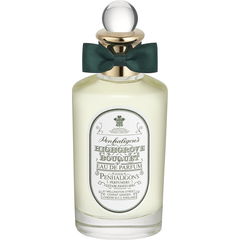
I would like to champion Highgrove Bouquet at this point: The fragrance is received here with goodwill, but not necessarily with enthusiasm, and it hasn’t really gained widespread attention yet. In my opinion, Penhaligon’s has created a true modern classic with this scent that deserves more recognition.
The fragrance opens with a fresh, rather unsweet tuberose with a distinctly green touch. The tuberose is unusually presented in Highgrove Bouquet: Due to the lack of sweetness and heaviness, it does not come across as particularly sensual-feminine, but rather in a somewhat "neutral-floral" way. It essentially serves as the "stage set" of the fragrance, shaping its floral character, while leaving the other notes to define its concrete expression. Quickly, a very high-quality iris note joins in. This will also be important for the character of the fragrance in the drydown, but initially appears only moderately powdery in the top note. Instead, it reveals a cool, clean earthiness in the top note. The typical carrot association of iris (root) is definitely perceptible here and harmonizes wonderfully with the green touch of the top note. Particularly through this cool, clean earthiness, the image of a garden after a summer rain shower begins to form even before the main characters have entered the stage.
As the fragrance develops, a beautifully executed linden blossom slowly emerges, which will decisively shape the scent. The top note does not simply disappear but remains pleasantly present. This gives the honey-like sweetness of the linden blossom a counterbalance, preventing it from becoming overly sweet and overwhelming. I find it a bit difficult to distinctly pick out mimosa alongside the linden blossom. In my perception, the linden blossom always remains dominant. Since both notes share a certain similarity with their floral "honey-like" quality, they likely blend quite well here. However, linden blossom is definitely the main character of the fragrance in my perception.
On the other hand, cedar and lavender are very noticeable in the base. As Turandot mentioned in her review, the base is kept quite slim. Against the backdrop of the rather lush floral character in the previous progression of the fragrance, Highgrove Bouquet surprised me here: The omission of sandalwood, amber, etc., has a remarkably positive effect and allows the fragrance to appear with clear contours until the end. Additionally, the iris becomes more prominent here, but this time less earthy-cool and instead soft and powdery. In this beautifully slim, very elegant, and not overly sweet base of cedar, lavender, and iris, the linden blossom continues to reveal itself until the end, leaving its mark on Highgrove Bouquet.
Overall, Highgrove Bouquet is a very classic and elegant fragrance. At the beginning, it tends towards the feminine but remains wearable for men as well. By the heart note, when the tuberose becomes a bit less intense, concerned gentlemen need not worry any longer. The base note even takes on a tendency towards the masculine in my perception, while still remaining suitable for women. The fragrance always appears bright and friendly, but never "playful," instead carrying a conservative-British seriousness within it. Too casual clothing is rather inappropriate regardless of gender.
Its unisex suitability is not least due to the very high-quality and natural execution of its concept: Highgrove Bouquet is neither a typical floral scent for women nor a typical lavender scent for men, but manages (at least for me) to truly evoke the quite realistic image of a blooming garden in summer.
Linden blossom as the central fragrance note is anything but ordinary and is wonderfully executed. The (impressively high-quality) iris and lavender give the fragrance a depth that one will search for in vain in other summer scents, especially citrus fragrances. The fragrance is indeed suitable for summer: The green freshness combined with the powdery iris ensures that the scent never becomes cloying and makes it, in my experience, excellent to wear up to 30 degrees.
Highgrove Bouquet brings a quality that I have come to greatly appreciate in older fragrance classics: The scent can "grow." While some modern niche fragrances can seem incredibly impressive at first testing, a certain boredom can set in quite quickly. With great classic fragrances, I have experienced the opposite: The more often you wear them, the more you recognize how much depth they contain, how finely they are "composed" down to the details, without wanting to dazzle. Highgrove Bouquet brings this quality alongside its classic character appropriately, and I no longer want to do without it in summer. It is certainly far from being a "shallow" floral scent. In my opinion, Penhaligon’s has created a great "neo-classic" with Highgrove Bouquet. Bravo!
The fragrance opens with a fresh, rather unsweet tuberose with a distinctly green touch. The tuberose is unusually presented in Highgrove Bouquet: Due to the lack of sweetness and heaviness, it does not come across as particularly sensual-feminine, but rather in a somewhat "neutral-floral" way. It essentially serves as the "stage set" of the fragrance, shaping its floral character, while leaving the other notes to define its concrete expression. Quickly, a very high-quality iris note joins in. This will also be important for the character of the fragrance in the drydown, but initially appears only moderately powdery in the top note. Instead, it reveals a cool, clean earthiness in the top note. The typical carrot association of iris (root) is definitely perceptible here and harmonizes wonderfully with the green touch of the top note. Particularly through this cool, clean earthiness, the image of a garden after a summer rain shower begins to form even before the main characters have entered the stage.
As the fragrance develops, a beautifully executed linden blossom slowly emerges, which will decisively shape the scent. The top note does not simply disappear but remains pleasantly present. This gives the honey-like sweetness of the linden blossom a counterbalance, preventing it from becoming overly sweet and overwhelming. I find it a bit difficult to distinctly pick out mimosa alongside the linden blossom. In my perception, the linden blossom always remains dominant. Since both notes share a certain similarity with their floral "honey-like" quality, they likely blend quite well here. However, linden blossom is definitely the main character of the fragrance in my perception.
On the other hand, cedar and lavender are very noticeable in the base. As Turandot mentioned in her review, the base is kept quite slim. Against the backdrop of the rather lush floral character in the previous progression of the fragrance, Highgrove Bouquet surprised me here: The omission of sandalwood, amber, etc., has a remarkably positive effect and allows the fragrance to appear with clear contours until the end. Additionally, the iris becomes more prominent here, but this time less earthy-cool and instead soft and powdery. In this beautifully slim, very elegant, and not overly sweet base of cedar, lavender, and iris, the linden blossom continues to reveal itself until the end, leaving its mark on Highgrove Bouquet.
Overall, Highgrove Bouquet is a very classic and elegant fragrance. At the beginning, it tends towards the feminine but remains wearable for men as well. By the heart note, when the tuberose becomes a bit less intense, concerned gentlemen need not worry any longer. The base note even takes on a tendency towards the masculine in my perception, while still remaining suitable for women. The fragrance always appears bright and friendly, but never "playful," instead carrying a conservative-British seriousness within it. Too casual clothing is rather inappropriate regardless of gender.
Its unisex suitability is not least due to the very high-quality and natural execution of its concept: Highgrove Bouquet is neither a typical floral scent for women nor a typical lavender scent for men, but manages (at least for me) to truly evoke the quite realistic image of a blooming garden in summer.
Linden blossom as the central fragrance note is anything but ordinary and is wonderfully executed. The (impressively high-quality) iris and lavender give the fragrance a depth that one will search for in vain in other summer scents, especially citrus fragrances. The fragrance is indeed suitable for summer: The green freshness combined with the powdery iris ensures that the scent never becomes cloying and makes it, in my experience, excellent to wear up to 30 degrees.
Highgrove Bouquet brings a quality that I have come to greatly appreciate in older fragrance classics: The scent can "grow." While some modern niche fragrances can seem incredibly impressive at first testing, a certain boredom can set in quite quickly. With great classic fragrances, I have experienced the opposite: The more often you wear them, the more you recognize how much depth they contain, how finely they are "composed" down to the details, without wanting to dazzle. Highgrove Bouquet brings this quality alongside its classic character appropriately, and I no longer want to do without it in summer. It is certainly far from being a "shallow" floral scent. In my opinion, Penhaligon’s has created a great "neo-classic" with Highgrove Bouquet. Bravo!
4 Comments
Translated · Show original
Drought on Capri
I like fragrances that attempt to olfactorily depict certain places or landscapes with a certain seriousness. For me, this concept can sacrifice some of the pleasantness of a scent. At the very least, an effort should be made to show the represented place in its most beautiful light.
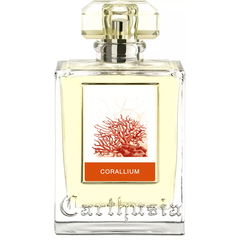
Corallium is one such "landscape scent" that doesn't quite succeed in this.
The fragrance starts off with a truly wonderful top note: soft, realistic citrus that, despite its clear presence, does not push itself to the forefront, accompanied by unsweet, resinous-aromatic myrrh and a distinctly noticeable bay leaf note that is bitter and slightly dark green. This is incredibly calming, and immediately I envision a Mediterranean (coastal) landscape in summer, when the warmth of the day enhances the scent of the surrounding plants. Here, a strength of the fragrance comes into play that is found in many Carthusias: naturalness. In all the scents from the house that I have been able to test so far, I have noticed this positively, and specifically Corallium stands out here. I know of no fragrance that smells so little "perfumey" and is simultaneously so pleasant and easy to wear.
From the heart note onward, the fragrance changes significantly. The citrusy-resinous-bitter coastal air of Capri gradually gives way to a soft, very dry, and completely unsweet cedarwood scent. The complexity of the fragrance noticeably diminishes for my perception here. Starting from the landscape image of the top note, one only perceives a rather desiccated landscape. Nothing blooms here, nothing green remains, nothing citrusy, and the pleasant resinousness of the top note completely disappears. Only dry wood remains. There is drought on Capri. The light and also completely unsweet musky powderiness in the base does nothing to change this, but rather presents itself in this context more as dry dustiness. I can only perceive sage with a lot of imagination and not at all the fat hen.
I think that from the heart note onward, much more could have been done with the fragrance. Whether I imagine a few green or floral notes alongside the dry woodiness, or in the base for example rockrose/labdanum, the fragrance always gains. As it is, it feels a bit unfinished to me.
All of this may sound quite critical now. Fundamentally, however, Corallium is a really beautiful and very natural summer fragrance with significantly more depth than fresh scents usually have. I wore it almost daily for a summer and would have rated it significantly higher at the beginning. The top note is, in any case, the most beautiful Mediterranean "landscape interpretation" I know in a fragrance. Unfortunately, this landscape dries out quite quickly.
Corallium is one such "landscape scent" that doesn't quite succeed in this.
The fragrance starts off with a truly wonderful top note: soft, realistic citrus that, despite its clear presence, does not push itself to the forefront, accompanied by unsweet, resinous-aromatic myrrh and a distinctly noticeable bay leaf note that is bitter and slightly dark green. This is incredibly calming, and immediately I envision a Mediterranean (coastal) landscape in summer, when the warmth of the day enhances the scent of the surrounding plants. Here, a strength of the fragrance comes into play that is found in many Carthusias: naturalness. In all the scents from the house that I have been able to test so far, I have noticed this positively, and specifically Corallium stands out here. I know of no fragrance that smells so little "perfumey" and is simultaneously so pleasant and easy to wear.
From the heart note onward, the fragrance changes significantly. The citrusy-resinous-bitter coastal air of Capri gradually gives way to a soft, very dry, and completely unsweet cedarwood scent. The complexity of the fragrance noticeably diminishes for my perception here. Starting from the landscape image of the top note, one only perceives a rather desiccated landscape. Nothing blooms here, nothing green remains, nothing citrusy, and the pleasant resinousness of the top note completely disappears. Only dry wood remains. There is drought on Capri. The light and also completely unsweet musky powderiness in the base does nothing to change this, but rather presents itself in this context more as dry dustiness. I can only perceive sage with a lot of imagination and not at all the fat hen.
I think that from the heart note onward, much more could have been done with the fragrance. Whether I imagine a few green or floral notes alongside the dry woodiness, or in the base for example rockrose/labdanum, the fragrance always gains. As it is, it feels a bit unfinished to me.
All of this may sound quite critical now. Fundamentally, however, Corallium is a really beautiful and very natural summer fragrance with significantly more depth than fresh scents usually have. I wore it almost daily for a summer and would have rated it significantly higher at the beginning. The top note is, in any case, the most beautiful Mediterranean "landscape interpretation" I know in a fragrance. Unfortunately, this landscape dries out quite quickly.
2 Comments