
Elysium
Reviews
Filter & Sort
Detailed
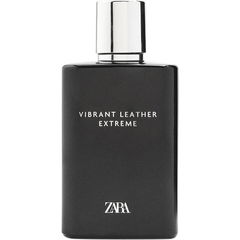
Leather, Smoke, and the Comfort of Darkness
VL Extreme is a semi-fresh fragrance with smoky and sweet undertones—a darker, thicker, more grounded flanker of the OG. It slipped under my radar almost a year ago, and by the time I decided to pull the trigger, it had vanished. Until last week, when ZARA quietly brought it back among its discounted winter releases.
From the first spray, a commanding cloud of leather fills the air: raw, rugged, animalic. There’s a faint alcoholic edge, a touch of zestiness, and the DNA of the original is immediately recognisable. What follows is unexpected—a sharp citrus accord, acidic and almost antiseptic. It calls to mind Lysoform (or Lysol): that unmistakable disinfectant brightness, clean to the point of sterility. Awkward as it may sound, I enjoy it. The opening feels less fresh, less Aventus-leaning than the OG, and that restraint works in its favour.
About half an hour in, that sterile brightness begins to fade. The citrus dulls, as though the harsh white light of a hospital corridor is slowly replaced by the warmer glow of an old workshop. Darker elements surface: smoky leather, a thread of saffron. There’s something quietly nostalgic here, almost cinematic—a small mountain cabin, burning wood, the dry smoke of charred paper lingering in the air, mixed with the faint trace of cigarette smoke clinging to a wool coat brought in from the cold. It’s not tobacco—there’s no sweetness, no aromatic warmth—but a dry, mineral smokiness that feels austere and reflective. This phase evolves slowly, introspectively, asking for attention rather than demanding it.
Eventually, the fragrance settles into a softer sweetness, slightly fruity, with a gently synthetic woodiness. Think burnt sugar rather than caramel—restrained, almost textural. One thing I consistently appreciate in Jérome Epinette’s work is his use of papery, bookish nuances—papyrus, patchouli—that give a dusty, lived-in feel, as if the scent carries memories without being weighed down by them.
Performance is solid: longevity is moderate to good (notably better than many Vibrant Leather (2018) Eau de Parfum flankers), with moderate sillage. I catch it on others only at close range. While its notes suggest autumn and spring, I enjoy it most in winter, when cold air sharpens its edges and pulls out nuances that warmer weather smooths away. Worn then, VL Extreme feels less like a crowd-pleaser and more like a quiet statement—dark, expressive, and unconcerned with being immediately likable.
My impressions are based on a bottle owned since January 2026(Batch code 53350, PD 2025-12-01)
—Elysium
From the first spray, a commanding cloud of leather fills the air: raw, rugged, animalic. There’s a faint alcoholic edge, a touch of zestiness, and the DNA of the original is immediately recognisable. What follows is unexpected—a sharp citrus accord, acidic and almost antiseptic. It calls to mind Lysoform (or Lysol): that unmistakable disinfectant brightness, clean to the point of sterility. Awkward as it may sound, I enjoy it. The opening feels less fresh, less
Aventus-leaning than the OG, and that restraint works in its favour.About half an hour in, that sterile brightness begins to fade. The citrus dulls, as though the harsh white light of a hospital corridor is slowly replaced by the warmer glow of an old workshop. Darker elements surface: smoky leather, a thread of saffron. There’s something quietly nostalgic here, almost cinematic—a small mountain cabin, burning wood, the dry smoke of charred paper lingering in the air, mixed with the faint trace of cigarette smoke clinging to a wool coat brought in from the cold. It’s not tobacco—there’s no sweetness, no aromatic warmth—but a dry, mineral smokiness that feels austere and reflective. This phase evolves slowly, introspectively, asking for attention rather than demanding it.
Eventually, the fragrance settles into a softer sweetness, slightly fruity, with a gently synthetic woodiness. Think burnt sugar rather than caramel—restrained, almost textural. One thing I consistently appreciate in Jérome Epinette’s work is his use of papery, bookish nuances—papyrus, patchouli—that give a dusty, lived-in feel, as if the scent carries memories without being weighed down by them.
Performance is solid: longevity is moderate to good (notably better than many
Vibrant Leather (2018) Eau de Parfum flankers), with moderate sillage. I catch it on others only at close range. While its notes suggest autumn and spring, I enjoy it most in winter, when cold air sharpens its edges and pulls out nuances that warmer weather smooths away. Worn then, VL Extreme feels less like a crowd-pleaser and more like a quiet statement—dark, expressive, and unconcerned with being immediately likable.My impressions are based on a bottle owned since January 2026(Batch code 53350, PD 2025-12-01)
—Elysium
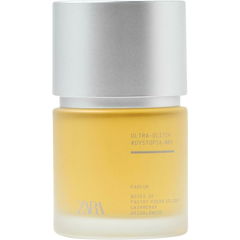
Dangerous Game of Olfactory Anomalies
Ultra Glitch lives up to its name: a dangerous game of olfactory anomalies that spill into reality. Part of a collection built on “daring overdoses” of synthetic molecules, this fragrance highlights three intentionally exaggerated notes on its bottle—pastry cream delight, cashmeran, and akigalawood. If you own Zara’s  C4SHMER4N,
  C0R4N0L,
  S4ND4LW00D, or
  4MBR0X, Ultra Glitch may trigger an immediate sense of déjà vu. Provocative and polarizing by design, this is no comforting gourmand. It is a scent that resists easy understanding and asks for patience.
The opening is arresting. Sharp black pepper crackles at first spray, quickly enveloped by an unexpected fatty, waxy gourmand accord that creates an almost confrontational contrast. The phrase “pastry cream delight” suggests something sweet, soft, and indulgent. What emerges instead is far stranger: thick, buttery notes reminiscent of the moment you melt butter at the start of a béchamel—warm, glossy, and heavy, but not burnt. It hovers dangerously close to excess. Smelled too closely, it can become cloying and tiring, turning faintly stale—like a rich note left under heat for too long—while stubbornly refusing to fade. It lingers for several minutes, underscoring the fragrance’s high concentration. Among the listed ingredients, benzaldehyde is most likely responsible for this sensation. In this type of modern, synthetic fragrance, benzaldehyde creates an almost plastic-buttery effect, especially when combined with vanillin, Peru balsam with a slightly fatty sweetness, and patchouli. Zara's Dystopia line plays heavily with unusual olfactory contrasts and futuristic synthetic notes. That buttery, almost rancid perception in the opening might be intentional—a way to create an unsettling, dystopian effect. On skin, it leaves behind a noticeable shiny, almost oily film.
As the composition settles, Ultra Glitch pivots toward balsamic warmth. Spicy vanilla and resinous benzoin begin to soften the edges, intertwining with the plush, woody hum of cashmeran. Vanillin and coumarin contribute sweetness with a hay-like warmth. This stage feels more approachable, yet still unconventional. Like a person with stiff manners at first meeting, the fragrance reveals warmth only once you give it time. Beneath the surface, musks begin to weave themselves through the composition, adding depth and cohesion rather than overt cleanliness.
What starts as unsettling—almost “wearably unsettling”—gradually becomes more comfortable in the base. The dry-down reveals earthy akigalawood fused with the smoky density of guaiac wood, wrapped in a clean halo of musk. The woods deepen the earthy, smoky facets. Benzoin acts as the balsamic anchor, binding the composition together and preventing it from collapsing into chaos. This is where the promised sweetness finally materializes: edible amber, vanilla, and lactonic notes emerge, supported by warm woods rather than sugar. The result is dense, intense, and unexpectedly addictive.
On my skin, Ultra Glitch ultimately unfolds as a rich blend of sweet amber, vanilla, lactonic nuances, and warm woods—preceded by a disorienting spicy-fatty opening and anchored by a musky, balsamic base. It feels almost dystopian in character, standing firmly apart from mainstream, crowd-pleasing fragrances. Performance is unmistakably “beast mode”: exceptional longevity well beyond eight hours, with powerful projection that fills a room during the first few hours of wear.
This is a fragrance best reserved for cold weather, day or night. In warmth or heat, its richness risks becoming suffocating. Ultra Glitch does not aim to please everyone—and that is precisely its strength.
Written from a bottle owned since January 2026 (BC 52460, PD 2025-09-03).
— Elysium
C4SHMER4N, C0R4N0L, S4ND4LW00D, or 4MBR0X, Ultra Glitch may trigger an immediate sense of déjà vu. Provocative and polarizing by design, this is no comforting gourmand. It is a scent that resists easy understanding and asks for patience.The opening is arresting. Sharp black pepper crackles at first spray, quickly enveloped by an unexpected fatty, waxy gourmand accord that creates an almost confrontational contrast. The phrase “pastry cream delight” suggests something sweet, soft, and indulgent. What emerges instead is far stranger: thick, buttery notes reminiscent of the moment you melt butter at the start of a béchamel—warm, glossy, and heavy, but not burnt. It hovers dangerously close to excess. Smelled too closely, it can become cloying and tiring, turning faintly stale—like a rich note left under heat for too long—while stubbornly refusing to fade. It lingers for several minutes, underscoring the fragrance’s high concentration. Among the listed ingredients, benzaldehyde is most likely responsible for this sensation. In this type of modern, synthetic fragrance, benzaldehyde creates an almost plastic-buttery effect, especially when combined with vanillin, Peru balsam with a slightly fatty sweetness, and patchouli. Zara's Dystopia line plays heavily with unusual olfactory contrasts and futuristic synthetic notes. That buttery, almost rancid perception in the opening might be intentional—a way to create an unsettling, dystopian effect. On skin, it leaves behind a noticeable shiny, almost oily film.
As the composition settles, Ultra Glitch pivots toward balsamic warmth. Spicy vanilla and resinous benzoin begin to soften the edges, intertwining with the plush, woody hum of cashmeran. Vanillin and coumarin contribute sweetness with a hay-like warmth. This stage feels more approachable, yet still unconventional. Like a person with stiff manners at first meeting, the fragrance reveals warmth only once you give it time. Beneath the surface, musks begin to weave themselves through the composition, adding depth and cohesion rather than overt cleanliness.
What starts as unsettling—almost “wearably unsettling”—gradually becomes more comfortable in the base. The dry-down reveals earthy akigalawood fused with the smoky density of guaiac wood, wrapped in a clean halo of musk. The woods deepen the earthy, smoky facets. Benzoin acts as the balsamic anchor, binding the composition together and preventing it from collapsing into chaos. This is where the promised sweetness finally materializes: edible amber, vanilla, and lactonic notes emerge, supported by warm woods rather than sugar. The result is dense, intense, and unexpectedly addictive.
On my skin, Ultra Glitch ultimately unfolds as a rich blend of sweet amber, vanilla, lactonic nuances, and warm woods—preceded by a disorienting spicy-fatty opening and anchored by a musky, balsamic base. It feels almost dystopian in character, standing firmly apart from mainstream, crowd-pleasing fragrances. Performance is unmistakably “beast mode”: exceptional longevity well beyond eight hours, with powerful projection that fills a room during the first few hours of wear.
This is a fragrance best reserved for cold weather, day or night. In warmth or heat, its richness risks becoming suffocating. Ultra Glitch does not aim to please everyone—and that is precisely its strength.
Written from a bottle owned since January 2026 (BC 52460, PD 2025-09-03).
— Elysium
2 Comments
Elysium 10 days ago
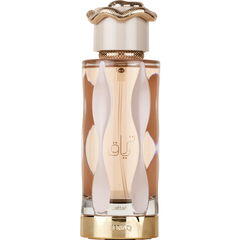
A Challenging Opening, a Rewarding Drydown
I recently reviewed  Teriaq Intense /ترياق, and forgot to mention the bottle is undeniably beautiful, though the design leans bold and kitschy—rather outside my personal taste. This is admittedly my own prejudice: I’ve never been fond of reptiles, and the metal serpent coiled around the cap actively repels me. Still, given that the fragrance is called Antidote, the visual symbolism makes sense within the broader concept.
Lattafa Teriaq is a sweet gourmand fragrance built around rich caramel, honey, and vanilla. Its opening, however, may prove challenging. The first fifteen minutes are distinctly disconcerting. Sharp, smoky, almost burnt facets rise immediately to the surface, with burnt caramel and bitter almond forming a slightly acrid, smoky impression. I struggle to detect the apricot listed in the opening—fruity notes often get swallowed by stronger accords, and here the caramelised bitterness dominates my experience. Pink pepper flickers in the background, adding a dry, spicy hum that those familiar with the note will recognise. This is not a straightforward sugar-sweet gourmand; it announces itself with edge and complexity.
As the fragrance settles into its heart, an unexpected twist emerges that sets Teriaq apart from its sweeter counterparts. A sour rhubarb note cuts through the richness, introducing a tart, green sharpness that reins in the sweetness. White florals follow, lending a creamy, lightly powdery texture without turning overtly floral. Honey becomes more pronounced at this stage, thick and golden, yet never overwhelming. The peppery bitterness continues to thread through the composition, maintaining an intriguing tension between sweet and sharp. A soft rose note also appears, understated and restrained, adding depth rather than taking centre stage—this is decidedly not a rose-heavy oriental. The balance here is carefully judged, preventing the fragrance from becoming cloying or one-dimensional.
The drydown softens further into vanilla, honey, and musk. The smoky, almond-tinged spiciness doesn’t disappear entirely but retreats into the background, now more subdued and rounded. Musk, leather, and labdanum provide quiet structure, tempering the sweetness with a subtle, resinous warmth.
That burnt caramel and bitter almond opening gives Teriaq more bite than many sweet fragrances, though it may be off-putting to some during the first half hour. Once past that initial sharpness, the scent develops into something far more wearable and cohesive. Like many Lattafa releases, performance is above average: it lasts a full day on skin, projects confidently for the first few hours, and lingers for days on clothing. I tend to go nose-blind to it fairly quickly, though others continue to notice it long after application. I’ve worn Teriaq comfortably throughout autumn and expect it to work just as well in spring. For colder winter occasions, however, I reach for the Intense flanker—Teriaq itself feels best when its balance of sweetness and bite can breathe.
This review is based on a bottle owned since October 2025.
— Elysium
Teriaq Intense /ترياق, and forgot to mention the bottle is undeniably beautiful, though the design leans bold and kitschy—rather outside my personal taste. This is admittedly my own prejudice: I’ve never been fond of reptiles, and the metal serpent coiled around the cap actively repels me. Still, given that the fragrance is called Antidote, the visual symbolism makes sense within the broader concept.Lattafa Teriaq is a sweet gourmand fragrance built around rich caramel, honey, and vanilla. Its opening, however, may prove challenging. The first fifteen minutes are distinctly disconcerting. Sharp, smoky, almost burnt facets rise immediately to the surface, with burnt caramel and bitter almond forming a slightly acrid, smoky impression. I struggle to detect the apricot listed in the opening—fruity notes often get swallowed by stronger accords, and here the caramelised bitterness dominates my experience. Pink pepper flickers in the background, adding a dry, spicy hum that those familiar with the note will recognise. This is not a straightforward sugar-sweet gourmand; it announces itself with edge and complexity.
As the fragrance settles into its heart, an unexpected twist emerges that sets Teriaq apart from its sweeter counterparts. A sour rhubarb note cuts through the richness, introducing a tart, green sharpness that reins in the sweetness. White florals follow, lending a creamy, lightly powdery texture without turning overtly floral. Honey becomes more pronounced at this stage, thick and golden, yet never overwhelming. The peppery bitterness continues to thread through the composition, maintaining an intriguing tension between sweet and sharp. A soft rose note also appears, understated and restrained, adding depth rather than taking centre stage—this is decidedly not a rose-heavy oriental. The balance here is carefully judged, preventing the fragrance from becoming cloying or one-dimensional.
The drydown softens further into vanilla, honey, and musk. The smoky, almond-tinged spiciness doesn’t disappear entirely but retreats into the background, now more subdued and rounded. Musk, leather, and labdanum provide quiet structure, tempering the sweetness with a subtle, resinous warmth.
That burnt caramel and bitter almond opening gives Teriaq more bite than many sweet fragrances, though it may be off-putting to some during the first half hour. Once past that initial sharpness, the scent develops into something far more wearable and cohesive. Like many Lattafa releases, performance is above average: it lasts a full day on skin, projects confidently for the first few hours, and lingers for days on clothing. I tend to go nose-blind to it fairly quickly, though others continue to notice it long after application. I’ve worn Teriaq comfortably throughout autumn and expect it to work just as well in spring. For colder winter occasions, however, I reach for the Intense flanker—Teriaq itself feels best when its balance of sweetness and bite can breathe.
This review is based on a bottle owned since October 2025.
— Elysium
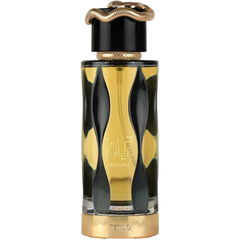
A Velvet Antidote With Whispers of Plum and Amber
I had my eye on this fragrance for quite some time. I added it to my wish list shortly after purchasing the OG  Teriaq Eau de Parfum, but kept postponing the purchase, hoping to stumble upon a last-minute, heavily discounted deal. A few days ago, thanks to reward vouchers accumulated at a personal care store, I finally managed to get it at a reduced price.
If you are familiar with the OG, know that Intense is a completely different creature. Quentin Bisch has created two variations that share a name, but not a soul. For those who may not know, Teriaq means antidote in Arabic. Interestingly, I remembered it as stronger and darker when I first tested it on a paper strip. Now, after wearing it repeatedly on skin, it feels milder and increasingly enticing, as though its edges soften with familiarity.
The fragrance bursts open with a potent saffron note backed by bergamot. The citrus brings brightness to an otherwise mysterious blend, while the saffron reveals itself as mild, leathery, and spicy—never metallic, medicinal, or animalic. Once the initial blast settles, a pleasant powderiness emerges, reminiscent of violet leaves or alpha-isomethyl ionone, accompanied by resinous benzoin and a subtle, plum-like fruitiness.
The magic happens when the scent truly settles on the skin. The warmth of pulse points amplifies the spiciness and booziness of the heart. Sweet cinnamon and plum liqueur gently step forward, rounding off the sharpness of the opening. The liqueur adds a velvety texture—sweet, yet never overpowering. Despite featuring both saffron and cinnamon, the blend is never overly spicy, nor is it comparable to something like Spicebomb.
At this stage, I cannot help but acknowledge the resemblance to Khamrah. They are not clones of one another, but they occupy the same olfactory territory. If you enjoy one, chances are you will appreciate the other as well.
The drydown rests on a warm, ambery-woody base, with the leather still present but softened by resins and woods. It turns sweet, slightly caramelised and roasted—though not in a #BR540 sort of way. I picture a brittle made of burnt sugar and toasted tonka bean seeds. The final trail is warm and ambery, lightly powdery, and never cloying or syrupy, unlike many vanilla-based compositions.
Assuming the bottle purchased from Tigotà (imported from the UAE) is original, performance has been rather restrained. Projection, sillage, and longevity are not particularly strong. It may benefit from some rest and ageing after the first sprays—time will tell. For now, it suits the freezing winter days and nights here in Italy perfectly. I enjoy catching subtle whiffs of it in the air. As long as it remains this well-mannered, I can wear it daily and even to the office without the risk of overwhelming my colleagues. In a way, this softer performance complements the fragrance’s cosy, indulgent character.
This review is based on a bottle owned since January 2026 (BC M05-250701978, PD 2025-08).
— Elysium
Teriaq Eau de Parfum, but kept postponing the purchase, hoping to stumble upon a last-minute, heavily discounted deal. A few days ago, thanks to reward vouchers accumulated at a personal care store, I finally managed to get it at a reduced price.If you are familiar with the OG, know that Intense is a completely different creature. Quentin Bisch has created two variations that share a name, but not a soul. For those who may not know, Teriaq means antidote in Arabic. Interestingly, I remembered it as stronger and darker when I first tested it on a paper strip. Now, after wearing it repeatedly on skin, it feels milder and increasingly enticing, as though its edges soften with familiarity.
The fragrance bursts open with a potent saffron note backed by bergamot. The citrus brings brightness to an otherwise mysterious blend, while the saffron reveals itself as mild, leathery, and spicy—never metallic, medicinal, or animalic. Once the initial blast settles, a pleasant powderiness emerges, reminiscent of violet leaves or alpha-isomethyl ionone, accompanied by resinous benzoin and a subtle, plum-like fruitiness.
The magic happens when the scent truly settles on the skin. The warmth of pulse points amplifies the spiciness and booziness of the heart. Sweet cinnamon and plum liqueur gently step forward, rounding off the sharpness of the opening. The liqueur adds a velvety texture—sweet, yet never overpowering. Despite featuring both saffron and cinnamon, the blend is never overly spicy, nor is it comparable to something like
Spicebomb.At this stage, I cannot help but acknowledge the resemblance to Khamrah. They are not clones of one another, but they occupy the same olfactory territory. If you enjoy one, chances are you will appreciate the other as well.
The drydown rests on a warm, ambery-woody base, with the leather still present but softened by resins and woods. It turns sweet, slightly caramelised and roasted—though not in a #BR540 sort of way. I picture a brittle made of burnt sugar and toasted tonka bean seeds. The final trail is warm and ambery, lightly powdery, and never cloying or syrupy, unlike many vanilla-based compositions.
Assuming the bottle purchased from Tigotà (imported from the UAE) is original, performance has been rather restrained. Projection, sillage, and longevity are not particularly strong. It may benefit from some rest and ageing after the first sprays—time will tell. For now, it suits the freezing winter days and nights here in Italy perfectly. I enjoy catching subtle whiffs of it in the air. As long as it remains this well-mannered, I can wear it daily and even to the office without the risk of overwhelming my colleagues. In a way, this softer performance complements the fragrance’s cosy, indulgent character.
This review is based on a bottle owned since January 2026 (BC M05-250701978, PD 2025-08).
— Elysium
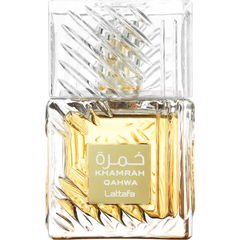
A Spiced Coffee Revelation
Qahwa—Arabic coffee—embodies a Middle Eastern tradition rooted in lightly roasted or green Arabica beans, a stark contrast to the dark roasts favored in the West. Brewed with cardamom, it carries a distinctive aromatic signature that feels both ancient and intimate. The word qahwa itself once meant “wine” in Arabic, evolving linguistically as coffee traveled: kaveh in Turkish, koffie in Dutch, and eventually coffee in English. The Dutch, notoriously enterprising, even bypassed established trade routes, smuggling coffee seeds from Yemen into Europe. That sense of migration—of tradition reshaped by new contexts—feels central to this fragrance.
Qahwa marks Lattafa’s first flanker to Khamrah, the breakout gourmand that exceeded expectations and inevitably drew comparisons to Kilian’s Angels’ Share. I’ll admit: the moment I learned this release centered on coffee, my interest spiked.
The opening unfolds as a spicy mélange—warm cardamom and dry cinnamon—with roasted coffee immediately claiming center stage. This is a decisive departure from the original’s aggressive cinnamon blast and densely sweet date accord. Here, the spices are restrained, lending a cozy, silky smoothness rather than a forcefully dry amber character. On skin, I perceive mostly the interplay of temperatures: the cool lift of cardamom against cinnamon’s warmth. Ginger lurks quietly in the background, adding a fizzy zestiness without demanding attention.
The heart turns lactonic. A creamy praline accord emerges, delivering a semi-sweet gourmand profile that avoids sticky or syrupy excess. Coffee and spices persist, reshaping the composition into something closer to a cappuccino than a spiced dessert. There’s a subtle boozy nuance—echoes of Curaçao or Cointreau—where chocolate-orange facets peek through vanilla and coffee. Although the official notes list various fruits, I strongly suspect dates play a role here, even if uncredited.
The base belongs to vanilla. Dense and almost milky, it feels less like cake or pastry and more like heavy frosting folded into coffee. Roasted tonka murmurs beneath the surface, adding depth without overt sweetness. Something floral—opulent yet elusive—threads through the dry-down. I can’t name it with certainty, but jasmine seems the most likely candidate. Benzoin also makes itself known intermittently, its warm, resinous powderiness surfacing in waves—a note I find especially appealing.
Lattafa’s reputation for room-filling fragrances remains intact. Qahwa projects boldly during the opening hours, with substantial sillage. Even once olfactory fatigue sets in and you stop noticing it yourself, others continue to comment on the scent trailing behind you. It radiates softly yet announces its presence whenever you move through a space. This is unmistakably winter territory, though crisp autumn days suit it just as well. As a powerful gourmand, it leans too sweet and cozy for late spring or summer. Its rich, alluring profile feels best suited to casual settings or date nights—arguably too seductive for professional or formal environments.
Do I like it? Absolutely. Qahwa sidesteps cloying sweetness through a thoughtful balance of spice and coffee, resulting in something warmer and more inviting than many modern gourmands. Compared to the original Khamrah, it reads more masculine. When I’m in the mood for something sweet, enveloping, and quietly seductive, Qahwa earns its place in rotation. Is it better than Khamrah? That depends on the craving—but this interpretation of spiced coffee feels confident, deliberate, and deeply satisfying.
Based on a bottle owned since August 2025.
— Elysium
Qahwa marks Lattafa’s first flanker to Khamrah, the breakout gourmand that exceeded expectations and inevitably drew comparisons to Kilian’s Angels’ Share. I’ll admit: the moment I learned this release centered on coffee, my interest spiked.
The opening unfolds as a spicy mélange—warm cardamom and dry cinnamon—with roasted coffee immediately claiming center stage. This is a decisive departure from the original’s aggressive cinnamon blast and densely sweet date accord. Here, the spices are restrained, lending a cozy, silky smoothness rather than a forcefully dry amber character. On skin, I perceive mostly the interplay of temperatures: the cool lift of cardamom against cinnamon’s warmth. Ginger lurks quietly in the background, adding a fizzy zestiness without demanding attention.
The heart turns lactonic. A creamy praline accord emerges, delivering a semi-sweet gourmand profile that avoids sticky or syrupy excess. Coffee and spices persist, reshaping the composition into something closer to a cappuccino than a spiced dessert. There’s a subtle boozy nuance—echoes of Curaçao or Cointreau—where chocolate-orange facets peek through vanilla and coffee. Although the official notes list various fruits, I strongly suspect dates play a role here, even if uncredited.
The base belongs to vanilla. Dense and almost milky, it feels less like cake or pastry and more like heavy frosting folded into coffee. Roasted tonka murmurs beneath the surface, adding depth without overt sweetness. Something floral—opulent yet elusive—threads through the dry-down. I can’t name it with certainty, but jasmine seems the most likely candidate. Benzoin also makes itself known intermittently, its warm, resinous powderiness surfacing in waves—a note I find especially appealing.
Lattafa’s reputation for room-filling fragrances remains intact. Qahwa projects boldly during the opening hours, with substantial sillage. Even once olfactory fatigue sets in and you stop noticing it yourself, others continue to comment on the scent trailing behind you. It radiates softly yet announces its presence whenever you move through a space. This is unmistakably winter territory, though crisp autumn days suit it just as well. As a powerful gourmand, it leans too sweet and cozy for late spring or summer. Its rich, alluring profile feels best suited to casual settings or date nights—arguably too seductive for professional or formal environments.
Do I like it? Absolutely. Qahwa sidesteps cloying sweetness through a thoughtful balance of spice and coffee, resulting in something warmer and more inviting than many modern gourmands. Compared to the original
Khamrah, it reads more masculine. When I’m in the mood for something sweet, enveloping, and quietly seductive, Qahwa earns its place in rotation. Is it better than Khamrah? That depends on the craving—but this interpretation of spiced coffee feels confident, deliberate, and deeply satisfying.Based on a bottle owned since August 2025.
— Elysium