Patchouli lost
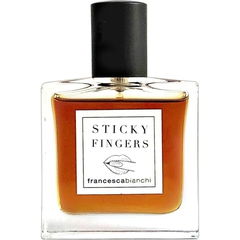
Sticky Fingers was my first purchase from the house of Francesca Bianchi, and has remained a favorite ever since. The main character is the big patchouli of the opening — damp, herbal, moldy, and borderline boozy — with every facet beautifully expressed. Unfortunately, however, it also lasts for a very short time compared to the longevity of the perfume as a whole.
What remains is a treacly, animalic amalgam reminiscent of honey, remotely similar to the drydown of certain classic orientals, in the vein of Shalimar. At this stage, a mere shadow of the patchouli hides behind every other note. Heliotrope is perceivable every now and then as an almondy facet. Tonka adds to the overall sweetness, also simulating the aroma of tobacco leaves. Spices provide some warmth, but none of them stand out individually. Buttery orris, castoreum and musks round up the composition and prevent it from entering the gourmand category by adding an inherent carnality.
The name Sticky Fingers was borrowed from an eponymous 1971 album by The Rolling Stones; in my opinion, a very apt choice. The double meaning of said album title is captured perfectly in this perfume, which manages to bridge the edible and the sexual.
Yet again — how I wish that the patchouli could last longer! After all, that was the defining scent of the 70s, a rockstar among perfumery notes.
Cotton candy melancholy
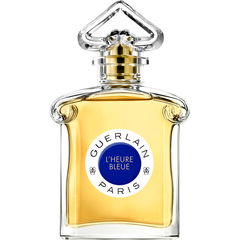
It’s hard not to get emotional when writing about one of the greatest perfumes of all time, Guerlain’s 1912 L’Heure Bleue. Words aren’t enough to describe the beauty of this creation, as pivotal in the history of perfumery as Monet’s Impression, Sunrise was to painting.
During a walk along the Seine, Jacques Guerlain noticed the deep blue of twilight and was struck by a feeling so intense, he could only express it in a perfume. His creative process was that of a romantic, emphasizing inspiration and intuition.
In terms of composition, this creation lends itself well to musical analogies. A string quartet among olfactory symphonies, its voice is soft and subdued. Depth is thus achieved through contrast rather than density. Almondy heliotrope, vanilla and tonka beans provide a saccharine aspect, borderline gourmand. Meanwhile, purple florals give the impression of talcum powder and vintage cosmetics; violets reference his 1906 Après L’Ondée, a last moment of innocence, and iris answers in a minor key, evoking feelings of melancholy and impending doom. Spicy cloves and aniseed prevent the fragrance from becoming cloying. The overall effect is reminiscent of cotton candy, with a diffuse and airy quality.
Another source of inspiration worth mentioning is François Coty’s L’Origan (1905), which Guerlain had studied and admired. Although less melancholic, it too explored the floral oriental theme with a juxtaposition of spices, purple flowers and resins.
L’Heure Bleue is the last romantic perfume on the market — a farewell to the Belle Époque simultaneously prophesying the horrors of the First World War. More than a century after, Guerlain’s elegy in a bottle still mourns the lives of the millions who died, the old world swallowed by a night which would never find its star.
Ancient greens
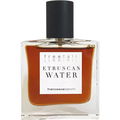
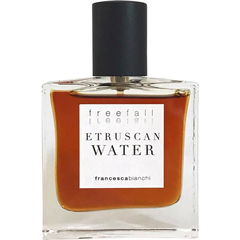
Francesca Bianchi’s Etruscan Water is one of the most faithful contemporary takes on the chypre theme, alluding to some of the most iconic masculines of the past. It is equal parts bitter and sweet, fresh yet very dense, a game of contrasts masterfully showcasing the complexity of the genre.
The opening is very green, with basil for a Mediterranean vibe and tart citruses. Shortly after follows a syrupy phase with immortelle and resins, which lasts for several hours, drying down to a base of moss and salt. None of these elements are clearly outlined; a layer of dust remains throughout the performance, hiding the seams while also symbolizing the passage of time.
Despite its retro character, this fragrance should also appeal to current customers. After all, it smells like nature, like being at peace with yourself, transporting one to a Tuscan beach surrounded by thick vegetation and ancient ruins. These associations make a great scent for the summer with unusual lasting power.
In my opinion, Etruscan Water is Francesca at her best, managing to incorporate her signature into a classic structure of perfumery.
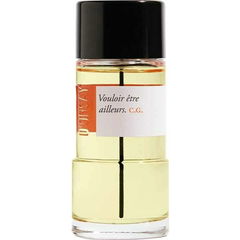
Elsewhere
Every year in June, the linden trees fill the city with their honeyed, polleny scent, evoking memories of distant times and a longing for innocence, leaving one wishing to be young again.
The fragrant blossoms have always delighted the noses of perfumers; however, they’re a so called mute flower, that is, a flower whose scent cannot be extracted. Therefore, an accord has to be composed. Many attempts have been made and, in my opinion, very few actually resemble the natural.
Tilleul was launched in 1915. The version currently available is the 1995 one though, aptly renamed Vouloir être ailleurs (meaning “to want to be elsewhere”). The nose behind the reformulation was the one and only Olivia Giacobetti, a master of transparency. Her style definitely shines through, diaphanous and subtle; a sweetish watercolor of watery cyclamens, petitgrain and pollen. A whisper of hay in the background reminds one that C.G. isn’t a mere product of a child’s imagination — it belongs to the plant kingdom.
Milky jasmine
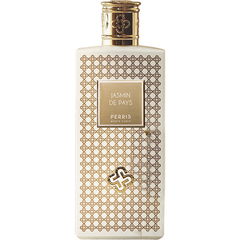
Composed by one of my all time favorite perfumers, Jean-Claude Ellena, Jasmin de Pays is in my opinion one of the best jasmine soliflores on the market. This perfume is milky, creamy and soft, with a ripe fruit undertone, however opaque considering Ellena’s usually more transparent signature. Medicinal marigold and cloves provide a nice contrast, preventing the jasmine from becoming cloying. The resulting effect is borderline gourmand. On the other hand, the indole is toned down, making it a safe choice for any occasion. Can be worn all year round too, allthough I think it would be especially pleasant during the summer months.