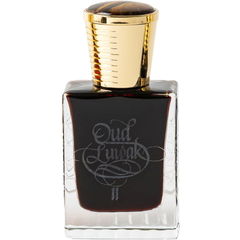
Genesis666
Reviews
Filter & Sort
Detailed
Translated · Show original
My AHA(B) Moment.
I confess. Guilty of judging this fragrance far too early.
But let me start like this. I no longer buy anything blind - period. I have fallen flat on my face too many times regarding blind buys, and at some point, I thought it wise to take Einstein's quote to heart: “The definition of insanity is doing the same thing over and over again and expecting different results.” Therefore, I now test beforehand, although this also carries the risk of not being able to buy a bottle due to increasingly frequent, strong limitations.
To be honest, there wasn't much for me in Adam's recent releases, but since I have been fascinated by Animalika since the beginning of my passion for fragrances, I had to at least test the entire Musk Collection.
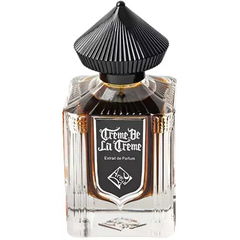
So I tested “Creme de la Creme” and was speechless… speechless because it smelled so boring. Somewhat over-seasoned, somewhat creamy, and somewhat like modeling clay, and I’m not talking colloquially about the physical kind of our main currency but rather the type of clay that children use to build strange figures, and one gets upset that it seems impossible to simply NOT mix the individual colors into a gray lump. Be that as it may, I didn’t particularly like it and set the sample aside more than unimpressed. A few days later, I was actually going to spray Cuirtis, but apparently, I grabbed the wrong sample and completely doused myself. “Wow, Cuirtis is great but completely different than expected.” When I put the little spray back, my expression probably resembled that of the little “we are going to Disneyland” girl in the backseat of the car (EVERYONE KNOWS IT).
It was CC. I was totally blown away. How could it be that I suddenly perceived the fragrance so positively? Sure, still a spicy opening, light pepper, a bit of nutmeg and sage, but at the same time, I found myself in the most beautiful amber-oud cloud I have ever smelled. No cola, no marzipan, just oud and ambergris in a way that I had never experienced before, completely free from any associations. The oud from the Philippines, classified as “sinking Grade,” which essentially means that the wood is so infected that the amount of resin formed in reaction is so high that it sinks in water, is according to Adam the highest quality oud he has ever used and extracted for a fragrance. On my skin, it comes through super prominently. Completely free from fermentation or animal notes, it unfolds a beautifully resinous, slightly mineral “blue” scent that complements the main player of this composition extremely well.
Now to the real star of this fragrance. Ambergris. Even in the world-famous novel “Moby Dick,” Herman Melville dedicates an entire chapter (92) in lyrical form to Captain Ahab about this equally mysterious and fascinating substance, writing: “I forgot to say that in this ambergris some hard, round, bony plates were found, which Stubb first thought might be the buttons of sailors' sweaters; but it later turned out that they were nothing more than pieces of small squid bones that had been embalmed in this way.”
That the immortality of this highly fragrant amber is found at the heart of such decay - is that not something? Think of the words of Saint Paul in the Corinthians about decay and incorruption, that we are sown in dishonor, but raised in glory. And also remember the saying of Paracelsus about what makes the best musk.”
The ambergris still growing in the belly of the whale serves solely to protect the sperm whale's digestive tract from being turned into minced meat by razor-sharp squid beaks. Yesssss… nature. That this stuff smells extremely attractive to some people is of no concern to the marine mammal underlying Moby Dick.
In the case of CC, however, white ambergris was used, which floats on the water's surface for months or even decades, drying out in the sun and “ripening” into a stone-like chunk that loses any fecal aspects that are clearly noticeable in fresh ambergris.
Three different tinctures are used. 5%, 10%, and ambergris resinoid, which is equivalent to a 100% concentrate. I contacted Adam about this, and he explained to me that an extremely concentrated tincture is heated until the entire liquid evaporates, resulting in a beeswax-like consistency.
Call me a chatterbox, but I claim that one can perceive the different concentrations. If one is a bit familiar with and engaged with the raw material, one can clearly recognize countless facets of this diverse substance. Nuances of tobacco, vanilla, caramel, various resins like benzoin and frankincense accompanied by a fine menthol freshness combined with an unbelievably beautiful, slightly mineral, balance-creating saltiness that reminds one of sun-dried skin on a Caribbean vacation.
The addition of sandalwood and ylang-ylang creates a creamy texture that, in my opinion, perfectly contrasts the dry, resinous aspects of oud and amber. In the meantime, a very light sunscreen character even develops on my skin.
In his presentation video for the Musk Collection, Adam says about CC: “I wanted the result to be quite minimalistic.” This statement holds true in that the main focus of the fragrance actually lies on just three ingredients: ambergris, oud, and sandalwood. However, a paradox arises from the incredible complexity that each of these raw materials CONTAINS.
I have now intensely engaged with the fragrance for a week, and with each wear, it gets even better for me. Whether the fragrance will continue to mature and how it may change, I cannot predict, but even if it stays exactly as it is now, it is a 10/10 for me. There hasn’t been a composition that has captivated me like Creme de la Creme since “Rauque.” I am already looking for a backup, and that’s despite the fact that I initially disliked it so much. This shows me once again that one should never judge too quickly and that this realization, when applied to all areas of life, represents a credo that positively influences many things in the long run. Thank you for reading.
But let me start like this. I no longer buy anything blind - period. I have fallen flat on my face too many times regarding blind buys, and at some point, I thought it wise to take Einstein's quote to heart: “The definition of insanity is doing the same thing over and over again and expecting different results.” Therefore, I now test beforehand, although this also carries the risk of not being able to buy a bottle due to increasingly frequent, strong limitations.
To be honest, there wasn't much for me in Adam's recent releases, but since I have been fascinated by Animalika since the beginning of my passion for fragrances, I had to at least test the entire Musk Collection.
So I tested “Creme de la Creme” and was speechless… speechless because it smelled so boring. Somewhat over-seasoned, somewhat creamy, and somewhat like modeling clay, and I’m not talking colloquially about the physical kind of our main currency but rather the type of clay that children use to build strange figures, and one gets upset that it seems impossible to simply NOT mix the individual colors into a gray lump. Be that as it may, I didn’t particularly like it and set the sample aside more than unimpressed. A few days later, I was actually going to spray Cuirtis, but apparently, I grabbed the wrong sample and completely doused myself. “Wow, Cuirtis is great but completely different than expected.” When I put the little spray back, my expression probably resembled that of the little “we are going to Disneyland” girl in the backseat of the car (EVERYONE KNOWS IT).
It was CC. I was totally blown away. How could it be that I suddenly perceived the fragrance so positively? Sure, still a spicy opening, light pepper, a bit of nutmeg and sage, but at the same time, I found myself in the most beautiful amber-oud cloud I have ever smelled. No cola, no marzipan, just oud and ambergris in a way that I had never experienced before, completely free from any associations. The oud from the Philippines, classified as “sinking Grade,” which essentially means that the wood is so infected that the amount of resin formed in reaction is so high that it sinks in water, is according to Adam the highest quality oud he has ever used and extracted for a fragrance. On my skin, it comes through super prominently. Completely free from fermentation or animal notes, it unfolds a beautifully resinous, slightly mineral “blue” scent that complements the main player of this composition extremely well.
Now to the real star of this fragrance. Ambergris. Even in the world-famous novel “Moby Dick,” Herman Melville dedicates an entire chapter (92) in lyrical form to Captain Ahab about this equally mysterious and fascinating substance, writing: “I forgot to say that in this ambergris some hard, round, bony plates were found, which Stubb first thought might be the buttons of sailors' sweaters; but it later turned out that they were nothing more than pieces of small squid bones that had been embalmed in this way.”
That the immortality of this highly fragrant amber is found at the heart of such decay - is that not something? Think of the words of Saint Paul in the Corinthians about decay and incorruption, that we are sown in dishonor, but raised in glory. And also remember the saying of Paracelsus about what makes the best musk.”
The ambergris still growing in the belly of the whale serves solely to protect the sperm whale's digestive tract from being turned into minced meat by razor-sharp squid beaks. Yesssss… nature. That this stuff smells extremely attractive to some people is of no concern to the marine mammal underlying Moby Dick.
In the case of CC, however, white ambergris was used, which floats on the water's surface for months or even decades, drying out in the sun and “ripening” into a stone-like chunk that loses any fecal aspects that are clearly noticeable in fresh ambergris.
Three different tinctures are used. 5%, 10%, and ambergris resinoid, which is equivalent to a 100% concentrate. I contacted Adam about this, and he explained to me that an extremely concentrated tincture is heated until the entire liquid evaporates, resulting in a beeswax-like consistency.
Call me a chatterbox, but I claim that one can perceive the different concentrations. If one is a bit familiar with and engaged with the raw material, one can clearly recognize countless facets of this diverse substance. Nuances of tobacco, vanilla, caramel, various resins like benzoin and frankincense accompanied by a fine menthol freshness combined with an unbelievably beautiful, slightly mineral, balance-creating saltiness that reminds one of sun-dried skin on a Caribbean vacation.
The addition of sandalwood and ylang-ylang creates a creamy texture that, in my opinion, perfectly contrasts the dry, resinous aspects of oud and amber. In the meantime, a very light sunscreen character even develops on my skin.
In his presentation video for the Musk Collection, Adam says about CC: “I wanted the result to be quite minimalistic.” This statement holds true in that the main focus of the fragrance actually lies on just three ingredients: ambergris, oud, and sandalwood. However, a paradox arises from the incredible complexity that each of these raw materials CONTAINS.
I have now intensely engaged with the fragrance for a week, and with each wear, it gets even better for me. Whether the fragrance will continue to mature and how it may change, I cannot predict, but even if it stays exactly as it is now, it is a 10/10 for me. There hasn’t been a composition that has captivated me like Creme de la Creme since “Rauque.” I am already looking for a backup, and that’s despite the fact that I initially disliked it so much. This shows me once again that one should never judge too quickly and that this realization, when applied to all areas of life, represents a credo that positively influences many things in the long run. Thank you for reading.
9 Comments
Translated · Show original
Twilight Zone
I’ll start like this - I have become cautious with Ensar Oud.
I am and remain a big fan of Ensar's creations, but the recent releases have mostly been "flops" for me, to be honest. Since "Siber Extreme," there hasn't really been anything that has truly convinced me. And as I have mentioned frequently by now, with the prices, a fragrance MUST convince 100%.
Due to this realization, I now force myself to sample every fragrance first - even if it means that the potential purchase candidate might already be "sold out" by the time the sample arrives. If in doubt, SOMEONE SOMEWHERE will certainly want to sell their bottle again.
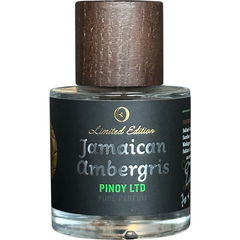
In the case of JaAm, I was torn. On one hand, I really like ambergris, but on the other hand, I found it unbearable in Tigerwood PP. Some ingredients like Jambu or Massoia bark were completely unknown to me until now. Is that good or bad? It could be interesting. But it could also go wrong since with Ensar, in most cases, you have to rely at least initially on the note descriptions and your olfactory memory. But if you don't know certain ingredients at all... difficult.
By the way, Jambu is a plant native to Brazil, which not only serves as a spice for traditional dishes but also finds use in pain therapy, as the spilanthol contained in the plant acts as a natural painkiller.
The Massoia tree is a laurel family plant from Indonesia, whose bark is processed into "Massoia lactones" using steam distillation. The essential oil obtained from it has an intensely bitter coconut scent.
Another factor that I found both very exciting and very critical - "Pinoy LTD Edition." The Pinoy LTD. is once again one of Ensar's famously notorious Oriscent oils. I have had the opportunity to smell this Oud in its pure form and was extremely impressed back then, even though I knew that I would never spend $1500 for 3g of Oud. Pinoy LTD is a rare Filipino Oud with a very special character. On one hand, it smells very "blue," almost maritime, which is probably why Ensar chose this Oud as a complement to the also oceanic ambergris; on the other hand, it is also smoky and slightly powdery. A truly extraordinarily good oil. So was this claim an artistically successful move, or was it just another reason to drive up the price and generate hype, similar to the "Chinese Exclusive"? More on that shortly.
Let's first talk about the scent.
I really like the opening. After the first spray, an incredibly pleasant, exotic, tropical scent unfolds that actually reminds me of a Caribbean vacation. Somehow fruity, floral, but at the same time, you immediately perceive a very strong ambergris note. And that is truly brilliant. Slightly animalistic, salty-mineral - the scent of sun-dried sea salt on the skin. As if you were sipping a fruity cocktail right on the white sandy beach. In the background, the sound of the sea. So the name fits not only in relation to the ingredients but also in relation to the olfactory impressions in my mind. Strong!
However, in the middle, my initial enthusiasm was somewhat dampened. Somehow, the fragrance gradually develops into a very jasmine-heavy, sweet mixture that reminds me of red lollipops. Not just any lollipops. A very specific kind, but I can't quite recall the name. I think it was something with forest fruit. You can still smell the amber note in the background, but it is by no means as intense as at the beginning. I personally find that a bit disappointing. I like the slightly bitter opening of the fragrance by far the best. The longer the fragrance is on the skin, the more "mass-appealing" but also less spectacular it becomes. I would almost claim that JaAm is probably the most mass-appealing fragrance that Ensar has ever produced. The coconut note caused by the Massoia bark additionally creates a minimal sunscreen vibe. If I hadn't had the notes in front of me, I could have sworn there was also a decent portion of ylang-ylang in it.
But wait a minute... Where is the Oud? Where is Pinoy LTD? To be honest, if I didn't know better, I would almost say that Ensar forgot it. I don't even get a WHIFF of Oud here. Especially not from the special scent of Pinoy LTD. However, I am not surprised by this in hindsight. With 1.2 g in 50 ml, you can almost guess that such a complex Oud won't really come into its own next to all the other very prominent notes like jasmine, frangipani, rose, etc. Why 1.2 g and not 1 g or 1.5 g? I really have no clue. In terms of the valuable Oriscent oil, we are once again facing exactly the same problem as with the previously mentioned Chinese Exclusive. It simply gets lost and only makes itself known in the price. Ensar just knows how to make exclusive fragrances seem EVEN MORE EXCLUSIVE.
All in all, JaAm is a good, very pleasant, and high-quality, naturally smelling fragrance that personally convinces me especially in the opening. In the middle and in the dry down, it becomes a bit too heavy-floral, jasmine-heavy, and sweet for my taste. But that's more of a personal thing and shouldn't be taken as a negative judgment per se. The addition of such valuable Oud, which according to Ensar, is of course "on the house," could really have been spared in my opinion.
That is also the reason for the title of my review. "Twilight Zone." On one hand, I consider JaAm to be a good fragrance; on the other hand, the addition of "Pinoy LTD. Edition" has once again raised expectations too high. So why not just "Jamaican Ambergris"?
Longevity and sillage are absolutely fine for a 100% natural fragrance. You can perceive it well, but it is by no means intrusive or even overpowering; rather, it creates a pleasant scent aura. Absolutely unisex wearable! I also like it on my girlfriend. And she likes it too.
I am and remain a big fan of Ensar's creations, but the recent releases have mostly been "flops" for me, to be honest. Since "Siber Extreme," there hasn't really been anything that has truly convinced me. And as I have mentioned frequently by now, with the prices, a fragrance MUST convince 100%.
Due to this realization, I now force myself to sample every fragrance first - even if it means that the potential purchase candidate might already be "sold out" by the time the sample arrives. If in doubt, SOMEONE SOMEWHERE will certainly want to sell their bottle again.
In the case of JaAm, I was torn. On one hand, I really like ambergris, but on the other hand, I found it unbearable in Tigerwood PP. Some ingredients like Jambu or Massoia bark were completely unknown to me until now. Is that good or bad? It could be interesting. But it could also go wrong since with Ensar, in most cases, you have to rely at least initially on the note descriptions and your olfactory memory. But if you don't know certain ingredients at all... difficult.
By the way, Jambu is a plant native to Brazil, which not only serves as a spice for traditional dishes but also finds use in pain therapy, as the spilanthol contained in the plant acts as a natural painkiller.
The Massoia tree is a laurel family plant from Indonesia, whose bark is processed into "Massoia lactones" using steam distillation. The essential oil obtained from it has an intensely bitter coconut scent.
Another factor that I found both very exciting and very critical - "Pinoy LTD Edition." The Pinoy LTD. is once again one of Ensar's famously notorious Oriscent oils. I have had the opportunity to smell this Oud in its pure form and was extremely impressed back then, even though I knew that I would never spend $1500 for 3g of Oud. Pinoy LTD is a rare Filipino Oud with a very special character. On one hand, it smells very "blue," almost maritime, which is probably why Ensar chose this Oud as a complement to the also oceanic ambergris; on the other hand, it is also smoky and slightly powdery. A truly extraordinarily good oil. So was this claim an artistically successful move, or was it just another reason to drive up the price and generate hype, similar to the "Chinese Exclusive"? More on that shortly.
Let's first talk about the scent.
I really like the opening. After the first spray, an incredibly pleasant, exotic, tropical scent unfolds that actually reminds me of a Caribbean vacation. Somehow fruity, floral, but at the same time, you immediately perceive a very strong ambergris note. And that is truly brilliant. Slightly animalistic, salty-mineral - the scent of sun-dried sea salt on the skin. As if you were sipping a fruity cocktail right on the white sandy beach. In the background, the sound of the sea. So the name fits not only in relation to the ingredients but also in relation to the olfactory impressions in my mind. Strong!
However, in the middle, my initial enthusiasm was somewhat dampened. Somehow, the fragrance gradually develops into a very jasmine-heavy, sweet mixture that reminds me of red lollipops. Not just any lollipops. A very specific kind, but I can't quite recall the name. I think it was something with forest fruit. You can still smell the amber note in the background, but it is by no means as intense as at the beginning. I personally find that a bit disappointing. I like the slightly bitter opening of the fragrance by far the best. The longer the fragrance is on the skin, the more "mass-appealing" but also less spectacular it becomes. I would almost claim that JaAm is probably the most mass-appealing fragrance that Ensar has ever produced. The coconut note caused by the Massoia bark additionally creates a minimal sunscreen vibe. If I hadn't had the notes in front of me, I could have sworn there was also a decent portion of ylang-ylang in it.
But wait a minute... Where is the Oud? Where is Pinoy LTD? To be honest, if I didn't know better, I would almost say that Ensar forgot it. I don't even get a WHIFF of Oud here. Especially not from the special scent of Pinoy LTD. However, I am not surprised by this in hindsight. With 1.2 g in 50 ml, you can almost guess that such a complex Oud won't really come into its own next to all the other very prominent notes like jasmine, frangipani, rose, etc. Why 1.2 g and not 1 g or 1.5 g? I really have no clue. In terms of the valuable Oriscent oil, we are once again facing exactly the same problem as with the previously mentioned Chinese Exclusive. It simply gets lost and only makes itself known in the price. Ensar just knows how to make exclusive fragrances seem EVEN MORE EXCLUSIVE.
All in all, JaAm is a good, very pleasant, and high-quality, naturally smelling fragrance that personally convinces me especially in the opening. In the middle and in the dry down, it becomes a bit too heavy-floral, jasmine-heavy, and sweet for my taste. But that's more of a personal thing and shouldn't be taken as a negative judgment per se. The addition of such valuable Oud, which according to Ensar, is of course "on the house," could really have been spared in my opinion.
That is also the reason for the title of my review. "Twilight Zone." On one hand, I consider JaAm to be a good fragrance; on the other hand, the addition of "Pinoy LTD. Edition" has once again raised expectations too high. So why not just "Jamaican Ambergris"?
Longevity and sillage are absolutely fine for a 100% natural fragrance. You can perceive it well, but it is by no means intrusive or even overpowering; rather, it creates a pleasant scent aura. Absolutely unisex wearable! I also like it on my girlfriend. And she likes it too.
2 Comments
Translated · Show original
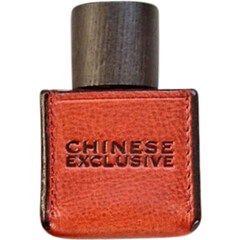
Chinese! Exclusive?
Chinese ouds have captivated me, I admit!
Whether it’s “Hailam Kilam,” “China Syang,” or “Hainan 2005.” They all have something special, something unique that sets them apart from all other oud varieties.
They are much softer and more subdued than, for example, Hindi, Cambodi, or Malay ouds. Not that I don’t also really like and appreciate their characteristics, but ouds from regions like Hainan or Yunnan simply provide me with a unique experience. No trace of barnyard, leather, or the like. In the opening, they are slightly bitter, medicinal, reminiscent of fresh, light sawdust. Lightly sweet and very creamy in the base. Hailam Kilam, for example, strongly reminds me of white chocolate.
Aside from the fact that these ouds smell special, they are also among the most expensive and rarest varieties that exist. Most experts say that wild Chinese oud is practically non-existent today.
Even the good Russian Adam made it clear during the presentation of his “Chinese Oud” that without the help of his friend “Jamira Oud,” who is also a distiller, he would have had no chance of using this rare and extremely costly material for one of his fragrances.
So it’s no wonder that I was more than just expectant when it came to the officially first “Oriscent Perfume,” which, according to Ensar, contains large quantities of various Chinese ouds like Hailam Kilam, Yunnan Kinam, and Hainan Kinam.
For those who can’t quite place the term “Oriscent”: That was the name of the brand in its early days. The name symbolizes a special “distillation technique” that, according to Ensar, only he himself masters and which remains unmatched in product quality to this day (at least according to his own statement). The brand is now called “Ensar Oud,” but to this day, you can still purchase vintage ouds like “Kyara LTD,” “Royal Kinam,” “White Kinam,” or “Nah Trang LTD” on the website, which were distilled using this special technique. Perhaps it can be compared to the “Swiss Made” seal in watch movements. One can certainly sense where this branding, alongside the quality, also makes its mark. :-)
Inspired by the Hainan attar, these extremely rare oud varieties should be accompanied by some citrus-fruity top notes and white flowers as heart notes, as well as a creamy base of sandalwood, vanilla, and beeswax.
Considering the slightly dried fruit and vanilla pudding reminiscent aroma of the ouds, this sounded very fitting and symbiotic to me at first, although I did have some concern, not least due to the sometimes very dominant notes like pepper, tuberose, and saffron, that the fine nuances of these beautiful ouds might get overshadowed.
Now to the scent: The opening was, as expected, extremely citrusy. Not necessarily sharp citrus. More like the flesh of the fruit, almost identical to the smell that wafts into your nose when you nibble on the peel of a fresh mandarin. The scent that spreads throughout the room within seconds and that you can’t quite get off your fingers... perhaps a bit softer. Quite quickly, however, a rather strong, papery sweetness joins in, mixed with a slightly bitter, medicinal note that clearly comes from the oud and is truly typical for Chinese ouds. I somehow had a DIRECT image of a freshly opened pack of Jaffa Cakes or chocolate refreshment sticks in my mind. The combination of the oud, pepper, saffron, sandalwood, and vanilla creates an impression of dark, bitter chocolate. Almost gourmand.
After a few minutes, orange blossom and tuberose add a slightly soapy touch, which is further enhanced in conjunction with the powdery but by no means animalistic musk. And then… yes, and then? Then not much else happens. I’ve worn the scent now for a total of 3 days in a row - sometimes on my arm, sometimes on my neck, in the crook of my arm on clothing… and I must say, aside from the fact that it becomes sweeter over time, it doesn’t undergo much transformation on me.
Please don’t get me wrong - linearity is not inherently a bad thing. For me, this only applies if the scent itself is already interesting enough. In the case of Chinese Exclusive, I must admit that while the scent is not bad, it is also far from spectacular. My initial skepticism regarding the dominant notes in contrast to the very fine but complex ouds has unfortunately been confirmed. My girlfriend even said the scent smells almost 1:1 like her hair treatment. Aiaiai…
The strong citrus and somewhat heavy sweetness suppress the beauty and complexity of the actual main players so much that, in my opinion, they are hard to “enjoy.” Even after several hours and in the dry down, Yunnan Kinam and Co. unfortunately fail to break through the rest of the pyramid and present their true beauty. These oils are not comparable in strength and radiance to ouds like “Tigerwood” or “Hindistan Kala,” which you can practically smell through the bottle cap. I find them, as I said, much more fragile and fine, softer and more subdued. Compared to most ouds, they are almost shy.
I would even go so far as to say that these ouds are not suitable for a spray perfume at all. They are already so complex and fine that it is almost impossible to do them justice within a perfume. The dry down has for me the typical, slightly sweet musk/sandalwood Ensar base. I would bet that contrary to the claims, Bourbon vetiver from Madagascar is also included.
That Chinese Exclusive, like actually all other EO scents, smells incredibly natural and high-quality, I probably don’t need to mention explicitly anymore. After the Tigerwood PP, however, I am now firmly of the opinion that such highly complex and rare ouds, just like Kinam distillations, are hard to fully appreciate within a perfume. I consider the Hainan attar to be a sensible alternative. It ultimately offers a very similar DNA and performance, but costs a fraction, although this one is still costly.
When it comes to the pure appreciation and rarity of the ingredients, with Chinese Exclusive you certainly have an almost unique collector's piece in your possession. However, if you expect a unique and creative DNA that places these wonderful oils in the spotlight and does not overshadow them, you will likely be disappointed in my opinion. Especially if you have smelled them in their pure form. Additionally, CE is a very quiet scent. Neither sillage nor longevity could really convince me. After just 1-2 hours, the scent is EXTREMELY close to the skin. While you can still faintly smell the scent on the skin after 8 hours, by then it is “only” the typical Ensar base and no longer a clearly recognizable “Chinese Exclusive.” Further in the comments...
Whether it’s “Hailam Kilam,” “China Syang,” or “Hainan 2005.” They all have something special, something unique that sets them apart from all other oud varieties.
They are much softer and more subdued than, for example, Hindi, Cambodi, or Malay ouds. Not that I don’t also really like and appreciate their characteristics, but ouds from regions like Hainan or Yunnan simply provide me with a unique experience. No trace of barnyard, leather, or the like. In the opening, they are slightly bitter, medicinal, reminiscent of fresh, light sawdust. Lightly sweet and very creamy in the base. Hailam Kilam, for example, strongly reminds me of white chocolate.
Aside from the fact that these ouds smell special, they are also among the most expensive and rarest varieties that exist. Most experts say that wild Chinese oud is practically non-existent today.
Even the good Russian Adam made it clear during the presentation of his “Chinese Oud” that without the help of his friend “Jamira Oud,” who is also a distiller, he would have had no chance of using this rare and extremely costly material for one of his fragrances.
So it’s no wonder that I was more than just expectant when it came to the officially first “Oriscent Perfume,” which, according to Ensar, contains large quantities of various Chinese ouds like Hailam Kilam, Yunnan Kinam, and Hainan Kinam.
For those who can’t quite place the term “Oriscent”: That was the name of the brand in its early days. The name symbolizes a special “distillation technique” that, according to Ensar, only he himself masters and which remains unmatched in product quality to this day (at least according to his own statement). The brand is now called “Ensar Oud,” but to this day, you can still purchase vintage ouds like “Kyara LTD,” “Royal Kinam,” “White Kinam,” or “Nah Trang LTD” on the website, which were distilled using this special technique. Perhaps it can be compared to the “Swiss Made” seal in watch movements. One can certainly sense where this branding, alongside the quality, also makes its mark. :-)
Inspired by the Hainan attar, these extremely rare oud varieties should be accompanied by some citrus-fruity top notes and white flowers as heart notes, as well as a creamy base of sandalwood, vanilla, and beeswax.
Considering the slightly dried fruit and vanilla pudding reminiscent aroma of the ouds, this sounded very fitting and symbiotic to me at first, although I did have some concern, not least due to the sometimes very dominant notes like pepper, tuberose, and saffron, that the fine nuances of these beautiful ouds might get overshadowed.
Now to the scent: The opening was, as expected, extremely citrusy. Not necessarily sharp citrus. More like the flesh of the fruit, almost identical to the smell that wafts into your nose when you nibble on the peel of a fresh mandarin. The scent that spreads throughout the room within seconds and that you can’t quite get off your fingers... perhaps a bit softer. Quite quickly, however, a rather strong, papery sweetness joins in, mixed with a slightly bitter, medicinal note that clearly comes from the oud and is truly typical for Chinese ouds. I somehow had a DIRECT image of a freshly opened pack of Jaffa Cakes or chocolate refreshment sticks in my mind. The combination of the oud, pepper, saffron, sandalwood, and vanilla creates an impression of dark, bitter chocolate. Almost gourmand.
After a few minutes, orange blossom and tuberose add a slightly soapy touch, which is further enhanced in conjunction with the powdery but by no means animalistic musk. And then… yes, and then? Then not much else happens. I’ve worn the scent now for a total of 3 days in a row - sometimes on my arm, sometimes on my neck, in the crook of my arm on clothing… and I must say, aside from the fact that it becomes sweeter over time, it doesn’t undergo much transformation on me.
Please don’t get me wrong - linearity is not inherently a bad thing. For me, this only applies if the scent itself is already interesting enough. In the case of Chinese Exclusive, I must admit that while the scent is not bad, it is also far from spectacular. My initial skepticism regarding the dominant notes in contrast to the very fine but complex ouds has unfortunately been confirmed. My girlfriend even said the scent smells almost 1:1 like her hair treatment. Aiaiai…
The strong citrus and somewhat heavy sweetness suppress the beauty and complexity of the actual main players so much that, in my opinion, they are hard to “enjoy.” Even after several hours and in the dry down, Yunnan Kinam and Co. unfortunately fail to break through the rest of the pyramid and present their true beauty. These oils are not comparable in strength and radiance to ouds like “Tigerwood” or “Hindistan Kala,” which you can practically smell through the bottle cap. I find them, as I said, much more fragile and fine, softer and more subdued. Compared to most ouds, they are almost shy.
I would even go so far as to say that these ouds are not suitable for a spray perfume at all. They are already so complex and fine that it is almost impossible to do them justice within a perfume. The dry down has for me the typical, slightly sweet musk/sandalwood Ensar base. I would bet that contrary to the claims, Bourbon vetiver from Madagascar is also included.
That Chinese Exclusive, like actually all other EO scents, smells incredibly natural and high-quality, I probably don’t need to mention explicitly anymore. After the Tigerwood PP, however, I am now firmly of the opinion that such highly complex and rare ouds, just like Kinam distillations, are hard to fully appreciate within a perfume. I consider the Hainan attar to be a sensible alternative. It ultimately offers a very similar DNA and performance, but costs a fraction, although this one is still costly.
When it comes to the pure appreciation and rarity of the ingredients, with Chinese Exclusive you certainly have an almost unique collector's piece in your possession. However, if you expect a unique and creative DNA that places these wonderful oils in the spotlight and does not overshadow them, you will likely be disappointed in my opinion. Especially if you have smelled them in their pure form. Additionally, CE is a very quiet scent. Neither sillage nor longevity could really convince me. After just 1-2 hours, the scent is EXTREMELY close to the skin. While you can still faintly smell the scent on the skin after 8 hours, by then it is “only” the typical Ensar base and no longer a clearly recognizable “Chinese Exclusive.” Further in the comments...
11 Comments
Translated · Show original
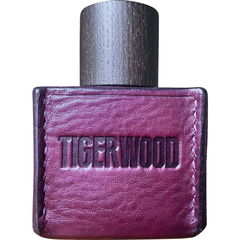
The Beauty and the Beast
As a big fan of the Tigerwood oils, especially the Tigerwood Royale, I was more than hyped when I received the news that these almost "legendary" ouds would now also be available as a spray perfume, or as EO calls it; "PureParfum." Never before have I clicked the "Order Button" so quickly as in this case.
For those who are not yet familiar with the Tigerwoods - these are wild vintage ouds from Malaysia that were distilled between 1990 and 2001. In this case, not by Ensar himself. According to him, he purchased the oils from a Chinese oud tycoon, and besides him, other bottles are exclusively owned by the Queen of Abu Dhabi.
What makes these ouds so special in my opinion is the absolutely extraordinary scent profile, which is among the most complex I have ever smelled in agarwood oils. It is so complex that it is difficult to describe. A mix of mineral, earthy, leathery, woody, and mossy. One of the most fitting descriptions would probably be the term "petrichor," which describes the typical smell of the atmosphere just before a summer rain - everyone knows and loves that, right? "It smells like rain."
So much for the oud itself.
Ensar seems to be very aware of the significance of "Tigerwood Royale" among oud lovers around the world, and that is probably the reason why he decided to create a "spray variant" of it. The same strategy has already proven to be extremely successful with "Oud Yusuf PP."
Now to the PP: The notes sounded very promising to me. In my mind, the addition of coffee, vanilla, cocoa, tobacco, Kashmir musk, etc. created an extremely harmonious composition. The only thing that worried me a bit was the black ambergris, of which, according to the description, "huge amounts" were used. Black ambergris is by far the most extreme and animalistic variant and is therefore used rather rarely.
Even during the first test, I realized: "Oh dear, this is not going to be an easy scent."… and I am anything but squeamish when it comes to fragrances. In the opening, you can clearly recognize the Tigerwood DNA. Although, due to the logically lower concentration, it appears somewhat more transparent. In the first few minutes, very slight nuances of coffee, tobacco, and cocoa come through. Here, the emphasis is on "nuances." This means that the notes are present but in no way steal the show from the oud.
What follows is exactly what Ensar described: "A base-heavy blast, that ain’t pretty."
Tigerwood has no heart notes, which means that the opening transitions directly into the base after about 10 minutes, and the base is more than intense. The black ambergris is so incredibly potent that, in my opinion, it completely overwhelms all other notes and mercilessly pushes them down. Here and there, you can still recognize the slight gasoline-like, almost heavy oil-like notes of the oud, but the main player after 10 minutes is clearly Black Ambergris. As I said, I am really not sensitive when it comes to animalistic and extraordinary scents, but the Tigerwood base plays in a completely different league here.
I wouldn't even call it animalistic but rather "swampy." It reminds me of the smell of damp moors and rotting wood. Someone else described the scent as "the smell of Mordor" or "Smeagol's Signature" from "The Lord of the Rings." Unfortunately, I have to say that I find that quite accurate. An acquaintance of mine, who works as a dental technician, even thought the scent smelled like "halitosis." Admittedly, I had to Google that myself, but in principle, it describes nothing other than "bad breath."
In between, a trace of oak moss occasionally comes through, which, in my opinion, seems completely out of place, as it brings a strange chypre character to the composition and irritates more than it does any good for the scent.
To me, the entire fragrance gives an impression of being unbalanced, immature, and unfinished. Like a rushed attempt to quickly crown the "Tigerwood hype." I would even go so far as to say that it is more of a "smell" than a perfume.
The longer the scent stayed on my skin, the more unpleasant it became for me. Not just for me, but also for those around me. My girlfriend liked it at first, but that changed quite quickly. To make sure it wasn't just an unfortunate interaction between the scent and my skin chemistry, I sprayed the scent on a sweater for comparison - unfortunately with the same result.
To illustrate this with a short example: If I had to choose between War&Peace II, which I greatly appreciate but am aware is light-years away from being "everyday suitable," and the Tigerwood PP for a job interview, I would probably choose W&P II.
My personal conclusion:
Ensar has not done "Tigerwood Royale" any favors with the PP in my opinion. Perhaps it is solely due to the opulent use of black ambergris, or perhaps the focus of the fixatives should have been more on musk or on the higher-graded white ambergris. I don't know; I'm not a perfumer. But considering that Ensar claims to have used the last remnants of this valuable oil for the scent, I can only say: What a shame for this wonderful exceptional oud.
It is certainly an extreme challenge to create a tribute to such a product, but free after the motto: Never Change a running System, some things should perhaps just be left untouched. After all, no one would come up with the idea of modifying a Ferrari F40.
Admittedly, Ensar clearly communicated in advance that the scent would not be "pretty," and therefore I do not want to "complain" here but merely convey how the result smells to me.
I also want to EMPHASIZE VERY CLEARLY that this is merely my SUBJECTIVE opinion and perception. I am sure there are people who find the perfume absolutely brilliant. I respect that 100% and am happy for anyone who appreciates this scent as it is. Perhaps the scent just needs to mature for a few more months; we will see. Personally, I will definitely stick with the oil.
With such a high price, a scent must meet certain criteria for me, and unfortunately, Tigerwood does not fulfill that in this case. As always, the rule applies: Test it yourself and don't place too much value on my opinion. Only then can one judge objectively. At least as long as the word "objectively" even exists in the world of fragrances.
For those who are not yet familiar with the Tigerwoods - these are wild vintage ouds from Malaysia that were distilled between 1990 and 2001. In this case, not by Ensar himself. According to him, he purchased the oils from a Chinese oud tycoon, and besides him, other bottles are exclusively owned by the Queen of Abu Dhabi.
What makes these ouds so special in my opinion is the absolutely extraordinary scent profile, which is among the most complex I have ever smelled in agarwood oils. It is so complex that it is difficult to describe. A mix of mineral, earthy, leathery, woody, and mossy. One of the most fitting descriptions would probably be the term "petrichor," which describes the typical smell of the atmosphere just before a summer rain - everyone knows and loves that, right? "It smells like rain."
So much for the oud itself.
Ensar seems to be very aware of the significance of "Tigerwood Royale" among oud lovers around the world, and that is probably the reason why he decided to create a "spray variant" of it. The same strategy has already proven to be extremely successful with "Oud Yusuf PP."
Now to the PP: The notes sounded very promising to me. In my mind, the addition of coffee, vanilla, cocoa, tobacco, Kashmir musk, etc. created an extremely harmonious composition. The only thing that worried me a bit was the black ambergris, of which, according to the description, "huge amounts" were used. Black ambergris is by far the most extreme and animalistic variant and is therefore used rather rarely.
Even during the first test, I realized: "Oh dear, this is not going to be an easy scent."… and I am anything but squeamish when it comes to fragrances. In the opening, you can clearly recognize the Tigerwood DNA. Although, due to the logically lower concentration, it appears somewhat more transparent. In the first few minutes, very slight nuances of coffee, tobacco, and cocoa come through. Here, the emphasis is on "nuances." This means that the notes are present but in no way steal the show from the oud.
What follows is exactly what Ensar described: "A base-heavy blast, that ain’t pretty."
Tigerwood has no heart notes, which means that the opening transitions directly into the base after about 10 minutes, and the base is more than intense. The black ambergris is so incredibly potent that, in my opinion, it completely overwhelms all other notes and mercilessly pushes them down. Here and there, you can still recognize the slight gasoline-like, almost heavy oil-like notes of the oud, but the main player after 10 minutes is clearly Black Ambergris. As I said, I am really not sensitive when it comes to animalistic and extraordinary scents, but the Tigerwood base plays in a completely different league here.
I wouldn't even call it animalistic but rather "swampy." It reminds me of the smell of damp moors and rotting wood. Someone else described the scent as "the smell of Mordor" or "Smeagol's Signature" from "The Lord of the Rings." Unfortunately, I have to say that I find that quite accurate. An acquaintance of mine, who works as a dental technician, even thought the scent smelled like "halitosis." Admittedly, I had to Google that myself, but in principle, it describes nothing other than "bad breath."
In between, a trace of oak moss occasionally comes through, which, in my opinion, seems completely out of place, as it brings a strange chypre character to the composition and irritates more than it does any good for the scent.
To me, the entire fragrance gives an impression of being unbalanced, immature, and unfinished. Like a rushed attempt to quickly crown the "Tigerwood hype." I would even go so far as to say that it is more of a "smell" than a perfume.
The longer the scent stayed on my skin, the more unpleasant it became for me. Not just for me, but also for those around me. My girlfriend liked it at first, but that changed quite quickly. To make sure it wasn't just an unfortunate interaction between the scent and my skin chemistry, I sprayed the scent on a sweater for comparison - unfortunately with the same result.
To illustrate this with a short example: If I had to choose between War&Peace II, which I greatly appreciate but am aware is light-years away from being "everyday suitable," and the Tigerwood PP for a job interview, I would probably choose W&P II.
My personal conclusion:
Ensar has not done "Tigerwood Royale" any favors with the PP in my opinion. Perhaps it is solely due to the opulent use of black ambergris, or perhaps the focus of the fixatives should have been more on musk or on the higher-graded white ambergris. I don't know; I'm not a perfumer. But considering that Ensar claims to have used the last remnants of this valuable oil for the scent, I can only say: What a shame for this wonderful exceptional oud.
It is certainly an extreme challenge to create a tribute to such a product, but free after the motto: Never Change a running System, some things should perhaps just be left untouched. After all, no one would come up with the idea of modifying a Ferrari F40.
Admittedly, Ensar clearly communicated in advance that the scent would not be "pretty," and therefore I do not want to "complain" here but merely convey how the result smells to me.
I also want to EMPHASIZE VERY CLEARLY that this is merely my SUBJECTIVE opinion and perception. I am sure there are people who find the perfume absolutely brilliant. I respect that 100% and am happy for anyone who appreciates this scent as it is. Perhaps the scent just needs to mature for a few more months; we will see. Personally, I will definitely stick with the oil.
With such a high price, a scent must meet certain criteria for me, and unfortunately, Tigerwood does not fulfill that in this case. As always, the rule applies: Test it yourself and don't place too much value on my opinion. Only then can one judge objectively. At least as long as the word "objectively" even exists in the world of fragrances.
5 Comments
Translated · Show original
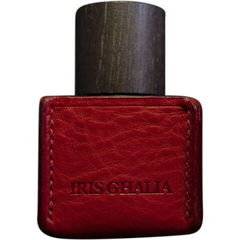
All good things come in threes. - Iris Ghalia 3.0 -
The term "Ghalia" comes from Arabic and means something like "precious" or "of inestimable value." It serves both as a female first name - although rather rare - and as a description for extremely valuable things that are actually reserved for the royal families of the Emirates.
Anyone who has had the pleasure of testing or even owning a fragrance from EO knows that Ensar, Adam, and Co. make no compromises when it comes to luxury and quality. This is reflected not only in the extraordinary scent experience but also in the price. However, when the addition "Ghalia" appears in the name, one can expect quite a bit, as it signifies not only that Ensar is particularly proud of this creation but also that materials from the "Royal Archive" of Sultan Qaboos, who was Sultan of Oman until his death in 2020, have once again found their place here. In the case of Iris Ghalia, it is ancient deer musk from Tibet and "Royal Ambergris."
The current version is already the third edition of this fragrance. Unfortunately, I only received my first sample after both previous versions had already sold out. For weeks, I chased a bottle, but no one even thought about selling it. A few weeks ago, the news came that there would now be a third, supposedly further improved version. An "Encore" of the original version. What was the difference between IG1 and IG2? In the original, three ingredients were used that were omitted in the second edition to make it less animalic and thus more "mass-appealing." In the third and current edition, these three ingredients are now back in use.
1. "Hyraceum" or "Africa Stone": This is the fossilized feces of the rock hyrax from South Africa. These usually centuries-old fragments are collected, dissolved in alcohol, and then used in the form of a tincture as a fixative in high-quality perfumes.
2. Castoreum or beaver musk: This secretion from a beaver's gland is described as extremely leathery, smoky, and animalic. It often serves as a base in classic leather accords.
3. Muskrat: This is essentially the same type of secretion as beaver musk, but it comes from a related species, the muskrat. In its pure form, this substance is described as even more animalic and is referred to by Ensar himself as "incredibly repulsive."
For those who (rightly) have concerns about the ethics of using such animal ingredients, it should be noted that Ensar Oud now exclusively relies on old stocks from the Arab royal families. In those times, these animals were not only hunted for their precious ingredients but were also fully utilized and served, among other things, as food.
Enough backstory - let's get to the scent itself.
I must admit that the opening can be a bit demanding or even overwhelming for "untrained noses." An explosion of impressions. On one hand, a floral, slightly powdery yet soft, almost creamy-buttery iris, on the other hand, fruity, zesty notes like blackcurrant and peach. As if that weren't enough, this cocktail is also contrasted by a whole battalion of animalic notes. In the opening, ambergris and musk are mainly prominent. The ambergris provides a slightly salty, mineral touch. The Tibetan musk adds a lightly sweet, sparkling note. I must say that I always perceive the Tibetan musk variant as sweet and sparkling, almost candied. To me, it bears little resemblance to Siberian musk, which often carries a slightly urinous touch.
Once the initial "storm" has settled a bit, the fragrance reveals its incredible beauty. The combination of iris, fruits, and blue lotus creates for me an image of freshly brewed black or Earl Grey tea. The spices add a certain depth and ensure that the opening does not become too thin. After a few minutes, the musk also comes through again. It gives the fragrance a special sweetness and sharpness. The initially rather bitter tea almost transforms into a lightly sweetened, natural peach iced tea.
Over the course of the first 1-2 hours, the fragrance becomes more bitter and smoky again. At times, a dry, leathery note fights its way through from the background. Castoreum and Hyraceum create an olfactory structure that reminds me of dry pipe tobacco with a hint of vanilla aroma. The not listed but definitely perceptible Maroke-Oud from the agarwood species "Aquilaria Filaria" contributes to a substantial portion of dark but not scratchy smoke in the base, which acts as a perfect counterpoint to the fruity-floral powdery iris.
In general, one can say that in this fragrance, no note overpowers another. Everything seems perfectly balanced once again. Ensar himself describes Iris Ghalia as his greatest challenge to date. According to his statement, there has been no fragrance that he has discarded and rebuilt as often as this one. Iris is not only one of the most expensive ingredients (about €70,000-90,000 /kg) but also one of the hardest to "tame."
Even in the drydown, the top notes are still well perceivable in the scent cloud around you. The fragrance remains somehow holistic from beginning to end and seems never to dissolve into individual components. However, this does not mean in the slightest that the fragrance is linear. It behaves almost like a chameleon. Sometimes it shows itself as fruity, leathery. Sometimes smoky, floral. Sometimes powdery, zesty. Each nuance always accompanied by a perfect counterpart. Almost Yin and Yang in spray format. Despite the iris as the main character, Iris Ghalia is, of course, not comparable in the slightest to classic iris representatives like Prada L’homme or Dior Homme Intense, Parfum, etc. I see scents in colors and structures, and this fragrance evokes images of blue-violet watercolors on canvas in my mind.
Projection and longevity are extremely good for a 100% natural fragrance! 12-14 hours are easily achievable. The first 5 hours, IG projects incredibly strongly, but even afterwards, the fragrance never becomes a "skin scent." Of course, it cannot compete with synthetic beasts like Montale, etc., but that is not their intention at all.
Despite the occasionally really rich but, in my opinion, never exaggerated animalic notes, this fragrance is one of the "most wearable" creations from EO that I own and know. It is perceived extremely positively by those around me and is the one with the highest "compliment factor" among all my EO fragrances, alongside EO02 Kashmir and EO03, my personal favorite. If I had to choose just one fragrance from my collection, it would probably be this one. It simply unites so many complex impressions and emotions that it takes some time to truly understand it.
Admittedly… alongside many releases lately that have not captivated me at all, Ensar has created another masterpiece with Iris Ghalia 3.0. At least for my nose.
Anyone who has had the pleasure of testing or even owning a fragrance from EO knows that Ensar, Adam, and Co. make no compromises when it comes to luxury and quality. This is reflected not only in the extraordinary scent experience but also in the price. However, when the addition "Ghalia" appears in the name, one can expect quite a bit, as it signifies not only that Ensar is particularly proud of this creation but also that materials from the "Royal Archive" of Sultan Qaboos, who was Sultan of Oman until his death in 2020, have once again found their place here. In the case of Iris Ghalia, it is ancient deer musk from Tibet and "Royal Ambergris."
The current version is already the third edition of this fragrance. Unfortunately, I only received my first sample after both previous versions had already sold out. For weeks, I chased a bottle, but no one even thought about selling it. A few weeks ago, the news came that there would now be a third, supposedly further improved version. An "Encore" of the original version. What was the difference between IG1 and IG2? In the original, three ingredients were used that were omitted in the second edition to make it less animalic and thus more "mass-appealing." In the third and current edition, these three ingredients are now back in use.
1. "Hyraceum" or "Africa Stone": This is the fossilized feces of the rock hyrax from South Africa. These usually centuries-old fragments are collected, dissolved in alcohol, and then used in the form of a tincture as a fixative in high-quality perfumes.
2. Castoreum or beaver musk: This secretion from a beaver's gland is described as extremely leathery, smoky, and animalic. It often serves as a base in classic leather accords.
3. Muskrat: This is essentially the same type of secretion as beaver musk, but it comes from a related species, the muskrat. In its pure form, this substance is described as even more animalic and is referred to by Ensar himself as "incredibly repulsive."
For those who (rightly) have concerns about the ethics of using such animal ingredients, it should be noted that Ensar Oud now exclusively relies on old stocks from the Arab royal families. In those times, these animals were not only hunted for their precious ingredients but were also fully utilized and served, among other things, as food.
Enough backstory - let's get to the scent itself.
I must admit that the opening can be a bit demanding or even overwhelming for "untrained noses." An explosion of impressions. On one hand, a floral, slightly powdery yet soft, almost creamy-buttery iris, on the other hand, fruity, zesty notes like blackcurrant and peach. As if that weren't enough, this cocktail is also contrasted by a whole battalion of animalic notes. In the opening, ambergris and musk are mainly prominent. The ambergris provides a slightly salty, mineral touch. The Tibetan musk adds a lightly sweet, sparkling note. I must say that I always perceive the Tibetan musk variant as sweet and sparkling, almost candied. To me, it bears little resemblance to Siberian musk, which often carries a slightly urinous touch.
Once the initial "storm" has settled a bit, the fragrance reveals its incredible beauty. The combination of iris, fruits, and blue lotus creates for me an image of freshly brewed black or Earl Grey tea. The spices add a certain depth and ensure that the opening does not become too thin. After a few minutes, the musk also comes through again. It gives the fragrance a special sweetness and sharpness. The initially rather bitter tea almost transforms into a lightly sweetened, natural peach iced tea.
Over the course of the first 1-2 hours, the fragrance becomes more bitter and smoky again. At times, a dry, leathery note fights its way through from the background. Castoreum and Hyraceum create an olfactory structure that reminds me of dry pipe tobacco with a hint of vanilla aroma. The not listed but definitely perceptible Maroke-Oud from the agarwood species "Aquilaria Filaria" contributes to a substantial portion of dark but not scratchy smoke in the base, which acts as a perfect counterpoint to the fruity-floral powdery iris.
In general, one can say that in this fragrance, no note overpowers another. Everything seems perfectly balanced once again. Ensar himself describes Iris Ghalia as his greatest challenge to date. According to his statement, there has been no fragrance that he has discarded and rebuilt as often as this one. Iris is not only one of the most expensive ingredients (about €70,000-90,000 /kg) but also one of the hardest to "tame."
Even in the drydown, the top notes are still well perceivable in the scent cloud around you. The fragrance remains somehow holistic from beginning to end and seems never to dissolve into individual components. However, this does not mean in the slightest that the fragrance is linear. It behaves almost like a chameleon. Sometimes it shows itself as fruity, leathery. Sometimes smoky, floral. Sometimes powdery, zesty. Each nuance always accompanied by a perfect counterpart. Almost Yin and Yang in spray format. Despite the iris as the main character, Iris Ghalia is, of course, not comparable in the slightest to classic iris representatives like Prada L’homme or Dior Homme Intense, Parfum, etc. I see scents in colors and structures, and this fragrance evokes images of blue-violet watercolors on canvas in my mind.
Projection and longevity are extremely good for a 100% natural fragrance! 12-14 hours are easily achievable. The first 5 hours, IG projects incredibly strongly, but even afterwards, the fragrance never becomes a "skin scent." Of course, it cannot compete with synthetic beasts like Montale, etc., but that is not their intention at all.
Despite the occasionally really rich but, in my opinion, never exaggerated animalic notes, this fragrance is one of the "most wearable" creations from EO that I own and know. It is perceived extremely positively by those around me and is the one with the highest "compliment factor" among all my EO fragrances, alongside EO02 Kashmir and EO03, my personal favorite. If I had to choose just one fragrance from my collection, it would probably be this one. It simply unites so many complex impressions and emotions that it takes some time to truly understand it.
Admittedly… alongside many releases lately that have not captivated me at all, Ensar has created another masterpiece with Iris Ghalia 3.0. At least for my nose.
5 Comments