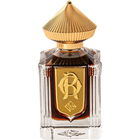
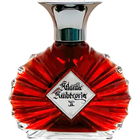
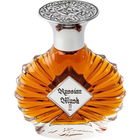
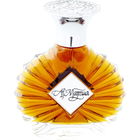
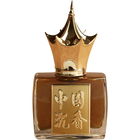
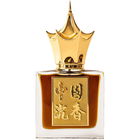
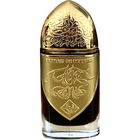
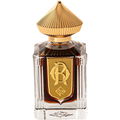
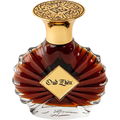
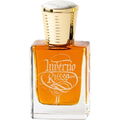
I have bought this bottle more out of curiosity to see what the famous “Antiquity” is, because I haven’t had a chance to try the original version. I have not yet decided whether it will stay with me or go to someone else, but my first impressions are nevertheless positive.
In my opinion, it is a very well composed fragrance, according to the art and rules of craftsmanship. The reference to the old French school is evident here. You certainly have to like this specific retro vibe to be convinced by Antiquity II, as it is a kind of olfactorial journey through time. However, for those who find themselves in such a convention, testing this perfume will certainly be an enjoyable moment and evoke specific images of years gone by. For proponents of a more contemporary approach to perfume creation, it may end with a grimace on the face and disapproval.
The different phases of the fragrance's development on the skin are very well thought out and one has the impression that Russian Adam tested the moments of transition from one phase to another with a watch in hand before releasing Antiquity II on the market, in order to plan them perfectly As far as I am concerned, there are even more phases here than the ever-mentioned 3 (opening, heart, base). This is a fragrance that is undoubtedly changeable and offers a whole spectrum of sensations. On the other hand, the transitions between the various phases are extremely smooth, giving a sense of coherence. One follows from the other and is a natural continuation.
The opening is bergamot and aldehydes. However, this is not a citrusy-peachy nose shot, but a subtly fruity opening. As far as I know, the first version of Antiquity offered a stronger experience from this angle. At least if those who have had the opportunity to compare the two versions are to be believed. In the case of Antiquity II, it is very comfortable right from the start, expressive but at the same time unobtrusive. In the background, although it's a rather discreet aspect, there is a slightly animalic note that I'm not quite sure what it's from, but it lends a slightly harshness, so that the beginning may not appeal to everyone.
As for the next phase, I have come across comparisons to Ottoman Empire. In fact, there is a distant echo of that fragrance, but it is just a small similarity. Here, sweet patchouli takes the lead and is woody and creamy. In this phase, the fragrance is most easy to ware and can be enjoyed by people around you. After about 3 hours, one might get the impression that the aroma is already muted and loses its power. Nothing could be further from the truth. At a certain point, the musk slowly comes to the fore, taking over after a while and playing a major role in the entire composition. It is not particularly dirty, but nevertheless quite expressive and intense, showing a slightly animalic character. However, it is a tame animal .
The base is not the same all the time, and even this phase can be divided - two or even three additional stages can be distinguished from it. The musk dominates for a long time and introduces a distinctive vintage atmosphere. While the beginning and the heart phase is about reaching back in time, the next phase is definitely a journey into the past and associations with an earlier era. It's in this phase that I like the musk the most, and while I'm not a big fan of deer musk, here the ingredient has been used justifiably, fitting with the whole Antiquity concept.
When it seems that nothing more surprising awaits us, suddenly oud comes to the fore, which harmonises very nicely with the musk. Admittedly, the oud does not play main role for a single moment, but it serves here to underline the whole and give the final touch to the composition. In the base, however, it fulfils its purpose.
Projection is solid. Longevity - many hours. And this is where I have a small problem with Antiquty II. At the very end, after many hours, the fragrance is still present on the skin and I personally associate it with urine or lack of hygiene I don't know if it's the musk that sticks or the combination of several ingredients that gives this effect. I had similar feelings with Oud Zhen or Russian Oud, for example. In Antiquity it is much less intense and doesn't even bother me that much. Nevertheless, I am 29 hours after applying the perfume, I am writing this text and, despite showering and washing my hands several times, the “stench” is still present and nothing is able to get rid of it. While the whole olfactory journey of Antiquity II has been interesting and pleasant, the smell that remains after this journey does not necessarily bring a smile to my face, although I try to accept it .
Antiquity II is by no means a revolutionary fragrance, so for someone looking for something they haven't sniffed before, this is not necessarily the way to go. On the other hand, this retro vibe is at the same time a certain hallmark of Antiquity II and, if only for this reason, the composition can be appreciated and deserves attention. On the plus side, moreover, the performance, variability and fidelity to the old school of perfumery. It is simply a well-made and well thought-out vintage-style fragrance.
Do I understand the Antiquity phenomenon? Both yes and no. Assuming that original Antiquity is similar, I confirm that it is a fragrance worth checking out and is a successful work by Adam. However, I find no justification for the horrendous prices that the original reaches (around €900 for a flacon). I know and value equally or even more several other compositions from Areej le Dore, which are certainly not inferior in any way to Antiquity, and whose prices have not been so inflated. Will the bottle stay in my collection? Yes, for sure, it is some peace of art for me. I don't regret the purchase and I'm glad I was able to test the Antiquity II, as it's a very interesting experience for someone who has a perfume hobby.


 Top Notes
 Peach aldehyde
 Bergamot
 Heart Notes
 Patchouli
 Cambodian oud
 Carnation
 Angelica seed
 Violet leaf
 Base Notes
 Deer musk absolute
 Oakmoss
 Russian leather









 StinkSultan
 TheDunkPapa
 BertolucciK
 CivetOnly
 AndreiLaowai