Sapho
Reviews
Filter & Sort
Detailed
Translated · Show original
A sepia-brown fragrance
I find it difficult to approach the Indian world of fragrances for two
reasons. The first is that the scents I am currently testing - and
here a heartfelt thanks to Floyd - are so unfamiliar and exotic to my nose
that it feels overwhelming. Secondly, I have never been to India and have had little contact with
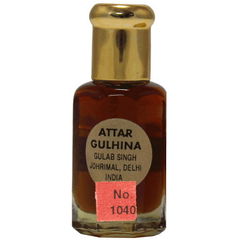
Indian culture. I decided to start with Attar Gulhina, as
the manufacturer's website lists only two fragrance notes for this scent,
namely sandalwood and henna flower. I know sandalwood, so
there was really only the color wood flower left to discover. The scent I perceived
was, well, peculiar. I would describe it as earthy, intense, and cheerful,
almost festive. It smells to me like dry autumn leaves being swept up
on a cold, sunny day. However, I did not find the scent to be
sensual, as one often reads.
I then began to read about henna bushes and learned that the scent of their
flowers has been known and beloved in the East for millennia; it is even called
'Mohammed's favorite scent'. The ancient Greeks referred to it as Kypros, and
it may have helped Kypris to turn Ares' head. Rome borrowed the name Cypros from
Greek culture, and even, who would have thought, the original Protestant Martin refers to henna as Traubencopher in his
translation of the Song of Solomon. The fragrance oil derived from henna flowers
was valued not only for its olfactory qualities but also as a
remedy. It was used especially for leprosy and various skin diseases, from abscesses and
tumors to chickenpox. While reading, my thoughts drifted into a daydream
where I was young again, eagerly anticipating a grand celebration. A minor chord
echoed softly in the background, as guests were also expected
who were rumored to have the 'evil eye'. I was warned and hesitated about
whether I should expose myself to it when I noticed
that I was not alone. Someone stroked my head. An old woman sat beside
me. Time had turned her skin, hair, and the sari she wore sepia-brown.
Even her kind eyes had taken on this color. At first, I thought it was Shitala,
the goddess of illness, who often appears to people in this form, but it was Parvati,
the mother goddess, who smiled at me. "I will rub your palms and soles with henna oil,
that will protect you from the evil eye," she said and got to work. As
a farewell, she raised her hand as if to bless me and dabbed a
drop of the protective oil on my forehead with her index finger like a sign.
The scent of the henna flower embraced me, and I felt safe. On to the celebration!
In 2024, henna was added by UNESCO to the list of the intangible
cultural heritage of humanity.
reasons. The first is that the scents I am currently testing - and
here a heartfelt thanks to Floyd - are so unfamiliar and exotic to my nose
that it feels overwhelming. Secondly, I have never been to India and have had little contact with
Indian culture. I decided to start with Attar Gulhina, as
the manufacturer's website lists only two fragrance notes for this scent,
namely sandalwood and henna flower. I know sandalwood, so
there was really only the color wood flower left to discover. The scent I perceived
was, well, peculiar. I would describe it as earthy, intense, and cheerful,
almost festive. It smells to me like dry autumn leaves being swept up
on a cold, sunny day. However, I did not find the scent to be
sensual, as one often reads.
I then began to read about henna bushes and learned that the scent of their
flowers has been known and beloved in the East for millennia; it is even called
'Mohammed's favorite scent'. The ancient Greeks referred to it as Kypros, and
it may have helped Kypris to turn Ares' head. Rome borrowed the name Cypros from
Greek culture, and even, who would have thought, the original Protestant Martin refers to henna as Traubencopher in his
translation of the Song of Solomon. The fragrance oil derived from henna flowers
was valued not only for its olfactory qualities but also as a
remedy. It was used especially for leprosy and various skin diseases, from abscesses and
tumors to chickenpox. While reading, my thoughts drifted into a daydream
where I was young again, eagerly anticipating a grand celebration. A minor chord
echoed softly in the background, as guests were also expected
who were rumored to have the 'evil eye'. I was warned and hesitated about
whether I should expose myself to it when I noticed
that I was not alone. Someone stroked my head. An old woman sat beside
me. Time had turned her skin, hair, and the sari she wore sepia-brown.
Even her kind eyes had taken on this color. At first, I thought it was Shitala,
the goddess of illness, who often appears to people in this form, but it was Parvati,
the mother goddess, who smiled at me. "I will rub your palms and soles with henna oil,
that will protect you from the evil eye," she said and got to work. As
a farewell, she raised her hand as if to bless me and dabbed a
drop of the protective oil on my forehead with her index finger like a sign.
The scent of the henna flower embraced me, and I felt safe. On to the celebration!
In 2024, henna was added by UNESCO to the list of the intangible
cultural heritage of humanity.
6 Comments
Translated · Show original
Marilyn Monroe, not at home in Beverly Hills
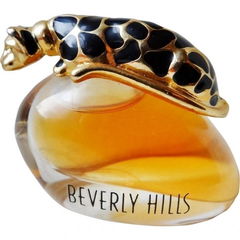
I bought this perfume because of its bottle, kitschy to the extreme and therefore impossibly beautiful. With a glittering panther on the cap, it somehow reminded me of Marilyn Monroe.
This perfume has been available since 1990 and was created by Francis Camail, a perfumer who also crafted Eau d'Hadrien and Grand Amour for Goutal, among others. On Fragrantica, you can find a detailed list of the fragrance notes. Top notes: Ylang Ylang, Orange, and Bergamot; Heart notes: Cloves, Gardenia, Tuberose, Cinnamon, Jasmine, and Rose; Base notes: Civet oil, Amber, Benzoin resin, Sandalwood, Tonka bean, Patchouli, Cedar, and Oakmoss. The fragrance notes reveal that this perfume has everything you would expect from a classic scent of the 1980s. It begins with a delicate Ylang-Ylang note, with the citrus adding a certain bitterness, until the main players take the stage. The opulent Tuberose is present but never overwhelming, harmoniously blending with the other floral and spice notes into an intoxicating accord, in which delicate tones emerge, promising a floral chypre, in short, an opulent caress. Enter the diva, Marilyn Monroe. Those who appreciate this actress, and I appreciate her very much, know that she never really felt at home anywhere. As the child of a mentally ill mother, she was passed around by foster parents into an orphanage and spent her life searching for a home, while simultaneously always being on the run. In 1949, she met the star agent Johnny Hyde, who left his wife for her. He owned a villa in Beverly Hills, where the couple lived for a few months. It was a very large house with 548 square meters, which had everything a young woman could wish for: large, bright rooms, a park-like garden, but Marilyn did not feel comfortable there and eventually moved to the Beverly Carlton Hotel. Was the house too perfect? It seems to me this perfume is also too perfect? An old Japanese vase only becomes complete with a crack, and a perfume needs a fine disharmony that breaks the accord to become interesting. For lovers of 1980s fragrances, it is certainly worth a test.
This perfume has been available since 1990 and was created by Francis Camail, a perfumer who also crafted Eau d'Hadrien and Grand Amour for Goutal, among others. On Fragrantica, you can find a detailed list of the fragrance notes. Top notes: Ylang Ylang, Orange, and Bergamot; Heart notes: Cloves, Gardenia, Tuberose, Cinnamon, Jasmine, and Rose; Base notes: Civet oil, Amber, Benzoin resin, Sandalwood, Tonka bean, Patchouli, Cedar, and Oakmoss. The fragrance notes reveal that this perfume has everything you would expect from a classic scent of the 1980s. It begins with a delicate Ylang-Ylang note, with the citrus adding a certain bitterness, until the main players take the stage. The opulent Tuberose is present but never overwhelming, harmoniously blending with the other floral and spice notes into an intoxicating accord, in which delicate tones emerge, promising a floral chypre, in short, an opulent caress. Enter the diva, Marilyn Monroe. Those who appreciate this actress, and I appreciate her very much, know that she never really felt at home anywhere. As the child of a mentally ill mother, she was passed around by foster parents into an orphanage and spent her life searching for a home, while simultaneously always being on the run. In 1949, she met the star agent Johnny Hyde, who left his wife for her. He owned a villa in Beverly Hills, where the couple lived for a few months. It was a very large house with 548 square meters, which had everything a young woman could wish for: large, bright rooms, a park-like garden, but Marilyn did not feel comfortable there and eventually moved to the Beverly Carlton Hotel. Was the house too perfect? It seems to me this perfume is also too perfect? An old Japanese vase only becomes complete with a crack, and a perfume needs a fine disharmony that breaks the accord to become interesting. For lovers of 1980s fragrances, it is certainly worth a test.
13 Comments

Translated · Show original
The Perfume of the Land Where Milk and Honey Flow
Judith Muller was born in Hungary and spent her childhood and youth under the care of her wealthy Jewish family. She dreamed of becoming a perfumer when the Second World War broke out and shattered her dreams. The family fled to Israel, and the young woman initially served for a time as a sergeant in the Israeli army. There was a lack of cosmetic products, so Judith decided to start her own cosmetics company to supply the army. After her first attempts, she wrote: "I found out I knew more than nothing but less than something about beautician's work." She decided to go to Paris to study the art of perfumery. In 1964, she returned to Israel and opened a cosmetics institute and a perfume manufacturing company in Haifa. Already in Paris, Judith had developed a strategy for her work as a perfumer. She sought inspiration for her creations in the ancient writings of the Jews, primarily using locally sourced raw materials, which she processed with modern methods. She remained true to this concept throughout her life. She pursued the approach of creating perfumes that relate to specific personalities in the Tanakh. Thus, 'Judith' was also created, and this perfume is by no means named after its creator, but after the mythological avenger who first seduced and then massacred the Assyrian general Holofernes. Those who do not have the pretty scene in mind may enjoy the image by Artemisia Gentileschi, who lovingly depicted it in all its bloody details. The perfume was born in 1975, a bitter combination of desert rose and herbs from Carmel with a hint of oak moss and musk. I found the list of perfume notes on Cleopatra's Boudoir. The top notes are said to be aldehydes, fruity notes, bergamot, hyacinth, lemon, and orange; heart notes: jasmine, clove, orchid, iris, desert rose, cyclamen, and ylang-ylang; base notes: oak moss, sandalwood, musk, amber, cedar, benzoin, caramel, and cinnamon. I must admit that I cannot trace this in detail. For me, Judith is an oriental chypre, bitter, powerful, overwhelming, not for the faint-hearted, rather for the more bloodthirsty among my sisters, and thus fully lives up to its namesake.
13 Comments

Translated · Show original
An Epitome of Divine Femininity
Edmond Roudnitska met Marcel Rochas at the end of 1943. Not only was that year coming to an end, but also World War II and a difficult time for French perfumes. There was a lack of money as well as raw materials. It was during this time that Rochas wanted to create something truly special, a fine, sensual, feminine fragrance for his beloved wife Hélène. Roudnitska was a talented perfumer, but at that time he had little experience with fine, feminine scents. He drew inspiration from the infamous actress Mae West, with whom he was friends. Later, the Lalique bottle of the perfume paid tribute to her beauty.
As the main component of his new fragrance, the perfumer used a scent accord he developed based on Prunol, which smelled fresh and elegant like peach and plum. Shortly thereafter, the end of the war was celebrated with ‘Femme’. This was one of the first French creations of the post-war period and a symbol of a newly blossoming femininity.
The fragrance itself has already been extensively described on Parfumo, and so I expected to smell juicy peaches and ripe plums that are strangely floral-dusty and to perceive a sharp, almost spoiled erotic note over time. However, that is not the case; I only notice a warming cloud that embraces me and protects me from the whole world. The perfume whispers to me that I am beautiful, and in those moments, I believe it. This is a scent a woman can rely on, not ostentatious, very intimate, a perfume just for her. Many wonder how to interpret the name ‘Femme’; for me, it is an expression of divine femininity. This concept can be found, for example, in Hinduism. The Hindu goddess Shakti represents divine feminine energy and is the creative force of life. As the warrior Durga, she rides a lion or a tiger. Correspondingly, we find civet in the fragrance notes. As the fearsome Kali, she symbolizes death and simultaneously frees souls from their suffering. For me, a dusty iris fits perfectly with this. As the sensual Parvati, who smells of musk and amber, she represents love and devotion, while as Lakshmi, with precious flowers in her hand, she embodies opulence and abundance. As the intellectual Sarasvati, she loves immortelle and is highly creative. And then there is Tripura Sundari, the highest beauty. She cannot be described; one must feel her. When I wear ‘Femme’ on my wrist, I carry Tripura Sundari in my heart.
My thanks go to Midnights for the opportunity to possess this treasure.
A small addition: my review pertains to the fragrance from the time before 1989. In that year, Oliver Cresp revised this perfume. As we know from Roudnitska's son, his father regretted this deeply and lamented that his ‘Femme’ had been stolen from him.
As the main component of his new fragrance, the perfumer used a scent accord he developed based on Prunol, which smelled fresh and elegant like peach and plum. Shortly thereafter, the end of the war was celebrated with ‘Femme’. This was one of the first French creations of the post-war period and a symbol of a newly blossoming femininity.
The fragrance itself has already been extensively described on Parfumo, and so I expected to smell juicy peaches and ripe plums that are strangely floral-dusty and to perceive a sharp, almost spoiled erotic note over time. However, that is not the case; I only notice a warming cloud that embraces me and protects me from the whole world. The perfume whispers to me that I am beautiful, and in those moments, I believe it. This is a scent a woman can rely on, not ostentatious, very intimate, a perfume just for her. Many wonder how to interpret the name ‘Femme’; for me, it is an expression of divine femininity. This concept can be found, for example, in Hinduism. The Hindu goddess Shakti represents divine feminine energy and is the creative force of life. As the warrior Durga, she rides a lion or a tiger. Correspondingly, we find civet in the fragrance notes. As the fearsome Kali, she symbolizes death and simultaneously frees souls from their suffering. For me, a dusty iris fits perfectly with this. As the sensual Parvati, who smells of musk and amber, she represents love and devotion, while as Lakshmi, with precious flowers in her hand, she embodies opulence and abundance. As the intellectual Sarasvati, she loves immortelle and is highly creative. And then there is Tripura Sundari, the highest beauty. She cannot be described; one must feel her. When I wear ‘Femme’ on my wrist, I carry Tripura Sundari in my heart.
My thanks go to Midnights for the opportunity to possess this treasure.
A small addition: my review pertains to the fragrance from the time before 1989. In that year, Oliver Cresp revised this perfume. As we know from Roudnitska's son, his father regretted this deeply and lamented that his ‘Femme’ had been stolen from him.
21 Comments
Translated · Show original
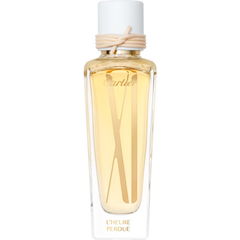
A Lost Memory
According to the official version, Mathilde Laurent wanted to compose a fragrance symphony
where a natural melody emerges from purely synthetic fragrance materials.
A lot of professional skill, an innate talent, and a pinch of magic -
et voilà, before us unfolds a painting in the style of Claude Monet, in
masterfully impressionistic manner, a dance of light and color nuances.
This painting lives, breathes, and shimmers. An indescribably beautiful scent image,
which proves that purely synthetic compositions can be airy, lively, natural,
and heartwarming. If I were to find a tactile metaphor,
I would describe this fragrance as very fine, soft, and precious silk.
A silk that cools and warms at the same time, inviting you to dream.
Does vanillin smell 'silky'? It reveals itself as the only note in the
fragrance pyramid, all other ingredients remain hidden, and that seems good to me,
because it gives everyone the freedom to complete it with their own ingredients.
This is a perfume that stimulates our imagination. Its
secret lies not only in the fragrance notes but also in the name: the eleventh
lost hour. Why lost? Luca Turin, who greatly appreciates this perfume,
interprets it as a scent like a memory that cannot be precisely placed,
but certainly evokes a real experience.
where a natural melody emerges from purely synthetic fragrance materials.
A lot of professional skill, an innate talent, and a pinch of magic -
et voilà, before us unfolds a painting in the style of Claude Monet, in
masterfully impressionistic manner, a dance of light and color nuances.
This painting lives, breathes, and shimmers. An indescribably beautiful scent image,
which proves that purely synthetic compositions can be airy, lively, natural,
and heartwarming. If I were to find a tactile metaphor,
I would describe this fragrance as very fine, soft, and precious silk.
A silk that cools and warms at the same time, inviting you to dream.
Does vanillin smell 'silky'? It reveals itself as the only note in the
fragrance pyramid, all other ingredients remain hidden, and that seems good to me,
because it gives everyone the freedom to complete it with their own ingredients.
This is a perfume that stimulates our imagination. Its
secret lies not only in the fragrance notes but also in the name: the eleventh
lost hour. Why lost? Luca Turin, who greatly appreciates this perfume,
interprets it as a scent like a memory that cannot be precisely placed,
but certainly evokes a real experience.
18 Comments