Translated · Show originalShow translation
On the Peaks of Despair
The hunt for the ultimate sillage projection longevity scale seems to have reached a new maximum value, although I find the attributions a bit exaggerated. There are quite a few fragrances that are similarly strong as Air Tiger and are rated significantly lower in terms of performance. But the beast mode mentality is definitely on trend, and the perfume influencers are giving it their all in this regard. The main thing: It lasts like Pattex and the Geiger counter is pushed to the brink.
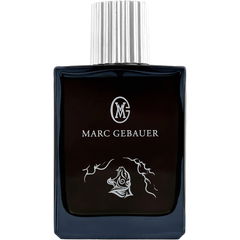
This propels me to new heights of despair. Completely without E. Cioran. I am not a Cologne fan in the strict sense nor do I want to constantly reapply. But Air Tiger fails to impress with a clearly defined theme or a particularly appealing scent progression. The fragrance starts with a rather captivating and almost charming citrus-spice (cardamom, lemon), only to quickly fall into a deep dark and depressing leather-labdanum stiffness. The patchouli also contributes to giving the whole thing a crypt-like vault cellar character.
I notice a discrepancy between the test strip and the skin. Air Tiger remains somewhat more mobile and accessible on paper, but quickly blurs and mixes on my skin into a rather indefinable, rough, and disrespectful wood mix. And it even smells unwashed. 3/10 for the first 10 minutes (on paper) and the (high) audacity to present such a block in the landscape. The privilege of youth. Although M. Gebauer is also in his mid-30s.
One should learn from the master. With leather and full throttle. And that is still Duro by Nasomatto. Air Tiger comes from the workshop, while Duro comes straight from the pharmacy: polished wood, polish, bright leather, unyielding and straightforward, yet comforting like a band-aid (with elephants and giraffes on it).
Translated · Show originalShow translation
Bitter Sweet Symphony
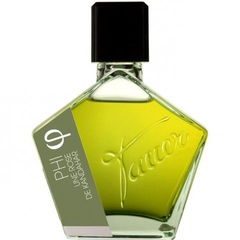
How beautiful the ingredient rose is in a perfume, in whatever form, became truly clear to me many years ago when I got to know Zino by Davidoff (the version with italic font before the dilution). There are indeed parallels to Phi - Une Rose de Kandahar. Both share a spicy-oriental character. However, there are also marked differences. Phi is noticeably fruitier and more floral, overall sweeter, and less woody than Zino. Nevertheless, Phi contrasts the floral sweetness with a dark, very oily, slightly bitter, and spicy note. This rose oil-like quality is particularly characteristic. It has almost a medicinal aspect at the beginning, without being sharp. A fabulous Bitter Sweet Symphony.
A connection can also be made to Lumière Noire pour Homme by MFK. This one is certainly lighter, more transparent than Phi, and in its flawlessness also more abstract. LpH is overall fresher. Phi, on the other hand, is more sensual. The fragrance makes no secret of placing the apricot fruit and marzipan right at the center. But only to capture both components with fresh, darkly spicy tobacco. Here, those who can appreciate Tobacco Vanille by Tom Ford might feel addressed. Interestingly, Phi is owned by more men than women on parfumo (as of 03.03.2021). In terms of target group voting, women are proportionally ahead. This reflects a possible gender-specific categorization (for those who wish to use it as a point of reference) of Phi well. It is unisex, remains ambivalent, and somewhat eludes categorization. I find that immensely appealing.
Phi is a spring, autumn, and winter fragrance. And a scent for sleeping. Therefore, references to Oud Satin Mood by MFK are also possible from my perspective, although there is no oud in Phi. The drydown is wonderfully soft, warm, and harmonious. Here, musk, tonka, and amber do a great job, fixing it firmly. However, it is not overly heavy, as one might initially suspect. Projection and longevity are undoubtedly good, but overall, Phi does not come across as overloaded to me. Certainly, one must have an openness to sweetness and gourmand notes. The cliff of over-sentimentality is then skillfully navigated. As for categorizing Phi, I also find that the fragrance is both retro and progressive at the same time. In my view, it is indeed so unique that I can imagine it on both an older woman and a younger man equally. Phi is a perfume that seems to particularly come to life through the wearer. I find that post-post-modern. And utterly delightful.
Translated · Show originalShow translation
Work Without an Author
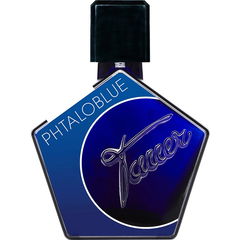
Phtaloblue. Instantly, images of an art exhibition (abstract painting) flash through my mind. And a swimming pool association also comes to mind right away. It’s steaming nicely, and a fresh breeze flows in from outside, mingling with the chlorine and the joyful cries of children in the pool. However, Phtaloblue is artificial. The challenge also lies in its genre: Phtaloblue is an Aquatic. This often means that little development and complexity are to be expected - unless one mixes in salty-mineral notes. That is not the case here. The scent remains clear, cerebral, theoretical. In fact, I believe that the color "blue" has somehow been translated into a fragrance. That is, at first, exciting. Synesthetic, so to speak.
Ultimately, Phtaloblue is for me a work without an author. I understand the film title as a reference and do not intend to draw any content parallels. For me, the scent could have been composed by a machine. I do not mean this disrespectfully. From my perspective, it is simply challenging to identify individual elements. Geranium, orange blossom, lavender. I had high hopes for these. However, here everything seems to diffuse a bit. Fennel sounds interesting, and if you know it, it makes sense. But I probably wouldn’t have figured it out on my own.
Despite everything, Phtaloblue is a solid to good Aquatic for me, with solid to good projection and longevity. I do not see a redefinition of the genre "Aquatic." It is difficult to build a relationship here. Of course, the scent is very wearable, always and everywhere. Seasonally, we have a distinct summer fragrance here. Stylistically and in terms of the basic idea, I see similarities to L'Eau by Serge Lutens, which is more citrusy and thus somewhat more accessible and ultimately points more clearly towards clean laundry, while Phtaloblue wants water. However, both make a fairly clear statement for me and pursue the concept of anti-fragrance.
Translated · Show originalShow translation
"The olive trees are very characteristic, and I make a great effort to capture that." (Vincent van Gogh)
The olive tree (true olive tree) is a symbol of peace and fidelity - often with biblical references. And anyone who has seen olive trees in person, for example in Crete, where the oldest tree in the world is said to be located, knows how graceful and calming they can be to the observer. The imposing curved and massive wood, the stable and elevated stature, the liveliness and persistence in an often barren and heat-drenched environment. Even the olives preserved in oil, as a staple of Mediterranean cuisine in all its facets, reflect these impressions in a certain way. Fresh bread and olives(-oil) - is there a more beautiful culinary minimalism?
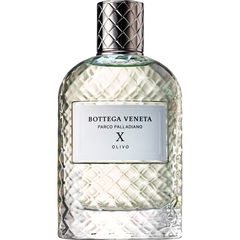
The question of how to translate such aspects into a perfume did not occur to me for a long time. Such an endeavor seemed too unsuitable. The olive tree is a wonderful symbol and purely contemplative. The product is meant for eating, rather for enjoyment. Until I tested Olivo by Bottega Veneta from the Parco-Palladiano line: The scent is truly not easy to grasp. For me, it is a sensation. And that can be quite well described as coming to rest. Olivo is unsweetened, yet by no means bitter. Dry, but not withered. Airy, but not fleeting. The longevity is quite decent, and the projection knows how to assert itself despite the overall restraint of the fragrance concept. Perfumes that are suddenly and effortlessly present again and wonderfully permeate through the nose with a body movement are rare. Olivo is exactly such a perfume.
To speak plainly, Olivo has something of a clean scent. Clear and transparent. To call it fresh would be an insult. It is pure of heart. And ethereal. Like, for example, Vetiver Insolént by Miller Harris. However, Olivo lacks any oriental spice. At most, a fine aromatic quality can be discerned, in my opinion. Olivo is self-contained, completely grounded and centered. Self-referential. On parfumo, only green notes, woody notes, and green olive are listed. I think the good endurance is thanks to a portion of Iso and/or musk. And immediately after spraying, resinous notes come into play. But, and I particularly like this, there is nothing "vegetable" involved here. The scent also lacks any sharpness and herbaceousness that green fragrances often exhibit. On the contrary: I perceive a slight creaminess, especially as it develops further. However, Olivo is a largely constant perfume. A bit like a small, balsamic melody. And universal. A holistic approach. Therefore, I can imagine the scent for almost any occasion and season. Whether for a PP presentation or during a sabbatical in a monastery - Olivo helps one get through the day, making the beautiful more beautiful and the bad bearable.
The entire Parco-Palladiano line is remarkable. Cipresso and Lauro, for example, are also extraordinarily well done and stylistically comparable to Olivo, Castagno with a subtle sweetness and thoroughly unisex. All the fragrances feel natural and high-quality, very wearable and lively. Definitely worth testing and don’t focus on the price.
Translated · Show originalShow translation
Footnotes on Héritage
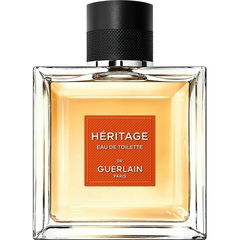
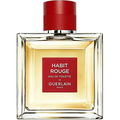
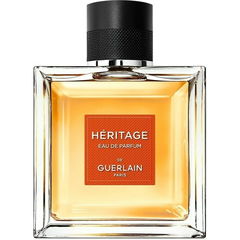
Two versions of the outstanding Héritage EdT are known to me: the one with the silver cap and the one with the gold cap (and Guerlain emblem). I had not yet had the current version (wooden cap) under my nose. I am also familiar with two versions of the EdP: the one with the silver cap (which I sold for reasons I can no longer explain - you know how it is, you regret it) and the one with the wooden cap (currently usually available in stores) - unfortunately, I do not know the old formulation (gold cap); it must be a "beast," incredibly complex and rich. When the EdP bottle of Héritage recently arrived at my place, I was initially disappointed and wanted to spontaneously return the package because: According to the photo, I had expected the EdP with the silver cap, but the current formulation (attentive readers now know: wooden cap!) was delivered. But then I just sprayed it on anyway...
There are disastrous reformulations in the history of perfume, and as a conventionally shaped scent aficionado, one instinctively takes two steps back like a dog in front of a cat flap when a new bottle presentation appears. Zino by Davidoff, for example, has been terribly butchered over the years. Fortunately, there are also counterexamples. Rive Gauche by YSL, for instance. Gently brightened a bit, the scent has turned out damn well and has managed to retain its original character almost completely in the "La Collection YSL" line. And Héritage EdP?
Héritage EdP still has a prominent powdery aspect (which some might describe as slightly musty), but it has lost a bit of the animalistic touch of its predecessor with the silver cap (which is already said to be reduced compared to the one before). Lavender and patchouli still form a completely fabulous connection here, which is delicate, very rich, and lush, but does not come across as baroque, heavy, or overloaded. It presents itself as polished, dark, finest premium wood. This is unmistakably Héritage EdP. And it still has considerable depth and power. Projection and longevity are exceptionally good. The legendary "Guerlinade" can definitely be identified, even though tonka bean/vanilla are not listed. There is something charming to be found here! You just shouldn't press your nose wildly against your wrist or clothing (then the scent, especially at the beginning, comes across as very earthy); the EdP lives through its radiance and gains more momentum and vibration at a half-distance.
The whole experience has done something to me: Héritage EdP has, so to speak, rewound my thought world olfactorily, a bit like a cassette in an old Sony tape deck, and has transported me back to a time when there was no blind oud craze or synthetic shower gel scent horror or exalted niche pseudo-individualism for 389 EUR/50ml. That makes me really happy. This is not meant to romanticize anything, and certainly not everything was better back then (not even in terms of perfume), but the style of Héritage is unique to me. Interestingly, Héritage is generally often associated with bankers and brokers. This may be due to the rather conservative advertising: club chairs, something with an airplane. For me, the scent works in a completely different way. It is a rock in the surf. A prime example of a noble, finely gourmand evening and going-out scent with a certain retro charm and beautiful spice that reliably carries along, envelops its wearer wonderfully, and gives him a very persistent scent aura. I rather see the lively family celebration, Christmas Eve by the fireplace, or the Sunday walk in autumn... So it is much more something "fatherly-uncle-like" (not to be understood negatively) - certainly no manifestations of unleashed turbo-capitalism.
By the way, all this lamenting is also of no use. Reformulations or not. There are indeed successful adaptations! Guerlain has at least saved the heritage here and not simply squandered it in the backyard. Héritage EdP is the ur-idea of the oriental men's perfume. Much of what came after sometimes seems like a footnote to it. Together with the airier and somewhat more versatile barbershop EdT, you actually don’t need anything more on a deserted island. And not even in New York City.