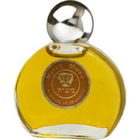
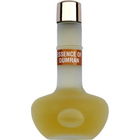
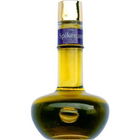
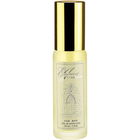
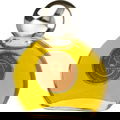
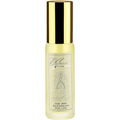
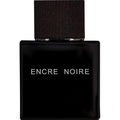
'Cravache', in German: riding crop, was launched in 1963 as the first men's fragrance
from the house of Piguet. While the old Cellier classic
'Bandit' had already hinted at Unisex years earlier, it ultimately did not fully venture into this still relatively uncharted territory at the time. However, 'Cravache' catered to the comparatively narrow fragrance canon that described the traditional masculine scent language: fresh-herbaceous citrus, herbaceous-aromatic
lavender, robust leather, firmly anchored by oakmoss, and ventilated by a subtle,
unsweet floral touch.
This sounds louder and rowdier than it actually was - after all, it aimed to be a fragrant leather whip - but 'Cravache' remained, in its essence, a true gentleman: reserved,
unobtrusive, always allowing the lady, who might be scented with 'Fracas', 'Bandit', or 'Baghari', to go first. The time of the room-shattering
fragrance gods 'Antaeus' and 'Kouros', who began to oppose the primacy of feminine fragrance dominance, had not yet dawned, and thus the few masculine representatives of their kind still naturally lined up behind the often grandly expansive-scented ladies.
Nowadays, we are long accustomed to stronger and more assertive men's fragrances, not to mention Unisex scents, so we perceive former representatives of this genre, whether called 'Eau Sauvage', 'Habit Rouge', 'Monsieur de
Givenchy', or simply 'Cravache', more as shy wallflowers, misjudging their cavalier restraint.
Those were still scents with manners!
When the house of Piguet faded into insignificance in the 1970s and eventually ceased perfume production,
'Cravache' also disappeared - it was gone for many
years. Only 'Bandit' and 'Fracas', the big sisters, were left to keep the Piguet flag flying: an American corporation had acquired the rights to the old fragrances and focused on the established, still marketable stalwarts.
It wasn't until 2007, during a revitalization of the brand, that Piguet's first men's fragrance was reintroduced, albeit in significantly revised form: the florals completely disappeared, as did the leathery nuances, and the citrus intro was heavily trimmed. However, this skeletonized Cravache concept was supplemented with a generous portion of nutmeg, aromatic sage, and a bundle of sweetgrass.
The new 'Cravache' now came with a bit more punch, exuding a spicy-nutmeg Fougère aura that conveyed a more conservative
stability rather than the leather-chypre bravado (which it hadn’t possessed before either, but at least hinted at under the facade of decorum).
Why the riding crop, or in another interpretation: leather whip, was so completely stripped of leather remained a mystery to me, especially since the new 'Cravache' smelled overall more old-fashioned than its 44-year-older namesake. Had Piguet perhaps lost the courage they had consistently possessed from the Cellier icons 'Fracas' and 'Bandit', through 'Futur' to 'Oud'?
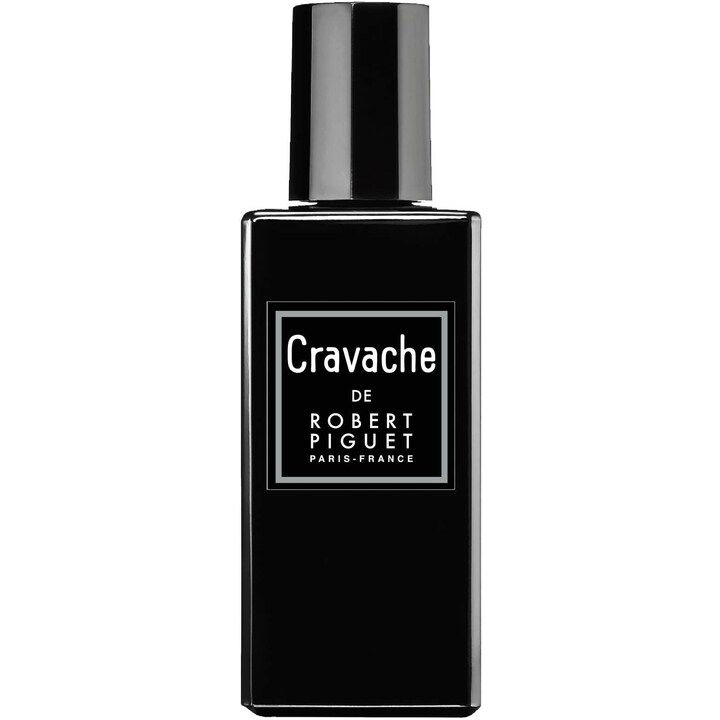
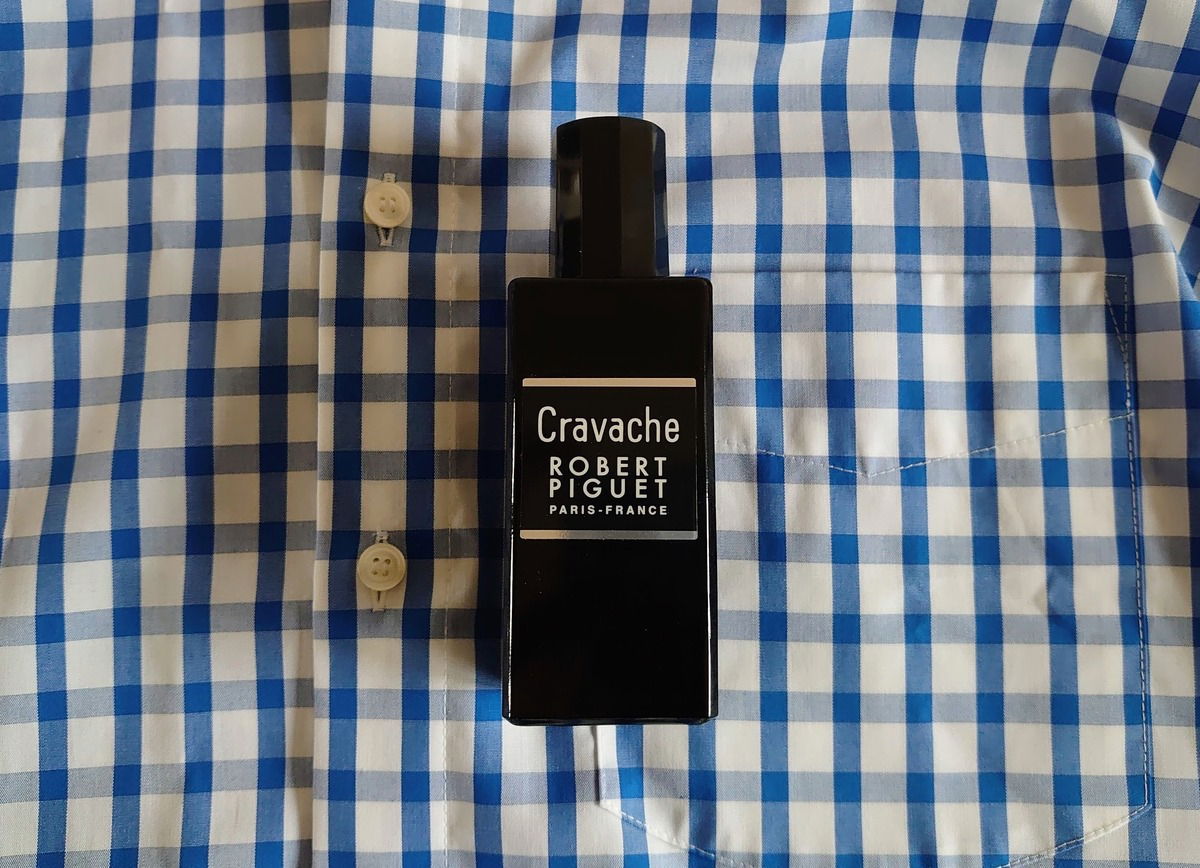
16 years later, a new 'Cravache' now replaces the completely leather- and flowerless descendant of the original 'Cravache' - this time in
EdP concentration and with a significantly altered formula.
First: the leather is back! And yes, even a few flowers. But anyone thinking that the good old chypre with the distinctly citrusy opening, the spicy yet floral heart, and the woody-leathery, damp-mossy base has been resurrected should be warned: that is not the case.
At least not in the sense of a detailed reconstruction.
The original scent concept apparently only served as a template for a new,
fairly free interpretation committed to the preferences of modern perfumery. Thus, the leathery effect is now typically created in conjunction with earthy iris rhizomes and saffron, while the dry-floral facets of the iris, combined with a hint of jasmine, redefine the floral bouquet. However, the dark
rose of the original 'Cravache' did not find its way into the current formula.
The citrus opening, on the other hand, has been accentuated again, but less in the style of a bright citrus freshness, and more characterized by the complex bitter-peel to green nuances of
bergamot and petitgrain, complemented by fruity hints of
bitter orange and mandarin.
The central, character-defining herbal lavender accord remains, flavored with a good dose of sage and a pinch of nutmeg, which, unlike the 2007 version, no longer plays a leading role.
In the base, finally, the chypre character of the original scent has now almost completely disappeared, after it had already drifted more towards the powdery-mossy Fougère direction in 2007. It has now fully arrived there, or rather gone a step beyond into a sweet-spicy,
woody-ambered, almost oriental terrain.
In essence, the new 'Cravache' behaves somewhat like the perfume of 'Eau Sauvage': the spirit of the original scent is still somehow present, but so paraphrased that it is hardly recognizable.
The once-slim chypre structures, which in both cases were supported by a good portion of oakmoss as a fixative, have been heavily pimped decades later with cashmeran and plumped up with woody-amber notes,
so that they unfold a vanilla-sweet-woody volume towards the base, which -
at least in the case of 'Eau Sauvage Parfum' - reliably sparks enthusiasm among younger
generations. Let's see if this will also work for 'Cravache Eau de Parfum'; the foundations are certainly there.
However, there is a small but not insignificant difference compared to
'Eau Sauvage Parfum': the new 'Cravache' is still recognizably 'Cravache', just in a more fashionable outfit and entirely different
proportions: more voluminous, androgynous, synthetic, and in a certain way digital. Because even though I still smell the bold central lavender note that characterized the two previous Cravaches, I have the feeling that in the latest edition I am being served the digitized version.
That’s not bad, no, it’s just different, and I still have to get used to it.
One thing I already know: I will definitely wear the new 'Cravache' more often than the previous version of the fragrance, which was simply too conservative for me, too much like a stock exchange floor, and lacked the sinewy leather-chypre masculinity of the original scent. The new one lacks it as well, replaced by a digitized and gender-fluid modernity, with which I interestingly find myself quite comfortable.
Updated on 10/24/2023



 Top Notes
  Bergamot
 Bitter orange
 Green mandarin orange
 Petitgrain
 Xerographic Earlobe
 Heart Notes
  Candied lavender
 Iris
Iris Jasmine
 Saffron
 Sage
Sage Base Notes
  Leather
 Patchouli
 Vetiver



 Yatagan
 Ergoproxy
 CharlAmbre
 Jannemann33
 SeloBera
 Palatinatus