

 Oud
Oud Frankincense
Chizza
362 Reviews
Translated · Show original

Chizza
Top Review
28
Fascinating Simplicity
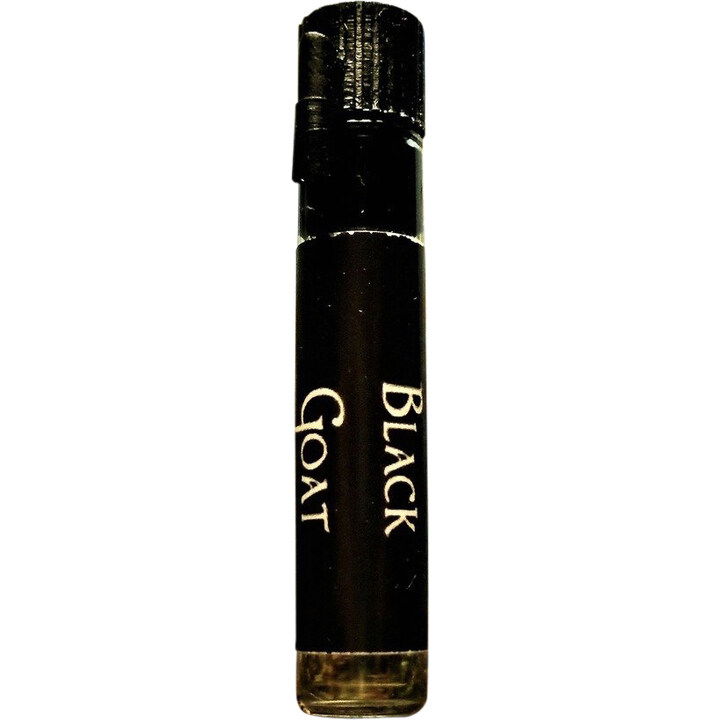
Anyone who knows me knows that I am interested in all kinds of sacred worldviews, not only the well-known Abrahamic religions but also pagan beliefs as well as occultism, or what is commonly summarized under Satanism or whatever; not a direct faith but rather a kind of antagonist to conventions, traditions, and church rituals. It fascinates me because it allows a glimpse into the history of humanity; into what was perceived as true in the respective ages and regions, including a mindset that serves as a counterpoint. So now we have The Black Goat. I couldn't help but think of the Baphomet cult and Goya's Witches' Sabbath. A dark painting, a sacrifice, and at the same time devotion, but that leads too far here; it's about the scent.
The perfumer actually refers to a passage from the Bible, from the Old Testament. Without going too deep into it, it’s basically about the goat that bore the sins of the people of Israel and was then banished to a then-common desert demon, today pushed into the devilish direction, named Azazel. So far, so good. McCoy consciously highlights the image of the fallen angel, who introduced humanity to warfare, dark magic, and other areas not favored by Christianity. According to the Book of Enoch, God eventually didn't like that anymore; he commissions archangels, and they rid themselves of Azazel until the Day of Judgment. Very intriguing, but what does such a symbolic image smell like?
Very good. But one thing at a time. Two ingredients are listed: frankincense and oud. In one lies the faith, in the other the hint of animality. At first, the frankincense appears slightly with a touch of citrus. In the background, oud, only conditionally animalistic. Rather as a counterpart, as the oud initially tends to lean towards the Indian direction for me. But that is misleading because it develops into a dark, full-bodied, intense, and moist scent, like the part of the jungle that one rarely enters. It smells wild in the sense of archaic, like a powerful primal force.
This is initially something to get used to because this symbiosis does not unfold without dissonances. Although, dissonances, that’s not quite correct. Initially, both ingredients want to claim the space for themselves; both are intense but fail to eliminate each other. Suddenly, The Black Goat ebbs away and remains close to the skin. A little time must pass before both - the frankincense and the Southeast Asian oud - merge together. Not a symbiosis, rather a fusion. The frankincense now underlines a very harmonious, deep medium-brown oud in which one could sink. Perhaps not completely sink, but linger, free after Goethe.
At first, this can come across as slightly musty in the sense of worn clothing infused with smoke and humanity, but eventually, these olfactory side strands disappear. This phase doesn’t smell bad, just unconventional in terms of perfume.
House of Orpheus fascinates me because the scents I have tested so far have always been good. Of course, some background stories are rather special, but one doesn’t have to pay attention to them. Nevertheless, I like that the perfumer tries to tell a story, to evoke impressions through the scent. Overall, The Black Goat quickly becomes close to the skin, lasting well for 10-12 hours. This is necessary because the true beauty must first fully unfold. Ironically, the animalistic note renews itself while the sacred part proves to be unchanging.
The perfumer actually refers to a passage from the Bible, from the Old Testament. Without going too deep into it, it’s basically about the goat that bore the sins of the people of Israel and was then banished to a then-common desert demon, today pushed into the devilish direction, named Azazel. So far, so good. McCoy consciously highlights the image of the fallen angel, who introduced humanity to warfare, dark magic, and other areas not favored by Christianity. According to the Book of Enoch, God eventually didn't like that anymore; he commissions archangels, and they rid themselves of Azazel until the Day of Judgment. Very intriguing, but what does such a symbolic image smell like?
Very good. But one thing at a time. Two ingredients are listed: frankincense and oud. In one lies the faith, in the other the hint of animality. At first, the frankincense appears slightly with a touch of citrus. In the background, oud, only conditionally animalistic. Rather as a counterpart, as the oud initially tends to lean towards the Indian direction for me. But that is misleading because it develops into a dark, full-bodied, intense, and moist scent, like the part of the jungle that one rarely enters. It smells wild in the sense of archaic, like a powerful primal force.
This is initially something to get used to because this symbiosis does not unfold without dissonances. Although, dissonances, that’s not quite correct. Initially, both ingredients want to claim the space for themselves; both are intense but fail to eliminate each other. Suddenly, The Black Goat ebbs away and remains close to the skin. A little time must pass before both - the frankincense and the Southeast Asian oud - merge together. Not a symbiosis, rather a fusion. The frankincense now underlines a very harmonious, deep medium-brown oud in which one could sink. Perhaps not completely sink, but linger, free after Goethe.
At first, this can come across as slightly musty in the sense of worn clothing infused with smoke and humanity, but eventually, these olfactory side strands disappear. This phase doesn’t smell bad, just unconventional in terms of perfume.
House of Orpheus fascinates me because the scents I have tested so far have always been good. Of course, some background stories are rather special, but one doesn’t have to pay attention to them. Nevertheless, I like that the perfumer tries to tell a story, to evoke impressions through the scent. Overall, The Black Goat quickly becomes close to the skin, lasting well for 10-12 hours. This is necessary because the true beauty must first fully unfold. Ironically, the animalistic note renews itself while the sacred part proves to be unchanging.
24 Comments
 Eggi37
 Floyd
Floyd Marieposa
 Schalkerin
 Delightful
 FrauKirsche
 Gandix
 Chizza