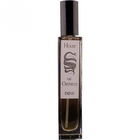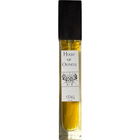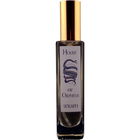



 Blue lotus
 Egyptian musk
 Saffron
 Civet
Civet
ElAttarine
90 Reviews
Translated · Show original

ElAttarine
Top Review
27
… a drug of dreams
She could see the orange-blue light with her eyes closed. Then a rush of shimmering darkness. Then a green, marshy, tumultuous green. A kaleidoscope of images, without stopping. Jac had inhaled the scent deeply. It was more than an aroma or a smell. Much more. The fragrance was a drug of dreams. The images now came faster, crashing over her and falling at her feet like a mosaic. Turquoise and lapis lazuli. Gold. Silver. And scents. Some familiar, some as foreign as the language spoken by the man and the woman. He was dark-skinned and wore a loincloth. At first, she could not see the woman. Then it became clear to her: it was herself. Her thighs were covered with a thin linen garment, her feet in jeweled sandals. The man was somehow familiar to her. Not his face, but his scent. It was a spicy, exotic fragrance that enveloped and attracted her. Close. Warm. Desirable. Whole. Finally. She belonged here. To him.
-----
In the novel “The Book of Lost Fragrances” by M. J. Rose, it is about a broken Egyptian clay vessel from the Ptolemaic period, dated between 323 and 30 BC, which contains remnants of a fragrance from Cleopatra's time, as well as an inscription telling of two lovers who were buried with a vessel of perfume to take it with them to the afterlife. Once the soulmates returned to their next life, the scent would help them find each other again, thus remaining connected through all times: “And so their souls could always find each other again through all times when the lotus bloomed.” The protagonist Jac L'Etoile, heir to a French perfume manufacturer, gradually succeeds in illuminating the past of the house as well as the origin of her visions from the past.
-----
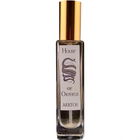
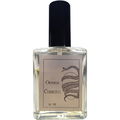
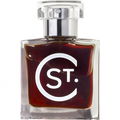
“Nefertum’s Flower” can evoke such archaic visions. For me, it is an extremely powerful, yet never overwhelming scent that paints exactly such colors as in the scene from the novel. Bitter-sweet saffron in the opening creates dark orange, together with the blue-violet-turquoise shimmering lotus flowers. For me, it opens gates to visions of ancient Egyptian deities like the cat-headed Bastet, who is sometimes referred to as the mother of Nefer-Tem. Because a very distinctly sour civet comes into play, countering the clearly present sweetness along with the saffron. The whole is embedded in powdery soft beautiful classic musk. I find it transparent yet heavy at the same time. Everything resonates and shimmers. Very intense and present, yet never overwhelming (no modern musk club) or loud; Marcus McCoy does this really well!
-----
Blue lotus, the holiest plant (not only) of the ancient Egyptians as a symbol of death and rebirth, was prepared as an extract in wine due to its psychoactive effects. Some somewhat obscure suppliers still claim today that lotus is a tonic, pain reliever, and stimulant that is stronger than Viagra...
The lotus, which closes its flowers at night and submerges in the water, only to rise again the next morning and bloom anew, was also an image of the solar cycle. In a creation myth, the world was dark and chaos reigned until in the morning the god Nefertem rose as the Blue Lotus from the depths of the river. As the flower opened, the young god sat in its golden center. The divine light he radiated illuminated the world, and the sweet scent he emitted filled the air and dispelled the general darkness. In the novel, a fictional but beautiful passage from the Egyptian Book of the Dead is mentioned: “I am the cosmic water lily, which brightly rose from the black primordial waters of Nun, and my mother is Nut, the night sky. O you who have created me, I have arrived, I am the great ruler of yesterday.”
-----
Scenes from the novel translated and shortened from: “The Book of Lost Fragrances” by M. J. Rose.
www.bristolbotanicals.co.uk/pr-2378 for the use of lotus extracts.
-----
In the novel “The Book of Lost Fragrances” by M. J. Rose, it is about a broken Egyptian clay vessel from the Ptolemaic period, dated between 323 and 30 BC, which contains remnants of a fragrance from Cleopatra's time, as well as an inscription telling of two lovers who were buried with a vessel of perfume to take it with them to the afterlife. Once the soulmates returned to their next life, the scent would help them find each other again, thus remaining connected through all times: “And so their souls could always find each other again through all times when the lotus bloomed.” The protagonist Jac L'Etoile, heir to a French perfume manufacturer, gradually succeeds in illuminating the past of the house as well as the origin of her visions from the past.
-----
“Nefertum’s Flower” can evoke such archaic visions. For me, it is an extremely powerful, yet never overwhelming scent that paints exactly such colors as in the scene from the novel. Bitter-sweet saffron in the opening creates dark orange, together with the blue-violet-turquoise shimmering lotus flowers. For me, it opens gates to visions of ancient Egyptian deities like the cat-headed Bastet, who is sometimes referred to as the mother of Nefer-Tem. Because a very distinctly sour civet comes into play, countering the clearly present sweetness along with the saffron. The whole is embedded in powdery soft beautiful classic musk. I find it transparent yet heavy at the same time. Everything resonates and shimmers. Very intense and present, yet never overwhelming (no modern musk club) or loud; Marcus McCoy does this really well!
-----
Blue lotus, the holiest plant (not only) of the ancient Egyptians as a symbol of death and rebirth, was prepared as an extract in wine due to its psychoactive effects. Some somewhat obscure suppliers still claim today that lotus is a tonic, pain reliever, and stimulant that is stronger than Viagra...
The lotus, which closes its flowers at night and submerges in the water, only to rise again the next morning and bloom anew, was also an image of the solar cycle. In a creation myth, the world was dark and chaos reigned until in the morning the god Nefertem rose as the Blue Lotus from the depths of the river. As the flower opened, the young god sat in its golden center. The divine light he radiated illuminated the world, and the sweet scent he emitted filled the air and dispelled the general darkness. In the novel, a fictional but beautiful passage from the Egyptian Book of the Dead is mentioned: “I am the cosmic water lily, which brightly rose from the black primordial waters of Nun, and my mother is Nut, the night sky. O you who have created me, I have arrived, I am the great ruler of yesterday.”
-----
Scenes from the novel translated and shortened from: “The Book of Lost Fragrances” by M. J. Rose.
www.bristolbotanicals.co.uk/pr-2378 for the use of lotus extracts.
25 Comments


 Marieposa
 ElAttarine
 Eggi37
 Seejungfrau
 Can777
 Gandix
 Yatagan
 Brida
Brida Chizza