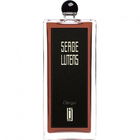
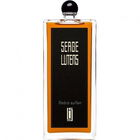
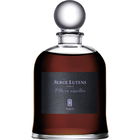
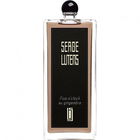
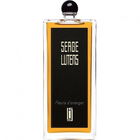
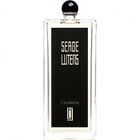
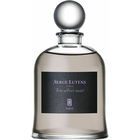
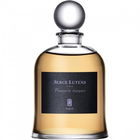
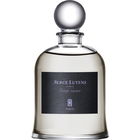
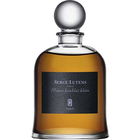
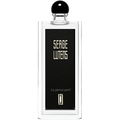
“When I presented L’eau to my team, I felt like Saint-Just informing the nobles they were going to lose their privileges”
(Serge Lutens)
…so allegedly Serge Lutens at the internal presentation of the 'Eaux' line, which was first launched about 14 years ago.
I had to look up who Louis Antoine de Saint-Just was - what Lutens meant became clear to me quickly: the image of the 'Eaux' line [L'Eau (2010), L'Eau Froid (2012), etc.] was contrary, even contradictory to the reputation of the brand, which since its inception in 1993 had long been synonymous with somewhat idiosyncratic, and even more so, solitary fragrances that completely defied the zeitgeist of the 90s and 00s. Many were composed with extraordinary consistency and quality. It seemed that Lutens wanted to pull this hard-earned terroir and the resulting privileges & reputation out from under his own feet…?!
I found the 'Eaux' a bit suspect, as the concept of 'water' as a central theme reminded me too much of Issey Miyake's first fragrances and the resulting cleanliness craze. But it also brought to mind the sequential reduction and skillfully applied artificiality that Comme des Garçons had practiced in the years prior. Once tested, it became clear to me that Lutens had also worked extremely solidly here with the implementation of C. Sheldrake: favorites from this time - the effervescent L'Eau Froid (2012) with its clearly non-natural aura thanks to loud aldehydes and Laine de Verre (2014).
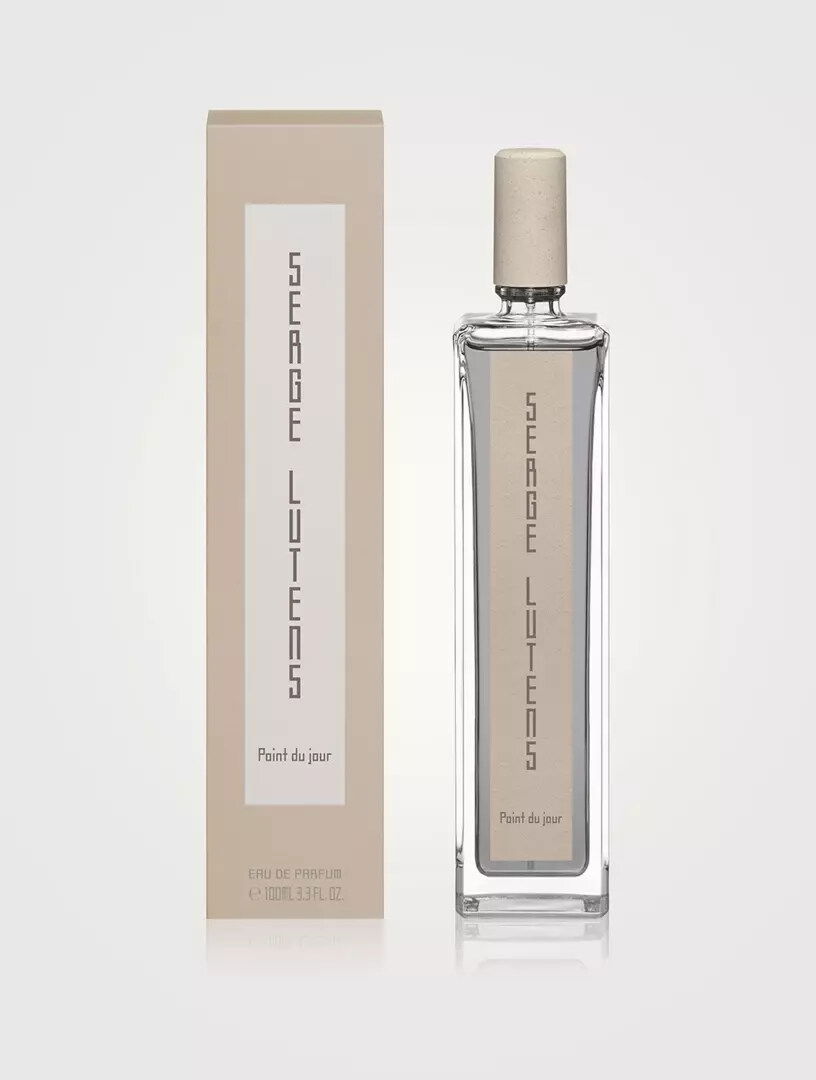
… fast forward: perhaps the team or someone in Shiseido management got cold feet or things became somewhat muddled: in 2022, the former Eaux were redistributed internally for a second time. Only in 2019 were they to be repackaged under the branding 'Eaux de Politesse' into square, transparent flacons, and received a solid but by now already discontinued newcomer with the sweetened mugwort-immortelle L'Eau d'Armoise (2019), see my review on that. Two internal reassignments of older perfumes: Santal Blanc (2001) and Gris Clair (2006) - formerly brilliant fragrances, were unfortunately significantly damaged or poorly reformulated during this move. Laine de Verre was long gone by this time.
2022/2024: in the meantime, L'Eau Froid achieved a price upgrade to the premium economy class of the 75ml bell jars, and the series - again under a new title - 'Matin Lutens' received two rather overlooked newcomers: Parole d'eau (2022), a summery hybrid version that combines opposites like the menthol-like laboratory cold of L'Eau Froid with the camping pine resin & needle atmosphere of Fille en aiguilles (2009); and Dans le bleu qui pétille (2022), where a maritime incense-algae mix sits on a base reminiscent of Ambre sultan (1993). Both fragrances deserve more detailed exploration, as they are distinct enough in themselves, and also come closest to the idea of a flanker - which Lutens has remarkably ignored until now - but back to the current one, which also has a similar duality.
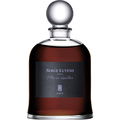
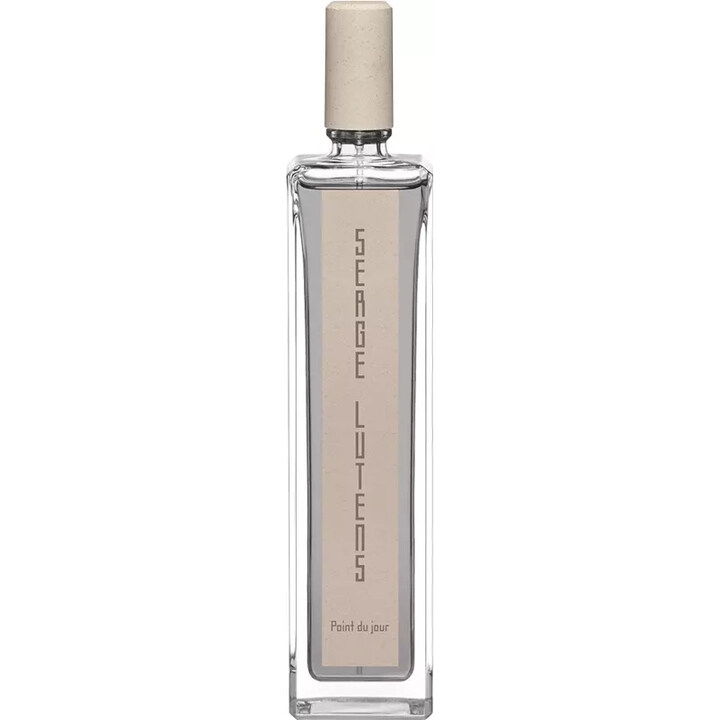
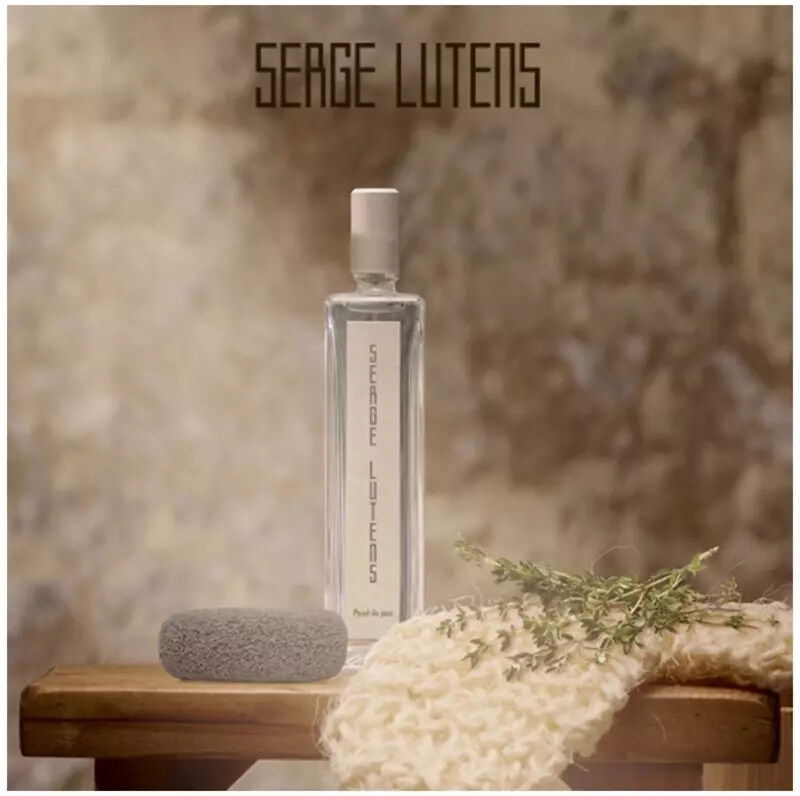
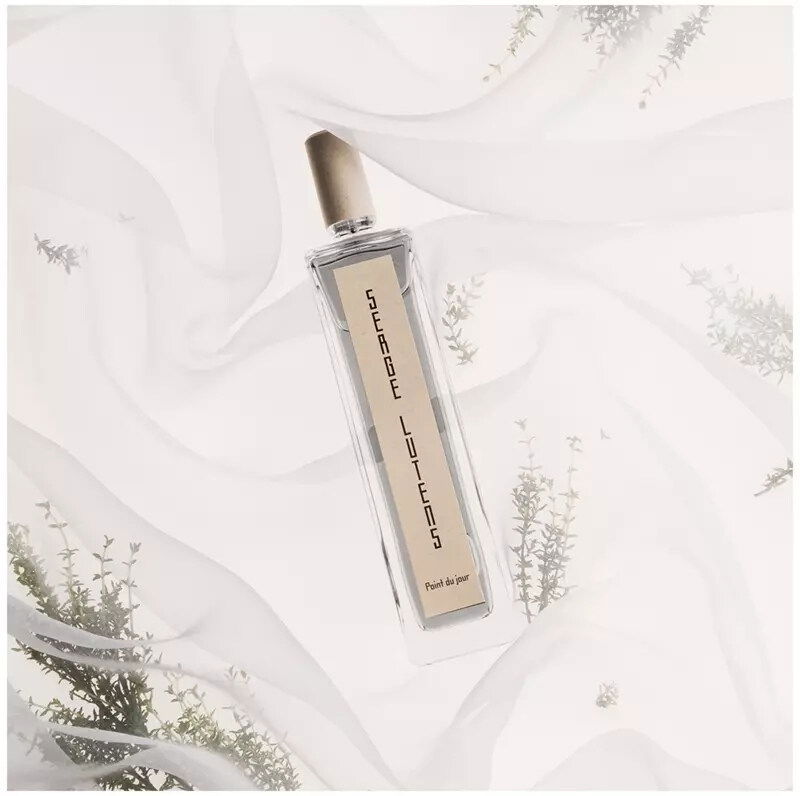
Point du jour
Point du jour starts like a dense bundle of dry herbs and spices: alongside central thyme and sage, I perceive cumin in equal measure, as well as cloves, rosemary, a bit of eucalyptus, and lavender. An extended bouquet garni with a Lutensian twist. I enjoy citrus-free but still refreshing fragrances that rely entirely on such essential oils. The form is tightly woven, balanced, and it becomes clear immediately that an experienced perfumer was at work here; nothing is excessive; spice-laden notes have repeatedly marked the brand's portfolio. I am reminded of a favorite in this genre, Lorenzo Villoresi's Spezie (1994), yes, a more compact, less baroque, and less green Spezie - especially at the opening of Point du jour…. And due to the pronounced cumin, also Diptyque's cumin gem L'Autre (1973) - the most uncompromising of all cumin fragrances. Those who like these two might find joy in Point du jour.
The new dryness
That would already be enough for me, and Point du jour could fade away in the manner of an Eau Fraîche - but it continues. The next twist underscores, as with other releases from the former 'Eaux' line, that this is not about reproduced impressionistic landscapes.
A connecting element among the 'Eaux' was a - sometimes more, sometimes less clear - comment on the complex of incense. This ranged from the concept of unburnt frankincense drops in L'Eau Froid, or traces of the same in L'Eau de Paille (2016) to the extinguished candle smoke-aldehyde note of the original Gris Clair. Encens et lavande (1996), an early, calm Lutens can perhaps be seen as a nucleus for this constellation, and quickly a reinterpretation of Encens et lavande was hoped for in the sporadically presented Point du jour in the English forums, but: 2024 is not 1996.
Point du jour shifts after a while to an increasingly drier, abstract note where only the lightest aspects of incense resonate, but it would be reckless to treat this impression as monochromatic or pure incense. Rather, it is a completely artificial dryness with a slight mineral shimmer: if I had to metaphorically incorporate this note into a notes list, I would probably suggest 'Terracotta' or 'unglazed earthenware'. I first encountered this note prominently in Ultræ (2018), and recently in the finale of the carefully orchestrated Sahar (2024) by Prin Lomros. Perhaps it resembles something like Synarome's Aldambre, which sits between clean ironing-board chic and dust-dry woody-amber nervousness?!
This new dryness seems to appear at different times depending on the constellation with other actors and climatic circumstances: while it is still centrally perceptible and thematically relevant in Ultræ, it requires much lower temperatures and lower humidity to even be noticed in Sahar. In Point du jour, on the other hand, it appears quickly at high humidity (80%), but only with significant delay and less prominently at lower humidity (46%). I have always perceived fluctuations in temperature and humidity as a kind of litmus test that can efficiently summarize the progression and structure of a perfume. This is nothing new in itself; most fragrances indeed work in one place/season/climate and simply behave differently in another. I have not yet been able to find conclusive analyses of what influence these 'climatic' factors have on the perceived presence of individual scent substances, and such studies would not serve the promise of universal, permanently consistent quality. In Point du jour, this dryness or terracotta flair is somewhat irritating - depending on temperature and humidity.
Updated on 10/09/2024



 Clary sage absolute
 Eucalyptus absolute
 Thyme
Thyme





 TheDunkPapa
 Ursaw
Ursaw Stockier
 Orangeblosso
 valhelsingv
 Ergoproxy
 CharlAmbre
 LysdeKerk
 Skubi73
 NikEy
NikEy