
FLUidENTITY
Reviews
Filter & Sort
Detailed
Translated · Show original
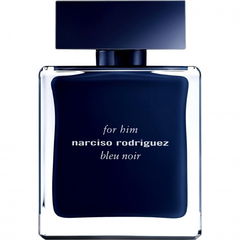
And I would love to dive into the bottle
All comparisons should be discarded. It doesn't matter what scent FHBN resembles, does not resemble, or resembles a bit. It speaks for itself. I immediately recognized the buoyancy of its wood. It was light-footed, nimble. It is not weighed down by anything heavy and instead strives for higher spheres. FHBN simply swirls.
I am drawn into its vortex and intoxicated by it. I almost want to trace my paths in the bottle and swim in it. Eyes closed and just dive in.
The scent is effortless. Everything that seems so weightless is, in truth, hard-earned and heavier than it appears at first glance. FHBN is no different. It simply smells so plain and simple yet so illuminating, the new creation from Narciso Rodriguez. Only in winter does the wood have to make concessions. Cardamom and vetiver are shown from their most agile side. They point to the north, south, east, and west. Up, down, right, and left. Like on rails, the cedar runs from the beginning to the end of the unfortunately somewhat short-lived scent. At first, the projection is not to be underestimated, but unfortunately fades quite quickly.
FHBN is characterized by a very own courageous lightness of being.
Unfortunately discovered too late. For winter, I will have to revert to the other Rodriguez scents.
I am drawn into its vortex and intoxicated by it. I almost want to trace my paths in the bottle and swim in it. Eyes closed and just dive in.
The scent is effortless. Everything that seems so weightless is, in truth, hard-earned and heavier than it appears at first glance. FHBN is no different. It simply smells so plain and simple yet so illuminating, the new creation from Narciso Rodriguez. Only in winter does the wood have to make concessions. Cardamom and vetiver are shown from their most agile side. They point to the north, south, east, and west. Up, down, right, and left. Like on rails, the cedar runs from the beginning to the end of the unfortunately somewhat short-lived scent. At first, the projection is not to be underestimated, but unfortunately fades quite quickly.
FHBN is characterized by a very own courageous lightness of being.
Unfortunately discovered too late. For winter, I will have to revert to the other Rodriguez scents.
3 Comments
Translated · Show original
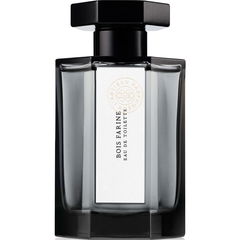
Famous Fragrance!
Bois Farine is a fundamentally good fragrance and features the typical L'Artisan base note. In this case, BF is crisp, dry, and pointed. The signature of Jean-Claude Ellena is quite discernible. Although they are not fragrance twins, Vétiver Tonka from the Hermessence line is somewhat inspired by BF. The hazelnut with its almond aroma is, of course, the focal point in Vétiver Tonka, but the wood flour is not that far removed from a hazelnut. In short: Jean-Claude Ellena knows his craft. He creates a hazelnut-almond duo twice, each in different forms.
While Vétiver Tonka is green and tends to be sweeter, wood flour aims in a completely different direction: uncompromisingly dry like dust, powdery like a dune, and gnarled like a steppe. This olfactory impression only reveals itself a few moments after spraying; it seems the fragrance has only just settled into position. And so BF does its thing without being deterred. Dry wood meets dry iris, and the powder joins in.
Powder is the keyword. Initially, the powder is dust-dry, but then it takes on a slightly more elastic note, thus influencing the overall aura of the fragrance. I now perceive the wood as more supple and no longer as unsentimental as before.
Indifference transforms into warmth. The brittle monotony shakes off and signals a lively spirit of departure. Woody remains woody, even though the overall impression is now considerably softer. A slight acidity lays over the powdery soft, almondy nutty wood. The round and soft wood is interwoven with a certain bite. Now BF might also be a bit sticky; in any case, it has become denser than it was at the beginning. The flour has, in a sense, become damp.
BF is definitely extremely aesthetic. It really can't fail to please. Even though it avoids taking the big risks, it is still a beautiful everyday companion that is sure to earn you a compliment or two.
Famous fragrance!
While Vétiver Tonka is green and tends to be sweeter, wood flour aims in a completely different direction: uncompromisingly dry like dust, powdery like a dune, and gnarled like a steppe. This olfactory impression only reveals itself a few moments after spraying; it seems the fragrance has only just settled into position. And so BF does its thing without being deterred. Dry wood meets dry iris, and the powder joins in.
Powder is the keyword. Initially, the powder is dust-dry, but then it takes on a slightly more elastic note, thus influencing the overall aura of the fragrance. I now perceive the wood as more supple and no longer as unsentimental as before.
Indifference transforms into warmth. The brittle monotony shakes off and signals a lively spirit of departure. Woody remains woody, even though the overall impression is now considerably softer. A slight acidity lays over the powdery soft, almondy nutty wood. The round and soft wood is interwoven with a certain bite. Now BF might also be a bit sticky; in any case, it has become denser than it was at the beginning. The flour has, in a sense, become damp.
BF is definitely extremely aesthetic. It really can't fail to please. Even though it avoids taking the big risks, it is still a beautiful everyday companion that is sure to earn you a compliment or two.
Famous fragrance!
3 Comments
Translated · Show original
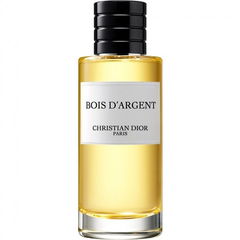
A Fragrance for: TADZIO
Death in Venice is a classic. Not only the book but especially the film has found an extreme echo. Even Gustav Mahler's Adagietto from his 5th Symphony has become a perennial favorite in music history thanks to the film adaptation.
The main characters of the book/film are quite well-known: Gustav Aschenbach and Tadzio. Tadzio comes from Poland and is depicted with curly blonde hair. As an angel on earth, he floats through the book and the film. His facial features are extremely soft and delicate. As an androgynous figure, he embodies both the feminine and masculine principles within himself.
Somewhat similar is this Bois d'Argent..., which I have always found wonderful, although back then I preferred Iris Silver Mist. This iris here at Dior is creamier in its buttery quality. I also perceive this certain soft wood note, as it has made history with Guerlain's Bois d'Armenie. Somehow, my nose constantly thinks of vanilla. The rich creaminess of Bois d'Argent likely evokes associations with this wonderfully sweet note, which is all the more impressive the less cloyingly it is staged.
The powder helps Bois d'Argent not to become sticky; on the contrary: it is light-footed and not at all cumbersome. Powder dust and very, very soft, supple wood intertwine with each other. The scent of this not-so-projecting Dior masterpiece is enveloped by the iris. It is not as prominent as one might initially think, yet it gently and subtly takes its place between the soft wood and bright powder.
And now follows a critique at the highest level: it may be a bit too one-dimensional for me. A bit more sparkle might have done Bois d'Argent some good.
Even if one might think that the fragrance is better suited for women, I do not agree. All fragrances are unisex; there are no non-unisex fragrances.
The sillage is fine, the longevity is better, and the bottle is simply a feast for the eyes.
In heavyweight comparison, the iris at Serge Lutens is simply the reference carrot.
The main characters of the book/film are quite well-known: Gustav Aschenbach and Tadzio. Tadzio comes from Poland and is depicted with curly blonde hair. As an angel on earth, he floats through the book and the film. His facial features are extremely soft and delicate. As an androgynous figure, he embodies both the feminine and masculine principles within himself.
Somewhat similar is this Bois d'Argent..., which I have always found wonderful, although back then I preferred Iris Silver Mist. This iris here at Dior is creamier in its buttery quality. I also perceive this certain soft wood note, as it has made history with Guerlain's Bois d'Armenie. Somehow, my nose constantly thinks of vanilla. The rich creaminess of Bois d'Argent likely evokes associations with this wonderfully sweet note, which is all the more impressive the less cloyingly it is staged.
The powder helps Bois d'Argent not to become sticky; on the contrary: it is light-footed and not at all cumbersome. Powder dust and very, very soft, supple wood intertwine with each other. The scent of this not-so-projecting Dior masterpiece is enveloped by the iris. It is not as prominent as one might initially think, yet it gently and subtly takes its place between the soft wood and bright powder.
And now follows a critique at the highest level: it may be a bit too one-dimensional for me. A bit more sparkle might have done Bois d'Argent some good.
Even if one might think that the fragrance is better suited for women, I do not agree. All fragrances are unisex; there are no non-unisex fragrances.
The sillage is fine, the longevity is better, and the bottle is simply a feast for the eyes.
In heavyweight comparison, the iris at Serge Lutens is simply the reference carrot.
5 Comments
Translated · Show original
Artificial Synesthesia of the Senses and Arts
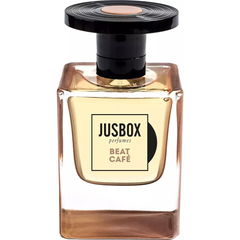
Jusbox aims to combine music with scents, drawing inspiration from music. The synesthesia of the senses is emphasized here, a concept we also see with Ben Gorham and Oliver Peoples, where you can get an Oliver Peoples glasses along with the fragrance for a hefty price (exactly 450 euros), and the optical view of Los Angeles through the color of the lenses is supposed to correspond with the color of the bottle and the olfactory impression of the perfume. I love such endeavors.
Beat Café is my favorite of the 4, followed by 14Hour Dream in second place, with Use Abuse and Micro Love bringing up the rear. Beat Café is woody and sweet, but it also has a certain phantom fruitiness that doesn’t appear in the pyramid. Beat Café is somewhat inspired by Byredo and cautiously glances towards Oliver Peoples' SweetWoodFruit, yet it is still more multifaceted. The pepper leans towards the wood, and the cognac takes on the sweet direction. Resin supports the wood, and tobacco adds to the sweetness. I can't find any green branch with leather in Beat Café.
Coffee is somehow not really discernible, to be honest, not at all, zero point zero. We have sweet wood with a fruity component; is it perhaps more about the location of a café? A big city electro temple that has named itself “Beat Café”? This theory would point in the direction of “synesthesia of the senses” and would certainly make sense.
On a black vinyl record, the 4 bottles from Jusbox are displayed. The collection has a very stylish flair and evokes thoughts of the hippest and trendiest scene. Old school was yesterday; this is definitely newschool. The label fits perfectly with Ludwig Beck.
Here, too, 145 euros are required for exactly 78 ml. Even though Beat Café is innovative and stylish and is the king of the 4 Jusbox creations, I currently have other olfactory goals than Jusbox. Perhaps Beat Café will make it onto my wish list someday, but at the moment, I wouldn’t replace any candidate on my wish list with a Jusbox.
Beat Café is my favorite of the 4, followed by 14Hour Dream in second place, with Use Abuse and Micro Love bringing up the rear. Beat Café is woody and sweet, but it also has a certain phantom fruitiness that doesn’t appear in the pyramid. Beat Café is somewhat inspired by Byredo and cautiously glances towards Oliver Peoples' SweetWoodFruit, yet it is still more multifaceted. The pepper leans towards the wood, and the cognac takes on the sweet direction. Resin supports the wood, and tobacco adds to the sweetness. I can't find any green branch with leather in Beat Café.
Coffee is somehow not really discernible, to be honest, not at all, zero point zero. We have sweet wood with a fruity component; is it perhaps more about the location of a café? A big city electro temple that has named itself “Beat Café”? This theory would point in the direction of “synesthesia of the senses” and would certainly make sense.
On a black vinyl record, the 4 bottles from Jusbox are displayed. The collection has a very stylish flair and evokes thoughts of the hippest and trendiest scene. Old school was yesterday; this is definitely newschool. The label fits perfectly with Ludwig Beck.
Here, too, 145 euros are required for exactly 78 ml. Even though Beat Café is innovative and stylish and is the king of the 4 Jusbox creations, I currently have other olfactory goals than Jusbox. Perhaps Beat Café will make it onto my wish list someday, but at the moment, I wouldn’t replace any candidate on my wish list with a Jusbox.
Translated · Show original
Flui catches his Pokémon, uh, fragrance notes
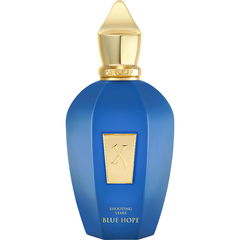
The Pokémon app is all the rage. It feels like everyone has it, and Flui has already tried to prove his Pokémon trainer skills. Coincidentally, I tested Blue Hope again on the same day to get closer to this legendary blue XerJoff.
I'm not entirely clear on the fragrance notes, and I can't quite identify and differentiate them. I always felt like I was trying to catch a Pokémon with the Pokéball that was either wandering in the hallway, at the gas station, or in front of the Munich Town Hall. With more or less success, I managed to catch Pokémon and make them disappear into the Pokéball.
With the notes of Blue Hope, I find it easiest to catch the saffron. My nose loves saffron and picks it out wherever it's hidden. Saffron was quite effortlessly caught by my Poké-nose. I also managed to get the violet, and together saffron and jasmine form the foundation of Blue Hope, my starter Pokémon, so to speak.
Perhaps the mandarin is responsible for the Play-Doh modeling note that I love in perfumes above all. It is soft and smooth and has a somewhat aesthetic scent reminiscent of modeling clay. Here, gum has often been mentioned as an association, but Flui believes it is Play-Doh that can transform several good scents into magnificent perfumes. However, I tried in vain to explicitly catch mandarin with my Poké-nose; it may be more of a phantom mandarin, which is noticeably at work in the background and not in small amounts. The radar indicates mandarin, but it can only be partially confirmed. It hides in the Play-Doh note and remains a freely floating note that cannot be captured by my Poké-nose into a Pokéball.
A similarly phantom-like behavior is observed with a hidden animalic note. Musk and castoreum are even more in the background than the mandarin, yet my nose can't shake the thought that something animalic is kicking and spurring the scent. My Poké-nose also fails to capture castoreum, but the radar reports that castoreum is fluttering around in the beautiful bottle. The scent is too deep for it to be solely saffron and jasmine carrying it.
However, my Poké-nose did make one catch. Vanilla forms the base, and not in small amounts. Here, beautiful saffron is combined with jasmine and vanilla, creating a truly magnificent finish, even if the sillage is not entirely typical of Xerjoff. The longevity is great, but after a few hours, one must settle for a skin scent when all projection has collapsed.
In summary, saffron with jasmine and vanilla is indeed a congenial fragrance creation, but the price of 400 euros leaves a somewhat bitter aftertaste, which seems a bit steep and perhaps doesn't quite do justice to the fragrance, even though I've never smelled anything like it before.
I'm not entirely clear on the fragrance notes, and I can't quite identify and differentiate them. I always felt like I was trying to catch a Pokémon with the Pokéball that was either wandering in the hallway, at the gas station, or in front of the Munich Town Hall. With more or less success, I managed to catch Pokémon and make them disappear into the Pokéball.
With the notes of Blue Hope, I find it easiest to catch the saffron. My nose loves saffron and picks it out wherever it's hidden. Saffron was quite effortlessly caught by my Poké-nose. I also managed to get the violet, and together saffron and jasmine form the foundation of Blue Hope, my starter Pokémon, so to speak.
Perhaps the mandarin is responsible for the Play-Doh modeling note that I love in perfumes above all. It is soft and smooth and has a somewhat aesthetic scent reminiscent of modeling clay. Here, gum has often been mentioned as an association, but Flui believes it is Play-Doh that can transform several good scents into magnificent perfumes. However, I tried in vain to explicitly catch mandarin with my Poké-nose; it may be more of a phantom mandarin, which is noticeably at work in the background and not in small amounts. The radar indicates mandarin, but it can only be partially confirmed. It hides in the Play-Doh note and remains a freely floating note that cannot be captured by my Poké-nose into a Pokéball.
A similarly phantom-like behavior is observed with a hidden animalic note. Musk and castoreum are even more in the background than the mandarin, yet my nose can't shake the thought that something animalic is kicking and spurring the scent. My Poké-nose also fails to capture castoreum, but the radar reports that castoreum is fluttering around in the beautiful bottle. The scent is too deep for it to be solely saffron and jasmine carrying it.
However, my Poké-nose did make one catch. Vanilla forms the base, and not in small amounts. Here, beautiful saffron is combined with jasmine and vanilla, creating a truly magnificent finish, even if the sillage is not entirely typical of Xerjoff. The longevity is great, but after a few hours, one must settle for a skin scent when all projection has collapsed.
In summary, saffron with jasmine and vanilla is indeed a congenial fragrance creation, but the price of 400 euros leaves a somewhat bitter aftertaste, which seems a bit steep and perhaps doesn't quite do justice to the fragrance, even though I've never smelled anything like it before.
2 Comments