Log in

Create Account Forgot your Password?
Naaase

Naaase

Reviews
1 - 5 by 109
Naaase 12 years ago 14
Translated · Show originalShow translation
A Rose Has Blossomed - from 1001 Nights

1.
"A rose has blossomed, from a tender root.
As the ancients sang to us, from Jesse came the kind.
And has brought a little flower in the cold winter
Well to the half of the night (...)"

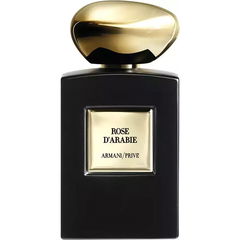
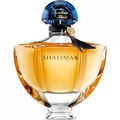
According to the "turquoise-colored" advertising announcements, Giorgio Armani's "Rose d'Arabie" (from 2010) is a majestic essence of the mystical Damask rose. Indeed: "Pulsating, sensual, captivating. Inspired by the famous 'Scheherazade', who, through incredible beauty and wisdom, managed to convince the king of her uniqueness with the legendary stories from 1001 Nights."

These "Damask roses", which are mainly cultivated today in Bulgaria and Turkey, originally come from Asia Minor. They were already known on the island of Samos in 1000 BC and play a role in the widely popular "Tales from 1001 Nights". In these tales, "Scheherazade" is the daughter of the vizier (in today's understanding a kind of minister) of the Persian king "Shahrayar". When this ruler discovers that his wife is cheating on him with a slave, he makes the -understandable in principle- decision never to be betrayed by a woman again. Therefore, he marries a new woman every day, whom he has killed the next morning. A solution; albeit somewhat too martial by today's standards. This was probably what "Scheherazade" thought (even back then) and she marries the king herself. On what she believes to be her last night, however, she begins to tell her newlywed husband a story, the plot of which abruptly ends the next morning. Curious about the end of the story, the king spares her life. And so it goes for 1001 nights. Look! In the end, her husband is so convinced of her loyalty that he grants her life. And if they haven't died...

2.
And surely he not only granted her life but also showered her with roses. With Damask roses. He surely would have surprised her with Giorgio Armani's "Rose d'Arabie". Contrary to the fragrance pyramid, "Scheherazade" would have noticed a certain scent progression. Although not a significant one.

Right at the beginning, she would have been greeted by a delicate -barely noticeable orange blossom-. Just a gentle hint of neroli amidst the surrounding hot desert sand. But then immediately, a stately and proud rose would have revealed its full beauty. Mysterious. Fairytale-like. Not this delicate and almost crystal-clear light pink specimen from "Lumière Noire" by Francis Kurkdjian. No, our proud and oriental rose in "Rose d'Arabie" is blood red. Dark red. Almost black. Yet: It is creamy underneath. Creamy underlined by noble saffron, which most likely found its long and arduous way through the merciless deserts of the land to the opulent royal palace via a caravan. Our noble rose is caressed by this. Yet it remains dark and mysterious. A fairytale indeed. A tale from 1001 Nights. Oud and patchouli ensure that. Everything is very, very finely tuned to each other. Yet "Scheherazade's" proud (and saffron-creamy) rose surpasses them all. Only mysteriously surrounded by its companions: The resinous oud; the smoky patchouli.

And this exotic rose would have accompanied "Scheherazade" for many hours. But not only "Scheherazade". Also her husband, the king. Because our rose is not (delicately) feminine. Therefore, it is also a beautiful rose scent for us men. To feel like a king from a tale of 1001 Nights. At least for a few hours. Because then this wonderful scent fades away with a light hint of vanilla, slightly sweet.

3.
"Rose d'Arabie" is a wonderful and mysterious rose scent. A fairytale from 1001 Nights. A scent for queens and for kings. For kings who do not have their newlywed wives killed right after the wedding night...
14 Comments
Naaase 12 years ago 3
Translated · Show originalShow translation
Cinema Paradiso
Cinema Paradiso

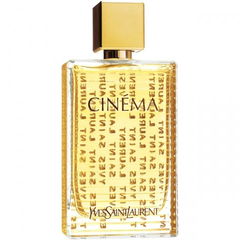
It sparkles at me. Glamorous and challenging. Cheekily reflecting the summer rays of sunlight. On the bottle designed by Line Vautrin, with its golden cap, the word "Cinéma" is written in unembellished letters. Simply "Cinéma".
Perhaps an invitation to a trip to the cinema.

1.
Perhaps to watch the film "Cinema Paradiso" together. Yes, it would be nice to see this classic again. This partially autobiographical film by Giuseppe Tornatore from 1988 tells the story of the people of a village in Sicily and their cinema from the 1940s to the present day:

The successful director Salvatore learns in 1980 in Rome that the local projectionist Alfredo in his childhood village, the Sicilian fishing village of Giancaldo, is nearing death. On the occasion of his funeral, Salvatore remembers his childhood in the late 1940s, which he spent largely as a half-orphan in the local cinema called "Cinema Paradiso": After the local projectionist Alfredo lost his eyesight in a fire, the little boy (who was then called "Toto" by everyone) was allowed to work in the rebuilt cinema (the "Nuovo Cinema Paradiso"), which ultimately made him fall in love with the art of film. Partly due to an unhappy love, and partly to make films himself, Salvatore later left the place of his childhood and thus also Alfredo.

But now, after 30 years, Salvatore returns to Giancaldo. Not only has he changed, but also the place of his childhood. The vacant building of the "Nuovo Cinema Paradiso" is to be demolished. However, the projectionist Alfredo left Salvatore a film reel with a series of kissing scenes as a memory, which he had to cut out over the years from the films shown in the local cinema at the request of the local priest.

2.
Perhaps we should also take Jacques Cavallier-Belletrud with us on our trip to the cinema. He is the creator of fragrances such as "L’Eau d’Issey" by Issey Miyake, "Givenchy Hot Couture" by Givenchy (together with Alberto Morillas), or "Stella" by Stella McCartney. And of course, our test candidate today: "Cinéma" from "Yves Saint Laurent".

In the 9/09 issue, Jacques Cavallier-Belletrud said to "First": "Even as a child, I was fascinated by the different smells in my father's workshop, who was also a perfumer. I thought it was great that you could make money with your nose, and since I can remember, I wanted to become a perfumer. I love the variety and never use the same raw material combination twice. But I am not just a perfumer; I also see myself as a translator of the brand for which I create the fragrance."

3.
But what does "Cinéma" (EdP) actually smell like?

It begins with a ripe clementine. Ripe and juicy, it opens the door to this fragrance for us. No sour refreshment. No, just this mature fruitiness. As was customary during film screenings, the ice cream vendor with his cute belly cart comes through again, and we immediately decide to purchase a fruity clementine ice cream. As we wonder where the hint of an alpine violet suddenly comes from (after all, our "Cinema Paradiso" is not located that high above sea level), the "fruitiness" comes to an end. Our friend Jacques Cavallier-Belletrud could not decide on a subtle fruit ice cream. No, typically male, it had to be that "Magnum" with the show-off almond bits. And he is now enjoying it. Not only audibly but also olfactorily noticeably. Right next to us. But, wow: That is quite a pleasant sweetness that delights our noses. Something in the direction of "Mandorlo di Sicilia" by Acqua di Parma, which thematically brings us back to the small Sicilian fishing village "Giancaldo," where "Toto" spent his childhood. But it is not that slightly spicy (as it is underlaid with coffee) almond sweetness of his Sicilian brother. No, it is the creamy almond of a (high-quality) ice cream. Perhaps with a few pieces of clementine. I mean those from the top note.

The pre-film is running. A documentary about flowers. We leave this region and thus the home of our alpine violet from earlier. We learn that Arabian Jasmine ("jasminum sambac") is a plant species of the genus Jasminum in the family of olive trees, which occurs wild in India and is cultivated worldwide. In our mind's eye, we see the delicious creamy almond dessert, tenderly surrounded by this delicate floral Arabian jasmine. This has brought along Amaryllis as a kind of reinforcement. And in cozy togetherness, these two delicate flowers now envelop our noble almond note. They take away its sweetness. They let it appear loose and light on this pleasantly warm summer day.

The pre-film is now over. Jacques Cavallier-Belletrud has finally finished with his huge "almond Magnum". Only a fine almond whisper remains in the room, testifying to the past enjoyment. The screen goes dark. Dark and mysterious like the finest amber. A hint of vanilla joins in. Just a whisper. It doesn't get too sweet. Someone must have consumed a vanilla milkshake. It can't be that Jacques again...
No, he just looks at me innocently and full of anticipation for the main film through his thick horn-rimmed glasses. Another breeze of rough musk, and the curtain opens. The film begins. And in large letters, I read on the screen:

"Cinema Paradiso".
3 Comments
Naaase 12 years ago 4
Translated · Show originalShow translation
The Clean Man for the Evening

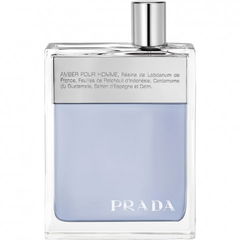
Before me stands the fragrance "Amber Pour Homme," created by Daniela Andrier and released in 2006 by Prada. I am very curious. Because: I find these Prada bottles simply chic. They feel luxurious in the hand. This was also true for "Infusion d'Homme." Almost minimalist. Yet equally modern. Simply straightforward.

And my anticipation grows even more with the promise of this fragrance, that we are to be presented something around the theme of "Amber."

1.
Amber is one of the most valuable raw materials that nature has ever produced. For a long time, the origin of this extremely rare substance could not be explained. Earlier, it was believed that the fragrant gray stones washed ashore came from sea monsters, but whalers in the early 19th century found amber in the intestines of sperm whales. The latter feed on squids and octopuses, which possess a very hard-to-digest and sharp-edged jaw. It is suspected that amber forms during the digestion of these indigestible parts. However, how this exactly works is still unclear. What is certain is that amber, after being excreted by the sperm whale, undergoes significant changes. The clumps drifting on the ocean surface undergo a chemical reaction under the influence of sunlight and oxygen. This results in the fragrant amber bodies that are washed ashore by the tides.

In earlier times, most (natural) amber came from the region around New Caledonia. However, trade there has nearly come to a standstill, as predominantly artificially produced amber is used in perfume production.
Natural amber, on the other hand, is only occasionally used to make the scent darker and thus more mysterious: For amber connects and refines floral and sweet fragrance notes by acting as a so-called "fixative," slowing down the evaporation of lightly volatile essential oils from the plant.

The processing of natural amber is such that the raw substance is ground into a fine powder and alcohol is added. This solution must then mature for several months before it can be mixed into the perfume. Only then do the characteristic fragrance notes unfold. The perfumer Nicolas Mamounas is quoted in an article by Hans Jürgen von der Burchhard for "Planet Wissen" (29.08.2013): "Perhaps amber unconsciously awakens in humans the longing for the sea, from which all life originally emerged."

2.
Prada's "Amber Pour Homme" begins with ripe citrus fruits: A (ripe) bergamot and a (no less ripe) mandarin. Spiced with cardamom and lovingly surrounded by an orange blossom. But the focus is on these two ripe fruits.

However, in my impression, only for a very short time. One cannot speak of a pronounced top note here. It gets darker. "Oh, is the promised amber perhaps already making an appearance?" I exclaim. In joyful anticipation. But - just like a child on Christmas Day - we must still be patient. The darkness does not come from the promised amber. No, no sperm whale has had a bowel movement here. Rather, grassy-earthy vetiver appears. Accompanied by spicy myrrh. Oh yes, and there’s also a little flower lying around: A geranium. But everything is very soft and powdery underneath. That must be the "Nirvanolides" indicated in the fragrance pyramid. They have not yet introduced themselves to me. However, a search for them on Parfumo does not lead to the proverbial "Nirvana." Rather, we learn that "Nirvanolides" is supposed to be a (patented) fragrance substance "that smells intensely of a fruity, powdery, slightly animalistic musk with lactonic nuances." Yes, and that’s exactly how our heart note is in "Amber Pour Homme": Earthy vetiver and spicy myrrh. Garnished with this little flower. And all of it powdery underneath.

What also stands out is - as with "Infusion d'Homme" - this incredible "cleanliness." Everything here feels pure - as if freshly cleaned. Only, in comparison to "Infusion d'Homme," on a darker, perhaps even "more evening" level.

And it gets sweeter. Yes, almost cozy. Even if this "powdery cleanliness" continues in the base. We now experience a vanilla sweetness that has a slightly smoky undertone (patchouli!). Just enough to give this "powdery sweetness" of vanilla and tonka bean a supportive corset. This scent does not gain an oriental touch from that. The whole thing is seasoned with a pinch of saffron, a knife tip of sandalwood, and a teaspoon full of leather. And there we have our - still very clean and pure- powdery-sweet base.

My conclusion:
And where is the promised amber? Perhaps in "Amber Pour Homme," amber was used in the manner described above as a "catalyst." As commendable as this may seem; it does not make it an outright "amber scent" - as the name promises.
Nevertheless, it is a well-crafted fragrance. It continues the "cleanliness theme" of "Infusion d'Homme" on a darker level. So to speak, the "clean man for the evening."
4 Comments
Naaase 12 years ago 7
Translated · Show originalShow translation
Excitement on a Forest Walk?

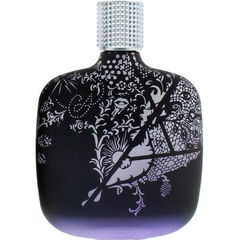
Our test candidate today is "Tumulte Pour Homme," created in 2005 by Nathalie Gracia-Cetto, from the house of "Christian Lacroix." As mentioned here, the French term "Tumulte" refers to the confusing and noisy chaos of excited people, as well as the gathering of loud and agitated individuals. Or - in short - for "Chaos." A "Chaos" is characterized by events not proceeding as planned. This can also be said of the life of the famous master Christian Lacroix.

1.
Christian Lacroix was born on May 16, 1951, in Trinquetaille, a district of Arles. His grandparents, with whom he grew up, influenced him to develop an early interest in style and elegance. After studying French literature, he moved to Paris and studied art history at the "Sorbonne." Initially wanting to become a museum curator, his path took a different turn when he met his (later) wife in Paris. At that time, she was an advisor at "Hermès." Through her connections, Lacroix worked as a design assistant in the fashion department of "Hermès" starting in 1978. From 1981 to 1987, he created the haute couture collection for "Jean Patou," for which he received a special award in 1986 from the "Council of Fashion Designers of America" as the most influential foreign designer. From 1987 (until 2009), Lacroix was the chief designer of his own fashion brand. In addition to these activities, he repeatedly discovered a love for costume design, not only for theater, opera, or ballet; he also created tour outfits for Mireille Mathieu and Madonna. As if that weren't enough, in 2004 he designed the uniforms for all customer-facing "Air France" staff. Furthermore, he is responsible for the interior design of the TGVs that have been running the Frankfurt-Saarbrücken-Paris and Stuttgart-Strasbourg-Paris routes since 2007. Finally, he designed a tram line in the French city of Montpellier in a "marine design."

2.
But what does "Tumulte" actually smell like? Does this fragrance unfold "chaotically" - as its name suggests? One can be curious:

At first, "Tumulte Pour Homme" is quite cool. Unlike so many fragrances, there is not a single citrus fruit present here. And yet, the opening is refreshing. Refreshingly cool. This is due to the distant chill of juniper. Slightly spicy with a hint of bay leaf, it greets us. Almost aloof and distant. But at the same time refreshing and cleansing. The bay leaf adds an interesting and deeper quality to this cool opening, as it imparts a spicy and intriguing note to our juniper berry, thus giving it depth.

And it does not get warmer. In the heart note, incense awaits. Not the unapproachable-cool incense from "Bois d'Encens" (Armani Privé). But still cool enough. While in "Bois d'Encens" the incense almost plays the sole leading role, here in "Tumulte Pour Homme," it is only granted a very short time (and then only in conjunction with the already mentioned spicy juniper berry). Because: I must agree with the previous commentators: We immediately enter a forest. More precisely: A cedar forest. And even more precisely: A cedar forest where a breeze of incense blows. It is true: This is indeed a cedar forest in spring. I can detect nothing rainy or moist about this forest. Certainly no mustiness. I think this impression (for me!) still comes from the slightly present juniper berry, which had greeted us (along with the bay leaf) in the top note of this fragrance so cool and distantly. Well, and our incense hint is still allowed to play along.

So we are in a dense forest. It is spring. It hasn't rained for a long time. The earth is dry; not, however, (highly) summer-dried. The dense treetops allow only a few rays of the still timid spring sun to reach us. Yet these few rays tickle our nose, which is already caressed by the cool hint of incense. It is morning. The coolness of the preceding night has not yet completely disappeared. It still lies like a gray veil over our cedar forest. This is calming for us. We forget space and time. We are caught in our solitary thoughts and trapped in the solitude of the forest. A cool, an unapproachable forest. And so we spend several hours in pleasant solitude. We can then use this solitude to ponder whether and to what extent "Atlas cedar," "Chinese cedar," "Texas cedar," and "Virginia cedar" are planted in our spring forest - as the fragrance pyramid would have us believe. As much as I try to sort these various cedar types olfactorily by their origin and thus their homeland, this endeavor somehow does not succeed for me. My little nose seems still too inexperienced for such feats. And so I leave it at the observation of a spring-cool cedar forest.

My conclusion:
A really well-made fragrance. It conveys a very, very beautiful mood. But is it the mood of a "Tumult"?
Admittedly, the fragrance is sexy. But does that mean that people magnetically (or even erotically) attracted to this fragrance create a confusing and noisy chaos or even a loud and agitated gathering around its wearer? Again: The fragrance is damn well made. But in the case of a "Tumult" around its wearer just because of the fragrance, it would be - to quote William Shakespeare - "Much Ado About Nothing."
7 Comments
Naaase 12 years ago 7
Translated · Show originalShow translation
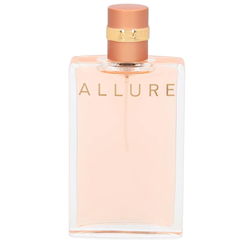
Allure - simply indescribable

"Allure - Indescribable and absolutely irresistible"

... is what you can read on Chanel's homepage about this fragrance. And if this scent were truly "indescribable" in the literal sense, then my comment could abruptly end here.

But we have learned that we cannot always trust these promotional announcements. So I will attempt to make a description. I want to preface that I agree with the highly esteemed "Turandot" that we cannot necessarily categorize Chanel's "Allure" (EdP) from 1999 into top, heart, and base notes. This fragrance eludes a stringent linear scent progression.

No, its creator, the brilliant Jaques Polge, has quite different things in store for us: Immediately after spraying, we are greeted by a wonderfully natural mandarin. A ripe fruit. Not a sour refreshment. Rather, simply a matured mandarin. But not just this fruit. It is creamy underneath. A delicious summer mandarin dessert. On a hot summer day, it delights our eager palate. In our mind's eye, we find ourselves on a sun-drenched terrace under an old mandarin tree. The sharp green leaves look down at us just as the plump ripe fruits do. They enjoy the warming sun rays with us and let themselves be gently caressed by them. But only we can enjoy this deliciously creamy mandarin dessert. We taste the pleasant sweetness. A noble Bourbon vanilla emerges. Pure enjoyment. It carries us away. Away to distant lands. A delicate oriental hint now pampers us.

But in the next moment, it is gone: Our mandarin. A noble flower makes its presence known: A pink rose. Proudly it meets us. Upright and self-assured. Yet still creamy underneath. Soft and tender. And gently and affectionately surrounded by jasmine. As a brilliant counterpart to the soft creaminess. This jasmine gives our proud (yet still creamy) rose a refreshing lightness. It makes it appear airy and loose.
Spring-like, accompanied by a hint of magnolia and a refreshing water lily.

This facet of "Allure" also delights. Now, it is no longer fruity creaminess, but rather the same game with the -still creamy- floral tones. However, before we can fully surrender to this floral creaminess, our initial creamy mandarin peeks out again. It boldly plays in the foreground once more. It lets the floral creaminess recede into the background.

And so this interplay continues: Sometimes it is the creamy rose that captivates us, sometimes the creamy mandarin. Over and over again. As the progression continues, it becomes darker and more mysterious: Noble woods and earthy vetiver increasingly accompany this loving interplay, this tender dance, between these fruity and floral notes, allowing this beautiful fragrance to lovingly fade after a few hours.

My conclusion:
A beautiful fragrance. A beautiful interplay without a linear progression. And how creamy - simply indescribable!
7 Comments
1 - 5 by 109