Log in

Seerose

Seerose

Reviews
1 - 5 by 775
Amer innocence - melancholic sensuality
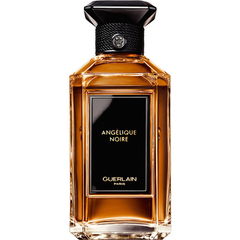
When I received the first O-sample with an order from Guerlain, I had never noticed Angelique Noire and therefore had no idea what this fragrance was like. I am generally skeptical when a fragrance's name suggests something angelic. For me, angels are not cute amulets. For me, angels are the projection of fearsome, powerful heavenly messengers with whom we humans must have no contact, because they are said to be dangerous and even deadly for us.
Although I tested Angelique Noire blindly and noted that I found it to be an enigmatic herbal-green, slightly bitter fragrance with a peculiar sharpness that I thought was citral (also known as neral or litsea cubeba). I had perhaps also added a hint of galbanum. Underneath, I had not perceived a sweet or even gourmand vanilla, but a lovely creamy one and suspected that it could be sandalwood. It was an interesting fragrance that I liked, but it didn't attract me at first. I judged the vanilla-sandal note to be a very ingenious antagonist to the otherwise only harsh-green herbaceous main ingredient.
After a while and wearing it again, I realized that Angelique Noir created a soft envelope of fragrance around me with a soft tingling sharpness, as if made for my skin.
Then I emptied the sample. So I didn't give it any more thought, because Angélique Noire is an expensive fragrance for me and would hardly be an option for me, at best a flacon from the souk.
Then I received another O-sample from Guerlain, which I used for further testing and also called up here for the first time.
I was puzzled by the ingredients listed here, I couldn't do anything with them compared to what I perceived of Angelique Noire.
I did some research and realized that this fragrance was not Angelique but the medicinal and slightly poisonous plant angelica. Which I had never noticed in a perfume before, even though it was listed.
I read the reviews and I couldn't do anything with them either, because Angelique Noir is neither a vanilla scent nor a gourmand scent for me. Even after a long time, the green, slightly sharp-bitter scent remains ephemerally infused with a gentle, creamy vanilla-sandal blend.
Angelique Noire was still perceptible on my wrist shirt after 2 days of wearing it again. I couldn't layer any other fragrance with it. But I was now completely seduced by Angelique Noir and said to my husband with a sigh: "What a pity that I don't have a patron who adores this fragrance?" and received it from my husband as an Easter present,
Now Angelique Noire was in front of me and I wanted to know exactly what Daniela Andrier's inspiration was, how the ingredients are presented at Guerlain.
I didn't find an ingredient list or pyramid, just the ingredients that must be listed on every perfume and cosmetics package. Yes, I also found citral, and the usual substances I know that are also listed for other perfumes and cosmetics. I also read other chemical ingredients that mean little to me and that may also be present in natural fragrances.
However, I noticed that there are remarkably few ingredients listed on the packaging, otherwise Guerlain always has extensive lists and long terms of synthetic substances that usually mean nothing to me.
But then I found a video clip on the Guerlain website about Angélique Noire with Daniela Dandrier and Thierry Wasser. It explained that for Angelique Noire, both the parts of the plant that grow above the ground (stems, leaves, flowers) and the roots of the Angelica plant are used for the perfume. That it is a very pungent, green, herbaceous and bitter fragrance that has been tamed with the softness and gentleness of vanilla. That it is very difficult to make a perfume from the angelica plant because this two parts of the plant releases two completely different essences.
No other fragrances or ingredients were mentioned, nor are they listed anywhere on the Guerlain website.
Then Thierry Wasser explained what the inspiration for this ambivalent fragrance was, the associations it evokes in you/him.
But I won't presume to repeat that here. It is the inspirations and associations of Daniela Dandrier that are explained first and of Thierry Wasser;
Expressed very poetically and full of devotion and tenderness. So that it touched me very much. I listened to it three times.
Instead, I took a close look at the angelica plant on Wikipedia, read all about it and I know that at least as a child I often saw this plant. It is a large umbelliferous plant like the poisonous hemlock and especially like the giant acanthus, which is very dangerous for our human skin. In my home country there are many many waters, streams, ditches, canals, swampy wet areas, that's where angelic grows. At least that's where it grew.
Angelica also has a mild photochemical reaction that corrodes the skin, as does the very dangerous giant acanthus. It is also described that angelica is a medicinal plant that was formerly used for many ailments, pains and diseases and that it is also slightly poisonous.
And that its extract or distillate is used in herbal stomach bitters such as Boonekamp or the famous French Chartreuse.
To summarize: It is an ambivalent unique and rare fragrance. For me, it is a sensual, tender, precious fragrance. Its dark green aromatic bitterness with the soft and tender vanilla expresses the melancholy and poetry of such feelings and moments.
0 Comments
As time goes by
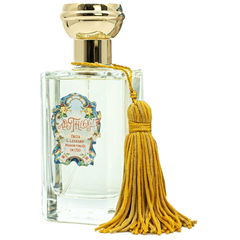
For some time now, there have been so many fragrances that make you smell more like a pastry shop or spice bazaar than a serious perfume for me. I skip this trend, with a few exceptions. I also think that I have enough beautiful fragrances for every occasion in my wardrobe. But I also like to test fragrances. A few months ago, for example, I bought a bottle of "Apotheose". Because the ingredients listed on ALzD appealed to me.
I can't understand the name's claim of "glorification, transfiguration, deification" as I looked it up old-fashioned in an analogue dictionary the German "Duden, to make sure I wasn't misremembering my terms. Nor do I understand its use in other contexts in relation to this perfume - completely.
At first, the initial phase of Apotheose struck me as very sharp, harsh and rough. To be honest, almost breathtaking and not really pleasant.
At the same time, I also smell fresh water that releases ozone into the air under the sun. In addition, I could sense something floral and green, transparent so to speak. However, Apotheosis also has a tart clove blossom scent, at least at the beginning.
Then Apotheose quickly presents a phase with a distinct floral blend that at best hints at sweetness with an almost dusty powderiness. I thought: No, this is not a fragrance I really wanted. It seems to be a typical Oriza L. Legrand fragrance, harsh, austere.
Even though I had already read the ingredients, I didn't look it up again and therefore tested it almost blindly. These two scents remained perceptible side by side for a relatively long time. I have to admit, I tested the fragrance several times and stopped at this stage each time and judged the fragrance to be unsuitable for me.
However, a few days ago I was in a hurry, couldn't decide on any of my perfumes and took the rest from the decant because I was sure that it was definitely not a fragrance that would involve those around me too much in its fragrance cloud and possibly be obtrusively annoying.
When I finally got back home and was able to relax, I noticed a very beautiful floral scent, I thought ylang-ylang, something soothingly creamy, perhaps sandalwood, a hint of balsamic, a familiar resin, but there was still a pungent note that I still perceived very clos on my skin . In short, I was enraptured. But what was it, where did it come from? Until I remembered: I had applied "Apotheosis" many hours ago and now I was smelling something like this on and around me? I almost couldn't believe it.
Because when I smelled it very carefully on my skin, I could detect something of the top note again.
Although I had already written a statement, I had never given the fragrance so much time to develop.
Only then did I look it up here: Eucalyptus? Eucalyptus also has different scent variations depending on the species. That explained a lot to me. And I really like it now. Above all, after a few days of testing, the heart is developing much faster, or rather I perceive it much more quickly, until the final phase. However, it is very much against the current trend of many fragrances.
If I think about it correctly, Apotheosis is one of the fragrances that were common towards the end of the 19th century. Grossmith fragrances, for example. It lasts very well on me, I can still perceive the finished fragrance even after many hours, the sillage is not too overpowering in my opinion and can also be clearly perceived around me.
In relation to the perfume Apotheosis, one could assign the name to the meaning in the theater world, in which a particularly meaningful final phase is meant.
Updated on 08/03/2025
0 Comments
Translated · Show originalShow translation
Like a Dried Orange Leaf Bundle
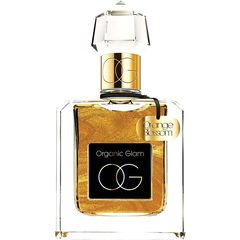
Today, I cleaned out a sorting box filled with notes and found a sample I had purchased earlier this year. Luckily, I had noted it down in my notebook right away. However, when I sniffed the spray head, I had decided to test Orange Blossom by Organic Glam later. Because it probably wouldn’t be a scent I would like. -
And I had forgotten about it until today. So I sprayed Orange Blossom blindly on my wrists without informing myself about it. And my vague suspicion was confirmed.
At first, I was greeted by a sultry, oppressive neroli. I was initially puzzled; it’s called "Orange Blossom," right? Why did my sense of smell insist on also perceiving tuberose? Oh yes, it came to me that I had already tested the tuberose scent from Organic Glam. Still, I smelled tuberose for a while, no matter what. I cautiously checked the label on the sample again with a magnifying glass.
And it remained, until now, a kind of dull, dry quasi-cologne. The orange blossoms seemed to me as if they had been hung up to dry on an attic long ago, along with the branches and leaves, and forgotten. There, they had become musty, shriveled into crumbly gray leaves. Only a bland, dry, slightly dusty hint of the former freshness still rose with the dust when disposing of it. That’s how I smelled it. What I find really disturbing, or found, was an eco-like scent that I had identified for myself years ago, after some misinterpretations, as chamomile. At that time - so my information back then - it was a fixative for ecological fragrances. But I can't stand chamomile aroma in any form, nor can I tolerate it in teas and similar things.
Additionally, Orange Blossom has the specific dull terpene scent of real rosewood oil.
Now, almost 8 hours have passed. From my wrists, I can still perceive a somewhat eco-like but nonetheless more pleasant, slightly sweet, and smoother scent of neroli and brighter citrus notes, almost skin-close. The dullness and dustiness have disappeared. But I miss invigorating, zesty citrus notes and a more radiant orange blossom note. In any case, colognes and predominantly citrus scents are not among my preferred perfumes. Organic Blossom will therefore never make it into my collection.
10 Comments
Translated · Show originalShow translation
Give the Fragrance Time
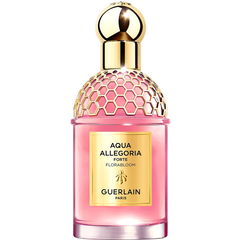
Since no one makes the effort and there are hardly any positive statements, I want to do what is needed for Florabloom and for a review: patience and time.
I almost just sprayed it quickly and put it aside after a relatively short time, then wrote a brief more or less devastating statement. I was prevented from doing so.
However, when I applied Rosabloom, I made handwritten notes as I always do. Then I wanted to wait; I had other plans. To then write a statement. Until then, I hadn't checked here, so I tested it blindly and only today/no, yesterday, looked here and first completed my work in the menu and wrote the statement.
I initially found Rosabloom disappointing: yet another generic floral scent, sour and unpleasantly bitter, green and - this from Guerlain: synthetic in a way that "hits you over the head" - I couldn't believe it. Then a tamed tuberose emerged and framed the fragrance. The synthetic notes disappeared. This tamed tuberose remained until the end, as I discovered much later.
However, there are some fragrances, like Do Son and one from Organic Glam, that also smell of a merely lovely tuberose.
To clarify: No, Florabloom will never be my fragrance. I like tuberose as it smells in nature, but one has to like that. However, Florabloom develops. In the third test, which I also extended to my décolletage, everything went back to how I initially felt about it. Now I wanted to know for sure. And lo and behold: now fully applied, the opening that was almost embarrassing for Guerlain was only very brief, and immediately the "well-behaved" tuberose appeared.
However, in the first test, I wanted to write a review in French about my favorite island after applying and noting, as was expected in the course.
Well, that wasn't so easy for me. I had already prepared everything, notes, ideas, the translation program within reach on my smartphone - just in case, and wanted to write that on the course website. But my computer said: "Due to insufficient performance, we have interrupted the internet connection, and then what one can do/could do to get back online, and: Would you like to play?
Umpf, no! All attempts were in vain. OK, one has other things to do. I forgot about Florabloom and occupied myself elsewhere. Meanwhile, a creamier and sweeter scent rose from my arm. Along with it, very faintly, what I smell from mango when I break a leaf from my mango tree and tear it a bit to smell: fruity-sweet-sour-delicious, yet it has something of pine needles.
The internet took hours to return. I forgot about Florabloom again. After a few hours, Florabloom was still there, just as medium-intense as from the beginning. But now I smelled a mix of creamy-green-sandalwood and - indispensable for Guerlain - vanilla and an almond note. Somehow unusual. That was (the day before) yesterday.
In the morning, I still smelled this scent faintly on my skin, even though I had showered.
So, the procedure again. But now, after some time, I had the impression that Florabloom was developing again in a way that I found quite pleasant. And yet, and yet, what did Florabloom remind me of?
Eureka: Samsara EdP. Could that be? Compared to Florabloom, this is a very strong perfume.
My left arm was still free, and I applied a small spray of it. But Samsara is really a different caliber and immediately overpowered Florabloom.
Too bad, I thought, now I have to wait it out. Is it similar now, or is it because Samsara is so dominant? Although I only had a hint of Samsara on my skin.
But I used the time to struggle with the description of my favorite German island in French. (It was worth it; I already received a heart, after all)
Now, after many hours, I can say there are phases in which Florabloom smells similar to Samsara and then again not. At the moment, Florabloom is again on its way with its needle-woody-fruity mango note along with a compliant tuberose, developing into an almost creamy, green-sandalwood almond scent. That all sounds very nice. It is too.
Nevertheless, Florabloom does not enchant me. Because Florabloom is always underlined by a note that I find unpleasant, which I cannot identify and do not want to. It is the unpleasant tuberose note that makes many fragrances with tuberose unbearable for me.
Since the longevity of Florabloom is very good, the sillage is only medium to close to the skin and has no unpleasant projection, it can be worn without worry on many occasions. However, one must like it on oneself. Those who find Samsara too intense and old-fashioned might possibly be happy with Florabloom.
25 Comments
Translated · Show originalShow translation
Floral Ornaments
When I first tested "Objet Céleste" a few years ago, I was captivated by all the fragrances in the sampler set. Especially by "Brume d'Hiver," of which I have already repurchased the 2nd bottle. I also liked "Objet Céleste" very much, but at that time - as now - I had several beautiful floral scents. So it remained on my wish list until now. I wrote a review in 2013, which I have long since deleted. I will set aside the reason for that. However, I saved the review in my files and realize that deleting it was the right decision. Back then, I perceived some things exactly as I do now. On the other hand, due to inexperience and lack of knowledge, I misattributed some fragrance notes because I didn't know better, and I couldn't differentiate others. Moreover, the pyramid has since been changed.
I also did not test it blindly and did not dare to move outside the listed pyramid.
Now it stands here, the new bottle, acquired at a bargain price from ParfumMaria, NL. At that time, the Volnay fragrances were available at ALzD, but that is already history. They classified "Objet Céleste" as a feminine floral chypre.
As also informed at ALzD, all Volnay fragrances have a base mixture, in this case, Base 4092, a blend of rose, not sweet vanilla, and clove.
The name? "Objet Céleste" is translated by my two translation programs either as celestial object or celestial body.
What continually enchants me about "Objet Céleste" is, on one hand, its delicate, gentle, ephemeral, indeed filigree floral quality; it has something ethereal and at the same time a well-executed, clearly noticeable yet restrained noble dark aromatic rosewood-like quality, whose bitterness I now perceive as grapefruit.
Objet Céleste starts off a bit harsh for a few seconds, almost citral, then a delicate citrus note unfolds that aligns itself under the simultaneously grounded dark-bitter wood note.
That’s how it is with the celestial bodies that shine and dazzle for us. They appear in the telescope as if the sky around us is woven with countless delicate little sparkling ornaments into an invisible net. And yet, the celestial bodies are mass, matter. These wood notes ground "Objet Céleste."
This results in a very harmonious scent, in my opinion.
After the brief initial phase, a lovely, delicate floral mix appears. I perceive a sweetness reminiscent of honeysuckle, a hint of honey sweetness like the nectar from honeysuckle flowers.
Could benzoin and/or labdanum be responsible for that?
This filigree, always ephemeral floral scent, however, is contained by the wood and the imperceptible clove scent as antagonists.
Even the vanilla and citrus accents at the beginning are no longer perceptible to me.
A creamy, warm, cheerful floral scent emerges, capable of uplifting one's mood into a sunny, buoyant state. And yet, it remains a woodsy, resinous grounded fragrance.
Since "Objet Céleste" has a restrained sillage, and I perceive it on myself and as a scent aura around me, it can be worn confidently for all occasions and seasons. If one wishes to present more of it, one must spray twice and not sparingly. The longevity is, in my perception, rather mediocre; I perceive it for a very long time on the skin and in the room.
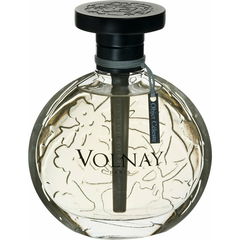
The round, moon-shaped, flat bottle is adorned on one side with a slightly raised floral pattern, which is also found on the cap.
I do not have small hands, but like with many large bottles, I turn the spray opening to the side so that I can hold the bottle securely with one hand while spraying.
I deducted one point for the bottle because the cap, while very heavy and slightly magnetic, sits firmly on the spray rim, preventing evaporation. However, one should never lift the bottle by the cap; it is not magnetic enough to hold the glass bottle. In a fraction of a second, the bottle can fall away.
For those who enjoy uncomplicated and non-intrusive floral scents, and who appreciate a certain twist towards the grounded, "Objet Céleste" is recommended. You will not be overwhelmed by heavy floral scents like jasmine, lily of the valley, orange blossom, lilac, lily, gardenia, or tuberose.


18 Comments
1 - 5 by 775