


 Top Notes
  Galbanum
 Tarragon
 Lavender
 Bergamot
 Petitgrain
 Heart Notes
  Pine needle
 Carnation
 Geranium
 Jasmine
 Patchouli
 Vetiver
 Base Notes
  Labdanum
 Leather
 Oakmoss
 Styrax
 Amber
Amber Coconut
 Musk
Musk

07/14/2012

jtd
484 Reviews

jtd
Top Review
13
Some thoughts on Price, Quality, Criticism
I’ve been thinking about the wonderful yet inexpensive perfumes out there. There are many well considered, beautifully made perfumes that you can buy for a song. Cheap or pricy, though, the best perfumes must stand up to the same criteria. Is it coherent and balanced? Does it hold up over time? Does it captivate you, that is, would you wear it as your only perfume? Crucial: does it smell good? Is it ‘you’? Does it remain engaging throughout the entire day? Will it last that long? Would you want it to? Does it work for you in all the compartments of your life: At work? Cooking? Socializing? Cruising? In a class? On the subway?
Let’s look at perfume criticism. And let’s not start with the accepted classics, the greats, the grandes dames. Let’s start with the commonly-available, inexpensive yet extraordinary perfumes, since this starting place is troubling to the notions of exclusivity and refinement baked into commercial perfumery by virtue of its long-standing affiliation with fashion. I hesitate to use the word “great” in perfumery. I recognize perfumery as an art form, one of my favorites. But greatness as a notion comes from more accepted genres of art and established forms of criticism, when what we need are new vocabularies and systems to consider perfume. Think of greatness as an aspiration or a standard of the Old School. I would hope that the New School in perfumery and criticism would promote quality, creativity and analysis, but not hold out judgment and arbitrary thresholds as principal goals. Greatness seems to me to connote a feigned objectivity, or at least a socially agreed upon judgment, when it is in fact fundamentally subjective. Greatness is cited when we’re looking for the dividing line: high/low, good/bad, worthy/crass. Lets find words that assess and characterize, words that can speak both to objectivity and shared subjectivity and foster a less removed esthetic of criticism.
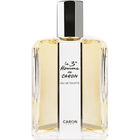
I’ve commented on some of the brilliant, inexpensive perfumes available. Azurée, Grey Flannel, Ivoire, Tocade, Troisièmme Homme. There are still many I hope to get to: Tommy Girl, Bulgari Black, Halston I-12 and Z-14. I might have mentioned that they’re inexpensive, but on reflection, I really want to focus more directly on the associations (or their lack) of quality, creativity and price. Dissociating cost and excellence is an important step in taking a discerning look at perfume. Divorcing notions of status and aspiration from the sale and use of perfume is a tricky prospect since perfume and fashion are historically and commercially enmeshed.
Still, while perfume and fashion are bound in the marketplace, perfume doesn’t necessarily have to be viewed and debated in the same light as fashion and design. Looking to other art forms, music is probably the most commonly used analogy. How often is a perfume described as orchestral, loud, harmonious, shrill or dissonant? We could just as easily consider perfume as performance, borrowing the language of dance and theater. Additionally, the recent recognition of the perfumer as auteur allows us to look at a perfumer’s body of work over time just as we might that of a visual artist. Add to these perspectives the scientific advances in chemical analysis and synthesis and perfumery looks ripe for a new if not radical form of critical thought.
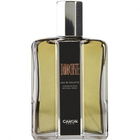
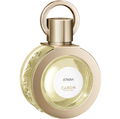
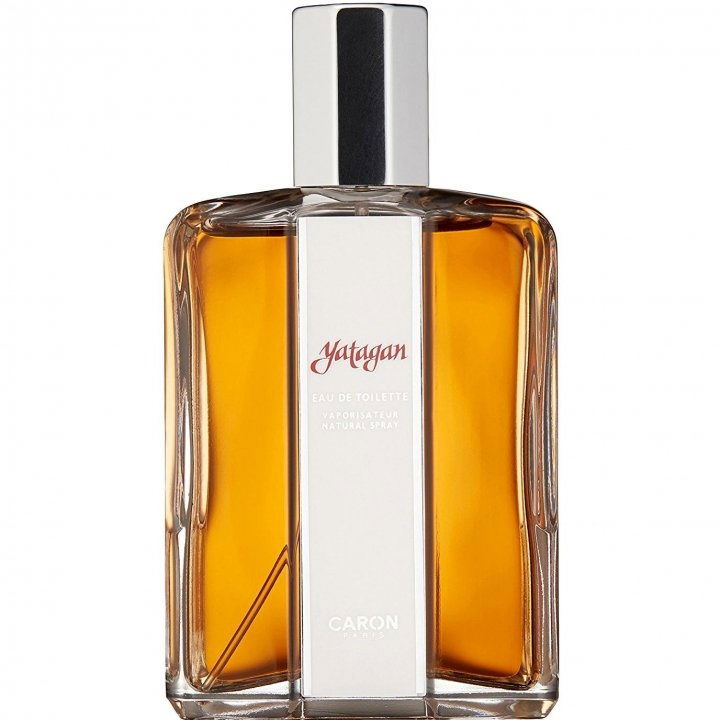
OK, so Yatagan. It smells instantly, recognizably botanical---moss, wood, herbs. All bitter, all dry. But Yatagan’s trick, its value is the scale of its components, its abstraction. To read peoples’ reviews, Yatagan is the black box of perfume. To some it is a spicy woody, to others, a definitive leather, to others still, purely herbal. And I’d be negligent if I didn’t note that nearly every other review mentions underwear. I usually fall in pretty easily with the drawers and jockstraps crowd, but in this case, I’m entirely in Caron’s marketing department’s camp. Flowerless oriental chypre. So perfectly, hollowly evocative. It is instantly familiar to the ear, like flourless chocolate cake, but is also an easily decoded intimation. Flowerless = not pretty (read: the troubled masculinity of 1976.) Oriental = what else can we call something spicy and resinous while tediously leaning on the stereotype of the inscrutable East? Chypre = green, bitter, mossy and, importantly, sophisticated. I imagine Caron might have been scared of Yatagan’s distinctiveness (to me a gorgeous part of its allure) and attempted to use classic fragrance language to come up with a catch-phrase to comfort and flatter its potential buyers.
Caron may have been encompassingly vague in their marketing language, dimly offensive in their oriental allusion, but fortunately direct and brave in their fragrance. Yatagan has that striking balance of starkness and richness found in the best and most distinctive of perfumes.
So given its quality, why is Yatagan so inexpensive? Some factors I can loosely understand: economies of scale over time, brand recognition obviating the need for specific product marketing, possibly lower composition/production costs, clear profit margins assuming the initial investments in the 1970s have been returned. But rhetorically, why does Yatagan cost so much less than the weekly iteration of men’s designer crap fragrance? And why does Yatagan cost literally one-tenth the price of some directly comparably, high quality fragrances like those from Serge Lutens and Amouage?
Let’s look at perfume criticism. And let’s not start with the accepted classics, the greats, the grandes dames. Let’s start with the commonly-available, inexpensive yet extraordinary perfumes, since this starting place is troubling to the notions of exclusivity and refinement baked into commercial perfumery by virtue of its long-standing affiliation with fashion. I hesitate to use the word “great” in perfumery. I recognize perfumery as an art form, one of my favorites. But greatness as a notion comes from more accepted genres of art and established forms of criticism, when what we need are new vocabularies and systems to consider perfume. Think of greatness as an aspiration or a standard of the Old School. I would hope that the New School in perfumery and criticism would promote quality, creativity and analysis, but not hold out judgment and arbitrary thresholds as principal goals. Greatness seems to me to connote a feigned objectivity, or at least a socially agreed upon judgment, when it is in fact fundamentally subjective. Greatness is cited when we’re looking for the dividing line: high/low, good/bad, worthy/crass. Lets find words that assess and characterize, words that can speak both to objectivity and shared subjectivity and foster a less removed esthetic of criticism.
I’ve commented on some of the brilliant, inexpensive perfumes available. Azurée, Grey Flannel, Ivoire, Tocade, Troisièmme Homme. There are still many I hope to get to: Tommy Girl, Bulgari Black, Halston I-12 and Z-14. I might have mentioned that they’re inexpensive, but on reflection, I really want to focus more directly on the associations (or their lack) of quality, creativity and price. Dissociating cost and excellence is an important step in taking a discerning look at perfume. Divorcing notions of status and aspiration from the sale and use of perfume is a tricky prospect since perfume and fashion are historically and commercially enmeshed.
Still, while perfume and fashion are bound in the marketplace, perfume doesn’t necessarily have to be viewed and debated in the same light as fashion and design. Looking to other art forms, music is probably the most commonly used analogy. How often is a perfume described as orchestral, loud, harmonious, shrill or dissonant? We could just as easily consider perfume as performance, borrowing the language of dance and theater. Additionally, the recent recognition of the perfumer as auteur allows us to look at a perfumer’s body of work over time just as we might that of a visual artist. Add to these perspectives the scientific advances in chemical analysis and synthesis and perfumery looks ripe for a new if not radical form of critical thought.
OK, so Yatagan. It smells instantly, recognizably botanical---moss, wood, herbs. All bitter, all dry. But Yatagan’s trick, its value is the scale of its components, its abstraction. To read peoples’ reviews, Yatagan is the black box of perfume. To some it is a spicy woody, to others, a definitive leather, to others still, purely herbal. And I’d be negligent if I didn’t note that nearly every other review mentions underwear. I usually fall in pretty easily with the drawers and jockstraps crowd, but in this case, I’m entirely in Caron’s marketing department’s camp. Flowerless oriental chypre. So perfectly, hollowly evocative. It is instantly familiar to the ear, like flourless chocolate cake, but is also an easily decoded intimation. Flowerless = not pretty (read: the troubled masculinity of 1976.) Oriental = what else can we call something spicy and resinous while tediously leaning on the stereotype of the inscrutable East? Chypre = green, bitter, mossy and, importantly, sophisticated. I imagine Caron might have been scared of Yatagan’s distinctiveness (to me a gorgeous part of its allure) and attempted to use classic fragrance language to come up with a catch-phrase to comfort and flatter its potential buyers.
Caron may have been encompassingly vague in their marketing language, dimly offensive in their oriental allusion, but fortunately direct and brave in their fragrance. Yatagan has that striking balance of starkness and richness found in the best and most distinctive of perfumes.
So given its quality, why is Yatagan so inexpensive? Some factors I can loosely understand: economies of scale over time, brand recognition obviating the need for specific product marketing, possibly lower composition/production costs, clear profit margins assuming the initial investments in the 1970s have been returned. But rhetorically, why does Yatagan cost so much less than the weekly iteration of men’s designer crap fragrance? And why does Yatagan cost literally one-tenth the price of some directly comparably, high quality fragrances like those from Serge Lutens and Amouage?
1 Comment






 BertolucciK
 OPomone
 JackofSpades
 Nostrildamus
 KimJong
 DJSaunter
 Ady14141
 Holscentbar
 Ceesie
 Matux
Matux