

 Top Notes
  Mandarin orange
 Bergamot
 Jasmine
 White blossoms
 Lemon
Lemon Heart Notes
  Basil
Basil Cistus
 Lavender
 Sage
Sage Base Notes
  Ambergris
 Cedarwood
 Sandalwood
 Vetiver
Meggi
1018 Reviews
Translated · Show original

Meggi
Top Review
23
Two and a Half Candy Attempts
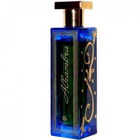
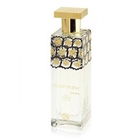
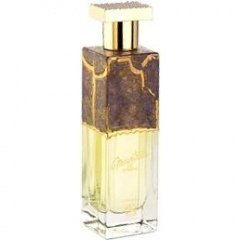
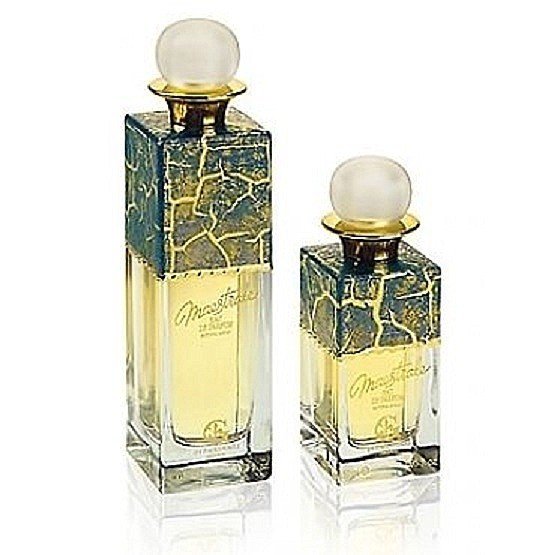
The opening of Maestrale has a toffee-like, almost liqueur quality. It takes a little while for other ingredients to make their presence known. Mandarin is fine, its juicy fruit sweetness is initially a bit jarring in this context. Then I catch a whiff of a white floral nuance, and finally, a soapy, foamy twist develops in the background. Together, this comes off as extraordinarily strange. By no means bad, after a few minutes it becomes rather pleasant. But indeed strange.
Picking out such details is certainly a bit of a challenge, as everything seems to be closely packed together. I should probably just broadly summarize it as "mild-floral fruit, subtly spicy-clean undertones." Curiously, the blend becomes increasingly candy-like as the morning progresses.
So - the one and a half attempt (the toffee from above only counts as half):
“Gooooons exclusive - our original Kräuterbonbons de Grasse. Avec ordentlisch lavender. And a tiny bit of white flowers. A drop of fruit must not be missing.”
“Who invented that?” comes the reply. It smells, maliciously sharpened, like Ricola with clean lavender. Nevertheless, the tension between candy-like floral and foamy-clean is quite charming.
By lunchtime, the mixture undergoes a fundamental transformation, becoming straightforwardly sweeter, as if - second candy attempt - more and more creaminess is sneaking in. Fortunately, not pure, no, help arrives: The rock rose provides a saving twist into the oriental. Again, this can at least be described as somewhat original.
After six or seven hours, a blend of vanilla-like, if you will, amber develops, at least directly on the skin, along with otherwise more labdanum-ambery aromas. Overall, a somewhat conventional sweet-creamy mixture is created, which, however, deserves credit for a) not smelling like sweetened whipped cream and b) not unfolding a dull, synthetic, trumpet-like aroma. In fact, the whole thing remains somewhat varied: Occasionally, small remnants of floral or white floral nature flash by, almost pronounced near the skin, bordering on the stinky. Then again, reminiscences of a spicy nature waft past or one can sense characterful resinous splashes. At the very end, in the evening, vanilla-like let’s-call-it-amber dominates.
Friends of such soft-balsamic scents with a slight edge might enjoy this Gigli creation. Personally, Maestrale does not sweep me off my feet; I simply do not understand what it really wants. And what all this has to do with the supposedly cool wind of the same name, I frankly do not understand at all. I find nothing cool about it; on the contrary. [In the meantime, I have been informed by Yalla, the donor of the sample (thank you very much!), that said wind can indeed deliver sweet warmth. Aha!]
Regarding the irritation that the relationship between purchase price and what is offered has caused among my two previous commentators, I can report that the virtual store, whose “i” recently shifted from the front to the middle, already offered the fragrance for under a hundred euros. That might fit better now - the mentioned roughly 200 was indeed a bit ambitious.
Picking out such details is certainly a bit of a challenge, as everything seems to be closely packed together. I should probably just broadly summarize it as "mild-floral fruit, subtly spicy-clean undertones." Curiously, the blend becomes increasingly candy-like as the morning progresses.
So - the one and a half attempt (the toffee from above only counts as half):
“Gooooons exclusive - our original Kräuterbonbons de Grasse. Avec ordentlisch lavender. And a tiny bit of white flowers. A drop of fruit must not be missing.”
“Who invented that?” comes the reply. It smells, maliciously sharpened, like Ricola with clean lavender. Nevertheless, the tension between candy-like floral and foamy-clean is quite charming.
By lunchtime, the mixture undergoes a fundamental transformation, becoming straightforwardly sweeter, as if - second candy attempt - more and more creaminess is sneaking in. Fortunately, not pure, no, help arrives: The rock rose provides a saving twist into the oriental. Again, this can at least be described as somewhat original.
After six or seven hours, a blend of vanilla-like, if you will, amber develops, at least directly on the skin, along with otherwise more labdanum-ambery aromas. Overall, a somewhat conventional sweet-creamy mixture is created, which, however, deserves credit for a) not smelling like sweetened whipped cream and b) not unfolding a dull, synthetic, trumpet-like aroma. In fact, the whole thing remains somewhat varied: Occasionally, small remnants of floral or white floral nature flash by, almost pronounced near the skin, bordering on the stinky. Then again, reminiscences of a spicy nature waft past or one can sense characterful resinous splashes. At the very end, in the evening, vanilla-like let’s-call-it-amber dominates.
Friends of such soft-balsamic scents with a slight edge might enjoy this Gigli creation. Personally, Maestrale does not sweep me off my feet; I simply do not understand what it really wants. And what all this has to do with the supposedly cool wind of the same name, I frankly do not understand at all. I find nothing cool about it; on the contrary. [In the meantime, I have been informed by Yalla, the donor of the sample (thank you very much!), that said wind can indeed deliver sweet warmth. Aha!]
Regarding the irritation that the relationship between purchase price and what is offered has caused among my two previous commentators, I can report that the virtual store, whose “i” recently shifted from the front to the middle, already offered the fragrance for under a hundred euros. That might fit better now - the mentioned roughly 200 was indeed a bit ambitious.
14 Comments




 Yatagan