

 Clary sage
 Corn mint
 Lavender
 Oakmoss
 Savory
 Woods
Woods01/21/2026

Intersport
117 Reviews
Translated · Show original

Intersport
Top Review
18
Double Negative (in 3D)
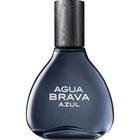
In 2019, a small booklet titled La Fabuleuse Histoire de l’Eau de Cologne was published as part of the exhibition of the same name at the Musée International de la Parfumerie in Grasse. The publication was directed by Jean-Claude Ellena, and among the selected reference fragrances is Puig's Agua Lavanda (1940). It may be that Puig decided to commission Ellena to revise his classics Agua Lavanda and also Agua Brava for this reason. It could just as well be due to Ellena's convincing editorial interventions in updating three Hermès fragrances: Bel Ami Vétiver (2013), Équipage Géranium (2015), and Rose Amazone (2014). Or simply the fact that an experienced perfumer like Ellena is at work, who may have encountered Agua Brava, released in 1968, at a young age. I suspect that Agua Brava was not particularly prominent or available outside of Spain back then, and only made its way to France through labor migration or increasing tourism; perhaps the Ellenas vacationed there?
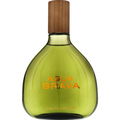
All speculation, but the dry, herbal-bitter, thoroughly Mediterranean, primarily functional, and unadorned Agua Brava serves as a good historical template for Ellena's later aesthetic, and the result is quite interesting. From a distance, it is clearly Agua Brava, and even in direct comparison with the current original version, the similarities in shape are undeniable, just everything in a new, radiant form, like a sensitively recolored 3D photo compared to the yellowed sepia or black-and-white original. Of course, it is clear who emerges as the favorite here; I also had to admit at first that the old one has, even in the ReReReformulation, more charm and even a bit of edge. But gradually, I find the new one not so bad at all. The fact that household savory is listed as a note here seems to me more in line with the current trend, where at least a rarely mentioned ingredient must be noted, but it certainly fulfills all the kitchen herb aspects of thyme and rosemary and sits well. While the mentioned renewals of the Hermès classics included shifts and emphases of individual notes as part of the concept, the holistic polishing of the new Agua Brava results in a volume that I would most closely associate with Ellena's Hermès times: reduced and yet well-structured.
Any mention of woods has been a thorn in my side for some time. It was often the once much rarer wood notes (think cedar via Iso E) that became increasingly popular in the 2000s and which I appreciated back then. However, since more recent woods often also contain woody-amber trace elements, wood notes in the mainstream hardly excite me anymore; on the contrary. Fortunately, Ellena here primarily draws on his own wood note(s), explicitly that of Cartier's Déclaration (1998). That fits here, I don't have a final assessment yet; at higher temperatures, it could certainly look different. Overall, Agua Brava, like the original, surely benefits from a certain base warmth.
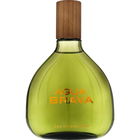
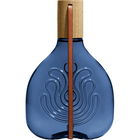
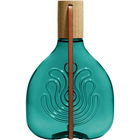
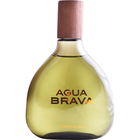
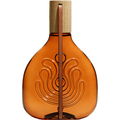
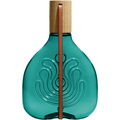
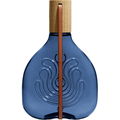
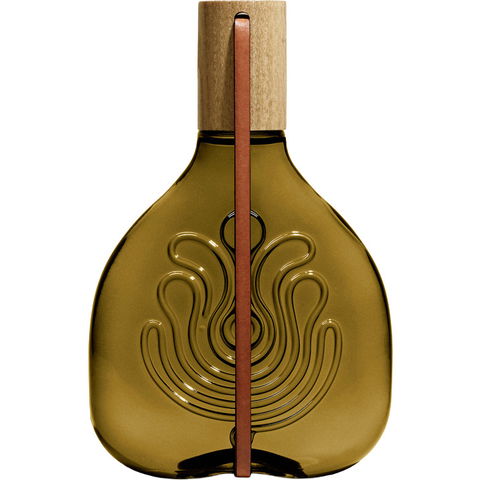
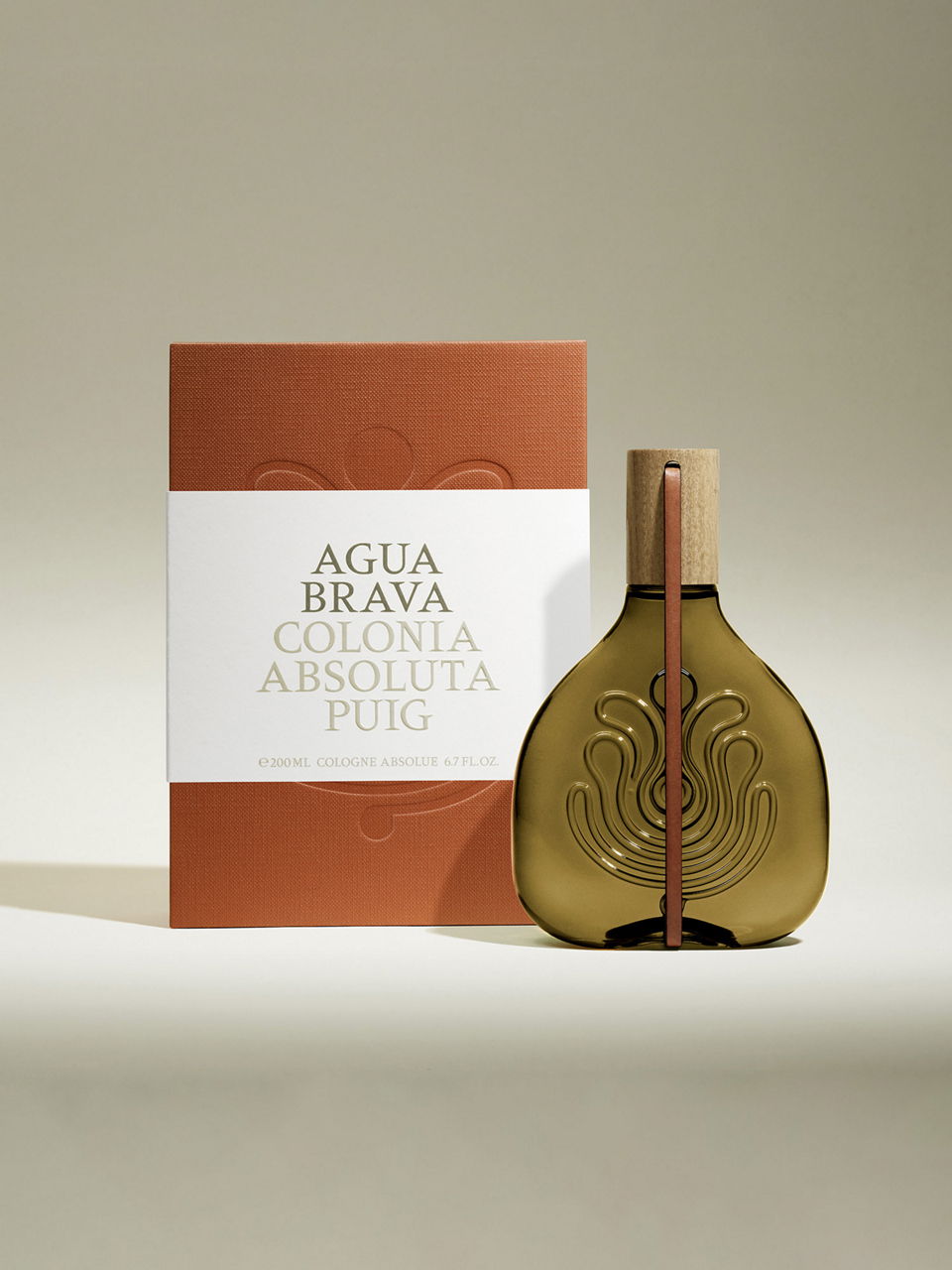
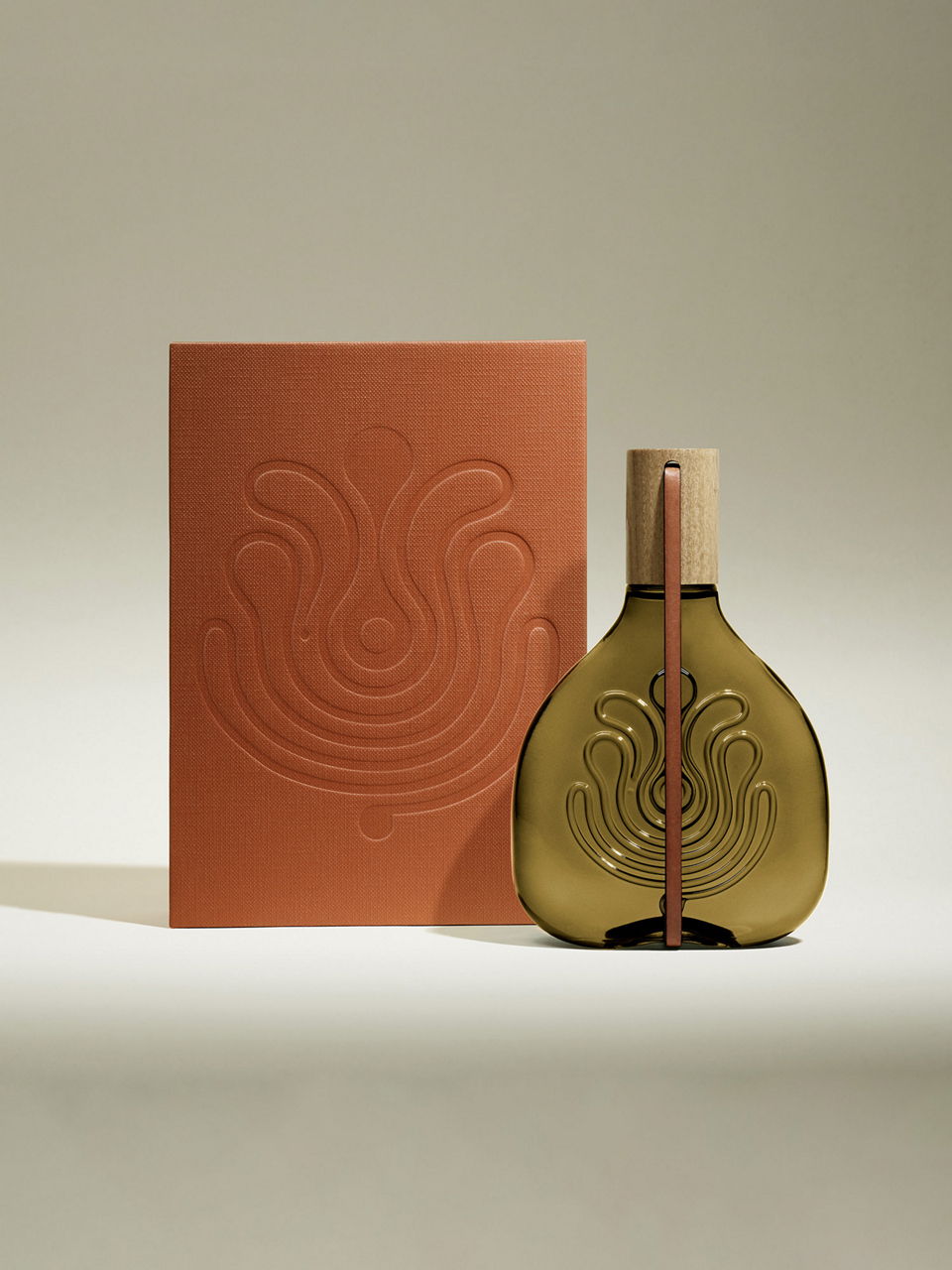
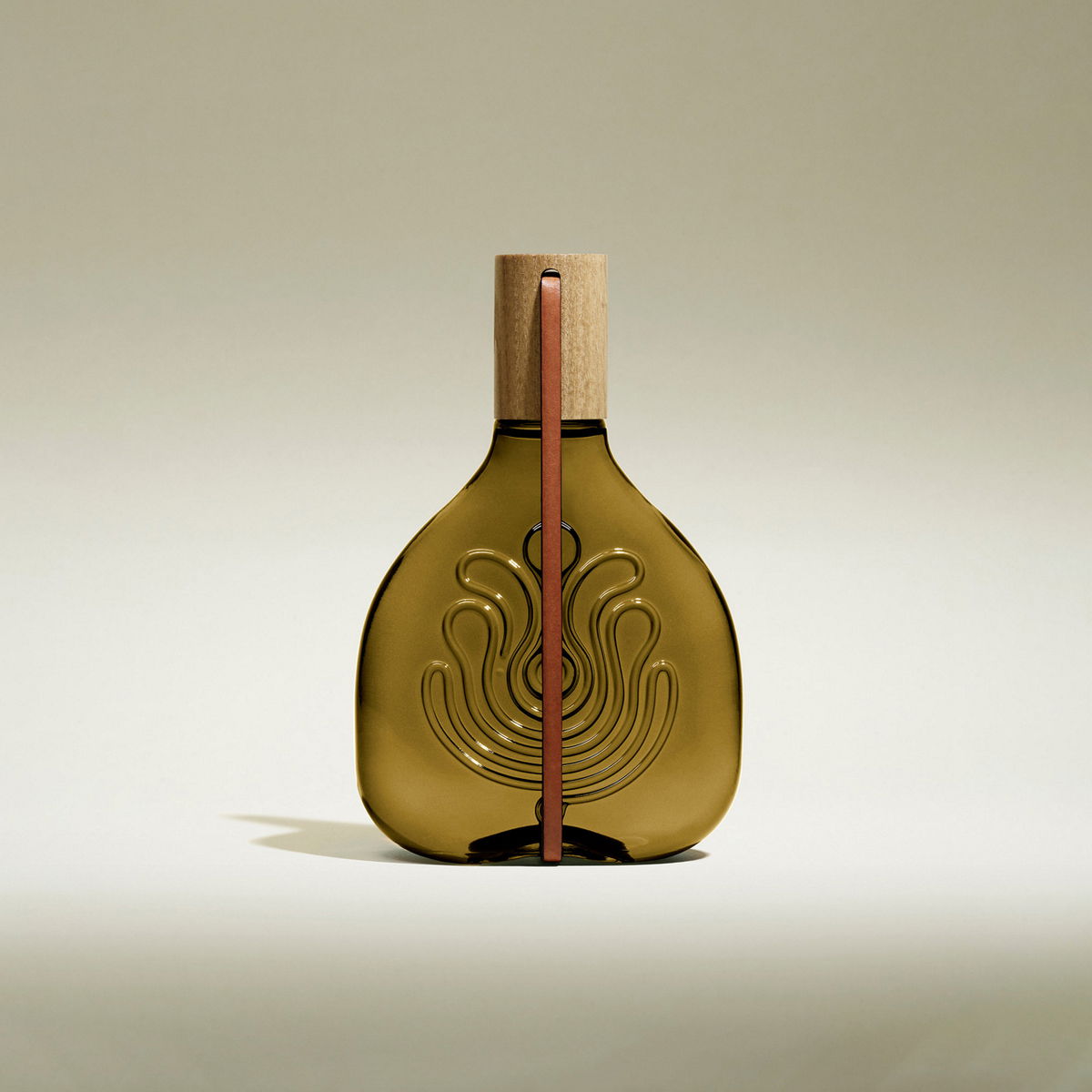
And yes, I have a fondness for such herbal, largely citrus-free, light, unfashionable fragrances, whose perfection for me is represented by Granville (2010), which was released by Dior. I don't like the new Agua Brava quite as much, but it's something. Rather, I see a completely different aspect here as problematic: product design and pricing. The fragrance largely quotes the original bottle that Puig established, including its volume of 200 ml. But it's a bit like a coffee table book: the slightly rustic-looking artificial leather strap that additionally secures the wooden lid is primarily impractical. I wonder how many bottles have already broken just because someone got caught on it in the heat of the morning battle in the bathroom. Or how many of these bottles are now standing around without a lid or have had the strap simply cut off...
And even if 180 EUR for 200 ml of a fragrance (Eau de Cologne…was similar at Chanel in 2007) these days seems almost not particularly high in the niche mainstream... the fact that Agua Brava, as a perfume that was long more associated with gas stations or drugstores than with haute parfumerie, is now offered at about ten times the previous price for 200 ml is sheer mockery. The small booklet that accompanies the fragrance, which of course emphasizes the uniqueness and exclusivity of the ingredients (all relative), does not help further. A 100 ml bottle for 90 EUR would have been more interesting here. However, the trend towards poorly proportioned luxury colognes has already been tested by Claus Porto with the Água Colónias (2018) by Lyn Harris, albeit accompanied by a hair-raisingly fabricated narrative. There too, the connection to those drugstores and mercerías where these fragrances were originally traded for decades was lost. Whether these new versions will have a similar longevity remains to be seen. Where this fragrance will now be available is another question. Puig will hardly place it in classic perfumeries or department stores; the new Agua Brava is too unwieldy, too much special interest. With this pricing policy, however, those sales outlets that have previously carried the old Agua Brava are also out of the question; why would they, the original is still very good. So direct sales remain, where on the website, alongside nostalgically reduced imagery, a Mediterranean region is portrayed, away from the beaches, as it has become so trendy in the last year. Many thanks to Costello for the testing opportunities.
14 Comments
 Yatagan
 Heikeso
 Chnokfir
 Khriso
 MuckiMango
 Waldler
 Leynir