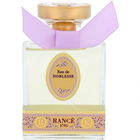
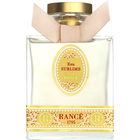
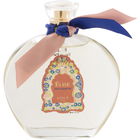
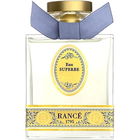
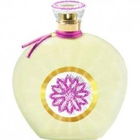
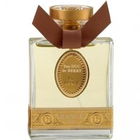
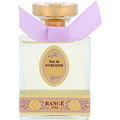
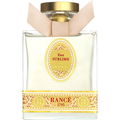
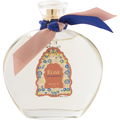
Well, marketing is a must, especially in the fragrance industry. Quote: "The perfume house Rancé, founded in Grasse, is one of the oldest family businesses in the perfume sector. The glove maker Louis Rancé established the tradition of the house. In 1795, his grandson François Rancé decided to focus exclusively on perfume, quickly becoming Napoleon's favorite perfumer."
That may have all been true - or something like it (Houbigant sends its regards), but why does it say "Made in Italy" on the bottom of the bottle? In the late 1800s, a descendant, Alexandre Rancé, is said to have moved to Milan. In a great comment from Gentsrevs, the following is noted: "Historically, it is at least proven that Rancé produced soaps and bath products for Napoleon's royal court. However, whether perfumes were explicitly included is not proven." The company Rancé & C. s.r.l. was founded in 2003 by Felice d’Elia and his wife Jeanne Rancé. Rancé has a store in Milan on Magenta Street.
Since 2003, several dozen creations have been released with names such as:
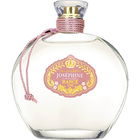
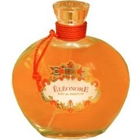
- Joséphine (2005, in the marketing text it says: "This women's fragrance from Rancé, dating back to 1805, is dedicated to Joséphine de Beauharnais, Empress of the French and Napoleon's first wife"),
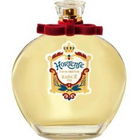
- François Charles (2007), son of Napoleon, who died of tuberculosis in his early twenties (that wasn't a marketing text), or
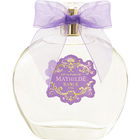
- Eugénie (2006) (Eugénie de Montijo from Spain, wife of Napoleon III and last Empress of the French).
In the parfumo database, I have seen some Rancé fragrances from the 1990s, but also from the 1920s.
So much blabla should create a certain aversion to a fragrance for me, but what can I say? I find Le Vainqueur (= the winner) really great. After a while, I realized what truly impressed me: This fragrance has the lightness of a cologne, and without being citrusy. It also has a harmonious, subtle scent development with good longevity.
According to marketing, Le Vainqueur is said to be based on a fragrance that François Rancé dedicated to Napoleon in 1805; in modern times, the fragrance was released alongside Joséphine in 2005. A short anecdote about Napoleon suggests that he was probably less into perfumes. After a campaign, he sent a brief, playful message to his Joséphine via messenger: "I will come in three days, do not wash." The nose behind Le Vainqueur is Jean-Christophe Hérault.
On parfumo, the fragrance is described as "fresh-citrusy," elsewhere as "fresh-woody, animalic-leathery," or "woody aromatic," and on Rancé's website as "Watery, Aromatic, Citrus." The opening is fresh-melony, slightly bitter in the background. A hint of ginger and mandarin comes in. For me, the fragrance lifts my mood on sunny days. However, I understand why the fragrance is rated relatively low. It takes (1-2 hours) for the subtle aromatic notes to unfold. This composition is certainly not for people who prefer loud fragrances. The scent development on the slightly bitter/leathery base is characterized by Mediterranean lightness and clarity, with fine floral notes (also a bit of aromatic lavender).
Some might say the fragrance appears feminine. I perceive it in a rather special way as maritime/water-clear, with the base of musk (also leather/vetiver) contributing a slight masculine note. Generally, Le Vainqueur is discreet/elegant, fits well with a shirt/suit/office, but is also a great everyday fragrance. Which of the short descriptions is correct? Well, the fragrance is definitely fresh. Citrusy? Rather less in the classical sense; "Watery" is also correct due to the clarity of the scent. I would not use the terms woody and animalic here. However, slightly leathery and aromatic fit well. So, in short, I would say "fresh-aromatic"; with light bitter-leathery and maritime notes and the freshness of Mediterranean citrus fruits.
The longevity is good and deserves the designation Eau de Parfum. From the marketing department: "At Rancé, only natural ingredients, some cultivated in Grasse, have always been used." Good.
My batch number is X501 018, but I am not quite clear on how to determine the production date based on this number.
I once read that the fragrance is said to be a mix of Truefitt & Hill's Freshman and Fragonard's Eau de Hongrie. Others compare Le Vainqueur to Beyond Paradise Men, Amyris, Serge Lutens L'Eau, or Burberry Weekend.
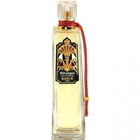
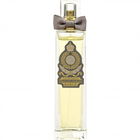
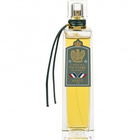
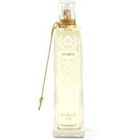
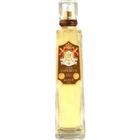
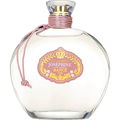
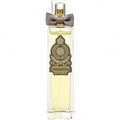
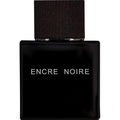
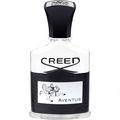
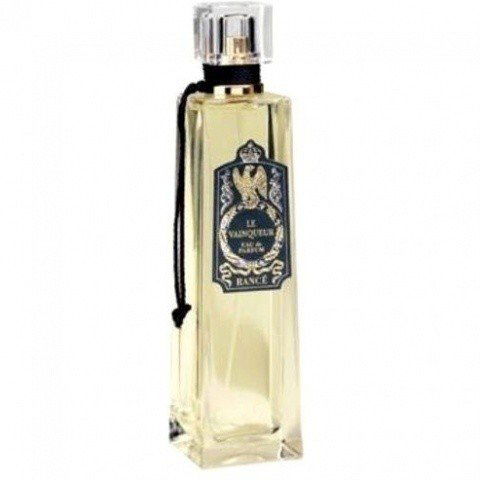
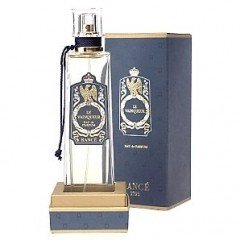
Le Vainqueur is available in a 50ml and a 100ml version. After Shave and Shower Gel can also be purchased. I have also seen a box with six perfumed soaps. The bottle design resembles an obelisk, that is, a four-sided, tapering monument reminiscent of a victory column. This obelisk design (Collection Impériale) is also found in the fragrances François Charles (2007), Triomphe (2009), Le Roi Empereur (2011), L'Aigle de la Victoire (2013), Heroïque (2015), a newer version of François Charles (2017), and Sharisme Insensé (2019). By the way, the fragrance François Charles is "Le Male discreet," L'Aigle de la Victoire is "Antaeus discreet," and Heroïque is "Aventus discreet."
An observation from Gentsrevs (and I fully agree): "None of the perfumes [from the Collection Impériale] aims to be an olfactory fireworks display. This is evident in the choice of such a fine misting vaporizer. It is intentionally sprayed little on the skin to promote the rather subtle, underlying scent experience. Otherwise, Rancé could have used the spray head from the Collection Privee to apply a significantly larger amount of fragrance water to the skin. So, those who miss strength in the perfume do not understand what this is about."
On the front of the Le Vainqueur bottle is the French Imperial Eagle, which the regiments of Napoleon's Grande Armée carried with them. Napoleon sent such eagles (which varied depending on the troop/region) to the regiments as early as 1804 to strengthen the sense of belonging to the troops. And since we are already on the topic of "historical fragrances," it can also be mentioned that such an eagle was among Wellington's trophies. In the Battle of Barrosa in 1811, it was the first time that the British captured such an eagle. Later, it was Wellington's wish that all his trophies be displayed at his funeral (including the Imperial Eagle).
The crown above the eagle could be a reference to Napoleon's imperial crown, although it looked different (with a cross on top). The laurel wreath was already a sign of victory among the Romans, so the wreath at the front fits the name (also to Napoleon's head crowned with laurel in depictions as a reference to the crown with which he crowned himself). The flowers next to the eagle could be lilies, a flower associated with the rule over France. Perhaps the flowers on the laurel wreath also have a special meaning. There is also a dark blue cord at the neck of the bottle, so the cat has something to play with with its paws.
In your perfume cabinet, you must, of course, be careful not to place this Rancé fragrance too close to Wellington by Trumper. We wouldn't want Wellington to end up knocking over the perfumed victory column and letting the Imperial Eagle from Le Vainqueur disappear as prey.



 Top Notes
  Bergamot zest
 Mandarin orange zest
 Sea breeze
 Heart Notes
  Lavender
 Geranium
 Ginger
 Nutmeg
 Base Notes
  Musk
Musk Leather
 Sandalwood
 Cedarwood





 Yatagan
 Landlord
 CharlAmbre
 Alexxx
 MichH
MichH VS1510
 BaSinga