

Log in

Create Account Forgot your Password?
We may earn a commission when you buy from links on our site, including the eBay Partner Network and Amazon.

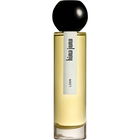
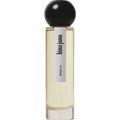
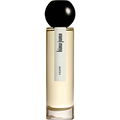
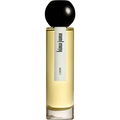
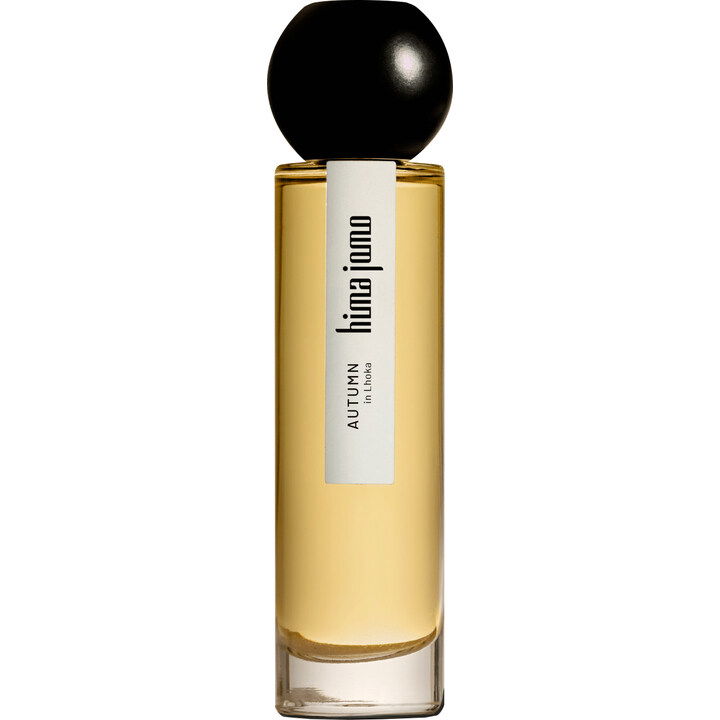
Autumn in Lhoka 2022

7.9 / 10 149 Ratings
A popular perfume by Hima Jomo for women and men, released in 2022. The scent is smoky-spicy. It is still in production.
Compare
Similar fragrances
We may earn a commission when you buy from links on our site, including the eBay Partner Network and Amazon.

Main accords

Smoky
Spicy
Woody
Resinous
Earthy

Fragrance Pyramid

Top Notes Top Notes
Cinnamon leafCinnamon leaf Black pepperBlack pepper SaffronSaffron
Heart Notes Heart Notes
Fir balsamFir balsam Bran absoluteBran absolute BarleyBarley
Base Notes Base Notes
Tibetian incenseTibetian incense PatchouliPatchouli Birch tarBirch tar

Perfumer

Ratings
Scent
7.9149 Ratings
Longevity
7.6114 Ratings
Sillage
7.0115 Ratings
Bottle
7.884 Ratings
Value for money
6.851 Ratings
Submitted by M3000 · last update on 05/06/2026.
Source-backed & verified
Interesting Facts
The fragrance is part of the Season collection.

Smells similar

What the fragrance is similar to
Psychotrope by Malbrum
Psychotrope
Wildfire by Malbrum
Wildfire
Black Heart V.2 by Map of the Heart
Black Heart V.2
Series 3: Incense - Jaisalmer by Comme des Garçons
Series 3: Incense - Jaisalmer

Reviews

6 in-depth fragrance descriptions
Jjcolbourne

1580 Reviews
Jjcolbourne
Jjcolbourne
0  
Tibetan Bells.
I was drawn not only to the Tibetan inspiration for Autumn in Lhoka, but also its barley accord and usage of bran absolute, and when I first smelled it I immediately fell for it. This has the texture of autumn, a chestnut brown warmth, as comforting as a bowl of porridge with molasses, with the melancholy of the waning days of harvest. Describing a fragrance as balanced comes with questions on what defines such an assessment. What does it really mean for one to be balanced? Yet I am compelled to express the feeling of balance here, where no element overpowers—rounded pepper and muted smoke, a creamy malt and smooth grain.

Autumn in Lhoka is a fragrance that appeals to my desire to simply inhabit it rather than examine its components. It has that monolithic beauty of a grounding incense. In fact, it reminds me of a Shoyeido incense I used to burn a number of years ago. I can't exactly recall which one, but when burning it, its glowing ember and a couple of candles would be the only light, and I would listen to the album Tibetan Bells by Henry Wolff and Nancy Hennings. Like this incense, Autumn in Lhoka invites me to feel; it releases a pressure valve with its savory, earthy beauty. While there are 99% natural ingredients in the formula, it has a satisfying persistence.

0 Comments
Taurus

1202 Reviews
Translated · Show originalShow translation
Taurus
Taurus
Very helpful Review 12  
Smoke Clouds in Tibetan Autumn
Quickly, but calmly, test and review "Autumn in Lhoka" before autumn turns into winter. For this, I need to research what Lhoka is all about. Initially, Tibet and temples as well as monasteries come to mind, and it seems to be just that.

To be precise, Lhoka is an administrative district in Tibet where the monastery fortress Yumbu Lagang, with its corresponding founding myth for Buddhism, is located. No wonder that incense is extremely present here. In the successful opening, you can still perceive a bit of cinnamon and a cautious pinch of pepper, as well as a concentrated amount of fir balsam, before it is shortly thereafter swallowed up by the incense, leaving no chance for the other ingredients to assert themselves later.

Overall, the whole thing seems quite niche and appealing; however, due to the intense use of incense, where the other ingredients gradually cannot really develop sufficiently, it unfortunately comes off a little too strict and thus exhausting. Analogously, this means that especially for incense fans who enjoy the material in a clerical way, "Autumn in Lhoka" will bring them true joy.

However, all others who are fond of incense but would have liked to savor the other ingredients like cinnamon leaf or fir balsam will be a bit disappointed, even though at times it feels like the notes flow seamlessly into one another.

Anyone who generally has issues with incense should steer clear of Autumn in Lhoka.
16 Comments
Tilki

6 Reviews
Translated · Show originalShow translation
Tilki
Tilki
Very helpful Review 9  
Mystical for Autumn
From dense forest, resin clings to the bark, smoke trails announce the temple, carried by the winds, forget all the clutter, in the abyss you find support.

Strong opening with the pepper. This makes one think of prayer beads, old wooden planks in an Eastern temple. There are types of wood that smell just like this when processed, unfortunately, I can't recall the name.

Frankincense and resinous notes join in, but in a restrained manner, creating a beautiful, harmonious whole that captivates with its sacredness without slipping into liturgical sterility (here I think a bit of Series 3: Incense - Avignon). The primal essence remains subtly present; it is not just a temple, but also nature, which one discovers associatively.

Good longevity on my skin of 5h+. Overall, rather a linear scent.

I would love more of this.
Updated on 09/02/2022
5 Comments
BunteHexe27

34 Reviews
Translated · Show originalShow translation
BunteHexe27
BunteHexe27
Very helpful Review 9  
Dust, Spices, and Incense by the Nourishing Fire
My journey with Hima Jomo through the four seasons in the Himalayas continues. After Spring in Bome and "Summer in Paro | Hima Jomo," the journey leads to "Autumn in Lhoka | Hima Jomo," bringing us back from Bhutan to Tibet. Lhoka, as the womb of the Tibetan nation, lies in the high Himalayas with its famous ancient monasteries. In autumn, the harvest takes place, celebrated with festivals. A year of vegetation is condensed in the earth and the crops.

I stand on sun-warmed slopes and absorb the aromas of spicy, dusty earth. Around me, the mountain farmers have spread out their harvest: cinnamon bark, saffron threads, and black peppercorns fill the air gently and warmly. I recall stews simmering over the fire and baked spice bread, conversations over tea in the coziness of huts and tents.

Next door, the grain is being threshed. It lies dry on the ground, dusting, and the grains bounce off the ground, falling back again. I let my hands glide into the softly yielding grains. Within them lies the power of the sun, the nourishing substances of the earth, and the rains of spring and summer. From them, food will be made that sustains people through the winter. Barley and bran will be roasted, ground, and turned into bread and porridge, mixed with water, seasoned, and eaten. I think of the upcoming harvest festival with its delicious foods, the horse fights, and the outdoor dances.

Evening approaches, and with the dew, the aroma of pine greenery wafts lightly from the heights of the mountains. Fires are lit, fragrant woods are placed inside, and pulled out again, smoking aromas saturate the evening's moisture with a hint of patchouli, a reminder of the sweetness and floral abundance of summer. These scents linger delicately even after hours. I remain seated here for a while longer; a friend comes to me, and we warm our legs under a blanket, cuddled together, we perceive the scent of skin and the aromas of the harvest in each other's hair. Here, a saffron thread still hangs in the hair, there, a grain of barley in the wool, I find a peppercorn and crush it between my fingers.

Hima Jomo, based in Grasse, uses 99% natural fragrances that do not last long on the skin but develop individually there. The scents are for all genders. Delphine Thierry tells in her compositions about the aromas of nature and the human cultures of the Himalayas, unobtrusively, finely composed, and intimately. The trilogy "Pashm | Hima Jomo," "Loon | Hima Jomo," and Tchai (wool, salt, and tea) also spoke of this world and was worth a closer study.

Immersed in the scents that celebrate the year of vegetation, making me feel safe and nourished, we enjoy warmth, dust, and memories, and I can calmly look forward to winter. The conclusion of my journey will lead me with Winter in Manaslu into the icy high forest of Nepal. I inhale the warm-scented dust deeply once more.
Updated on 02/10/2024
10 Comments
Lauser93

1199 Reviews
Translated · Show originalShow translation
Lauser93
Lauser93
6  
A Beautiful Incense Scent
A big thank you to Sören for the sample of Autumn in Lhoka :-) I am quite amazed in the end - this is a really great scent that reminds me a lot of Wildfire :-) The longevity is fantastic with well over 12 hours, and the sillage is really impressive :-)

In the top note, the saffron is very prominent. There’s also a certain spiciness to it. And then an incense note hits you so strongly... This is truly amazing! It is wonderfully supported in the heart note by fir balsam. Cinnamon leaves make me linger in a special place... The base remains really beautiful and, thanks to this smoky aroma, feels unique... I can't help but think of a very special woman who once stole my heart... The heart will never return or heal... But this scent makes up for a lot in the end...

I am quite taken aback and thrilled - a beautiful fragrance!
Updated on 03/23/2024
2 Comments
More reviews

Statements

64 short views on the fragrance
2 years ago
5
It reminds me of the scent of burnt wheat, a flour of ancient origins used here in Italy. Meditative and reassuring.
0 Comments
2 years ago
3
Smoky and spicy fragrance. Patchouli floor with incense. Cute :)
0 Comments
2
Opens with a seamless blend of saffron, pepper, and cinnamon, before settling into a contemplative incense. My favorite from the brand.
0 Comments
2
I agree this is simple but lovely. Cinnamon in the opening and then the scent of Autumn leaves with a touch of smoky incense.
0 Comments
2
Some cinnamon in the opening, quickly followed by smoky birch tar, barley flakes, and bread crust. Quite simple, but nice and comforting.
0 Comments
More statements

Charts

This is how the community classifies the fragrance.
Pie Chart Radar Chart

Images

3 fragrance photos of the community

Popular by Hima Jomo

Spring in Bome by Hima Jomo Winter in Manaslu by Hima Jomo Summer in Paro by Hima Jomo Pashm by Hima Jomo Loon by Hima Jomo Tchai by Hima Jomo Lhasa Rose 1924 by Hima Jomo Khullu by Hima Jomo