Log in

Create Account Forgot your Password?
Alan

Alan

Reviews
1 - 5 by 21
Translated · Show originalShow translation
Dust and Rain
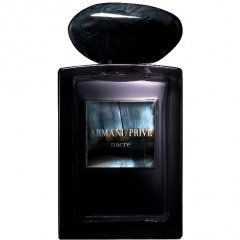
Niche brands often go a bit overboard when describing their fragrances. The most bizarre scent notes are sometimes claimed to be included, from gunpowder to tennis balls, and yet these fragrances often smell surprisingly - well, normal. Not necessarily bad, no, but nothing that deviates from the Douglas assortment they aim to stand out from. And then sometimes you find a perfume that promises you a noble, almost classic composition, only to deliver nothing of the sort and lead you down unknown paths. "Nacre" is such a perfume.

I expected iris, either creamy or powdery, with a hint of sweetness. Instead, I found dust and dry, gray wood, like the beams of an old attic, and the smell of old books, yellowed paper, and decaying fabric covers. No mold, no mildew has taken up residence here; it is dry, and the thin layer of dust and the scent of neglect are the only signs that this attic has been left to itself.

And yet "Nacre" smells damp, as if someone had thrown open the window and let in the scent of rain on still sun-warmed, dusty streets, the smell of a city under a shower that brings coolness after a hot summer day. Not wet earth, not moist greenery, but dusty asphalt, where the raindrops paint the first dark spots. That is "Nacre," rain on dusty streets, the first cool breeze in warm air.

It is actually not a pleasant scent, to be honest. There is no sweetness, no creaminess, and the promised flowers turn out to be dust. But that doesn't matter, because it is the scent of a memory; of late summer afternoons, sitting by an open window, one leg dangling and a book in my lap, while the first raindrops drum on the old slate roof, a dry shelter from which I watch the falling rain. It is a gray scent, "austere" is what I would call it if I had to describe it in a single word, but I also associate it with a feeling of coziness. Surely it is an odd scent, a creation I would have expected more from Comme des Garçons than to place it in the Armani Privé line. There is no opulence, no complex structure, no multifaceted progression. Just a captured moment, beginning rain.
5 Comments
Translated · Show originalShow translation
Oud, Oudh, Aoud - Enough Already!
For my readers in the distant future or for the unlikely case that the discerning fragrance-savvy reader has been living under a rock for the past few years: Agarwood, also known as Oud, is currently very trendy. In the category "new and noteworthy," where Parfumo presents eighteen selected new releases, we currently find "Taif Aoud" by Roja Parfums, "Oud Bouquet" by Lancome, "Hand in Hand - Rose & Oudh" by Ramon Monegal, "Amber Oud" by Floris, and "N° 9 Oud" by Trish McEvoy. Even Lip Smacker is reportedly about to release the flavor "Oud Cherry." Okay, okay, that was made up, but the Oud hype has become so extensive that Oud as a lip balm flavor doesn't sound completely absurd anymore. In other words, Oud is simply everywhere.

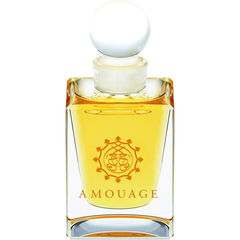
That would be great if I were an Oud fan. If, said the Laconian, and that is exactly the problem: I do not like Oud. At least, I do not like fragrances with a strong Oud note; I have never had agarwood under my nose in its natural form. In perfumes, I encounter the scent note as woody and strongly medicinal, with a slightly animalistic note. Accordingly, I was initially disappointed that "Al Mas" turned out to be very Oud-heavy - and all the more surprised when I found out after a while that I actually liked the scent.

"Al Mas" is an attar and therefore oil-based, starting with the dreaded woody-medical notes, but the agarwood here is not as piercing as I usually know it, and it is softened by a milky sweetness. I believe I can sniff creamy vanilla, saffron, and raisins, as we leave behind the medicinal impression with the opening, and the Oud note reveals itself from a warm-woody side. A very milky sandalwood note joins in, the promised rose can at most be sensed as a hint and is then gone again. What remains is the idea of a dessert, sweet saffron rice soaked in milk flavored with sandalwood and vanilla pods, sprinkled with pieces of Oud, a scent impression that is somewhere between woody and edible.

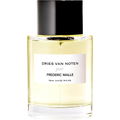
With its blend of wood and dessert, "Al Mas" is a distant relative of "Dries Van Noten par Frédéric Malle," which wavers between sandalwood and waffles, yet remains drier and does not approach the idea of a dessert as closely as its cousin does. Nevertheless, "Al Mas" never tips into the sticky; instead, it remains grounded through the woody notes. These are also the ones that linger the longest on the skin, a warm woodiness that ultimately shows a tiny trace of the animalistic note I usually associate with Oud. The dreaded harsh impression is absent, and agarwood instead forms a soothing counterbalance to the sweet aspects of the fragrance.

As delightful as this discovery is, I still stand by my point: Give us something other than Oud already, or Lip Smacker might actually come up with silly ideas. After the long-lasting Oud wave, we simply need some variety. How about benzoin? Or osmanthus, that sounds nicely exotic too. Labdanum, perhaps? Anything!
2 Comments
Translated · Show originalShow translation
The $5,000 Question
When reading about "Yu" by Mane, it rarely revolves around the scent. It’s about the price. You lay down $5,000 for a bottle of this strictly limited fragrance. Is it worth it? Is any perfume worth that price? But today, I don’t want to deal with that question; I want to focus solely on what my nose perceives.

Yu is said to be the Chinese word for rain, but the scent has very little to do with the smell of petrichor. Instead, it starts with fresh flowers and fruit, a typical representative of the "fruity-floral" direction. The floral aspect is presented through the fresh and slightly spicy note of champaca and orange blossom. Orange blossoms often come across as shrill to my nose, but here they fortunately appear with a mild sweetness. Fruity notes join in, although these are not noted in the fragrance pyramid. My nose interprets them as Nashi, juicy and sweet, with a small piece of watermelon on the side. It’s a watery fruitiness, not overly sweet or sticky, and quite pleasant.

Then Ylang-Ylang joins in. To be fair, I must say that Ylang-Ylang is generally a difficult note for me, either buttery or reminiscent of fabric softener, and "Yu" solidly falls into the latter category, rounded off with a bit of vanillin. White musk seems to further emphasize the sweet-clean impression, and I catch a hidden mintiness, reminiscent more of toothpaste than fresh mint. It’s not an unpleasant smell, but if I wanted to smell like fabric softener, I would just use some.

The fabric softener note eventually fades, and what remains as a base is an abstract fruity-floral impression that reminds me of my former German teacher. Not because he smelled of fruit and flowers, but because he used to say that there was no more devastating criticism than "quite nice." And that is exactly the judgment I have come to about "Yu." The opening is nice. The heart notes are okay. What lingers on the skin after a few hours doesn’t annoy me. In other words, "Yu" is the perfected mediocrity; there’s nothing wrong with it, but there’s also somehow nothing in favor of it. I wouldn’t claim that "quite nice" is the worst thing that can be said about a fragrance, but in a world where scents like "Péché Cardinal" exist in the same fragrance family, "quite nice" simply isn’t enough for me, regardless of the price range.
0 Comments
Alan 11 years ago 17 11
Translated · Show originalShow translation
I Only Shower with Holy Water Now
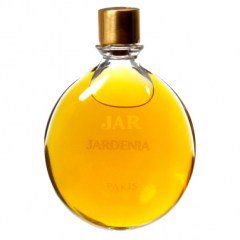
I am extraordinarily relieved that I tested "Jardenia" in my own four walls and not in the boutique of JAR itself. A visit there is said to be a very special experience. According to tales, you immerse yourself in a plush, violet world of velvet, adorned with dim lighting and a trained salesperson who silently presides over the glass containers, each containing a piece of fabric soaked in perfume. Without revealing the notes, he would then lift the glass lids for me, unveiling the olfactory experience. And I, under his expectant gaze, would struggle for words as the scent of "Jardenia" wafts into my nose, because there is simply no diplomatic way to say: "This perfume smells overwhelmingly of mushrooms."

However, since I am far from the holy halls, I can say it openly: Yes, it indeed smells of mushrooms. Mushroom notes are not entirely new to me, as I am familiar with the combination of mushrooms and flowers from Aftelier's "Cepes and Tuberose," where the eponymous components create an unusual but strangely harmonious and captivating blend. Unfortunately, "Jardenia" is not "Cepes and Tuberose," but rather "mushrooms forgotten in the fridge for a week and gardenia." And anyone who thinks the gardenia might be fresher is very much mistaken.

On the contrary, as if it doesn't want its mushroom roommates to develop complexes about their caps already showing a slimy coating, it does its best to present itself in as overripe, wilted splendor as possible. The water it stands in is long since murky and foul, the petals have turned brown and soft. After about two hours, however, most mushrooms finally have the decency to dispose of themselves in the compost. (There are always a few stubborn ones.) The gardenia, however, does not realize that it is only fit for organic waste at this point. It has long since passed away but has not lost an ounce of stubbornness, and in my imagination, it crawls up my arm, a zombie gardenia, only instead of groaning "Braaainsss!!", it moans "Nooosesss!!" as it continues to wander towards my face. This perfume makes babies cry in their sleep when you walk past their cribs smelling like this, as it so insistently speaks of graveyards and decay. (Disclaimer: This is a purely speculative assumption of the writer. No children were harmed during the testing of "Jardenia.")

Just as zombies are not particularly known for their development, our gardenia does not show much potential for growth either. Instead, it merely falls apart into its individual parts, with a jaw here, a little leg there - excuse me, a wilted petal here, a wilted petal there, and in the end, "Jardenia" disassembles itself until only a vaguely moldy-floral trace remains on the skin, which ultimately must be dealt with using water and soap. (Best to use holy water. Just don’t take any risks.)
11 Comments
Translated · Show originalShow translation
The Nightmare of the Forest Ranger
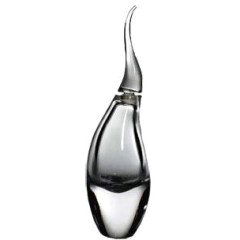
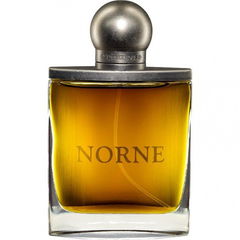
"Norne" is the outsider among my fragrance samples. I never have to worry about finding my little vial among the countless other samples, because among the transparent, champagne-colored, and deep golden companions, "Norne" stands out like a goth among a group of ballet dancers: Black as ink, it ponders the world's pain in its vial, and I always make sure not to place it next to the pink-tinted "Narcotic Venus," as I want to avoid any quarrels in my sample box. "Norne" is said to be composed solely of natural absolutes, which I attribute to its dark color. Either that, or the creator takes a perverse pleasure in leaving olive-green stains on the wearers of his perfume. Beware!

Now that my arm looks like I've been abused, "Norne" takes me straight back to my childhood days, unfortunately for the first few minutes to those days when the smell of Vicks Vaporub rose from my chest. The medicinal, camphor-like scent would probably not be half as bad if I didn't associate it with runny noses and coughing fits, which are naturally not particularly glorious memories.

Fortunately, the medicinal opening is not particularly persistent and soon gives way to the impression of a coniferous forest. Despite the dark color and gloomy marketing speak, "Norne" does not strike me as a sinister haunted forest, perhaps because the forest was my favorite playground as a child during seemingly endless summers. The sunbeams warm the conifer trees and let their aromatic scent waft between the resinous trunks as one walks over the shady, springy forest floor, which neither sun nor rain can truly reach. For this is a pure coniferous forest, and like its real-life counterpart, this fragrant forest offers hardly any lush green undergrowth. The ground is dry and covered with fallen needles, providing little incentive for moist moss and dense underbrush at the feet of the conifer trees; at most, a bit of humble ivy clings on. That is "Norne" for me: wood, sticky, fragrant resin, warm pine needles, and filtered sunlight.

At least part of it. The other part is smoke, and when this smoke is provided by incense, it is the first distinctly noticeable incense that does not make me want to run screaming in the opposite direction. My father had the habit of burning deadwood and cut branches in a pit on the lawn, and this scent now greets me again, not the fresh smoke, but the smell of charred wood. The fire has burned down, and a first rain has already washed away the largest remnants of the charred wood, leaving only the scent of slightly burnt wood behind. Someone has lit a campfire in this dry coniferous forest, and while the forest ranger of our olfactory forest is experiencing a serious panic attack, I enjoy this interplay, inhaling deeply again and again. As one gets closer, the smoky notes dominate, while from a distance, one is wafted by a pine forest. "Norne" does not smell like a perfume, but like a place, and only after a few hours does one receive more than this raw, yet compelling olfactory impression.

The scent becomes a bit smokier, the resins more balsamic, and a little sweeter. For the first time, one notices that one is not standing in the forest after all, but has something man-made under their nose. "Norne" becomes rounder, softer, and more harmonious, and in this way remains a companion on the skin for several hours, before at the end of the day, a spicy note finally mixes in, with which I cannot quite warm up. To me, it smells like galangal, a spice whose scent I would describe as sharp, bitter, and a little sour. It is just a hint of it, and shortly after, the olive-green stain on my arm must also yield after a long day to the shower.

By the way, I do not catch the slightest trace of the indicated hemlock here, which has a rather memorable scent for me, quite biting, similar to, well, certain underpasses. Perhaps the hemlock fir was originally meant here, or perhaps the fragrance pyramid of "Norne" is just meant to give a dangerous touch. Completely indifferent, this scent is pure aromatherapy. And that is where I have a bit of a problem: "Norne" is extraordinary and at the same time a pleasant scent, but it is certainly not what one would classically consider a perfume. On what occasions does one wear pine forest and campfire? After much wrestling with myself, I therefore reduce my original rating by ten percent, as I see "Norne" more as a scent journey and cannot imagine wearing it regularly as a perfume, for it conjures up a place that smells too realistic for me. Without a scolding forest ranger, admittedly, but I don't really know how they smell either.

9 Comments
1 - 5 by 21