

 Orris absolute
 Vetiver
 Patchouli
 Musk
Musk Tonka bean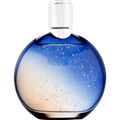

loewenherz
920 Reviews
Translated · Show original

loewenherz
Top Review
13
'The winter northern sea released its gray-green elephants...'
it says in 'Le baiser', a wonderfully gentle song by the French singer-songwriter Alain Souchon - translated roughly: 'The winter northern sea released its gray-green elephants...' Anyone who has ever been to a northern coast in winter will immediately understand what he means. Two years ago, I was in February at the equally deserted and icy beach of Scheveningen. And I thought of Alain Souchon's beautiful song.
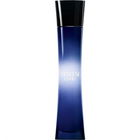
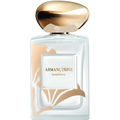
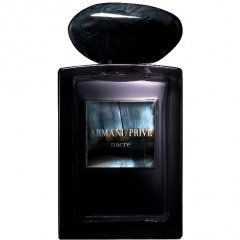
'Nacre' means 'mother-of-pearl' in German, and a section of the Norman Channel coast - just a few hundred kilometers west of Scheveningen - bears its name: 'Côte de nacre', mother-of-pearl coast. And Armani's Nacre thematizes the same motif as Alain Souchon's song and the coastal section that shares its name: a northern coast and its melancholy in winter, the time of cold and solitude.
Iris scents - and Nacre is one of them - often have a 'gray' impression and are usually, if not cold, then at least clearly 'not-warm'. Even the musk - otherwise a candidate for (sometimes sweaty) warmth - does not change this. Patchouli adds moisture - like the dark seaweed at the line to which the surf barely reaches - and vetiver complements the roughness and wintery harshness.
Nacre is neither a soft nor a pleasing fragrance. It is also not cumbersome or difficult; it remains too distant for that. It tells of the endless expanses of that cold and deserted beach, of the pale February sun and the whispering sea, which piles up gray-green elephants against the lead-colored winter sky. However, the apparent simplicity of its composition deceives the nose - this is a decidedly complex fragrance.
Conclusion, in Souchon's soft poetic voice:
'Marchant dans la brume,
le cœur démoli par une
sur le chemin des dunes,
la plage de Malo Bray-Dunes.'
'Nacre' means 'mother-of-pearl' in German, and a section of the Norman Channel coast - just a few hundred kilometers west of Scheveningen - bears its name: 'Côte de nacre', mother-of-pearl coast. And Armani's Nacre thematizes the same motif as Alain Souchon's song and the coastal section that shares its name: a northern coast and its melancholy in winter, the time of cold and solitude.
Iris scents - and Nacre is one of them - often have a 'gray' impression and are usually, if not cold, then at least clearly 'not-warm'. Even the musk - otherwise a candidate for (sometimes sweaty) warmth - does not change this. Patchouli adds moisture - like the dark seaweed at the line to which the surf barely reaches - and vetiver complements the roughness and wintery harshness.
Nacre is neither a soft nor a pleasing fragrance. It is also not cumbersome or difficult; it remains too distant for that. It tells of the endless expanses of that cold and deserted beach, of the pale February sun and the whispering sea, which piles up gray-green elephants against the lead-colored winter sky. However, the apparent simplicity of its composition deceives the nose - this is a decidedly complex fragrance.
Conclusion, in Souchon's soft poetic voice:
'Marchant dans la brume,
le cœur démoli par une
sur le chemin des dunes,
la plage de Malo Bray-Dunes.'
Updated on 12/08/2016
1 Comment


 Sweetsmell75
 Floyd
Floyd Baerlie
 TillDA
 Gandix
 Serge
Serge