Flanking a flanking perfume
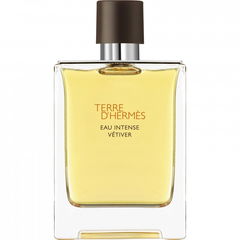
Vetiver can stand for much different fragrances. The classics elegantly showcase the beautiful dark green note of this exotic grass root. However, more contemporary interpretations often show their own approach. Terre d'Hermès Eau Intense Vétiver is one of the latter.
The fragrance opens citrusy and fresh, whereas the note denominated as bergamot lasts unusually long. I sensed it somewhat differently, not completely typical. One may come to the conclusion that a synthetic fragrance ingredient may have been used instead of natural bergamot oil. Behind the citrus stands a fresh green note which I perceived as cucumber-like. A strange combination for a gents' fragrance.
By and by, the citric note becomes more rooted. The freshness steps back for a somewhat rough woodiness. This intermediate section of development will be passed through within an hour or so. A modern, dry wood note remains, partly still with a citric undertone. We already know that kind from another perfume flanking the original Terre d'Hermès : Terre d'Hermès Eau Très Fraîche.
Standing in the tradition of Ellena one may not expect overly complex perfumes by Hermès. A few well-chosen fragrance ingredients - and that should be it. Also Christine Nagel follows that path, but with some limitation. I find the head with its cucmber note quite quirky. It does not appeal to me.
Obviously, Ellena's Eau Très Fraîche was the blueprint for Nagel's Eau Intense Vétiver. In the base note, both meet in a presumably identical wood note. But whereas Ellena shows that a puristic concept - citrus meets dry wood - can be completely sufficient, Nagel's opus appears to me as a disimprovement.
By the way, whoever is looking for the characteristic aromatic note of the popular original fragrance may be disappointed by both. Dry and synthetic woodiness has taken its place. Both have nothing to do with the original.
And what about the intense vetiver? Well, I hardly smell any. If at all, I sense a certain roughness or robustness in the middle section of the fragrance development. This reminds me of a not so elegant aspect of vetiver. In many classic vetivers, the perfumers have successfully covered this aspect.
Vetiver always sounds good - this must be the reason for the use of it in the perfume's name. I am not fond of such a naming if the denominated note does not stand in the focus or is even hardly perceivable. This causes irritation, especially for perfume beginners.
We know beautiful fragrances by Chrstine Nagel. It seems to me she got the stipulation to closely relate to Ellenas Eau Très Fraîche. However, some things should be left as they are.
Translated · Show originalShow translation
A Modern Oriental
Guerlain thrives on the myth of the Guerlinade - that mysterious scent note, the core of which is said to be a specially prepared vanilla, and which could only be found at Guerlain. With every new release, the expectation lingers: is it there, or is it not? Fueled by this myth, Guerlain offers us a rich array of Orientals - that is, fragrances built around notes of vanilla, benzoin resin, or tonka bean.
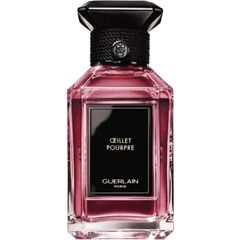
The latest contribution to this theme must therefore face comparison, as it is almost inevitable. Lui immediately made me think of Bois d'Arménie. There was the oriental warmth, a vanilla-like hint, but also a fine smoky note, as beautifully presented by its predecessor.
However, Lui seemed reluctant to commit. Throughout its development, it ventured into slightly woody, mildly bitter, and, if you will, leathery territories. Lui leaned towards Arséne Lupin Voyou, and Eau du 68 also had its influence.
Lui offers what one expects from a "typical" Oriental - but modern, in a simple, unembellished form. One might miss the legendary Guerlinade. Lui is not poorly made, but it could just as well have come from another brand. I still prefer Bois d'Arménie, which, in its elegant restraint, is more aura than perfume.
Surely, Lui will find its buyers. Those who shrug in confusion at the restraint of Bois d'Arménie. Or those who do not dare to wear the radiant Spiritueuse Double Vanille.
If there were still space among the mentioned Guerlain fragrances, Lui could take it.
Translated · Show originalShow translation
A Classic Raid
Murdering and plundering, spreading fear and terror, they appeared with their longships on the coasts of Britain and elsewhere. Anyone who fell into their hands could consider themselves lucky if they only lost their belongings. What could have motivated Creed to concoct such a story for their new perfume "Viking"?
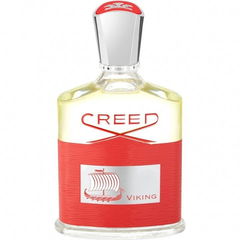
Viking opens classically with strong bergamot. This is familiar, good, and tried-and-true. Quickly, spicy notes emerge, but also herbal ones. The spice strongly reminds me of Bay Rhum or allspice, refreshed by a hint of mint. Lavender lingers in the background, but likely contributes to the herbal aspect. For me, there was a certain breadth that was somewhat unpleasant, which probably accounts for the note referred to as rose. It is the counterpoint to all the spice and herbaceousness.
This fragrance shows a great closeness to the concept of classic Fougères around 1900 - a fragrance direction that represents, for me, the masculine image of past - and outdated - times. In this respect, the Vikings fit well: Because when real men of yore indulged in a fragrance, it couldn't just be pleasant. As a punishment, one had to suffer a little: Sharpness and prickliness created the necessary distance from overly feminine sweetness and softness. It must have been a difficult balancing act - selling a man a perfume without damaging his patriarchally shaped self-image.
Today, we are allowed to work on a new, unburdened approach to classic Fougères. But who knows, at Creed they may have thought of the remaining Vikings in spirit. Those who would like to be real men and also want to go on a raiding expedition.
One might be amused by marketing ideas, but ultimately I find Viking - as is often the case with Creed - to be a mediocre perfume. I do like the use of mint and lavender. Herbaceousness and spice of a Fougère can have their charm, but that doesn't arise solely from the use of certain ingredients. With Viking, I simply miss that "alchemical moment" that makes a fragrance seem so magical. By the way, the scent is gone after two hours, then a modern, synthetic wood note takes over in a rather unclassical and sobering way.
Those seeking the sharpness and spiciness of classic Fougères will find something more interesting with Castle Forbes (1445).
Anglomania for Gents
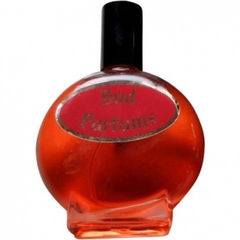
Dou you still remember the „red“ fragrances that were so popular at the end of the 1980ies? Jil Sander’s Feeling Man, Gainsboro’s G-Man and, most of all, Joop! Homme which has survived the times? The colour red, being part of the packaging, somehow seemed to have an olfactory equivalent in those perfumes – and not just there. Scented tea with wild cherry flavour was hip, and one or the other perfume buyer – without being clear about it – may have let his taste experience influence his buying decision.
Is it the red colouring of the perfume that made me smell Joop! Homme for a split second? Howard Jarvis, our friend from Australia, however, sees his latest gents’ fragrance in a completely different setting. One reads about Redwood forests, about lichen and moss. It is humid and foggy, and lastly, a dragon appears – apparently a peaceful dragon, as he lets the hiker have a glimpse into his glimmering golden clutch.
I have no idea how pure Dragon’s Blood oil smells like. This note is found rarely in perfumes. Maybe it is the basis of the not quiet correct impression of red and black berries that I get. Be that as it may, here, a dark and powerful red was transferred into a perfume. Sometimes, one really can smell a colour...
Wild Dragons blood does not take long preliminaries. The fragrance is present in an instant – beautiful, grand and extensive. Caution is advised: very few spritzes are enough to flood a room. The sillage is too strong for the office. Better wear it in the evening, maybe on a spree through smoky bars. Some courage is required nevertheless since this dragon’s fragrance is quite loud.
This perfume bears the signature of its creator. During drydown – which starts setting in after an hour or so – the woodiness of the primarily appearing cedar oil is more and more pushed aside by a resinous note. I have smelled this resin or a similar note in other Bud perfumes before.
What I like in this fragrance is the balance of the different notes. Only those who are searching for it will isolate a whiff of frankincense or beeswax here or there. More than that, I smell the work that may have been necessary to achieve this balance.
Let’s go back to red: once, there was a wonderfully strong, red and robust ladies’ fragrance which I really regretted not being able to wear as a man: Vivienne Westwoods Anglomania. Concerning style and expression, Wild Dragons Blood comes quite close to it. But with its woody and resinous notes, it stays on the masculine side.
With Wild Dragons Blood, Howard Jarvis contributes a beautiful perfume to a fragrance category that one does not find so often. He asked me to write a few lines, and I gladly accepted his request.
Translated · Show originalShow translation
Nomen est Omen
Anyone who feels committed to a puristic style in the art of perfumery must choose wisely. The few fragrance notes must be perfectly harmonized. And above all, such a scent should contain at least one component that sparks special interest. Just wood - that would be too little.
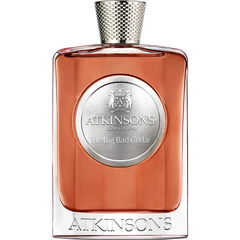
The Big Bad Cedar initially brings together 2 aspects of cedar in equal measure - the harsh wood and the ethereal, almost sharp scent of the green needles. A certain medicinal impression emerges, which I find very attractive. The balance lasts quite a while before a pure wood base ultimately defines the fragrance.
A third aspect comes into play right from the start: a sweet-animalic note. Only hinted at, it nudges the scent slightly in an Arabic direction, as I know this note in extreme form from there. If I describe this further, I unfortunately run the risk of scaring off the reader - so be it: it is the very best country air, specifically: pigsty. With the heavy sweetness of a fully bloomed gorse bush, that would also make sense, but perhaps described a bit too harmlessly.
Here, the saying holds: the dose makes the poison. And this dose is very, very weak. But I understand its purpose. Without such animality, the scent would be quite lifeless. One could just as well pour it into the bathtub instead of a fir needle bubble bath. Only this small, dirty animal note transforms Big Bad Cedar into an erotic perfume.
In recent years, we have seen many puristic wood scents. The Big Bad Cedar cautiously explores a difficult boundary in this area, serving as a remedy against the boredom that can arise so quickly with pure wood scents. It succeeds well: I find the fragrance wearable, attractive, and interesting.
Personally, I really enjoy smelling these harsh wood scents - but only on others. Because for me to wear it myself would be too exhausting. At some point, the bitter wood note would bother me - but perceptions certainly differ on that.
For those who can't get enough of Terre d'Hermès, The Big Bad Cedar will surely bring them joy. Others might appreciate it as a functional scent that serves more the attractiveness than the well-being of the man. Classified as a unisex fragrance, I can hardly imagine that it would work the same way for female wearers.