
Humphrey
Reviews
Filter & Sort
Detailed
Translated · Show original
How I was delighted. And how nothing remained of it.
He sat alone on the bench at the edge of the park, his gaze fixed on a point somewhere between gray cobblestones.
The coffee beside him had long since gone cold.
Earlier, he had believed he could find something special - a fragrance that fulfilled a promise that began with its name. A word like a door to a new world. But when he sprayed it on his skin for the first time, there was nothing but a dull echo of disappointed expectation, a pale memory of better times.
Now he stared into the emptiness before him, as people walked by, laughing and talking, unaware that he was mourning a personal disappointment.
Not the quickly faded great love, not the loss of a job - just a fragrance that said nothing.
And yet this insignificance weighed heavily.
He sighed, briefly lifted his gaze, as if the distance could give him an answer. But it remained silent.
***
Sometimes joyful expectation promises more than reality can deliver.
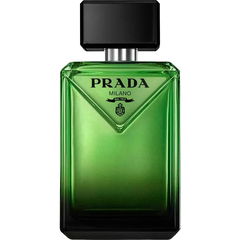
A new Prada was announced. The name was highly promising, and the bottle reminded one of better times from other brands and appeared in its clear, green simplicity simply beautiful, significantly enhancing the anticipation.
However, bottles and fragrances behave quite similarly to expectations and realities.
What did I expect? An olfactory paradigm shift? Not necessarily. At least a new Prada.
What did I get? A new MYSLF clone with the current Paco Rabanne charm. Not the one from earlier, when bottles were still green and simple and called Pour Homme. ( Paco Rabanne pour Homme Eau de Toilette)
The one from today with robot toy figurines as bottles. ( Phantom)
The opening flickers, if at all, only briefly with a citrus note before it fades away meaninglessly like a candle that has been deprived of every love by oxygen.
Fragrance notes that sounded beautiful beforehand are ignored like customers in a hardware store.
The watery-soapy-orange blossom middle axis does not deserve to be reviewed within the context of a new fragrance due to its lack of individuality, as we actually do not have a new fragrance here, but rather the lowest common denominator of the general designer uninspiredness of recent months and years.
The so-called drydown creates more final distance than it reconciles warmly.
Paradigms could have expanded my fragrance world. Instead, it only reminds me of something I have long known and am trying to leave behind: insignificance.
The coffee beside him had long since gone cold.
Earlier, he had believed he could find something special - a fragrance that fulfilled a promise that began with its name. A word like a door to a new world. But when he sprayed it on his skin for the first time, there was nothing but a dull echo of disappointed expectation, a pale memory of better times.
Now he stared into the emptiness before him, as people walked by, laughing and talking, unaware that he was mourning a personal disappointment.
Not the quickly faded great love, not the loss of a job - just a fragrance that said nothing.
And yet this insignificance weighed heavily.
He sighed, briefly lifted his gaze, as if the distance could give him an answer. But it remained silent.
***
Sometimes joyful expectation promises more than reality can deliver.
A new Prada was announced. The name was highly promising, and the bottle reminded one of better times from other brands and appeared in its clear, green simplicity simply beautiful, significantly enhancing the anticipation.
However, bottles and fragrances behave quite similarly to expectations and realities.
What did I expect? An olfactory paradigm shift? Not necessarily. At least a new Prada.
What did I get? A new MYSLF clone with the current Paco Rabanne charm. Not the one from earlier, when bottles were still green and simple and called Pour Homme. (
Paco Rabanne pour Homme Eau de Toilette)The one from today with robot toy figurines as bottles. (
Phantom)The opening flickers, if at all, only briefly with a citrus note before it fades away meaninglessly like a candle that has been deprived of every love by oxygen.
Fragrance notes that sounded beautiful beforehand are ignored like customers in a hardware store.
The watery-soapy-orange blossom middle axis does not deserve to be reviewed within the context of a new fragrance due to its lack of individuality, as we actually do not have a new fragrance here, but rather the lowest common denominator of the general designer uninspiredness of recent months and years.
The so-called drydown creates more final distance than it reconciles warmly.
Paradigms could have expanded my fragrance world. Instead, it only reminds me of something I have long known and am trying to leave behind: insignificance.
10 Comments

Translated · Show original
"One does not travel to arrive, but to travel."
I would like to begin with the Goethe quote in the headline.
And I want to consciously frame this review between two quotes, as it refers to a fragrance named after a climate zone that is framed.
Framed in the truest sense of the word.
Framed between two other climate zones. And this circumstance will be reflected in the scent DNA... but we will get there.
To get there, we will travel together. This review will not be straightforward; it will meander and be lengthy. It will be a question-and-answer game and a search for definitions. Primarily, however, it will be a journey.
You can still drop out now, but I would be happy if you join me. We travel to understand a fragrance that deserves to be understood. Whether we can do it justice, I cannot promise you, but we will do our best on this journey.
Let’s start at the beginning and then slowly and steadily work our way forward, as the Thundra, or as I will henceforth write, the Tundra, does not allow otherwise.
To any exact elaboration belongs, first of all, a clarification of the terminology.
In my opinion, a certain understanding of what the Tundra means is even essential to understand the fragrance.
So what is the Tundra?
The Tundra, also known as treeless cold steppe, is simply put the umbrella term for the open land areas of the (sub-)polar climate zone.
What does that mean and where can you find this Tundra, or better, the Tundra areas?
Well, basically, there are only three major areas, which is why we want to briefly look at this together in theory before we then travel through the Tundra together.
The largest part of the Tundra is located in the northern hemisphere on the landmasses of the Arctic. Therefore, this part is also called Arctic Tundra, which includes parts of Canada, Siberia, Scandinavia, and Alaska.
Then there is the Tundra in the southern hemisphere. However, since Antarctica is almost completely covered with ice, the Tundra areas here are only found at the edge of Antarctica. Depending on the definition, significant parts of Tierra del Fuego and the Falkland Islands also belong to this southern hemisphere Tundra. This is then the Antarctic Tundra due to its geographical proximity to the South Pole.
The third major area is alpine Tundra, which is distributed all over the world. This includes Tundra areas in mountains like the Alps or the Himalayas.
These three major Tundra areas together cover a landmass of about 3-4% as cold steppe.
From now on, when I write about Tundra in this review, I will refer to the Arctic Tundra. On the one hand, because I have the greatest connection to it, and on the other hand - and this is much more important at this point - because it seems to me to be the most relevant for the perfume being reviewed here.
But how do we reconcile perfume and climate zone, you may wonder. And rightly so, but please be patient for a moment, and everything will become clear.
I will now take you on a short journey through the Tundra. Why THROUGH the Tundra and not IN the Tundra? Yes, this question is justified, and the answer is due to the nature of the Tundra.
Very few people settle in the Tundra or choose to reside here.
Primarily, one traverses the Tundra, at least as a traveler. One crosses it to get from the Taiga to the Arctic. (Or vice versa.)
Admittedly, I do not have an ideal knowledge of the Tundra either. I have traveled parts of the Taiga and have also reached the Tundra. However, I have never crossed it.
Nevertheless, I have engaged intensively enough with the map and travel routes to describe that the Tundra on one side borders directly on polar ice surfaces and on the other side, the more vegetation-friendly side, transitions into the Taiga, which is characterized primarily by its countless coniferous trees and is beautiful to travel through, but that is a topic for another review.
So let us now traverse the Tundra together in thought within the framework of this review.
To do this, we find ourselves on the Dempster Highway. This is one of the most remote roads in Canada and the only one that leads into the Arctic in both summer and winter.
Over 736 kilometers, this road winds over the permafrost, from the south of Yukon not far from the gold rush town of Dawson City to Inuvik in the Northwest Territories.
The Dempster Highway passes lonely lakes and subarctic forests.
It goes through the Tundra. Here, there is hardly a soul in sight.
What an adventure!
“At 66 degrees and 33 minutes north latitude, we cross the Arctic Circle, later we take ferries over the mighty rivers of the north. There is only one hotel along the road, including a gas station and workshop.
Otherwise, only emptiness, solitude, and the horizon that seems endless.
At the end of our journey, Inuvik offers superlatives with the northernmost greenhouse and the most famous igloo church in the country. A sophisticated ventilation system ensures that the round structure does not sink into the permafrost. In the fall, a new road will open in Inuvik that leads all the way to Tuktoyaktuk on the Arctic Ocean.” (Source: Travel Report Dempster Canada)
So, now you understand the bipolarity of the Tundra. Since we are in the subpolar region, the term bipolarity is probably not ideally chosen. But that doesn’t matter, because it’s about understanding that it is a diametrical landscape.
Caught between Taiga and Arctic, it lies there: The Tundra.
That is the situation, but what about the perfume? Hang in there, the Tundra is difficult to traverse...
Before we get to the fragrance itself, we must clarify not only the location of the Tundra but also its characteristics.
What is the climate like? Cold. The temperature and sunlight are very extreme. There are long winters here. Then the average temperature is below 15 degrees Celsius. However, there are also large fluctuations, as in summer the average temperatures rise above 15 degrees Celsius. The soils are completely covered with snow and frozen for eight to eleven months.
That is where the name permafrost comes from, namely from permanent frost.
What happens in summer? In summer, the top layer of ice melts, but only that.
Then the water cannot drain away, and a floodplain forms.
In summer, the sun shines in the Tundra mostly all day.
And this is where the short period for plants to grow lies.
The extreme climate makes it possible for only a few plants (and animals) to settle here.
Thus, the cold steppe is a very barren landscape.
And this is how you can determine the transition from the Taiga to the Tundra. Where there are no more trees, the Tundra area begins.
But why? The permafrost prevents the rooting of trees. Moreover, they cannot draw nutrients from the soil here.
And that is why you find no trees here, but many small plants like mosses, lichens, and shrubs.
+++++
The scent begins to reveal its interplay of patchouli and mint with the first spray.
The top note comes across quite piercing, as it is such a refined cold mint that one can olfactorily immediately grasp the permafrost.
At the same time, one smells such a deep earthy patchouli that one can almost taste the barren soil that forms the basis of all Tundra.
Immediately, you are there. On site. In the first minutes, you can already smell the Arctic in the distance (mint) and the distant Taiga (slight coniferous forest association) at your back.
Patchouli remains present throughout, but becomes more open, more voluminous. The coniferous forest association is completely displaced and replaced by moist, mossy soil. At the same time, the mint is always present, sometimes stronger and sometimes less strong. It blows like cold winds.
Over time, a slight herbal note emerges that I cannot pinpoint (thyme, lavender, rosemary), but at least the association with the shrubs and lichens of the Tundra comes to mind. Also, a very slight, restrained animalic note flashes through now and then, like a snow hare that briefly runs into the picture.
In the end, only patchouli remains. Beautifully trampled open patchouli. And yet this patchouli is not warm cocoa patchouli, not rich harvest patchouli, and not fireplace cuddle patchouli. This patchouli is cold-earthy, perfectly fitting with the subtle mint tone that accompanies it permafrost, uh, permanently. And yet, the patchouli radiates a certain warmth now and then, as if summer in the Tundra could melt the ice and the earth would receive moisture.
This fragrance is what one can truly understand as niche, as it consistently smells like what it claims to be and does not strive to please everyone.
The combination of patchouli and mint is not necessarily the first thing that comes to mind when going through fragrance pairs for harmony.
To become a so-called “crowd-pleaser,” it would have needed to be rounder, less demanding, and less brutal. But the Tundra is demanding.
And this is exactly what this fragrance masterfully shows: The Tundra. The beauty of the Tundra.
Dear ones, if you are ever (again) on the Dempster Highway, do not just look for the pole, the Arctic, and the glow of the stars and northern lights. Look at where you are. What this barren landscape has in beauty to offer you. There are already polar foxes, plenty of snow hares, reindeer, and the occasional polar bear. But there are also lichens. There are mosses. There are shrubs. They all smell wonderfully of nearly untouched and remarkably primal nature.
And there is snow and frost. And you can smell both of these too. Your nose will feel the cold.
Pause for a moment in thought at this beautiful transit station. You will arrive, don’t worry. But don’t look at the destination yet; instead, linger in the beauty of the moment.
Because
“Only looking at the destination spoils the joy of traveling.”
-Friedrich Rückert
And I want to consciously frame this review between two quotes, as it refers to a fragrance named after a climate zone that is framed.
Framed in the truest sense of the word.
Framed between two other climate zones. And this circumstance will be reflected in the scent DNA... but we will get there.
To get there, we will travel together. This review will not be straightforward; it will meander and be lengthy. It will be a question-and-answer game and a search for definitions. Primarily, however, it will be a journey.
You can still drop out now, but I would be happy if you join me. We travel to understand a fragrance that deserves to be understood. Whether we can do it justice, I cannot promise you, but we will do our best on this journey.
Let’s start at the beginning and then slowly and steadily work our way forward, as the Thundra, or as I will henceforth write, the Tundra, does not allow otherwise.
To any exact elaboration belongs, first of all, a clarification of the terminology.
In my opinion, a certain understanding of what the Tundra means is even essential to understand the fragrance.
So what is the Tundra?
The Tundra, also known as treeless cold steppe, is simply put the umbrella term for the open land areas of the (sub-)polar climate zone.
What does that mean and where can you find this Tundra, or better, the Tundra areas?
Well, basically, there are only three major areas, which is why we want to briefly look at this together in theory before we then travel through the Tundra together.
The largest part of the Tundra is located in the northern hemisphere on the landmasses of the Arctic. Therefore, this part is also called Arctic Tundra, which includes parts of Canada, Siberia, Scandinavia, and Alaska.
Then there is the Tundra in the southern hemisphere. However, since Antarctica is almost completely covered with ice, the Tundra areas here are only found at the edge of Antarctica. Depending on the definition, significant parts of Tierra del Fuego and the Falkland Islands also belong to this southern hemisphere Tundra. This is then the Antarctic Tundra due to its geographical proximity to the South Pole.
The third major area is alpine Tundra, which is distributed all over the world. This includes Tundra areas in mountains like the Alps or the Himalayas.
These three major Tundra areas together cover a landmass of about 3-4% as cold steppe.
From now on, when I write about Tundra in this review, I will refer to the Arctic Tundra. On the one hand, because I have the greatest connection to it, and on the other hand - and this is much more important at this point - because it seems to me to be the most relevant for the perfume being reviewed here.
But how do we reconcile perfume and climate zone, you may wonder. And rightly so, but please be patient for a moment, and everything will become clear.
I will now take you on a short journey through the Tundra. Why THROUGH the Tundra and not IN the Tundra? Yes, this question is justified, and the answer is due to the nature of the Tundra.
Very few people settle in the Tundra or choose to reside here.
Primarily, one traverses the Tundra, at least as a traveler. One crosses it to get from the Taiga to the Arctic. (Or vice versa.)
Admittedly, I do not have an ideal knowledge of the Tundra either. I have traveled parts of the Taiga and have also reached the Tundra. However, I have never crossed it.
Nevertheless, I have engaged intensively enough with the map and travel routes to describe that the Tundra on one side borders directly on polar ice surfaces and on the other side, the more vegetation-friendly side, transitions into the Taiga, which is characterized primarily by its countless coniferous trees and is beautiful to travel through, but that is a topic for another review.
So let us now traverse the Tundra together in thought within the framework of this review.
To do this, we find ourselves on the Dempster Highway. This is one of the most remote roads in Canada and the only one that leads into the Arctic in both summer and winter.
Over 736 kilometers, this road winds over the permafrost, from the south of Yukon not far from the gold rush town of Dawson City to Inuvik in the Northwest Territories.
The Dempster Highway passes lonely lakes and subarctic forests.
It goes through the Tundra. Here, there is hardly a soul in sight.
What an adventure!
“At 66 degrees and 33 minutes north latitude, we cross the Arctic Circle, later we take ferries over the mighty rivers of the north. There is only one hotel along the road, including a gas station and workshop.
Otherwise, only emptiness, solitude, and the horizon that seems endless.
At the end of our journey, Inuvik offers superlatives with the northernmost greenhouse and the most famous igloo church in the country. A sophisticated ventilation system ensures that the round structure does not sink into the permafrost. In the fall, a new road will open in Inuvik that leads all the way to Tuktoyaktuk on the Arctic Ocean.” (Source: Travel Report Dempster Canada)
So, now you understand the bipolarity of the Tundra. Since we are in the subpolar region, the term bipolarity is probably not ideally chosen. But that doesn’t matter, because it’s about understanding that it is a diametrical landscape.
Caught between Taiga and Arctic, it lies there: The Tundra.
That is the situation, but what about the perfume? Hang in there, the Tundra is difficult to traverse...
Before we get to the fragrance itself, we must clarify not only the location of the Tundra but also its characteristics.
What is the climate like? Cold. The temperature and sunlight are very extreme. There are long winters here. Then the average temperature is below 15 degrees Celsius. However, there are also large fluctuations, as in summer the average temperatures rise above 15 degrees Celsius. The soils are completely covered with snow and frozen for eight to eleven months.
That is where the name permafrost comes from, namely from permanent frost.
What happens in summer? In summer, the top layer of ice melts, but only that.
Then the water cannot drain away, and a floodplain forms.
In summer, the sun shines in the Tundra mostly all day.
And this is where the short period for plants to grow lies.
The extreme climate makes it possible for only a few plants (and animals) to settle here.
Thus, the cold steppe is a very barren landscape.
And this is how you can determine the transition from the Taiga to the Tundra. Where there are no more trees, the Tundra area begins.
But why? The permafrost prevents the rooting of trees. Moreover, they cannot draw nutrients from the soil here.
And that is why you find no trees here, but many small plants like mosses, lichens, and shrubs.
+++++
The scent begins to reveal its interplay of patchouli and mint with the first spray.
The top note comes across quite piercing, as it is such a refined cold mint that one can olfactorily immediately grasp the permafrost.
At the same time, one smells such a deep earthy patchouli that one can almost taste the barren soil that forms the basis of all Tundra.
Immediately, you are there. On site. In the first minutes, you can already smell the Arctic in the distance (mint) and the distant Taiga (slight coniferous forest association) at your back.
Patchouli remains present throughout, but becomes more open, more voluminous. The coniferous forest association is completely displaced and replaced by moist, mossy soil. At the same time, the mint is always present, sometimes stronger and sometimes less strong. It blows like cold winds.
Over time, a slight herbal note emerges that I cannot pinpoint (thyme, lavender, rosemary), but at least the association with the shrubs and lichens of the Tundra comes to mind. Also, a very slight, restrained animalic note flashes through now and then, like a snow hare that briefly runs into the picture.
In the end, only patchouli remains. Beautifully trampled open patchouli. And yet this patchouli is not warm cocoa patchouli, not rich harvest patchouli, and not fireplace cuddle patchouli. This patchouli is cold-earthy, perfectly fitting with the subtle mint tone that accompanies it permafrost, uh, permanently. And yet, the patchouli radiates a certain warmth now and then, as if summer in the Tundra could melt the ice and the earth would receive moisture.
This fragrance is what one can truly understand as niche, as it consistently smells like what it claims to be and does not strive to please everyone.
The combination of patchouli and mint is not necessarily the first thing that comes to mind when going through fragrance pairs for harmony.
To become a so-called “crowd-pleaser,” it would have needed to be rounder, less demanding, and less brutal. But the Tundra is demanding.
And this is exactly what this fragrance masterfully shows: The Tundra. The beauty of the Tundra.
Dear ones, if you are ever (again) on the Dempster Highway, do not just look for the pole, the Arctic, and the glow of the stars and northern lights. Look at where you are. What this barren landscape has in beauty to offer you. There are already polar foxes, plenty of snow hares, reindeer, and the occasional polar bear. But there are also lichens. There are mosses. There are shrubs. They all smell wonderfully of nearly untouched and remarkably primal nature.
And there is snow and frost. And you can smell both of these too. Your nose will feel the cold.
Pause for a moment in thought at this beautiful transit station. You will arrive, don’t worry. But don’t look at the destination yet; instead, linger in the beauty of the moment.
Because
“Only looking at the destination spoils the joy of traveling.”
-Friedrich Rückert
9 Comments
Translated · Show original
Oakmoss, oh Oakmoss - the Scent of the Forest
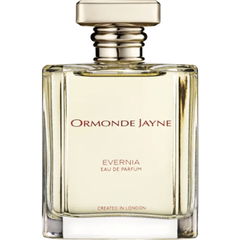
First a brief note: Evernia means oakmoss.
Oakmoss is known to the Latin scholar as Evernia prunastri. It is a lichen that grows in forests and on trees. This oakmoss has an incredibly characteristic scent that is described as earthy, mossy, woody, and slightly animalic. Oakmoss is often perceived as fresh, green, and calming, and - to put it visually - it reminds one of a forest walk after a rain shower.
However, Evernia contains no oakmoss at all.
In the past, to extract the scent of oakmoss for perfumes, the extraction technique of enfleurage was used - as is often the case. Real lichens were soaked in a solvent like alcohol or oil to extract their aromatic compounds. After a certain period, the solvent was separated and distilled - yielding concentrated oakmoss extract.
Nowadays, due to regulations and restrictions related to allergens in perfumes, only synthetic alternatives to natural oakmoss are used. These synthetic molecules reproduce the scent of natural oakmoss - when done well - very accurately and continue to allow for the creation of complex and multifaceted oakmoss fragrances.
However, since it is not entirely easy to make synthetic oakmoss appear natural when it is so prominently featured, oakmoss has increasingly become a companion to fragrance notes and is less frequently the protagonist, the main actor from top to heart note.
Thanks to Linda Pilkington and her handcrafted scents of the highest quality, we thankfully do not have to worry about our olfactory impression of oakmoss, but can trust Ormonde Jayne here almost blindly.
So...
...oakmoss, oh oakmoss, let's begin with the description.
When autumn arrives and the leaves fall, the forest awakens to a magical place full of secrets and ephemeral beauty.
While one might have preferred casual linen shirts and delicate citrus scents in the heat of the sun, temperature and nature now change so quickly and drastically that one develops entirely different needs than to smell of lemon, tea, and fresh waters.
On a now cooler but bright autumn day, one enjoys walking through the dense forest. The ferns flutter in the wind as the last rays of sunshine fall through the golden leaves. One enjoys the silence and the soothing sounds of nature. A gentle rustling. A majestic tree towering mightily from the thicket.
All of this is suddenly perceived again, after the dominating heat of the sunny summer.
The deep connection with nature and the forest is olfactorily as pronounced in autumn as in hardly any other season.
Of course, one loves the fresh grass of spring, the sunscreen associations of hot days, and the crackling snow and the Christmas warmth of wintertime.
Autumn, however, seems to be able to harmonize nature and scent in almost a magical way, that one believes one can smell with the naked nose whether the leaves are already falling, still colorful, whether it is September, October, or even November.
I, for one, love autumn.
I then uncompromisingly wear a classic Barbour jacket and cannot help but occasionally dress in a way that I could well belong to the English country gentry.
When the time comes, precisely when the leaves slowly fall from the trees and the air becomes cooler, it is time for Evernia.
This scent is a perfume incarnate walk through the autumnal forest, surrounded by moss, oakmoss, and fresh air.
The incredibly elegant composition of Evernia also perfectly matches classic attire.
That is exactly what Evernia is for me: The scent for classic attire in autumn.
In the opening, there is light pepper with cardamom. Even though oakmoss is not listed in the top note, it is fully present from the very beginning.
One should not expect too much fresh citrus from the bergamot; it is extremely restrained and frames, just like the blackcurrant, only subtly.
I do not even smell the blackcurrant as a berry, but rather the late-summer blackcurrant bush as a fragrant thicket.
The base note, in my opinion, only lends the scent a certain delicacy, softness, and gentleness, but is quite interchangeable in terms of the individual fragrance notes.
The heart note, however, is overwhelmingly oakmossy, paired with warm woody notes that subtly remind one of cozy hours by the fireplace in an old English manor house.
Opoponax as sweet myrrh I would have rather identified as incense.
The church pew association that one sometimes reads cannot be entirely denied.
In contrast to "Ormonde Man (Eau de Parfum) | Ormonde Jayne," we do not have here the macho-masculine broadside of the hemlock spruce, which is so oud-infused that the tree could well have become rotten. Evernia also completely dispenses with the coriander that accompanies Ormonde Man Eau de Parfum throughout and which does not enjoy universal popularity.
Do not get me wrong, I love "Ormonde Man (Eau de Parfum) | Ormonde Jayne," but it is a loving compilation of masculine notes and not a coherent picture of a situation, as Evernia is.
But let's leave the individual notes as individual notes and return to the feeling.
When I wear the scent, I feel like a character from a Jane Austen novel, like a character from Atonement, or for that matter from Downton Abbey or The Crown.
English, elegant, and timeless.
Wrapped in my Barbour jacket, with Evernia on my skin, I feel like a part of the English country gentry - stylish and full of elegance.
This scent is for me more than just a perfume; it is an experience that reflects my love for autumn and British culture.
It is a situation.
It is a season.
It is autumn.
It is the forest.
It is oakmoss in perfection.
Oakmoss is known to the Latin scholar as Evernia prunastri. It is a lichen that grows in forests and on trees. This oakmoss has an incredibly characteristic scent that is described as earthy, mossy, woody, and slightly animalic. Oakmoss is often perceived as fresh, green, and calming, and - to put it visually - it reminds one of a forest walk after a rain shower.
However, Evernia contains no oakmoss at all.
In the past, to extract the scent of oakmoss for perfumes, the extraction technique of enfleurage was used - as is often the case. Real lichens were soaked in a solvent like alcohol or oil to extract their aromatic compounds. After a certain period, the solvent was separated and distilled - yielding concentrated oakmoss extract.
Nowadays, due to regulations and restrictions related to allergens in perfumes, only synthetic alternatives to natural oakmoss are used. These synthetic molecules reproduce the scent of natural oakmoss - when done well - very accurately and continue to allow for the creation of complex and multifaceted oakmoss fragrances.
However, since it is not entirely easy to make synthetic oakmoss appear natural when it is so prominently featured, oakmoss has increasingly become a companion to fragrance notes and is less frequently the protagonist, the main actor from top to heart note.
Thanks to Linda Pilkington and her handcrafted scents of the highest quality, we thankfully do not have to worry about our olfactory impression of oakmoss, but can trust Ormonde Jayne here almost blindly.
So...
...oakmoss, oh oakmoss, let's begin with the description.
When autumn arrives and the leaves fall, the forest awakens to a magical place full of secrets and ephemeral beauty.
While one might have preferred casual linen shirts and delicate citrus scents in the heat of the sun, temperature and nature now change so quickly and drastically that one develops entirely different needs than to smell of lemon, tea, and fresh waters.
On a now cooler but bright autumn day, one enjoys walking through the dense forest. The ferns flutter in the wind as the last rays of sunshine fall through the golden leaves. One enjoys the silence and the soothing sounds of nature. A gentle rustling. A majestic tree towering mightily from the thicket.
All of this is suddenly perceived again, after the dominating heat of the sunny summer.
The deep connection with nature and the forest is olfactorily as pronounced in autumn as in hardly any other season.
Of course, one loves the fresh grass of spring, the sunscreen associations of hot days, and the crackling snow and the Christmas warmth of wintertime.
Autumn, however, seems to be able to harmonize nature and scent in almost a magical way, that one believes one can smell with the naked nose whether the leaves are already falling, still colorful, whether it is September, October, or even November.
I, for one, love autumn.
I then uncompromisingly wear a classic Barbour jacket and cannot help but occasionally dress in a way that I could well belong to the English country gentry.
When the time comes, precisely when the leaves slowly fall from the trees and the air becomes cooler, it is time for Evernia.
This scent is a perfume incarnate walk through the autumnal forest, surrounded by moss, oakmoss, and fresh air.
The incredibly elegant composition of Evernia also perfectly matches classic attire.
That is exactly what Evernia is for me: The scent for classic attire in autumn.
In the opening, there is light pepper with cardamom. Even though oakmoss is not listed in the top note, it is fully present from the very beginning.
One should not expect too much fresh citrus from the bergamot; it is extremely restrained and frames, just like the blackcurrant, only subtly.
I do not even smell the blackcurrant as a berry, but rather the late-summer blackcurrant bush as a fragrant thicket.
The base note, in my opinion, only lends the scent a certain delicacy, softness, and gentleness, but is quite interchangeable in terms of the individual fragrance notes.
The heart note, however, is overwhelmingly oakmossy, paired with warm woody notes that subtly remind one of cozy hours by the fireplace in an old English manor house.
Opoponax as sweet myrrh I would have rather identified as incense.
The church pew association that one sometimes reads cannot be entirely denied.
In contrast to "Ormonde Man (Eau de Parfum) | Ormonde Jayne," we do not have here the macho-masculine broadside of the hemlock spruce, which is so oud-infused that the tree could well have become rotten. Evernia also completely dispenses with the coriander that accompanies
Ormonde Man Eau de Parfum throughout and which does not enjoy universal popularity. Do not get me wrong, I love "Ormonde Man (Eau de Parfum) | Ormonde Jayne," but it is a loving compilation of masculine notes and not a coherent picture of a situation, as Evernia is.
But let's leave the individual notes as individual notes and return to the feeling.
When I wear the scent, I feel like a character from a Jane Austen novel, like a character from Atonement, or for that matter from Downton Abbey or The Crown.
English, elegant, and timeless.
Wrapped in my Barbour jacket, with Evernia on my skin, I feel like a part of the English country gentry - stylish and full of elegance.
This scent is for me more than just a perfume; it is an experience that reflects my love for autumn and British culture.
It is a situation.
It is a season.
It is autumn.
It is the forest.
It is oakmoss in perfection.
5 Comments
Translated · Show original
He has it all. And too much of it.
How could one combine and assemble a fragrance more beautifully than with the listed notes?
Barbershop vibes meet licorice.
Vetiver and cardamom provide masculine depth, cinnamon adds warmth, and grapefruit delivers the necessary freshness. This fragrance has it all! And it has a lot that I personally really love.
But is it my signature scent? No, not in a million years. Because while it has everything, it has too much of everything.
How can a review of this fragrance do it justice? Probably not at all from my pen, but I’ll try with a little story:
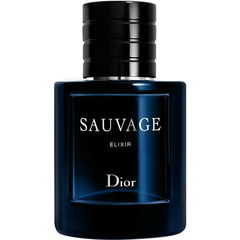
Imagine a gorilla. The gorilla is to be named Elixir. (You see where I’m going with this...)
Our Elixir was a gorilla who stood out distinctly from the other monkeys in the jungle.
He was a true gentleman. And as such, he wanted to go to work dressed particularly elegantly.
But the problem was that Elixir was simply too strong and too muscular to fit into a suit. He was, after all, a gorilla.
He tried on countless suits, but none seemed to fit just right. The sleeves were too short, the jacket too tight, and the pants were snug on his thighs. Elixir was frustrated. He just wanted to look like a real gentleman. He had all the qualities for it, but his sheer strength made it impossible.
One day, Elixir met a wise old monkey who gave him an important piece of advice:
"My dear Elixir, one can also be too strong. Elegance does not only come from strength, but also from restraint. Be proud of your strength, but learn to control it as well."
After these words, Elixir finally understood that being too strong is not good either.
The moral of the story is: It is important to possess both strength and elegance.
Because only when one maintains a balance of both can one truly be a gentleman.
And I believe this is also how it is with our Elixir being reviewed here. Sauvage translates to wild, untamed, or even brutal. However, I do not want to unleash a completely untamed sillage paired with this strength on my surroundings.
I love this fragrance, but it needs to be approached with caution. It is truly untamed. Elegant and clear, but still a wild beast.
It could be a 10. But it is not. Not for me.
And strangely enough, not because it is too weak, as we often criticize with our summer freshies and daily signatures.
But because it is too strong.
Like a gorilla in a suit.
(Please forgive me this comparison - I hope you understand what I am trying to express.)
Barbershop vibes meet licorice.
Vetiver and cardamom provide masculine depth, cinnamon adds warmth, and grapefruit delivers the necessary freshness. This fragrance has it all! And it has a lot that I personally really love.
But is it my signature scent? No, not in a million years. Because while it has everything, it has too much of everything.
How can a review of this fragrance do it justice? Probably not at all from my pen, but I’ll try with a little story:
Imagine a gorilla. The gorilla is to be named Elixir. (You see where I’m going with this...)
Our Elixir was a gorilla who stood out distinctly from the other monkeys in the jungle.
He was a true gentleman. And as such, he wanted to go to work dressed particularly elegantly.
But the problem was that Elixir was simply too strong and too muscular to fit into a suit. He was, after all, a gorilla.
He tried on countless suits, but none seemed to fit just right. The sleeves were too short, the jacket too tight, and the pants were snug on his thighs. Elixir was frustrated. He just wanted to look like a real gentleman. He had all the qualities for it, but his sheer strength made it impossible.
One day, Elixir met a wise old monkey who gave him an important piece of advice:
"My dear Elixir, one can also be too strong. Elegance does not only come from strength, but also from restraint. Be proud of your strength, but learn to control it as well."
After these words, Elixir finally understood that being too strong is not good either.
The moral of the story is: It is important to possess both strength and elegance.
Because only when one maintains a balance of both can one truly be a gentleman.
And I believe this is also how it is with our Elixir being reviewed here. Sauvage translates to wild, untamed, or even brutal. However, I do not want to unleash a completely untamed sillage paired with this strength on my surroundings.
I love this fragrance, but it needs to be approached with caution. It is truly untamed. Elegant and clear, but still a wild beast.
It could be a 10. But it is not. Not for me.
And strangely enough, not because it is too weak, as we often criticize with our summer freshies and daily signatures.
But because it is too strong.
Like a gorilla in a suit.
(Please forgive me this comparison - I hope you understand what I am trying to express.)
1 Comment
Translated · Show original
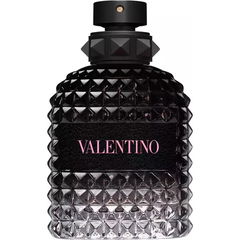
A Unique DNA - Born in Rome
It was an entirely normal day in a completely ordinary German town when I first applied this fragrance and smelled it on my forearm.
"Why the forearm right away?" some connoisseurs might think in shock... there are test strips, after all.
Yes, that's true, they exist.
But: For me, test strips are just a way to make a preliminary selection, to get an initial impression of whether something goes in a completely different direction than I would like to wear on my skin.
In my opinion, true testing cannot be achieved with test strips.
I have always tested fragrances that are designed as crowd-pleasers only on my skin, because the detour via the test strip simply does not benefit me.
Well, I had Born in Roma on my forearm back then... and I found it... simply too sweet.
I wore it throughout the day, sniffing here and there, but I didn’t understand the Born in Roma DNA at that time.
I think I simply had too little experience with sweet fragrances that are not gourmands.
I did not know or understand the interpretation of such a sweet summer scent.
It is not a clubbing scent like Ultra Mâle or another vanilla-sugar treat for cold winter evenings.
This fragrance belongs to a category of its own, of which I would certainly not claim, especially after the releases of recent years, that there are few representatives.
However, I would definitely argue that Born in Roma has created a completely new DNA within this category, a unique composition that, when broken down into notes, does not reveal how the combination of individual ingredients can create this fragrance, and that Born in Roma is indeed more than the proverbial "sum of its parts," just as DNA itself is more than the mere sequence of nucleotides.
This DNA of Born in Roma seems, especially in light of the reviews here, not to be decipherable by everyone. I also do not fully understand the listed fragrance notes here and will try to describe what my impression was and is.
For that, I initially needed a second encounter with Born in Roma. This occurred entirely unremarkably in the form of a sample that was given to me at the perfumery when I purchased another fragrance.
This time I tested it at home. In the evening. I could appreciate the fragrance more.
Upon reapplying, the recognition value of the Born in Roma DNA set in. And I felt like so many others who have fallen for this fragrance and count themselves among its fans - I succumbed to this DNA. But what does this DNA smell like?
What also unfolded during the third testing on my skin, and why are the fragrance notes here on Parfumo, in my opinion, different from what I perceive?
Initially, there were top notes of ginger and blackcurrant that unfolded so gently on my skin. And indeed, these can already evoke the association with the vibrant energy of the Italian capital. If one continues to walk through this association in the warm, narrow streets, the heart notes of jasmine and lily of the valley blend with this unmistakable warm base note. It is as if one is olfactorily wandering through a blooming garden, surrounded by the sweet and sensual scents of the pulsating city.
This fragrance unfolds as a love letter to the beauty and elegance of Italy.
It exudes a timeless sophistication and an irresistible allure.
And yet it remains quite linear.
The sophistication lies in its DNA, not in its progression.
Overall, I can say little more than that this Eau de Toilette is a harmonious composition of sweet-fruity, floral, and warm notes that promises an olfactory journey.
It is a fragrance that can likely be worn both during the day and in the evening, although I clearly prefer the evening.
The warm evening.
The summer evening that does not call for delicate citrus but is pulsating and sweet.
Urban and loud.
And on which one feels like a fragrance DNA that leaves a sweet trace of luxury and style behind.
Born in Roma is a fragrance that enchants the senses and touches the soul when one perceives it as a homage to beauty.
And it has a distinctiveness that sets it apart.
I absolutely accept it if one does not classify it as a masterpiece.
But I simply cannot accept how poorly it is rated overall here.
To all those who criticize the synthetics, I want to shout, yes, that's true, but it is part of the DNA.
Rome itself, in olfactory representation, would not be broken down and distinguishable by salt, vetiver, and lily of the valley, but would be a wild sweet mix, a pulsating blend, an urban homage.
And here we are. This is it: the DNA of Born in Roma.
And what is synthetics anyway? Do you think Geza Schön picks oak moss in the forest for us for our beloved Ormonde Jaynes and Clive Christians? There hasn’t been any oak moss in fragrances since around 2004 or so.
Not everything that glitters is gold. And not everything that is out there is strictly natural. And yet we celebrate and love our niche. And that sometimes contains a good portion of synthetics. And that need not be particularly good or particularly bad.
But likewise, fragrances are not automatically bad because they are designer. And receiving a truly distinctive fragrance DNA from a designer can indeed be worth more than if the next niche house creates a fragrance that is very, very similar to one already sitting on the shelf, reminding us that our fragrance world can indeed be repetitive.
Fragrances like Born in Roma manage to break this repetitiveness by creating something new.
Something with its own DNA.
And that is why it is also correct that this fragrance was not published, released, or launched, but
"born".
Born in Roma.
"Why the forearm right away?" some connoisseurs might think in shock... there are test strips, after all.
Yes, that's true, they exist.
But: For me, test strips are just a way to make a preliminary selection, to get an initial impression of whether something goes in a completely different direction than I would like to wear on my skin.
In my opinion, true testing cannot be achieved with test strips.
I have always tested fragrances that are designed as crowd-pleasers only on my skin, because the detour via the test strip simply does not benefit me.
Well, I had Born in Roma on my forearm back then... and I found it... simply too sweet.
I wore it throughout the day, sniffing here and there, but I didn’t understand the Born in Roma DNA at that time.
I think I simply had too little experience with sweet fragrances that are not gourmands.
I did not know or understand the interpretation of such a sweet summer scent.
It is not a clubbing scent like
Ultra Mâle or another vanilla-sugar treat for cold winter evenings.This fragrance belongs to a category of its own, of which I would certainly not claim, especially after the releases of recent years, that there are few representatives.
However, I would definitely argue that Born in Roma has created a completely new DNA within this category, a unique composition that, when broken down into notes, does not reveal how the combination of individual ingredients can create this fragrance, and that Born in Roma is indeed more than the proverbial "sum of its parts," just as DNA itself is more than the mere sequence of nucleotides.
This DNA of Born in Roma seems, especially in light of the reviews here, not to be decipherable by everyone. I also do not fully understand the listed fragrance notes here and will try to describe what my impression was and is.
For that, I initially needed a second encounter with Born in Roma. This occurred entirely unremarkably in the form of a sample that was given to me at the perfumery when I purchased another fragrance.
This time I tested it at home. In the evening. I could appreciate the fragrance more.
Upon reapplying, the recognition value of the Born in Roma DNA set in. And I felt like so many others who have fallen for this fragrance and count themselves among its fans - I succumbed to this DNA. But what does this DNA smell like?
What also unfolded during the third testing on my skin, and why are the fragrance notes here on Parfumo, in my opinion, different from what I perceive?
Initially, there were top notes of ginger and blackcurrant that unfolded so gently on my skin. And indeed, these can already evoke the association with the vibrant energy of the Italian capital. If one continues to walk through this association in the warm, narrow streets, the heart notes of jasmine and lily of the valley blend with this unmistakable warm base note. It is as if one is olfactorily wandering through a blooming garden, surrounded by the sweet and sensual scents of the pulsating city.
This fragrance unfolds as a love letter to the beauty and elegance of Italy.
It exudes a timeless sophistication and an irresistible allure.
And yet it remains quite linear.
The sophistication lies in its DNA, not in its progression.
Overall, I can say little more than that this Eau de Toilette is a harmonious composition of sweet-fruity, floral, and warm notes that promises an olfactory journey.
It is a fragrance that can likely be worn both during the day and in the evening, although I clearly prefer the evening.
The warm evening.
The summer evening that does not call for delicate citrus but is pulsating and sweet.
Urban and loud.
And on which one feels like a fragrance DNA that leaves a sweet trace of luxury and style behind.
Born in Roma is a fragrance that enchants the senses and touches the soul when one perceives it as a homage to beauty.
And it has a distinctiveness that sets it apart.
I absolutely accept it if one does not classify it as a masterpiece.
But I simply cannot accept how poorly it is rated overall here.
To all those who criticize the synthetics, I want to shout, yes, that's true, but it is part of the DNA.
Rome itself, in olfactory representation, would not be broken down and distinguishable by salt, vetiver, and lily of the valley, but would be a wild sweet mix, a pulsating blend, an urban homage.
And here we are. This is it: the DNA of Born in Roma.
And what is synthetics anyway? Do you think Geza Schön picks oak moss in the forest for us for our beloved Ormonde Jaynes and Clive Christians? There hasn’t been any oak moss in fragrances since around 2004 or so.
Not everything that glitters is gold. And not everything that is out there is strictly natural. And yet we celebrate and love our niche. And that sometimes contains a good portion of synthetics. And that need not be particularly good or particularly bad.
But likewise, fragrances are not automatically bad because they are designer. And receiving a truly distinctive fragrance DNA from a designer can indeed be worth more than if the next niche house creates a fragrance that is very, very similar to one already sitting on the shelf, reminding us that our fragrance world can indeed be repetitive.
Fragrances like Born in Roma manage to break this repetitiveness by creating something new.
Something with its own DNA.
And that is why it is also correct that this fragrance was not published, released, or launched, but
"born".
Born in Roma.