
Jeob
Reviews
Filter & Sort
Detailed

Translated · Show original
The Unbearable Lightness of Being
Forgetting one's own language
learning to crawl again.
To be eternally momentary.
To nourish oneself from skin.
An everything, your nothing.
----
Where do I begin?
Perhaps at the start, when it still seemed that this nothing and I could not come together, as I belong to those who can extensively feel estranged by neroli.
So it is here as well.
What my nose initially perceives as a hint of cleanliness quickly gains a depth that others describe as 'musty,' but my nose deciphers it as 'human.' 'Hints of earthy notes and oak moss,' says my intellect, while the rest of me senses the trail of the little inner creature that dwells within us all and often points the way, hungry or fleeing, while simultaneously giving the mind the comforting feeling that it is truly in control.
The scent evokes for me associations that are far removed from the spiritual Homo sapiens and remind me of fragrant instinct. Sensual, intimate, unique, softly animalistic, ephemeral. It conjures images that tell of inhabiting one's own body in its vulnerability and transience and nourishing oneself from closeness.
It is highly sensual and simultaneously profoundly melancholic. And because it washes over me a flood of images that all tell of finiteness, both small and large, it pulls stronger on my heartstrings than seems rational.
I smell velvety fur, library dust, a delicate leather impression, as well as skin kissed by cologne, still carrying the echo of yesterday's cigarette smoke. It is an apparent lightweight with immense, albeit quieter, endurance as it develops, and a sillage that is easily underestimated, especially in the first hours.
The softly vanillic musk on amber in the base is not a cloud of cleanliness; instead, it has something very human about it. The most beautiful kind of unclean.
I find it understandable how much this scent polarizes. It is unique, a bit unwieldy while simultaneously refusing to engage in primary color painting that would make it easier to categorize. My current rating is that of someone in the early phase of infatuation; it may turn into love. The signs are certainly promising.
----
"...to withstand the light, the joy (like our child when it sang) knowing that I fade in the light over gorse, asphalt, and sea, to withstand time, or rather eternity in the moment. To be eternal: to have been."
Max Frisch, Homo Faber.
learning to crawl again.
To be eternally momentary.
To nourish oneself from skin.
An everything, your nothing.
----
Where do I begin?
Perhaps at the start, when it still seemed that this nothing and I could not come together, as I belong to those who can extensively feel estranged by neroli.
So it is here as well.
What my nose initially perceives as a hint of cleanliness quickly gains a depth that others describe as 'musty,' but my nose deciphers it as 'human.' 'Hints of earthy notes and oak moss,' says my intellect, while the rest of me senses the trail of the little inner creature that dwells within us all and often points the way, hungry or fleeing, while simultaneously giving the mind the comforting feeling that it is truly in control.
The scent evokes for me associations that are far removed from the spiritual Homo sapiens and remind me of fragrant instinct. Sensual, intimate, unique, softly animalistic, ephemeral. It conjures images that tell of inhabiting one's own body in its vulnerability and transience and nourishing oneself from closeness.
It is highly sensual and simultaneously profoundly melancholic. And because it washes over me a flood of images that all tell of finiteness, both small and large, it pulls stronger on my heartstrings than seems rational.
I smell velvety fur, library dust, a delicate leather impression, as well as skin kissed by cologne, still carrying the echo of yesterday's cigarette smoke. It is an apparent lightweight with immense, albeit quieter, endurance as it develops, and a sillage that is easily underestimated, especially in the first hours.
The softly vanillic musk on amber in the base is not a cloud of cleanliness; instead, it has something very human about it. The most beautiful kind of unclean.
I find it understandable how much this scent polarizes. It is unique, a bit unwieldy while simultaneously refusing to engage in primary color painting that would make it easier to categorize. My current rating is that of someone in the early phase of infatuation; it may turn into love. The signs are certainly promising.
----
"...to withstand the light, the joy (like our child when it sang) knowing that I fade in the light over gorse, asphalt, and sea, to withstand time, or rather eternity in the moment. To be eternal: to have been."
Max Frisch, Homo Faber.
23 Comments

Translated · Show original
The Fourth Wall
Thankfully, the floors are freshly cleaned, the costumes are hanging ready, smelling of laundry detergent. As a 'ToiToiToi' from a colleague, a single rose stands in an empty toothbrush holder in front of the mirror. Stage ritual: brush teeth beforehand. Idiotic, but calming. The last shadow under the eyes powdered away. A hasty sip of coffee on top. Shouldn't do it, makes one even more nervous. Whatever. The stage manager crackles over the loudspeaker (hopelessly trying to adjust the volume) that it is now time.
ToiToiTois are murmured in embrace. Only the Spanish colleague whispers "MierdaMierdaMierda" and suggests three times pinching the butt. One could question that. But no one does. It's just how it is. Standing in a circle, looking everyone in the eyes. Like children looking: encountering a pair of eyes without pretense. Without a shy smile, without irony, without a furrowed brow. Just look.
Deep breath.
Lights out.
Lights on.
Act 1.
The fourth wall in theater is one that isn’t really there: the audience. From the perspective of the stage. And from the viewpoint of that, namely the audience, I initially tried to fathom the scent and could hardly connect it with the publicly accessible areas of a theater. Every theater smells different, I admit, but none smelled like this. Until the moment my perception shifted, this scent, which wanders between synthetic fabric softener, minimal rose, and coffee, was unpleasant to me. Especially the coffee note, which strangely stands out from this otherwise fluffy floral web, was repugnant to me.
And then came the powder, and my associations-or rather my lack of ability to associate-tipped over along with the fourth wall, backwards towards the stage.
And so we landed in the often shabby, albeit (mostly) well-cleaned back rooms of the theater, which often look like a functional building from the GDR era compared to the publicly accessible areas. Only in small niche theaters do both usually look comparable. Equally shabby or equally minimally nice.
So, the dressing room.
Theater makeup, washed costumes, the coffee, the rose. Alongside something slightly artificial-metallic. The backstage, where cables, spotlights, and all sorts of technical clutter exist in organized chaos. And suddenly, this scent, which I actually don't like, is very close to me.
It is noticeably from the same family as Odeur 71 or
  Odeur 53. A series of scents that were once conceived as anti-perfumes, and whose greatest scandal today is how incredibly wearable toaster brand and lettuce are. Artificial, at times industrially clinical, reflecting a world between light bulbs, printers, and aforementioned toasters (as well as always laundry detergent). And yet mostly absolutely wearable. On the right person, perhaps even fabulous.
This one will not be my scent. A bit too clean for me in the light of day, both for myself and for the theater. It lacks something more human, if necessary, even a bit of fresh sweat. However, that misses the point of the Odeur series.
Nevertheless. What unsettles, confuses, and sends one traveling seems to be doing something right.
ToiToiTois are murmured in embrace. Only the Spanish colleague whispers "MierdaMierdaMierda" and suggests three times pinching the butt. One could question that. But no one does. It's just how it is. Standing in a circle, looking everyone in the eyes. Like children looking: encountering a pair of eyes without pretense. Without a shy smile, without irony, without a furrowed brow. Just look.
Deep breath.
Lights out.
Lights on.
Act 1.
The fourth wall in theater is one that isn’t really there: the audience. From the perspective of the stage. And from the viewpoint of that, namely the audience, I initially tried to fathom the scent and could hardly connect it with the publicly accessible areas of a theater. Every theater smells different, I admit, but none smelled like this. Until the moment my perception shifted, this scent, which wanders between synthetic fabric softener, minimal rose, and coffee, was unpleasant to me. Especially the coffee note, which strangely stands out from this otherwise fluffy floral web, was repugnant to me.
And then came the powder, and my associations-or rather my lack of ability to associate-tipped over along with the fourth wall, backwards towards the stage.
And so we landed in the often shabby, albeit (mostly) well-cleaned back rooms of the theater, which often look like a functional building from the GDR era compared to the publicly accessible areas. Only in small niche theaters do both usually look comparable. Equally shabby or equally minimally nice.
So, the dressing room.
Theater makeup, washed costumes, the coffee, the rose. Alongside something slightly artificial-metallic. The backstage, where cables, spotlights, and all sorts of technical clutter exist in organized chaos. And suddenly, this scent, which I actually don't like, is very close to me.
It is noticeably from the same family as
Odeur 71 or Odeur 53. A series of scents that were once conceived as anti-perfumes, and whose greatest scandal today is how incredibly wearable toaster brand and lettuce are. Artificial, at times industrially clinical, reflecting a world between light bulbs, printers, and aforementioned toasters (as well as always laundry detergent). And yet mostly absolutely wearable. On the right person, perhaps even fabulous.This one will not be my scent. A bit too clean for me in the light of day, both for myself and for the theater. It lacks something more human, if necessary, even a bit of fresh sweat. However, that misses the point of the Odeur series.
Nevertheless. What unsettles, confuses, and sends one traveling seems to be doing something right.
18 Comments
Translated · Show original
The Art of Whispering Worlds
“This is the way the world ends
Not with a bang but a whimper.”
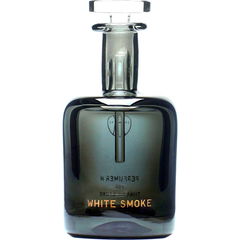
These last lines from T.S. Eliot's “The Hollow Men” were what I associated when I first encountered Lyn Harris' White Smoke a few days ago.
I stumbled, very early in the morning, after the meaning of this association, pressing my nose against the back of my hand, balancing a cup of coffee in the other hand. It seemed too dramatic to withstand closer inspection. Perhaps it is simply a symbol of the small seismic shift inside me that this quiet yet powerful fragrance has triggered. In the case of White Smoke, the last sentence might read:
“not with a bang but a mighty whisper.” We can skip the end of the world.
White Smoke unfolds in finely balanced stages. Especially in the first third, incense and chamomile are clearly discernible, a combination of notes that enchanted me already in "Series 3: Incense - Avignon | Comme des Garçons." But while Avignon leaves one in strained awe for the first hours before providing some silent comfort thanks to chamomile, White Smoke is more approachable, warmer, and significantly more dynamic. In any case, the fragrances I have smelled so far from Perfumer H create an image of movement within me.
In the case of White Smoke, the first minutes with it correspond to the image of a silent explosion. I see - as if the film were missing its sound - a noiseless discharge, smell a hint of gunpowder, and then a smoke moving towards me in slow motion: delicate, almost tender wisps of smoke that do not drift as a surface but rather weave their way through the space until they envelop, consume.
At the end of this slow-motion sequence, an almost sacred space is created.
One in which I would kneel down without hesitation.
Later, almost imperceptibly creeping in and simultaneously changing the character of the fragrance significantly, the warmth of the resins, the amber, the very subtle powderiness of the iris, and - almost hidden beneath everything yet hitting the perfect note - the gentle purr of the oud, adding a hint of animalic quality.
I begin to believe Lyn Harris could make an egg dance on a razor blade. She skillfully creates balance that sometimes (as in the case of Dust) consists of the greatest possible tension between opposing poles, and sometimes from the perfect choreography of the seemingly ever-moving interplay of notes.
Nothing about White Smoke is loud, nothing burns or smolders, nothing drifts off into an ambient-woody-vanilla olfactory comfort salad. Instead, it resembles an introspective work of art, which I hope to listen to whispering much more often.
Not with a bang but a whimper.”
These last lines from T.S. Eliot's “The Hollow Men” were what I associated when I first encountered Lyn Harris' White Smoke a few days ago.
I stumbled, very early in the morning, after the meaning of this association, pressing my nose against the back of my hand, balancing a cup of coffee in the other hand. It seemed too dramatic to withstand closer inspection. Perhaps it is simply a symbol of the small seismic shift inside me that this quiet yet powerful fragrance has triggered. In the case of White Smoke, the last sentence might read:
“not with a bang but a mighty whisper.” We can skip the end of the world.
White Smoke unfolds in finely balanced stages. Especially in the first third, incense and chamomile are clearly discernible, a combination of notes that enchanted me already in "Series 3: Incense - Avignon | Comme des Garçons." But while Avignon leaves one in strained awe for the first hours before providing some silent comfort thanks to chamomile, White Smoke is more approachable, warmer, and significantly more dynamic. In any case, the fragrances I have smelled so far from Perfumer H create an image of movement within me.
In the case of White Smoke, the first minutes with it correspond to the image of a silent explosion. I see - as if the film were missing its sound - a noiseless discharge, smell a hint of gunpowder, and then a smoke moving towards me in slow motion: delicate, almost tender wisps of smoke that do not drift as a surface but rather weave their way through the space until they envelop, consume.
At the end of this slow-motion sequence, an almost sacred space is created.
One in which I would kneel down without hesitation.
Later, almost imperceptibly creeping in and simultaneously changing the character of the fragrance significantly, the warmth of the resins, the amber, the very subtle powderiness of the iris, and - almost hidden beneath everything yet hitting the perfect note - the gentle purr of the oud, adding a hint of animalic quality.
I begin to believe Lyn Harris could make an egg dance on a razor blade. She skillfully creates balance that sometimes (as in the case of
Dust) consists of the greatest possible tension between opposing poles, and sometimes from the perfect choreography of the seemingly ever-moving interplay of notes. Nothing about White Smoke is loud, nothing burns or smolders, nothing drifts off into an ambient-woody-vanilla olfactory comfort salad. Instead, it resembles an introspective work of art, which I hope to listen to whispering much more often.
14 Comments

Translated · Show original
Wondering Forward
A hint of damp concrete or stone, hesitantly broken by nature. As if a second skin were growing over stone, breathing, constantly expanding. A silky, transparent, slightly bitter veil, soaked in the green of the stems, the scent of the flowers and woods.
Scent as texture, constantly changing.
--
I tend to be someone who falls in love with fragrances hesitantly. It may be that a spell is cast upon first sniff, one that then needs to be felt and tested. I take it with me on walks, let it sweat and freeze with me, go to the post office and navigate existential crises. I exaggerate, but only to a certain extent. The ceremony resembles a careful merging rather than a spontaneous kneeling.
Miracula, on the other hand, belongs to the fragrances that undermine my romantic hesitation, even though it - at least in some respects - does not fall into my usual olfactory forest.
--
The wonder begins mineral, cool. It opens pleasantly herbaceous, a bit aloof, more man-made surface than nature. Then, in small shifts, the organic emerges, this scent develops into a tuberose that I have never quite grasped and have not smelled before. It seems too green to me, too few of the gum-like hints are present.
In fact, it blooms surprisingly little here; instead, the balance of the notes creates something that reveals itself to me more as texture than as a interplay of clearly identifiable components. Miracula glides slowly from coolness into warmth, so seamlessly, so incrementally, that it would be difficult to separate the progression into clear stages.
And so I stumble - wondering forward - through this scent. I, a declared opponent (or at least a skeptic) of blooming fragrances, helplessly enchanted by a tuberose.
The woody nuances at the outset have a creamy touch, and so my - not particularly experienced in raw materials - nose suspects notes of sandalwood in the base. If that is the case (more experienced noses are welcome to disagree), it is neither one of the more unpleasant synthetic variants nor a coconut-heavy representative of its kind.
The subtle creaminess that arises reminds me of silky fabric; nothing clogs the palate or forces its way into the cozy. It may be that the creamy impression is simply due to the tuberose itself.
The wonder lasts, even with a very hesitant application (the sample is small, the fear of quickly using it up is great), a good 8 hours. The sillage is still indeterminate for me, but I suspect it lies in the middle range. That it is priced in the luxury segment is one of fate's little cruelties. I accept it and patiently hope for unexpected financial windfalls.
I thank Bigalchen1, without whom I probably would not have encountered this rather rarely found fragrance here.
Scent as texture, constantly changing.
--
I tend to be someone who falls in love with fragrances hesitantly. It may be that a spell is cast upon first sniff, one that then needs to be felt and tested. I take it with me on walks, let it sweat and freeze with me, go to the post office and navigate existential crises. I exaggerate, but only to a certain extent. The ceremony resembles a careful merging rather than a spontaneous kneeling.
Miracula, on the other hand, belongs to the fragrances that undermine my romantic hesitation, even though it - at least in some respects - does not fall into my usual olfactory forest.
--
The wonder begins mineral, cool. It opens pleasantly herbaceous, a bit aloof, more man-made surface than nature. Then, in small shifts, the organic emerges, this scent develops into a tuberose that I have never quite grasped and have not smelled before. It seems too green to me, too few of the gum-like hints are present.
In fact, it blooms surprisingly little here; instead, the balance of the notes creates something that reveals itself to me more as texture than as a interplay of clearly identifiable components. Miracula glides slowly from coolness into warmth, so seamlessly, so incrementally, that it would be difficult to separate the progression into clear stages.
And so I stumble - wondering forward - through this scent. I, a declared opponent (or at least a skeptic) of blooming fragrances, helplessly enchanted by a tuberose.
The woody nuances at the outset have a creamy touch, and so my - not particularly experienced in raw materials - nose suspects notes of sandalwood in the base. If that is the case (more experienced noses are welcome to disagree), it is neither one of the more unpleasant synthetic variants nor a coconut-heavy representative of its kind.
The subtle creaminess that arises reminds me of silky fabric; nothing clogs the palate or forces its way into the cozy. It may be that the creamy impression is simply due to the tuberose itself.
The wonder lasts, even with a very hesitant application (the sample is small, the fear of quickly using it up is great), a good 8 hours. The sillage is still indeterminate for me, but I suspect it lies in the middle range. That it is priced in the luxury segment is one of fate's little cruelties. I accept it and patiently hope for unexpected financial windfalls.
I thank Bigalchen1, without whom I probably would not have encountered this rather rarely found fragrance here.
12 Comments
Translated · Show original
Insight into a Clumsy Romance
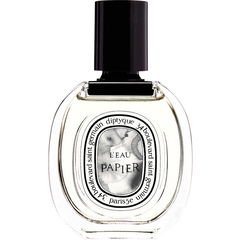
Do you know that feeling? Fragrances that somehow captivate you, even when you're not sure if you actually like them? L’eau papier is one of those.
Looking at my notes from the first sniff, I wrote the following:
“Shaving water opening. Then laundry detergent. A hint of light woods and rice in the background. And yes: sesame."
Enthusiastic fragrance love sounds different. If I were a copywriter, I would be unemployed.
And yet, yet, yet: the scent won't leave my mind. So back to the sample and another skin test. Yep. Still shaving water, before laundry detergent. To be precise, the scent at this stage is so glaringly white that it almost blinds.
Only then does the rest follow in my perception and if I'm completely honest: besides a mimosa that I now also perceive, the main impression that remains is molecular. Ambroxan most likely, maybe Iso E Super. Now I have developed a strange love for Ambroxan ( Molecule 02) and perhaps that is an explanation for this peculiar attraction. But not the only one. Because somehow I like the friction it creates. It’s kind of scratchy in an exciting way.
It’s not quite paper and yet it evokes in me the image of a white surface waiting to be written on. It’s not cuddly, not soft, not sweet (even though it develops a slight sweetness in the dry down).
Somehow it’s as if I’m carrying a question mark on my hand, a prompt to constantly engage with this damned scent.
So while I continue to struggle with whether to pursue this strangely clumsy romance or finally seek my escape, I at least have the following words of wisdom to share: Don’t buy it blindly. Don’t buy it if you’re looking for a cuddly scent. And: People who hate synthetics will probably want to steer clear of this fragrance.
Looking at my notes from the first sniff, I wrote the following:
“Shaving water opening. Then laundry detergent. A hint of light woods and rice in the background. And yes: sesame."
Enthusiastic fragrance love sounds different. If I were a copywriter, I would be unemployed.
And yet, yet, yet: the scent won't leave my mind. So back to the sample and another skin test. Yep. Still shaving water, before laundry detergent. To be precise, the scent at this stage is so glaringly white that it almost blinds.
Only then does the rest follow in my perception and if I'm completely honest: besides a mimosa that I now also perceive, the main impression that remains is molecular. Ambroxan most likely, maybe Iso E Super. Now I have developed a strange love for Ambroxan (
Molecule 02) and perhaps that is an explanation for this peculiar attraction. But not the only one. Because somehow I like the friction it creates. It’s kind of scratchy in an exciting way. It’s not quite paper and yet it evokes in me the image of a white surface waiting to be written on. It’s not cuddly, not soft, not sweet (even though it develops a slight sweetness in the dry down).
Somehow it’s as if I’m carrying a question mark on my hand, a prompt to constantly engage with this damned scent.
So while I continue to struggle with whether to pursue this strangely clumsy romance or finally seek my escape, I at least have the following words of wisdom to share: Don’t buy it blindly. Don’t buy it if you’re looking for a cuddly scent. And: People who hate synthetics will probably want to steer clear of this fragrance.
8 Comments