
loewenherz
Reviews
Filter & Sort
Detailed
Translated · Show original
Fragile Voices, Yet a Gentle Song
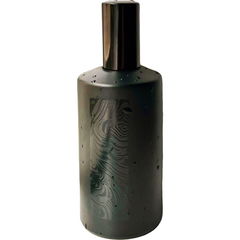
Here is one that I wanted to write about as soon as it came to my nose recently. One that I still wanted to write about while it took up space on my wrist and developed. And I took a little more time to write about it, as it indeed requires time to organize and sort one’s thoughts about a perfume - especially when a fragrance deserves such order and sorting as Fischersund's Flotholt, which I find as beautiful and special as I haven't in a long time. One that I wanted to take home spontaneously, but followed the voice of reason (for now) and successfully resisted the impulse to possess.
I was already familiar with two of Fischersund's perfumes - Jöklalykt and Útilykt - found both sensually appealing and academically intriguing in their conception. Flotholt fits well into this series yet is more special and different - both in terms of volume and orchestration of its scent accords. I perceive the smoky note as defining - it has hints of ash, thus evoking the memory of something lost, burned. But it does without that sometimes bothersome incense note that the accord of smoke can have. Instead, Flotholt is carried by something fragile, something wounded, and hardly more than a memory, an echo.
In dialogue with the smoky key accord, other strong protagonists emerge - each carefully chosen and harmonized in their rugged beauty. A dark marine tone - green frothy sea on a black beach, and devoid of everything that the perfume industry usually calls 'aquatic.' A scratchy, almost barn-like musk tone: animalistic-intimate, but not warm - akin to the resting place of a creature long gone. The distant hint of a forest - one that once existed in Flotholt's now largely treeless homeland of Iceland - resinous and foreign and barren, bent under northern winds. And it is this fine smoky wind that brings these fragile voices together into a gentle and soft song that touches and 'does something to us.'
Conclusion: do I want to have Flotholt, where it seemingly excites me so? A part of me, of course - certainly! - and I cannot say with certainty today whether this part will prevail when a gloomy moment on a dreary day suddenly needs meaning and beauty. However, Flotholt, as described, serves a very specific niche - smoky and rugged and foreign yet familiar - and this niche is already occupied in my portfolio by Aēsop's Hwyl - another scent, yet in terms of its essence, related to me. Therefore, the voice of reason (for now) says No to me, but I congratulate anyone who chooses Flotholt very much.
I was already familiar with two of Fischersund's perfumes - Jöklalykt and Útilykt - found both sensually appealing and academically intriguing in their conception. Flotholt fits well into this series yet is more special and different - both in terms of volume and orchestration of its scent accords. I perceive the smoky note as defining - it has hints of ash, thus evoking the memory of something lost, burned. But it does without that sometimes bothersome incense note that the accord of smoke can have. Instead, Flotholt is carried by something fragile, something wounded, and hardly more than a memory, an echo.
In dialogue with the smoky key accord, other strong protagonists emerge - each carefully chosen and harmonized in their rugged beauty. A dark marine tone - green frothy sea on a black beach, and devoid of everything that the perfume industry usually calls 'aquatic.' A scratchy, almost barn-like musk tone: animalistic-intimate, but not warm - akin to the resting place of a creature long gone. The distant hint of a forest - one that once existed in Flotholt's now largely treeless homeland of Iceland - resinous and foreign and barren, bent under northern winds. And it is this fine smoky wind that brings these fragile voices together into a gentle and soft song that touches and 'does something to us.'
Conclusion: do I want to have Flotholt, where it seemingly excites me so? A part of me, of course - certainly! - and I cannot say with certainty today whether this part will prevail when a gloomy moment on a dreary day suddenly needs meaning and beauty. However, Flotholt, as described, serves a very specific niche - smoky and rugged and foreign yet familiar - and this niche is already occupied in my portfolio by Aēsop's Hwyl - another scent, yet in terms of its essence, related to me. Therefore, the voice of reason (for now) says No to me, but I congratulate anyone who chooses Flotholt very much.
2 Comments
Translated · Show original
Like Birds Moving with the Clouds
For me, I admit, a perfume is always a product for all senses; it must be a product for all senses. First, there is of course the scent itself - how is it structured, how is it orchestrated, how does it develop over the time I wear it? Furthermore, it is also important to me what it does to me, how it is conceptually thought out - if it is thought out at all. If not, it is probably out. And then I also want to know what story it tells - and whether this story is told carefully, coherently, and well. And I also want a beautifully designed bottle that matches the scent and its story. For all of this - for the scent, for its idea, and for its marketing - I am willing to pay. This may not apply to everyone here, and that is good for each person to have it as they want. I want it all.
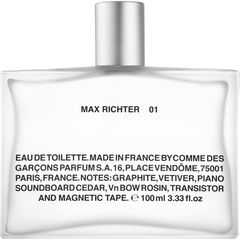
Why am I rambling on about this? Because so much of it is true here - putting the sober bottle aside, but that’s just how Comme des Garçons does it. The fine, multi-faceted scent. What it does to me while I wear it. The association with the wonderful Max Richter, who created a sensitive, intimate work with chamber-music-reduced instrumentation. The transformation of this sensitive, intimate work into a scent architecture where you recognize the idea. How it tells stories - of solitary walks on an empty beach in winter. Of a long drive through a forest in the north - following the birds that move with the clouds. Of an afternoon in a gallery with contemporary art, when I suddenly and without reason started to cry.
It has - of course - something highly artificial. Once again - Comme des Garçons does it this way. You know that beforehand; sometimes it works, sometimes it doesn’t. Here it works. A bitter, cool juniper (without the gin and tonic association that I don’t like) and hardly more than a hint of sweetness - almost as if mourning a long-lost loss, with fine hints of ink and liqueur. It follows a fine, brittle pepper - and I often find pepper exhausting - without sting and without sharpness, almost more the memory of pepper than the pepper itself. And then - in the beautiful and soft slowness of a viola - tender cedar softness, approachable and distant at the same time - like the hand warming the handmade paper while we write, barely perceptible and already gone.
Conclusion: quiet beauty, convincingly translated into a scent concept.
Why am I rambling on about this? Because so much of it is true here - putting the sober bottle aside, but that’s just how Comme des Garçons does it. The fine, multi-faceted scent. What it does to me while I wear it. The association with the wonderful Max Richter, who created a sensitive, intimate work with chamber-music-reduced instrumentation. The transformation of this sensitive, intimate work into a scent architecture where you recognize the idea. How it tells stories - of solitary walks on an empty beach in winter. Of a long drive through a forest in the north - following the birds that move with the clouds. Of an afternoon in a gallery with contemporary art, when I suddenly and without reason started to cry.
It has - of course - something highly artificial. Once again - Comme des Garçons does it this way. You know that beforehand; sometimes it works, sometimes it doesn’t. Here it works. A bitter, cool juniper (without the gin and tonic association that I don’t like) and hardly more than a hint of sweetness - almost as if mourning a long-lost loss, with fine hints of ink and liqueur. It follows a fine, brittle pepper - and I often find pepper exhausting - without sting and without sharpness, almost more the memory of pepper than the pepper itself. And then - in the beautiful and soft slowness of a viola - tender cedar softness, approachable and distant at the same time - like the hand warming the handmade paper while we write, barely perceptible and already gone.
Conclusion: quiet beauty, convincingly translated into a scent concept.
3 Comments
Translated · Show original
The Saddest Perfume in the World
Here we go, friends. Grab the feathers and tar, I am ready. A part of me actually almost regrets writing this - Spoiler Alert! - not really nice comment. (The other part doesn’t care.) It should be acknowledged, however, that this comment might be a bit unfair, as some of what I am about to say about Paradigme could certainly be said about one or another perfume of the present. And yet - what a deeply sad scent this is, for whose short-term gain the label Prada (and the mentioned artists) sold their names to L'Oréal.
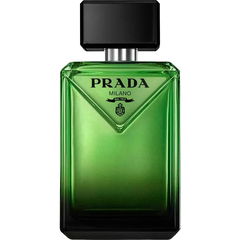
No one, I assert, who truly loves perfumes or experiences them with sensual passion, has contributed to the creation of Paradigme at any point. Not with the campaign featuring the currently popular Marvel actor Tom Holland, which - although iconographically not un-aesthetically done - could just as well promote any other perfume. Not with the design of the loveless bottle, which - without being minimalistic - looks as if it was simply abandoned halfway through. And certainly not with its soulless content, which I find forgettable and annoying, impertinent and irrelevant all at once.
Paradigme is - to put it neutrally - the brutal essence of a mainstream perfume of the present, an industrial arrangement following the key words 'fresh', 'sexy', 'youthful', aimed at maximum likability and fungibility, with minimal use of all the resources that make a perfume special. Fresh, sexy, and youthful are not bad attributes, but they have rarely been tossed around so carelessly as here. To remedy this shortcoming, I fear that those who wear it for a year or two (before they forget it existed) will likely apply it more generously. Which does not make it any better.
Conclusion: as a punchline in the history of perfume, I suspect that all those who lavishly apply Paradigme before the evening 'speeding along the Ku'damm' in front of the wavy Ikea mirrors in the hallway will neither be able to pronounce its name correctly nor know that a paradigm is a 'fundamental view of things' or simply 'worldview'. But that’s okay.
No one, I assert, who truly loves perfumes or experiences them with sensual passion, has contributed to the creation of Paradigme at any point. Not with the campaign featuring the currently popular Marvel actor Tom Holland, which - although iconographically not un-aesthetically done - could just as well promote any other perfume. Not with the design of the loveless bottle, which - without being minimalistic - looks as if it was simply abandoned halfway through. And certainly not with its soulless content, which I find forgettable and annoying, impertinent and irrelevant all at once.
Paradigme is - to put it neutrally - the brutal essence of a mainstream perfume of the present, an industrial arrangement following the key words 'fresh', 'sexy', 'youthful', aimed at maximum likability and fungibility, with minimal use of all the resources that make a perfume special. Fresh, sexy, and youthful are not bad attributes, but they have rarely been tossed around so carelessly as here. To remedy this shortcoming, I fear that those who wear it for a year or two (before they forget it existed) will likely apply it more generously. Which does not make it any better.
Conclusion: as a punchline in the history of perfume, I suspect that all those who lavishly apply Paradigme before the evening 'speeding along the Ku'damm' in front of the wavy Ikea mirrors in the hallway will neither be able to pronounce its name correctly nor know that a paradigm is a 'fundamental view of things' or simply 'worldview'. But that’s okay.
14 Comments
Translated · Show original
For who I really am
One of those myths that our songs and stories have drawn from for so many years is that sometimes you must follow a call and go to a specific place to make important, to make the right decisions. And when the young heroine stands over the cliffs of Scotland, with the sea wind tugging at her hair, she will suddenly know whether she should marry the mayor's son, whom she does not love but who is good to her - or the adventurer with nothing but his rusty camper van, who, unlike the mayor's son, sometimes makes her look the Lord directly in the eyes at night. Or something like that.
And similarly, there are not only places but also things, objects, soul catchers that can be given such significance. The rounded stone I found as a boy down by the pond. Grandmother's locket with the fine inlay work, which has always been missing the pearl. This perfume that goes straight to the heart. We want to believe in the power of such objects when big decisions need to be made. Should I quit and really go abroad for this job? When I stand up in Scotland at the cliff with Grandmother's locket, with only the starry sky above me, I will know. For sure.
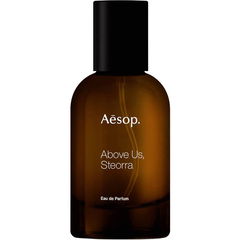
Aēsop is good at making things special and 'meaningful.' That is a marketing achievement I admire. The stores, the design, the entire product portfolio. But if that didn't work, the product couldn't deliver what it promises. The calm, the introspection, the focus on its wearer. The minimalist and the reduced, the absolute feeling of something truly special. The high contemporary that seems to have always been there, transcending fashion and zeitgeist. Something tangible like a perfume is elevated to something that can give meaning to the moment. Like the cliffs of Scotland or Grandmother's golden locket.
Above Us, Steorra is even more than its brothers the epitome of such a fragrance. Intimate, personal, amidst apparent familiarity yet unusual. A scent of incense, yet completely unoriental, a fragrance full of warm spices, yet without any Christmas associations. Above Us, Steorra has a heavy-, almost bodiless warmth like breath in one's own hand, has a light and has a glow from within, warm like a hearth fire and yet distant like stars in the night sky. Not one for everyday, I would say - but one for the wind-swept cliffs of Scotland with Grandmother's locket in hand - that gives the moment of wearing the magic it sometimes needs.
Conclusion: hits home.
And similarly, there are not only places but also things, objects, soul catchers that can be given such significance. The rounded stone I found as a boy down by the pond. Grandmother's locket with the fine inlay work, which has always been missing the pearl. This perfume that goes straight to the heart. We want to believe in the power of such objects when big decisions need to be made. Should I quit and really go abroad for this job? When I stand up in Scotland at the cliff with Grandmother's locket, with only the starry sky above me, I will know. For sure.
Aēsop is good at making things special and 'meaningful.' That is a marketing achievement I admire. The stores, the design, the entire product portfolio. But if that didn't work, the product couldn't deliver what it promises. The calm, the introspection, the focus on its wearer. The minimalist and the reduced, the absolute feeling of something truly special. The high contemporary that seems to have always been there, transcending fashion and zeitgeist. Something tangible like a perfume is elevated to something that can give meaning to the moment. Like the cliffs of Scotland or Grandmother's golden locket.
Above Us, Steorra is even more than its brothers the epitome of such a fragrance. Intimate, personal, amidst apparent familiarity yet unusual. A scent of incense, yet completely unoriental, a fragrance full of warm spices, yet without any Christmas associations. Above Us, Steorra has a heavy-, almost bodiless warmth like breath in one's own hand, has a light and has a glow from within, warm like a hearth fire and yet distant like stars in the night sky. Not one for everyday, I would say - but one for the wind-swept cliffs of Scotland with Grandmother's locket in hand - that gives the moment of wearing the magic it sometimes needs.
Conclusion: hits home.
3 Comments
Translated · Show original
Can Bring People to Tears...
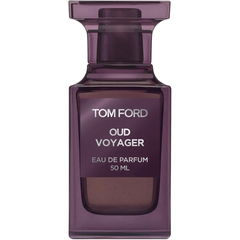
Oh no, it’s not that bad at all, don’t worry. Not even a little bad, quite the opposite. Nevertheless - what a strange fragrance Oud Voyager is - and what a peculiar time it comes at. I must (and want to) explain right away why I find it so strange, so odd - and why it has something dramatic and driving about it - 'haunting' is what one would say in English - of which I somewhat theatrically claim in the title that it may bring one to tears.
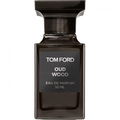
Rose and Oud - hasn’t that been over for a good decade? And now here comes Tom Ford (who launched something quite similar with Oud Fleur about ten years ago) and lets the great Dominique Ropion create a fragrance that seems to be out of time in the mid-2020s. Has it simply been forgotten back then with Oud Fleur, Oud Minérale, Tobacco Oud, and all the others that were supposed to make the cash registers ring in the shadow of Oud Wood?
I could now ramble on about how Oud Voyager is indeed contemporary. But it is not; it could just as well be from 2010 or even earlier. And it doesn’t matter here, because it presents the well-trodden fashion accord of rose and oud so finely and delicately, so approachable, so intimate, and so fragile - possibly the timeless hand of the timeless Monsieur Ropion? - that it works just as well as a reminiscence of past Private Blends as it does as a creation of the present.
Oud Voyager, whose name speaks of longing and distance, has that minor rhythm - like beautiful cursive on parchment or a sad waltz danced in half-shadow - driving and pressing, yet executed with precision. Rose with a hint of regret like a never-given bouquet and dry, almost paper-like wood like letters full of devotion and love that no one ever read. A fragrance full of vulnerability, full of hurt - and yet complete and intact.
Conclusion: a strange wanderer between the olfactory yesterday and today. Very Tom Ford in its own way and yet also très Ropion. And - who would have thought? - it works.
Rose and Oud - hasn’t that been over for a good decade? And now here comes Tom Ford (who launched something quite similar with Oud Fleur about ten years ago) and lets the great Dominique Ropion create a fragrance that seems to be out of time in the mid-2020s. Has it simply been forgotten back then with Oud Fleur, Oud Minérale, Tobacco Oud, and all the others that were supposed to make the cash registers ring in the shadow of Oud Wood?
I could now ramble on about how Oud Voyager is indeed contemporary. But it is not; it could just as well be from 2010 or even earlier. And it doesn’t matter here, because it presents the well-trodden fashion accord of rose and oud so finely and delicately, so approachable, so intimate, and so fragile - possibly the timeless hand of the timeless Monsieur Ropion? - that it works just as well as a reminiscence of past Private Blends as it does as a creation of the present.
Oud Voyager, whose name speaks of longing and distance, has that minor rhythm - like beautiful cursive on parchment or a sad waltz danced in half-shadow - driving and pressing, yet executed with precision. Rose with a hint of regret like a never-given bouquet and dry, almost paper-like wood like letters full of devotion and love that no one ever read. A fragrance full of vulnerability, full of hurt - and yet complete and intact.
Conclusion: a strange wanderer between the olfactory yesterday and today. Very Tom Ford in its own way and yet also très Ropion. And - who would have thought? - it works.
5 Comments