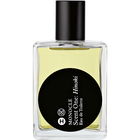
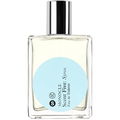
Zagorsk… Sagorsk… Was was there? Down to the cellar! Quickly, 'The Robbers', 'Woyzeck' and other Reclam booklets are packed away, followed by König's explanations of 'Judenbuche', 'Fräulein von Scuderi', etc. Finally, one of those moving boxes is free, containing the contents of my old youth room.
Hit! Right on top, I find the sought-after flat box, labeled in Cyrillic letters with the words “Solotoje Kolzo”. Inside is a cardboard plate full of pins (see album, image 100044), souvenirs from a choir trip to the dying Soviet Union. As is well known, many things were scarce there - these more or less propagandistic pins were not. The price had been exactly four rubles and sixty kopecks (image 100045), which converted to pennies, and in youthful exuberance of West decadence, we had carted away pounds of them. The things were available for everything and everyone: for people, events, achievements, buildings, and - for cities. “Solotoje Kolzo” means “Golden Ring” and refers to a series of ancient Russian cities northeast of Moscow. The tin tribute to Sagorsk, now Sergiev Posad, can be seen in the bottom left, image 100046 shows this masterpiece of socialist manufacturing technology in detail.
In Sagorsk, with its Trinity Monastery, which the scent apparently refers to as a representative of the smoke of the Russian Orthodox Church, we were not there at the time, but we did have a different encounter with Orthodoxy in Moscow, beyond the touristy. Because besides the actual concert program, we were spontaneously invited to sing in one of the supposedly first official services after the Russian turnaround, in the "Church of the Commemoration of the Resurrection at the Ascension Ravine", located not far from the Kremlin and Red Square. A unique experience, amidst a foreign liturgy, surrounded by the preaching and singing voice of a priest and the lavishly distributed incense.
How much of that does the scent conjure?
Little. I sense a distinctly iris-tinged opening of almost carrot-like freshness and then immediately bright wood. Sour, for a few seconds almost hesperidic-astringent pine. Quickly, bright, peppery incense joins in. There’s nothing church-like about it, at least not for me. Instead, effortlessly, memories of the Russian winter are evoked. At minus 20 degrees, there was snow endlessly, we were swept by biting, dry cold.
Above all, however, Zagorsk smells of wood; indeed a ‘matryoshka wood note’ (thanks to Jumi for this image!), as well as further coniferous wood. Alongside it, sour resin with a spicy touch. In the past, when allspice was still called “spice grain” and went into Mom's food, one could feel something like that when accidentally biting into it. This contributes a prick that has nothing to do with cold air, but rather - let’s say: allegorically - may remind one of the strong smell of old furniture.
The Zagorsk wood is therefore more robust, sharper, colder, more piercing than the pale counterpart from the sibling perfume Kyoto, yet a successful familial connection beyond banal individual aromas can be considered achieved. It is quite possible, by the way, that (as has been speculated) vetiver plays a significant role in Zagorsk. The nutty-earthy aspects in the background speak for that. However, the lush matryoshka certainly has nothing to do with vetiver.
The scent structure is now essentially established: bright wood plus carrot-iris, alongside a sourness that may stem from vetiver. Plus a nearly minimalist white incense.
Elsewhere, I have occasionally noticed how bright wood, primarily of laboratory origin, can be refined with iris. Unfortunately, that doesn’t work today because the carrot note mixes in very strangely and, moreover, with its somewhat static sweetness, appears quite sterile.
Hmm. Back then, in that service, I understood that a liturgy can intoxicate, captivate, ensnare, seduce. Zagorsk cannot convey that to me. It does not enter the church at all.
I thank Ergoproxy for the sample.