

 Balsam fir needle
 Fossilised amber
 Juniper tar
 Oakmoss absolute
 Siberian stone pine
03/15/2025

Mairuwa
72 Reviews
Translated · Show original

Mairuwa
Very helpful Review
7
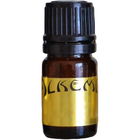
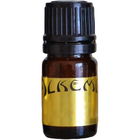
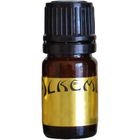
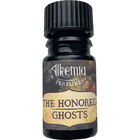
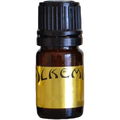
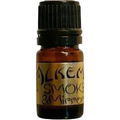
In the Smoke Chamber of Ullr
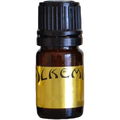
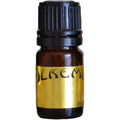
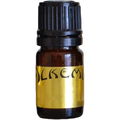
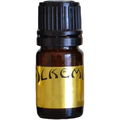
Yeti, Yatagan, Yggdrasil, Yria. Melodious names starting with Y are (not only) popular in perfumery, as they evoke thoughts of the exotic, if not the mythical. The brand Yves Saint-Laurent first abbreviated the name of its creator to YSL, until eventually just a Y was enough to conjure up the myth. There are also repeated attempts to refine vetiver into Vetyver. Only hyssop strangely leads a rather insignificant existence as a fragrance note.
Ydalir. Here we find ourselves deep in Norse mythology. “Ýdalir is said to be where Ullr has / Built the hall” - so it is written in Grímnismâl, the song of Grímnir in the Edda. Ullr was a stepson of Thor and Ydalir his home. The name derives from the Old Icelandic word for yew valley and likely refers to the yew wood bows that Ullr, as the god of hunting, is associated with. The name is undoubtedly sonorous.
However, I had long had my issues with Norse mythology. Probably partly due to Wagner's overly Aryan arias and their pathos, and partly because of their ongoing appropriation by the right and far-right. But when one actually delves into the original sources, one finds a rather pleasant humor that is often dark and somewhat coarse, yet possesses archaic force.
“Ydalir” is also dark and somewhat coarse and has a force for which the attribute archaic is certainly not exaggerated. However, one cannot necessarily attest humor to this fragrance. There is nothing agreeable, nothing playful, not even any ambiguities.
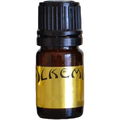
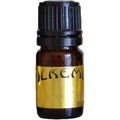
The scent is dominated by an overwhelming, dark smokiness, which is only briefly illuminated at the very beginning by fresh, ethereal flashes of conifer resins. These shine briefly and iridescently, accurately locating Ullr's home in cool forest thickets. But as one approaches the place itself, the increasingly dominant smoky note leaves hardly any other association than an open wood fire. A bit later, the smoke becomes increasingly aromatic and evokes thoughts of smoked ham, which seems quite plausible given the listed note of “smoked juniper tar.” So, a sort of Viking version of a gourmand note? Perhaps therein lies the faintest spark of irony. In any case, Ullr's palace is clearly a smoke chamber.
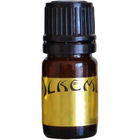
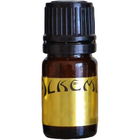
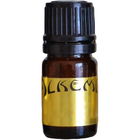
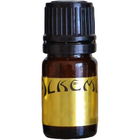
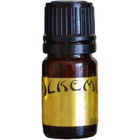
The focus on this authentic smoky note elevates the fragrance above any suspicion of being agreeable. The manufacturer's declared intention was to create a primal scent, and that has certainly been achieved. Was it really necessary to emphasize that the fossil amber used here is 35 million years old to support this claim? This superlative could certainly have been spared, especially since the amber base does not play a pronounced role. The consistent reduction is already remarkable enough, and anyone looking for an authentic smoke accord in a bottle will surely find it here.
If one did not want to settle for such simple primality but instead wanted to insist critically on classical criteria for fragrance development, one could complain that “Ydalir” does not express its different facets quite evenly, that the needle resinous top note fades too quickly, and that the moss and amber base never really becomes tangible. One might conclude that the whole is rather a successful but somewhat monothematic concept fragrance of an aromatic wood fire than actually a perfume. But that is already not insignificant and not bad in itself. In terms of its form, “Ydalir” is a fragrance oil made from purely natural raw materials; meadow foam oil was used as a carrier.
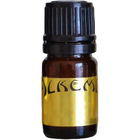
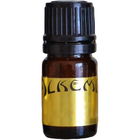
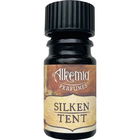
Since 2009, Sharra Lamoureaux has been launching fragrances on the market in almost inflationary fashion with her Alkemia label. Parfumo currently lists 586 (!) perfumes from the brand, including a whole series of quite authentic natural fragrances and original concept fragrances. Many creations, however, reveal their creator's penchant for the esoteric. Terms like “mysterious,” “magic,” “primal,” “ritual,” “ancient,” or “divination” are defining for the marketing prose, and there are tips on which fragrances match which zodiac signs. One must appreciate that. Otherwise, one can also selectively ignore it and focus on the scent itself.
For those who like to hear something while smelling, I recommend the Ride of the Valkyries in the recording by the Uri Caine Ensemble for better digestion.
Thanks to BeJot.
Ydalir. Here we find ourselves deep in Norse mythology. “Ýdalir is said to be where Ullr has / Built the hall” - so it is written in Grímnismâl, the song of Grímnir in the Edda. Ullr was a stepson of Thor and Ydalir his home. The name derives from the Old Icelandic word for yew valley and likely refers to the yew wood bows that Ullr, as the god of hunting, is associated with. The name is undoubtedly sonorous.
However, I had long had my issues with Norse mythology. Probably partly due to Wagner's overly Aryan arias and their pathos, and partly because of their ongoing appropriation by the right and far-right. But when one actually delves into the original sources, one finds a rather pleasant humor that is often dark and somewhat coarse, yet possesses archaic force.
“Ydalir” is also dark and somewhat coarse and has a force for which the attribute archaic is certainly not exaggerated. However, one cannot necessarily attest humor to this fragrance. There is nothing agreeable, nothing playful, not even any ambiguities.
The scent is dominated by an overwhelming, dark smokiness, which is only briefly illuminated at the very beginning by fresh, ethereal flashes of conifer resins. These shine briefly and iridescently, accurately locating Ullr's home in cool forest thickets. But as one approaches the place itself, the increasingly dominant smoky note leaves hardly any other association than an open wood fire. A bit later, the smoke becomes increasingly aromatic and evokes thoughts of smoked ham, which seems quite plausible given the listed note of “smoked juniper tar.” So, a sort of Viking version of a gourmand note? Perhaps therein lies the faintest spark of irony. In any case, Ullr's palace is clearly a smoke chamber.
The focus on this authentic smoky note elevates the fragrance above any suspicion of being agreeable. The manufacturer's declared intention was to create a primal scent, and that has certainly been achieved. Was it really necessary to emphasize that the fossil amber used here is 35 million years old to support this claim? This superlative could certainly have been spared, especially since the amber base does not play a pronounced role. The consistent reduction is already remarkable enough, and anyone looking for an authentic smoke accord in a bottle will surely find it here.
If one did not want to settle for such simple primality but instead wanted to insist critically on classical criteria for fragrance development, one could complain that “Ydalir” does not express its different facets quite evenly, that the needle resinous top note fades too quickly, and that the moss and amber base never really becomes tangible. One might conclude that the whole is rather a successful but somewhat monothematic concept fragrance of an aromatic wood fire than actually a perfume. But that is already not insignificant and not bad in itself. In terms of its form, “Ydalir” is a fragrance oil made from purely natural raw materials; meadow foam oil was used as a carrier.
Since 2009, Sharra Lamoureaux has been launching fragrances on the market in almost inflationary fashion with her Alkemia label. Parfumo currently lists 586 (!) perfumes from the brand, including a whole series of quite authentic natural fragrances and original concept fragrances. Many creations, however, reveal their creator's penchant for the esoteric. Terms like “mysterious,” “magic,” “primal,” “ritual,” “ancient,” or “divination” are defining for the marketing prose, and there are tips on which fragrances match which zodiac signs. One must appreciate that. Otherwise, one can also selectively ignore it and focus on the scent itself.
For those who like to hear something while smelling, I recommend the Ride of the Valkyries in the recording by the Uri Caine Ensemble for better digestion.
Thanks to BeJot.
9 Comments


 Katemorganb
 CharlAmbre
 Ergreifend
 Chizza
 Caligari
 PallasCC
 Cfr
Cfr