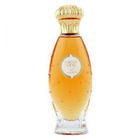
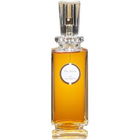
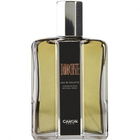
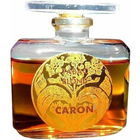
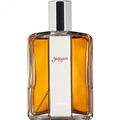
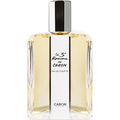
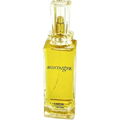
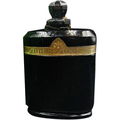
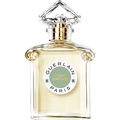
There is currently no comment on this fragrance, neither for the vintage version nor for the reissues as Eau de Parfum and Parfum in 2017.
Perhaps the Caron classics have indeed fallen somewhat out of fashion, and the low interest in these fragrances is also reflected on Parfumo.
In October 2018, the French cosmetics company Alès Groupe sold the Caron brand to Cattleya Finance, owned by the French family Benjamin and Ariane de Rothschild, after twenty years of investment, due to declining sales. This acquisition brings hopes for the preservation of the Caron heritage. Ariane de Rothschild is considered a long-time fan of the brand and is said to wear “Or et Noir,” a remarkably beautiful fragrance that to me smells like rose cream soap.
They parted ways with house perfumer William Fraysse, who had only taken over the position from his father in 2017, and hired Jean Jacques, who had previously worked for 22 years at the fragrance company Takasago, and for whom numerous fragrances are listed on Parfumo that he developed for various brands. On Fragrantica, there is a post mentioning that Ariane Rothschild does not want to limit herself to the role of a spectator but wants to form a duo with house perfumer Jean Jacques and implement her own ideas, just as the tandem of Ernest Daltroff and Félicie Wanpouille did in the history of the Caron house. (All information found on various internet sites)
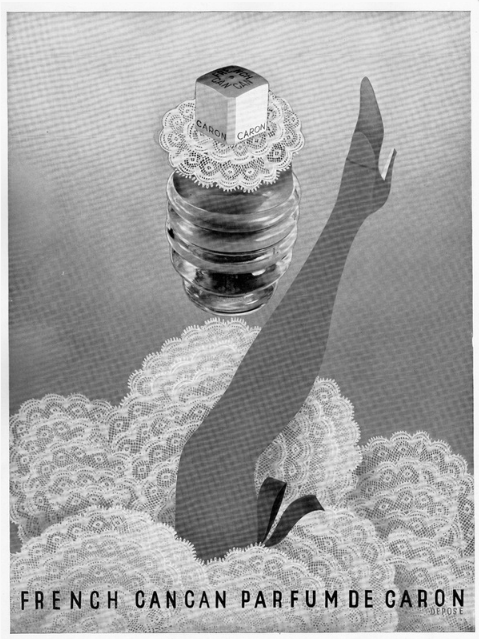
As of November 1, 2019, a number of Caron fragrances were discontinued, including French Cancan. Whether this is permanent or if there are plans to reissue the classics with improved formulations - I have not found any information on that.
At the same time, at the end of last year, the first four new perfumes by Jean Jacques were released, which can currently be found on the Caron Facebook page, but are not available for order. Currently, they can only be obtained in the Parisian Caron boutiques.
Goodness, this is going to be a long comment if the preamble is already so epic.
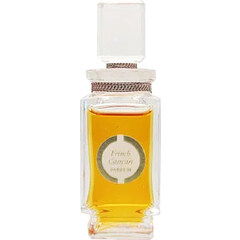
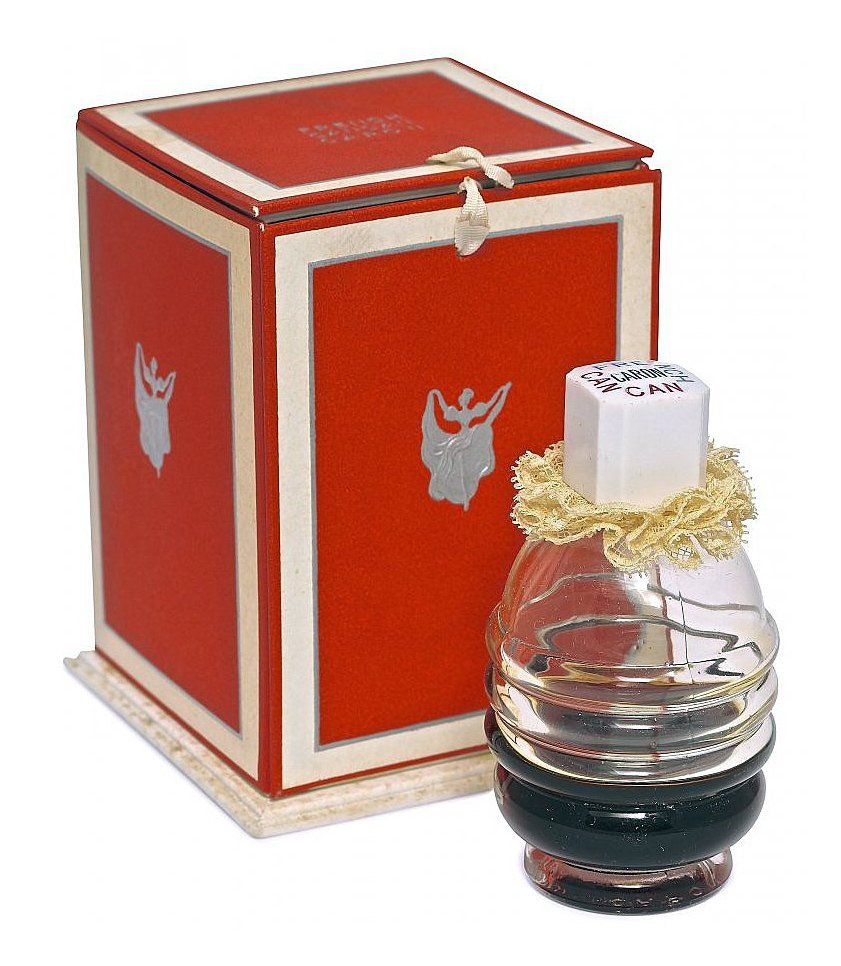
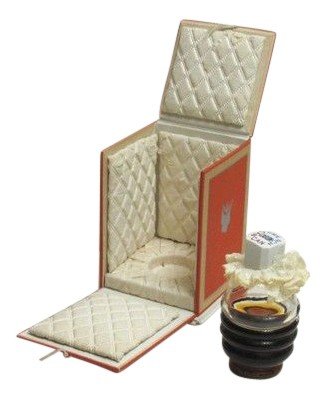
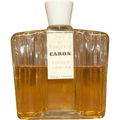
So let’s finally get to the fragrance itself, which I tested this time as a vintage version, although I do not know how old it is.
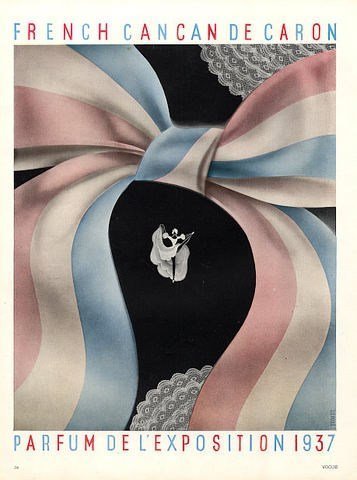
In any case, it is from before 2017. What that means, I cannot really say, as it is certainly not from 1936, and a reformulation of French Cancan is documented at least for 2011, and it is likely that it underwent further changes when it was released in the Collection Privée line in 2017. Whether the fragrance was continuously diluted on that occasion is also uncertain. The 2017 parfum version is on its way to me, so a direct comparison will soon be possible.
For me, French Cancan starts with a scent accord that vaguely reminds me of the drizzly mistiness of Louis Vuitton's “Orage,” only weaker, much softer, and more complex - and it evokes anticipation for the further development of the fragrance.
I primarily smell a triad of flowers, patchouli, and oakmoss. The latter is not particularly strong and only slightly green and bitter, which reinforces my belief that my vintage version is not ancient. And I have the impression that I perceive part of the wonderful base from “En Avion” relatively early on. As for the flowers, there is a violet that smells brighter than in En Avion, combined with an orange blossom or daffodil, which appears much more pleasing than in Narcisse Noir and is very subtle. Slightly herbaceous, but less strict and not at all indolic.
Despite the lack of hesperidic notes, I perceive French Cancan as a gentle chypre; I also believe I can detect the slight lemon accents that I definitely smell in “En Avion.”
A significant component of French Cancan is also the extremely soft, slightly smoky leather, which evokes memories of “Tabac Blond.” But even the leather is extremely subdued. French Cancan is a perfume that will surely appeal to fragrance lovers who do not usually like leather.
Otherwise, French Cancan is such a densely woven potpourri of various scent notes that I find it difficult to highlight individual ones. While "Tabac Blond" is a refined smoky leather fragrance, "Violette Précieuse" is a wonderful violet, and "Narcisse Noir" is a serious, strict orange blossom-daffodil scent, "French Cancan" and "En Avion" elude such categorization. They combine aspects from all three fragrances into a hard-to-describe drizzly, misty, leathery, ambered aroma.
The fragrance becomes increasingly powdery over time. When I compare it to “En Avion,” I find French Cancan brighter and lighter, while "En Avion" is richer, deeper, and darker. The characteristic Caron background noise of Mousse de Saxe and clove, combined with the special scent of sandalwood, gains presence in both fragrances over time. Even in the base, French Cancan is lighter than En Avion.



 Oakmoss
 Orange blossom
 Iris
Iris Patchouli
 Sandalwood
 Violet
 Amber
Amber Lilac
Lilac Lily of the valley
 Rose
Rose Jasmine




 Pluto
Pluto Melisse2