

 Carnation
 Leather
 Amber
Amber Vanilla
 Vetiver
 Iris
Iris


Marieposa
90 Reviews
Translated · Show original

Marieposa
Top Review
37
Gaslight Nights in Sepia
In the light of the gas lamp, my blurred shadow shatters on the cobblestones. The sounds of the day have long faded - the clattering of trams, mixed with the clip-clop of hooves and the occasional sputter of an engine. With my gaze directed at the night sky, I watch as the fog fluffs into tiny crystals. They settle on my forehead like delicate powder. A hint of my perfume rises from my warm coat, garden carnation, vanilla, and a suggestion of rough grasses. The bag in my hand is still brand new. Soft black leather. Matching the shoes with the small heel and the strap. I had to save for a long time for this. My hair is damp from dancing, and the night air coolly meets the run in my silk stockings. The long satin glove in my coat sleeve has slipped down a bit.
I wait for the sound of your footsteps on the empty street, but muffled by the distance, I can only hear an echo of the music, the voices, and the laughter as I slipped out the door, leaving nothing but a rosewood-colored lipstick mark on my whiskey glass. In my thoughts, you wrap your arm around my waist like that evening when we trudged through the snow, accompanied by the lights of the big city, nibbling on glazed chestnuts from the pretty box with the velvety bow.
Whether you will follow me, I do not know. But perhaps it doesn't matter at all. The moment belongs to me. The night is mine.
**
Wearing Tabac Blond always feels a bit like my own face looking back at me in sepia from an old family album - perhaps framed by a short water wave, as was fashionable in the 1920s, and with a restrained smile in the heavily made-up eyes that contradicts the serious lips.
Something about this scent is incredibly close to me, resonates with me so much, and yet it is not me, not my time, rather an illusion of a yesterday that probably never existed. And already images form in my mind of this woman in a flapper dress, who I could have been under different circumstances, at another time, and whose scent now accompanies me for a day.
When Ernest Daltroff composed Tabac Blond in extrait form for Caron in 1919, the house wanted to pay homage to "the new woman," characterized by emancipation and independence. Symbolically, for Caron and Tabac Blond, it represented "the smoking woman." A tribute, then, to women (and their daughters) who ensured that the social and economic system did not completely collapse during World War I and who had to support a whole generation of physically and emotionally scarred men after the war. It is no wonder, then, that these women fought for their right to vote, refused to let go of the opportunity for education and to pursue a career, and moved beyond the boundaries of conventional norms in their leisure activities - which also included smoking in public. Accordingly, it is just as ridiculous to reduce the type of the new woman of that time to smoking, drinking party girls as it is to assume that Tabac Blond is a simple tobacco scent.
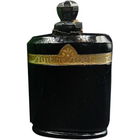
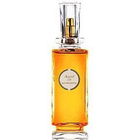
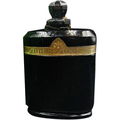
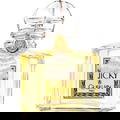
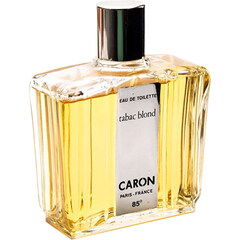
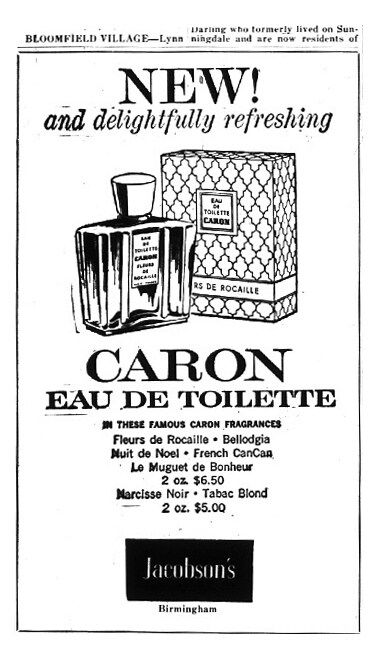
The Eau de Toilette is significantly younger than the extrait, and unfortunately, I do not know exactly from which decade my vintage bottle originates. It is a soft, powdery-floral leather scent, whose ambered foundation may have been inspired by Knize Ten Toilet Water (1925), while the velvety iris can already be found in Chanel's Cuir de Russie Parfum from 1924. However, the combination of leather and garden carnation is much more defining for Tabac Blond, which is more transparent and delicate in the EdT than in the other versions, allowing this unique blend of vanilla and smoky-nutty purring vetiver to shine through more strongly, which was in turn picked up and perfected by Molinard in "Habanita (1924) (Eau de Toilette) | Molinard." In Tabac Blond, it serves more as a link to transition to the Caronade, that typical dark-ambered, creamy base that smells a bit like glazed chestnuts and connects all the old Caron scents.
Although the EdT version is more delicate than its sisters, with the powdery-floral aspects standing out a bit more and leaving room for additional facets, the characteristic blend of creamy leather, nutty-mossy Caronade, and smoldering darkness that makes Tabac Blond so unique is still preserved here.
Dear Trollo, thank you so much for always generously sharing your vintage treasures with us, allowing me to experience this beauty.
I wait for the sound of your footsteps on the empty street, but muffled by the distance, I can only hear an echo of the music, the voices, and the laughter as I slipped out the door, leaving nothing but a rosewood-colored lipstick mark on my whiskey glass. In my thoughts, you wrap your arm around my waist like that evening when we trudged through the snow, accompanied by the lights of the big city, nibbling on glazed chestnuts from the pretty box with the velvety bow.
Whether you will follow me, I do not know. But perhaps it doesn't matter at all. The moment belongs to me. The night is mine.
**
Wearing Tabac Blond always feels a bit like my own face looking back at me in sepia from an old family album - perhaps framed by a short water wave, as was fashionable in the 1920s, and with a restrained smile in the heavily made-up eyes that contradicts the serious lips.
Something about this scent is incredibly close to me, resonates with me so much, and yet it is not me, not my time, rather an illusion of a yesterday that probably never existed. And already images form in my mind of this woman in a flapper dress, who I could have been under different circumstances, at another time, and whose scent now accompanies me for a day.
When Ernest Daltroff composed Tabac Blond in extrait form for Caron in 1919, the house wanted to pay homage to "the new woman," characterized by emancipation and independence. Symbolically, for Caron and Tabac Blond, it represented "the smoking woman." A tribute, then, to women (and their daughters) who ensured that the social and economic system did not completely collapse during World War I and who had to support a whole generation of physically and emotionally scarred men after the war. It is no wonder, then, that these women fought for their right to vote, refused to let go of the opportunity for education and to pursue a career, and moved beyond the boundaries of conventional norms in their leisure activities - which also included smoking in public. Accordingly, it is just as ridiculous to reduce the type of the new woman of that time to smoking, drinking party girls as it is to assume that Tabac Blond is a simple tobacco scent.
The Eau de Toilette is significantly younger than the extrait, and unfortunately, I do not know exactly from which decade my vintage bottle originates. It is a soft, powdery-floral leather scent, whose ambered foundation may have been inspired by Knize Ten Toilet Water (1925), while the velvety iris can already be found in Chanel's Cuir de Russie Parfum from 1924. However, the combination of leather and garden carnation is much more defining for Tabac Blond, which is more transparent and delicate in the EdT than in the other versions, allowing this unique blend of vanilla and smoky-nutty purring vetiver to shine through more strongly, which was in turn picked up and perfected by Molinard in "Habanita (1924) (Eau de Toilette) | Molinard." In Tabac Blond, it serves more as a link to transition to the Caronade, that typical dark-ambered, creamy base that smells a bit like glazed chestnuts and connects all the old Caron scents.
Although the EdT version is more delicate than its sisters, with the powdery-floral aspects standing out a bit more and leaving room for additional facets, the characteristic blend of creamy leather, nutty-mossy Caronade, and smoldering darkness that makes Tabac Blond so unique is still preserved here.
Dear Trollo, thank you so much for always generously sharing your vintage treasures with us, allowing me to experience this beauty.
31 Comments
 Kankuro
 Floyd
Floyd Trollo