When I was about ten years old, I found many books from the 19th century to around the 1930s in an old large glass-fronted bookcase. This treasure trove contained numerous children's and youth books, especially for girls. There were also works by Th. Storm, Novalis, E. T. A. Hoffmann, and other romantics, many fairy tale books, especially art fairy tales by Hauff, Storm, and many more. I read all the books without exception, and several times. Many were printed in Fraktur, the language was more elaborate and "old-fashioned," but I quickly learned and no longer noticed it. Not only was there a complete edition of "Nesthäkchen," a precursor to "Hanni und Nanni," but also a series of complete editions with books by the Swiss author Johanna Spyri. Today, she is mostly known through film and television for the kitschy and exaggerated version of her book about "Heidi."
However, Johanna Spyri wrote very moving, socially critical books about children's fates in the 19th century, especially about girls from the lower classes of that time, which includes not only Heidi but also the unforgettable book "Das Rosenresli."
It is about a girl who feels she has to pick rose petals every day due to her poverty because her mother has become too ill to do so, and the family thus has no income. The owners of a rose plantation exploit the undernourished and far too thinly dressed child for this work. They pay her miserably and treat the little girl ruthlessly harshly because she cannot produce the picking output of an adult woman. Child labor was common not only in the UK at that time but also in Switzerland, as everywhere in Europe.
No, these books are by no means sentimental; the harshness, especially against the children, is described unflinchingly. Not quite as drastically as Charles Dickens; the books were written for children.
However, the scent of rose petals, which I could very rarely smell back then, and our class teacher, an enthusiastic rose lover and breeder, who shared his hobby with us at every opportunity (he extensively educated us about grafting and budding as well as about rose varieties, preferably during art classes, so I still know how it works) made me swoon for roses back then. Rose soap was the ultimate for me.
How I froze with the Rosenresli, felt the thorn-scratched hands, felt her cold little hands when she had to pick the roses very early in the morning. And I imagined the rising scent of the rose petals from the picking basket.
Why I loved roses from then on, I cannot explain; the novella could have had the opposite effect.
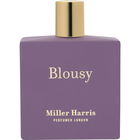
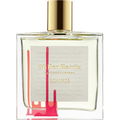
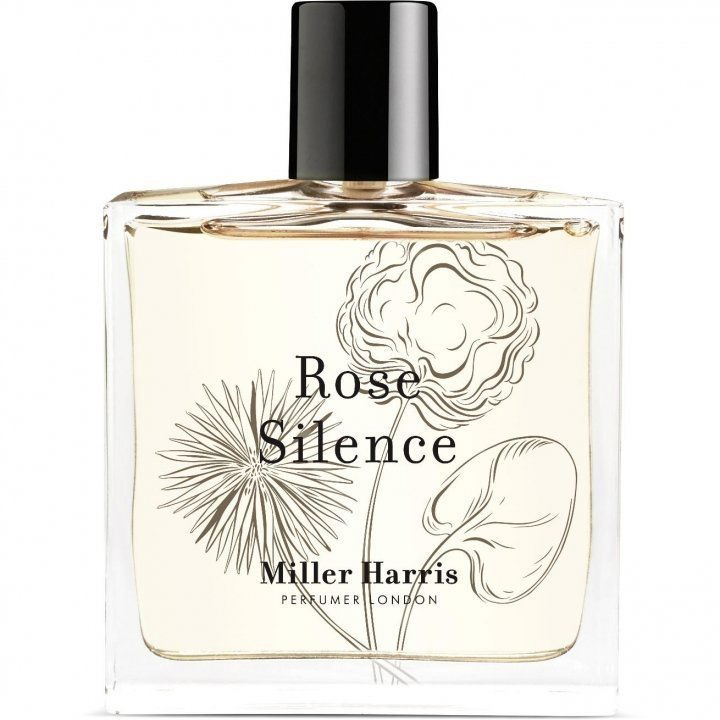
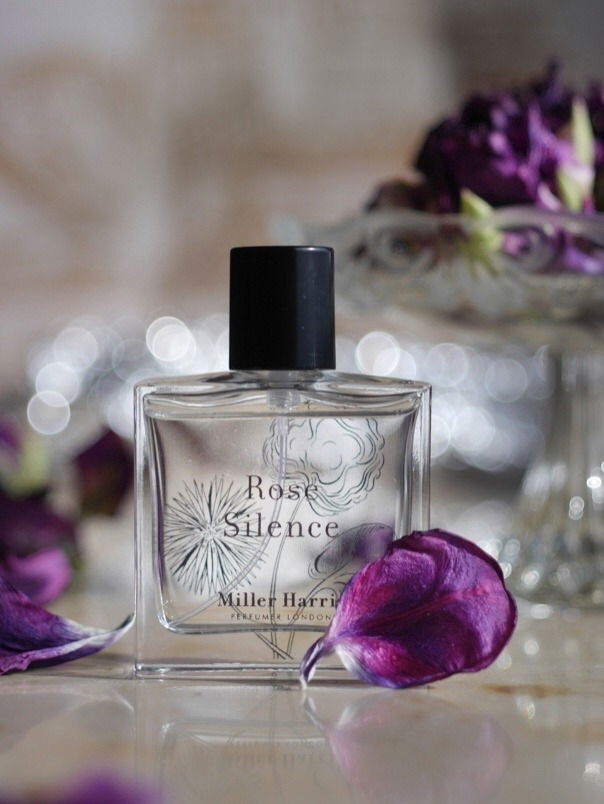
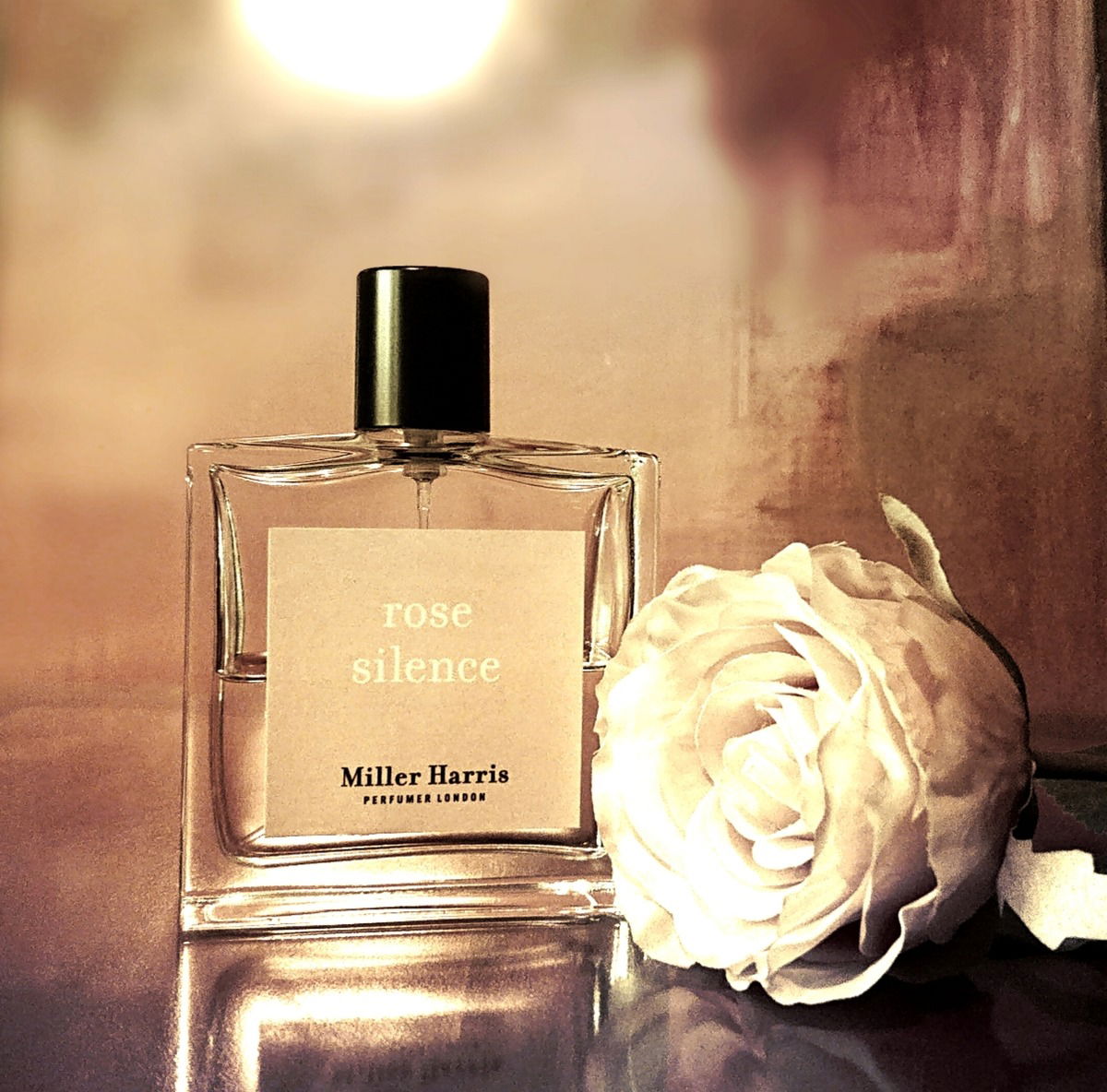
But even back then, I found many rose soaps smelled more like soap and not like real roses - to connect this to the scent "Rose Silence" by Miller Harris.
I was always searching for the true rose scent. I later bought rose oils, rose fragrances.
However, that changed; I realized that the scent of fresh rose petals is always different from that of processed roses in fragrances, soaps. And the scent of dried rose petals never smells like blooming roses. Moreover, each rose variety smells different; a rose is not just a rose.
By now, my love for rose scents has faded significantly, a faded love reminding me of certain events from childhood.
As a perfume lover, I am also not a rose scent enthusiast and therefore very selective. Additionally, I have developed other scent preferences. However, one or two rose-dominated fragrances are part of my complete perfume collection.
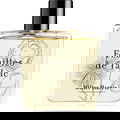
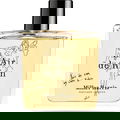
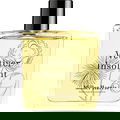
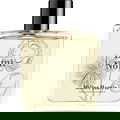
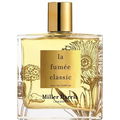
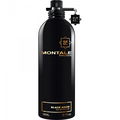
So I received this opulent and top-quality rose scent "Rose Silence" as a surprise gift.
As we know, the so-called monofloral fragrances are always blended with other ingredients to create a lasting, nearly authentic scent of the single flower.
And I particularly prefer rose scents that are composed with woods, oud, incense, and patchouli, yes, even with oak moss; a little musk brightens a rose scent.
This is also the case with "Rose Silence," starting with the dry down. Towards the end of a long-lasting wear, I perceive a delicate, very subtle musk creaminess.
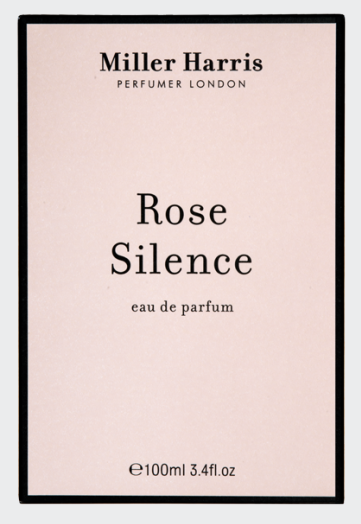
"Rose Silence" starts with a tart note listed here as black currant. However, when I inspected the box and read the ingredients listed there, required by the EU, especially the allergens, citral is also listed. This explains the rather strict top note scent.
I will not explain the other chemical components listed there.
I will stick to the pyramid because it states how "Rose Silence" is supposed to smell.
After the bitter-fruity start, a lush, radiant modern, almost dazzling rose with a citrus peel oil undertone appears.
Thus, "Rose Silence" remains almost unchanged strong for me for many hours. Very slowly, "Rose Silence" becomes softer; I wait for the listed patchouli along with the mentioned musk.
However, to my quiet disappointment, I do not smell any patchouli.
Instead, what I find in many other fragrances in the base as patchouli, which I cannot identify as such. Rather, something that I perceive as synthetic patchouli; something is missing. As if the patchouli has been stripped of some of its typical scent compounds so that those who do not like patchouli do not perceive it as much.
This "castrated" patchouli note does not spoil "Rose Silence"; it only tames what might otherwise be too lush a rose scent for me. Thus, "Rose Silence" is particularly pleasant for me because no dominant synthetic sweetness becomes annoyingly intrusive at any point.
This reminds me of "Hippie Rose" by Heeley. That is also a strong rose scent. But in contrast to "Rose Silence," it is a cool scent despite the incense and distinctly perceptible patchouli.
Or "Coup de Foudre" by DelRae with its subtle rose note and as an antagonist a very beautiful aromatic oak moss that even excites me as an oak moss enthusiast.
In contrast, the once beloved "White Rose" by Floris lacks just such an antagonist; it has very little longevity and is contourless against "Rose Silence," or more kindly: a filigree white rose.
I cannot add anything further about "Rose Silence." It stands out within a maximum of five minutes and then blooms in full flaming rose. "Rose Silence" is a great rose scent that should delight rose scent enthusiasts.
In my opinion, "Rose Silence" represents the claim of the rose to be the queen among flowers.
"Rose Silence" is also a quality scent. Personally, I miss a perceivable bright and warm, distinct patchouli, as "promised" in the pyramid.
Could men wear this nowadays? Why not. A J. W. von Goethe would have had no problem with it, as he loved to wear rose scents.
Updated on 04/01/2020



 Top Notes
  Blackcurrant
 Mandarin orange
 Heart Notes
  Damask rose absolute
 Base Notes
  Kashmiri musk
 Sandalwood
 Patchouli







 itscoraline
 Pluto
Pluto Parma
Parma NiMaJazzEr
 Gold
Gold SaGa
SaGa MlleJeanne
 Baneling
 Clarissa
 MadameLegras