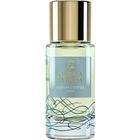
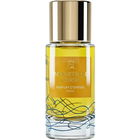
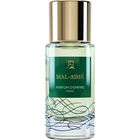
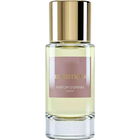
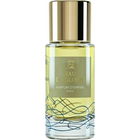
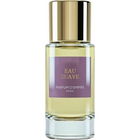
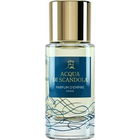
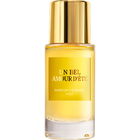
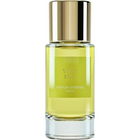
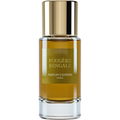
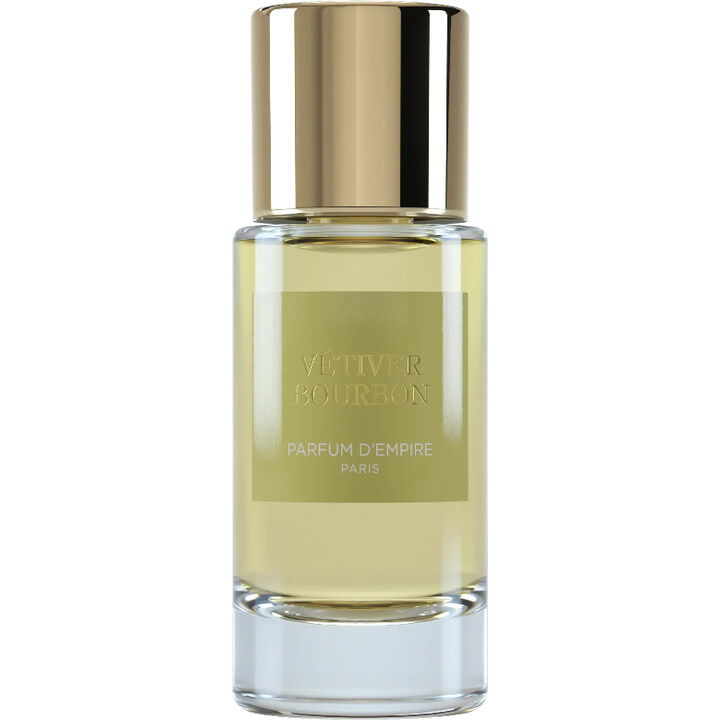
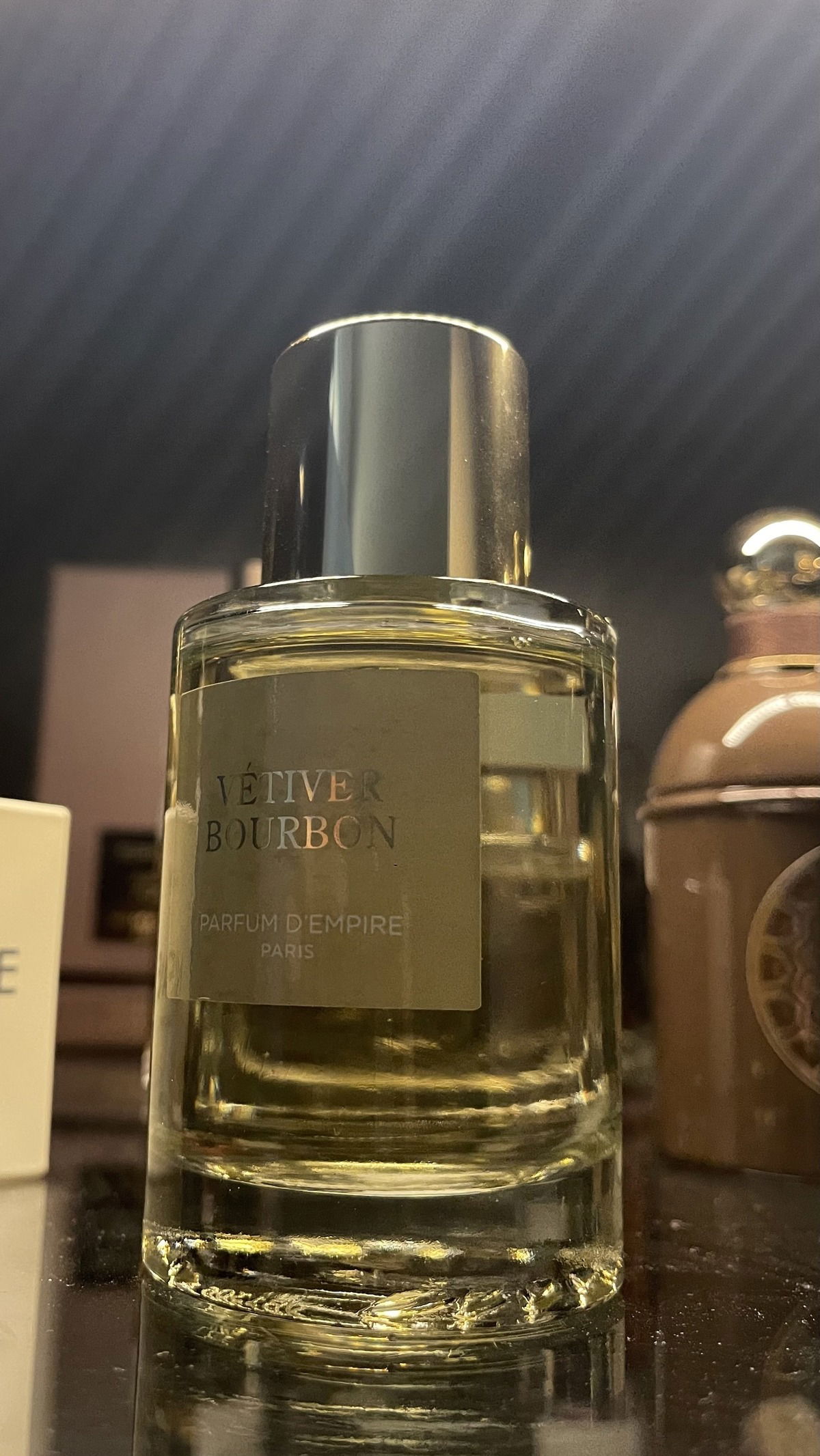
That Parfum d'Empire took almost 20 years to release a Vétiver fragrance is already a special starting point. A 'proper Vétiver' has long been part of the canon in the modus operandi of niche perfumery, see L'Artisan Parfumeur (1978), Annick Goutal (1985), Maître Parfumeur et Gantier (1988) - and so it has been again with the increasing appearance of Vétivers since the early 2000s - there seems to be no way around a Vétiver.
So much for the outset - Vétiver Bourbon is a 'mature' Vétiver, and that is apparently what Marc-Antoine Corticchiato aimed for, a Vétiver with the sympathetic intention of unleashing it from overly bourgeois-civilized manners "(…) unshackles it from its overly civilised manners to restore its native elegance" - as the author puts it. Indeed, since Carven, Givenchy, and Guerlain established Vétiver as a fixed star in the (men's) perfume firmament in the mid-20th century, this plant carries with it a sense of bourgeois civility alongside all the exoticism of its growing regions. Originally from India, it was introduced in the second half of the 18th century via Mauritius to La Réunion (formerly Île Bourbon). Since the 1930s, production locations gradually shifted to Haiti, or in the other direction to Indonesia. Globalization in the making. Like so many of the central components of perfumery, the history of these ingredients is also closely tied to colonial pasts - a complex topic that is rarely addressed critically, or is more or less sidelined.
Of course, many Vétiver fragrances still orient themselves according to the blueprints of Guerlain, Givenchy & Co, but there have always been attempts to highlight the internal complexity of the Vétiver root. Some of the aforementioned Vétivers have certainly paved these paths or at least stepped into them. Vétiver distillates are also often regarded by experienced perfumers as already self-contained micro-compositions - as recently noted by Isabelle Doyen. The perfumer may have signed her Turtle Vetiver series and specifically Turtle Vetiver Exercise 1 (2009) with one of the highest measured Vétiver contents to date at 90%. And fragrances like Vitrum (2012), Vêtu de Vert (2020) but also those from the small label N•O•A•M, with Bois Verna (2022): for some time now, there have been fascinating endeavors to break free from the shackles of urban Vétiver geography. Vétiver and exoticism, or perhaps better Otherness, could also be traced back many years, appearing in the French context already in the first volume of Proust's Recherche, a moment when the still youthful protagonist comments on the strange scent of Vétiver roots.
*
But what are Corticchiato's keys to deciphering the raw charm of Vétiver? Those who have taken a closer look at the perfumer's earlier works will not be surprised that a high-quality distillate is also used here. 'Parfum-matière' or 'materials-driven', as Parfum d'Empire calls this care for good stuff. The central ingredient is already indicated in the title, Vétiver Bourbon, that from La Réunion, a back to the roots in French Vétiver cultivation. However, it does not come directly from Réunion; the perfumer, together with his Corsican compatriot Lucien Acquarone, cultivated plants from the island on the neighboring Madagascar. Acquarone was posthumously honored last year with Mal Aime (2021), and absolutes used in the Heritage Corse releases Immortelle Corse and Aqua di Scandola (both 2019), as well as in Helios di Corsica (2018), likely come from the distilleries of the Acquarone family. The decision to produce custom ingredients directly and exclusively can be read as a response to the use of captives by large fragrance manufacturers like IFF, Symrise, or Givaudan - which are usually exclusively available to in-house perfumers and orders, but it also resonates in the other direction of the spectrum: the tinctures and small-batch absolutes of the homegrown and botanical scene.
Vétiver Bourbon unfolds like a conceptual monochromatic menu with careful spirit pairing: thematically, the green thread remains the Vétiver at all times, yet in well-timed intervals, Vétiver Bourbon negotiates a palette of greenish shades.
The opening is indeed sparkling, lively, spirited, and thankfully avoids any citrus notes that so many classic Vétivers start with. It is ambrette seeds that make the start of the perfume appear crisp and effervescent. The ingredient, which was already the focus in Le Cri de la Lumière (2017), first came to my attention in this snap-like way in the Eau de Toilette version of Chanel No. 18 (2007); Corticchiato also used this effect in Corsica Furiosa (2014) and later in Salute! (2019) in quite different flavor profiles. The combination with Vétiver, which also prominently describes the opening, is unique - and a clever move, as it navigates around bergamot or grapefruit, probably the most popular pairings with Vétiver for years. The duo of Ambrette / Vétiver also reminds me of the aforementioned and long-discontinued Vétiver Eau de Toilette by Annick Goutal, where a iodine-like maritime note controls the modulation.
Gradually, the ambrette note is replaced by cloves, which - here the societal reins come into play again - are very well paired, a precisely timed progression, the Vétiver remains in the foreground but gradually gains depth and terroir thanks to the clove modulation. The perceived volume now resembles that of Mal Aime, but aside from the obvious overlaps of 'green' and 'plant-like', there are no overlaps. Although significantly darker, I must think of the Vétiver note in Sel de Vétiver (2006), which is heavily influenced by lovage. In this middle section, Vétiver Bourbon is unabashedly Vétiver at its best! Timeless and trend-free, but somehow also anachronistic, unrefined, a bit raw. Iris-like notes eventually cloud the profile in the base, sweet notes join in, in minimal amounts, preparing the fragrance for a balsamic, very soft finish that rounds off and completes the green facets once more.
Thus, Vétiver Bourbon excellently complements a territory that has developed over decades. It modulates and unites the spectra that various Vétivers like to claim for themselves. In its progression, the combination of Ambrette + Vétiver offers a novelty. Even though Bourbon Vétiver has been used in numerous older, non-Vétiver fragrances and thus likely also in early batches at Guerlain and Givenchy - the Vétiver fragrances that first mentioned it by name were probably Route du Vétiver and Etro's famous Vétiver Eau de Cologne (1989). Miller Harris consciously relied on the ingredient in the mid-2000s with the formerly similarly named Vétiver Bourbon (2005), and recently Hugo Lambert achieved an impressively balanced commentary with Vetiver Royal Bourbon (2014). But, in the spirit of biodiversity, new and nuanced interpretations are highly welcome.



 La Réunion vetiver
 Angelica root
 Ambrette seed
 Orris root
 Madagascan clove






 Finerthings8
 BamBamNYC
 OceanCliffs
 MaxumusIIV
 Palmha
 GingerThumbs
 Erswan
 Holscentbar
 AlexD76
 Metaphysical