Uncommented Scents No. 111 (for New Year's Eve)
The quote in the title comes from the final scene of the film "Die Feuerzangenbowle" with Heinz Rühmann from the penultimate year of that murderous war instigated by Nazi Germany. Apart from rather marginal concessions by Heinz Rühmann, who produced the film himself, "Die Feuerzangenbowle" is a partly even verbatim rendition of the novel by Heinrich Spoerl from 1933. A significant reminiscence of Nazi ideology is perhaps primarily the character of the head teacher Dr. Brett, who was not present in the novel, whose sharp figure and discipline-oriented pedagogical principles strongly contrast with the humanistic ideals of the other teachers, and yet because of this and due to the telling name ("Brett") could occasionally be understood as (subtle) criticism of the system. After all, the fascist censorship actually wanted to stop the film, and it was only after Rühmann's personal intervention that the screening was finally allowed. One need not gloss over Rühmann's occasional collaboration with the Nazi authorities; what remains, however, is a German cult film whose currency is not only fascist ideology but also humanism and, well, escapism (such a justified accusation against a film in the last year of the war).
When I watched the film again on Christmas Eve (and for the first time with our youngest daughter), I particularly noticed the last sentence of the writer Pfeiffer (Heinz Rühmann's / Heinrich Spoerl's), which the whole film is essentially leading up to: "Only the memories we carry with us, the dreams we weave, and the longings that drive us are true." And he adds: "With that, we want to be content." Of course, one can also read this sentence in the sense of a desired escapism in the last year of the war, but it can also be understood in the sense of a very general Platonic philosophy and thus (in short) as the precedence of ideal content over materialistic values. What is more accurate: escapism or Platonism (yes, I know, that would need to be defined more precisely), everyone must decide for themselves (caution: I will not discuss this in the reply section of my comment, as I am convinced that there will be no right or wrong here).
The sentence seemed to me an accurate summary of what has already been frequently discussed in blogs and forums as the "associative power of scents." Rightly so! Scents evoke in us more than just the feeling of pleasant fragrance; they also evoke memories, longings, and dreams: fathers and mothers, friends and companions, situations from childhood and youth that suddenly feel "there" again and thus almost present. This has been explored more than enough.
Such figments of the imagination may be strongest when we stand at a crossroads. Perhaps that is why this film and this last sentence of the film have become significant to me at the end of the year.
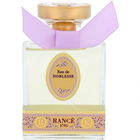
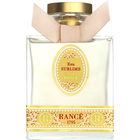
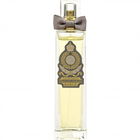
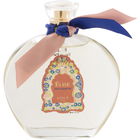
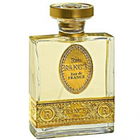
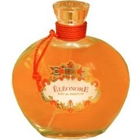
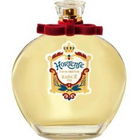
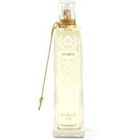
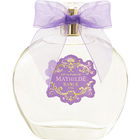
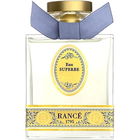
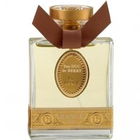
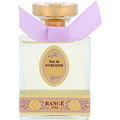
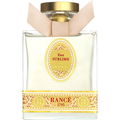
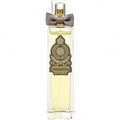
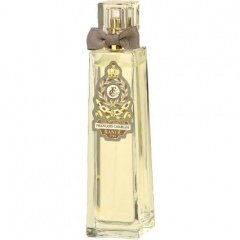
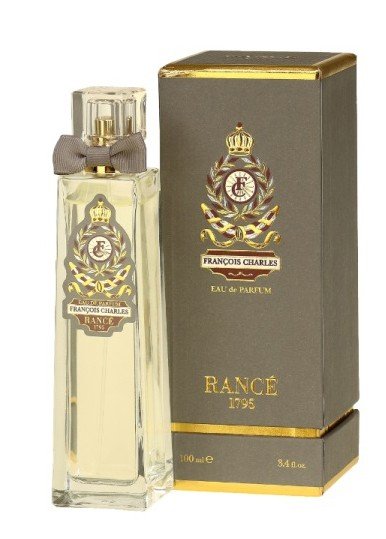
Particularly fitting for this turning point, which a change of year always represents, is a scent that wants to be a part of history itself: a scent that can tell a bit of its own story. "Rancé 1795 Francois Charles" was allegedly originally composed for Franz Karl Bonaparte (Francois Charles Bonaparte, Duke of Reichstadt), the son of the French emperor and military leader Napoleon Bonaparte. However, he did not have much time for a scent to be dedicated to him, as he died at the age of 21 in 1832 in Austrian exile at Schönbrunn Palace in Vienna from a lung disease. It should be noted that the taste for scents in the early 19th century was different from today, that no aromatic chemical means were available, and that one relied on classical perfumery; in short, the scent today likely has as much in common with the one from back then as a hybrid car does with a horse-drawn carriage. But that doesn't matter! The story is already quite nice. Rancé is, by the way, the former court manufactory of the French imperial court under Napoleon, for whom the manufacturer composed several scents that are still included by name in the program and which have certainly all been completely reformulated. There we have it again: memories, dreams, longings. The stuff that scent (actually) is made of. Thus, it ultimately doesn't matter whether Francois Charles smelled completely different around 1830 than in 2016 or 2008 (as there is another version listed here; see below). The scent evokes associations, the brand has character and stands on the pedestal of its own history: beautiful. That is enough for me for now.
The situation is a bit more complicated with the more recent history: At Parfumo, it was thought necessary to list a 2008 and a 2016 version of the scent, which I don't quite agree with, but it is admittedly difficult to draw a definitive line behind a reformulation. In other words: Why is Eau Sauvage EdT currently only listed in one version (namely the one from 1966), even though everyone knows that there have been several reformulations that changed, ruined, and somewhat restored the scent, while Rancé Francois Charles is listed in two versions (2008 / 2016), although both scents have nothing to do with the original version (which no one knows anymore and of which only a company fairy tale is reported), but which apparently differ more in accents (I have both versions)?
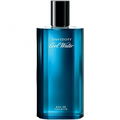
All in all, both scents (from 2008 and 2016) have a somewhat embarrassing, intrusive relative from a precarious background, who has nothing to do with imperial sons, military leaders, and dukes; a certain blue sailor who wears tight pants and a bare torso: Le Male. While Le Male makes a loud statement with tonka, vanilla, and neroli, the imperial offspring presents itself significantly more discreetly, more distinguished, more elegant, without a penetrating cloud of tonka and orange blossom, in other words, without the characteristic Francis Kurkdjian DNA. One might regret this if one prefers louder scents, but one can also find it quite good if one prefers subtle scents. The top note lingers longer, is very complex and yet classic in the sense of an eau de cologne, leading to a woody base where the tonka note is already somewhat recognizable but is better integrated by numerous other components.
It seems to me that it is the principle of Rancé to create classically discreet or classically discreet variants of well-known scents (see also Heroique to Aventus).
So, if you want to take it a bit quieter on New Year's Eve, since it is already loud enough outside, you might want to turn to this extremely elegant scent, which could go very well with a vegetarian fondue, the renunciation of fireworks, a generous donation, elegant attire, and a bit of reflection. Mind you: One could! This is just one of 99,000 possibilities from our database (sic!).
Wishing you a wonderful New Year's Eve and a good New Year's morning,
Yatagan



 Top Notes
  Melon
Melon Ginger
 Bitter orange
 Cardamom
 Lemon
Lemon Mandarin orange
 Aniseed
 Apple
Apple Bergamot
 Cinnamon
 Grapefruit
 Pineapple
 Pink pepper
 Heart Notes
  Clary sage
 Lavender
 Jasmine
 Orange blossom
 Rose
Rose Base Notes
  White musk
 Amber
Amber Caramel
 Cedarwood
 Chocolate
 Ebony
Ebony Iris
Iris Patchouli
 Raspberry
 Sandalwood
 Vanilla
 Vetiver



 Yatagan
 Stanze
 Remmus
 Athos
Athos SirOriental
 Gerdi
Gerdi MrNiceGuy