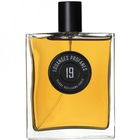
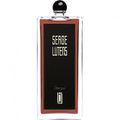
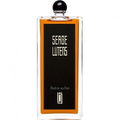
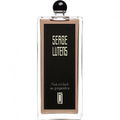
I was initially irritated. What is this? Very unusual. What I could hold on to: The color of the fragrance is yellowish, earthy, ochre, perhaps brown. Like honey, like curry, like a sluggish river carrying earth with it, like a dusty track through cleared tropical forest. Otherwise: Quite a bit of sweetness, spicy and resinous. Almost no freshness. Is the fragrance therefore sleepy, sluggish, heavy? Moreover, it is (strangely enough) not soft and warm enough, and above all, it has a certain restlessness, even nervousness, which may stem from an intriguing scent note. I cannot identify it at first; all I can think of is: “unpleasantly organic.” The nose beside me also detects a certain smokiness.
I apparently expected something different. What? Anyone who has ever been to Indochina, this fairy-tale beautiful part of the world, bordered by the ocean in the east and south and by the great empires of China and India in the north and west, brings their own scent expectations: Flowers, countless, lush flowers (such as frangipani and lotus, the national flowers of Thailand and Vietnam). Coffee, because Indochina is not only a coffee-growing region but also a stronghold of coffee drinkers. Rice, of course, the ubiquitous rice. Fresh fruits and vegetables: bananas, papaya, civet, bamboo, coconut, sweet potatoes, water spinach. None of that, absolutely none, in this perfume. Then the heat, the overwhelming, often humid heat. Little of that is felt in "Indochine": A certain slightly oppressive humidity perhaps, but no heat; equally, there is no cooling freshness that one would counterpose to the tropical heat, like a cool citrus scent fits the Mediterranean summer. Instead, this spicy sweetness, almost somewhat warming, reminiscent from afar of honey cake, of spiced tea with milk (which is not drunk in Indochina). Does this mean “theme missed”?
So let’s take a look at the fragrance pyramid: Siam benzoin in the base note, likely responsible for the spicy and smoky aspects of the scent. A resin used in incense that comes from Thailand. Geographically fitting and, yes, perhaps also from the scent memories, when we think of the tens of thousands of temples that dot all of Indochina, where devout Buddhists constantly offer incense. The heart note: Laotian honey, nice, yes. On the other hand, is honey particularly special for Laos? Thanaka wood, the raw material from which, finely ground, the paste is derived that is typically applied by Burmese women as makeup and sun protection. Very special for Myanmar, indeed, but who gets so close to a Burmese woman that they even know the scent of this paste? In the top note Cambodian pepper (pepper is everywhere today, nothing specific then) and Sri Lankan cardamom: Cardamom is not a spice typical for Indochina, and Sri Lanka is far from Indochina, although there are religious connections through Theravada Buddhism. Did the perfumers here simply throw in an ingredient from each country mechanically, without really telling a story, and even partly got the geography wrong? The suspicion is strong.
The riddle is solved when we consider that “Indochine” is a French fragrance. "Indochina" has a special meaning for France: “French Indochina,” consisting of Vietnam, Laos, and Cambodia, thus "Greater Indochina" without the (always independent) Siam (Thailand) and the (formerly British) Myanmar, was once the jewel of the French colonial empire. It stands for charming towns where Southeast Asian flair combines most advantageously with the ambiance of French provincial towns (as can still be observed today in Vientiane) and for vast, exotic, uncharted lands. It also represents a colonial past that is not as traumatic here (despite the bloody Indochina War in the 50s) as the topic of “Algeria,” but rather with melancholy. The melancholy in the face of the sluggishly flowing Mekong, the rural Asian slowness, the enchanting beauty of the daughters of the land, the melancholy also in light of the never-resolved tension between (perhaps sincere) promises of development and (partly brutal) colonial exploitation, the melancholy of loss and farewell, and perhaps also the melancholy about what this paradise and dreamland had to endure after independence in terms of terrible suffering.
Considering this, one understands the fragrance, and then one can begin to love it. It does not even attempt to recreate the “real” scent in the street kitchens of Saigon or at the farmers' markets of Northern Thailand. It stands for warm, lush beauty, colonial slowness, and deep sadness at the same time: “Indochine, mon amour.”
As for the strange (relative) “coolness” of the fragrance, it should be noted that it is not always oppressively hot in Indochina. In certain seasons and in certain areas, especially in the highlands, it can also become quite cool at night. “Quite cool” can already mean 18 degrees, as the houses have no heating and people, if they are poor, have no other outerwear than T-shirts. And during the rainy season, there is a pervasive humidity that can make one shiver even in slight coolness.
And my personal scent riddle has also been solved: The “unpleasantly organic note” from the beginning of the fragrance development: That is how a pair of good leather shoes once smelled to me after they had gotten damp and had not dried properly. The entire sole leather had to be replaced because it had spoiled. This experience I had (in Germany) fits eerily well with the “colonial theme,” because that is surely also what happened with some expensive pair of Parisian shoes in Saigon or Luang Prabang. It was certainly not the perfumers' intention, but it fits the picture of a rainy afternoon on the Mekong.
So far, I have only described my first impression of the fragrance. What happens next? After about two to three hours, the “spoiled leather” has completely disappeared, or more precisely, it has harmoniously blended with the other components. The nervousness of the beginning has dissolved, has come to rest. For a few more hours, a gentle and calm spiciness remains, now very close to the skin, with a tamed sweetness and slightly bitter notes. Still very unusual and somewhat mysterious, but now beautiful and almost pleasing. The smokiness in the background remains until the fragrance finally fades away, or rather, merges with the scent of one’s own body. The harmony is restored, but we know that it remains fragile.
I have learned to love the fragrance, and if a dear person were to gift me a bottle of it, I would keep it like a trophy and use the contents on special days, perhaps just for myself. Whether I would buy it for myself and whether it can be worn well “out there” is another question.

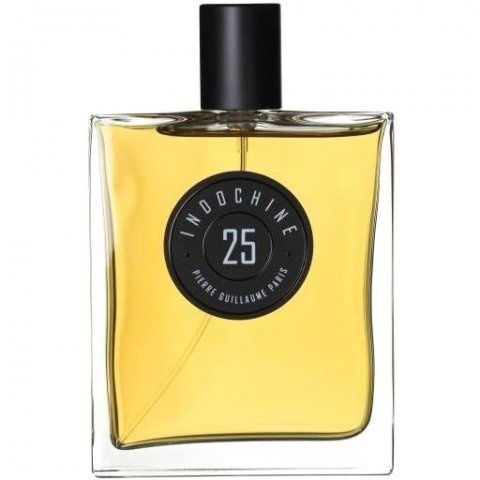


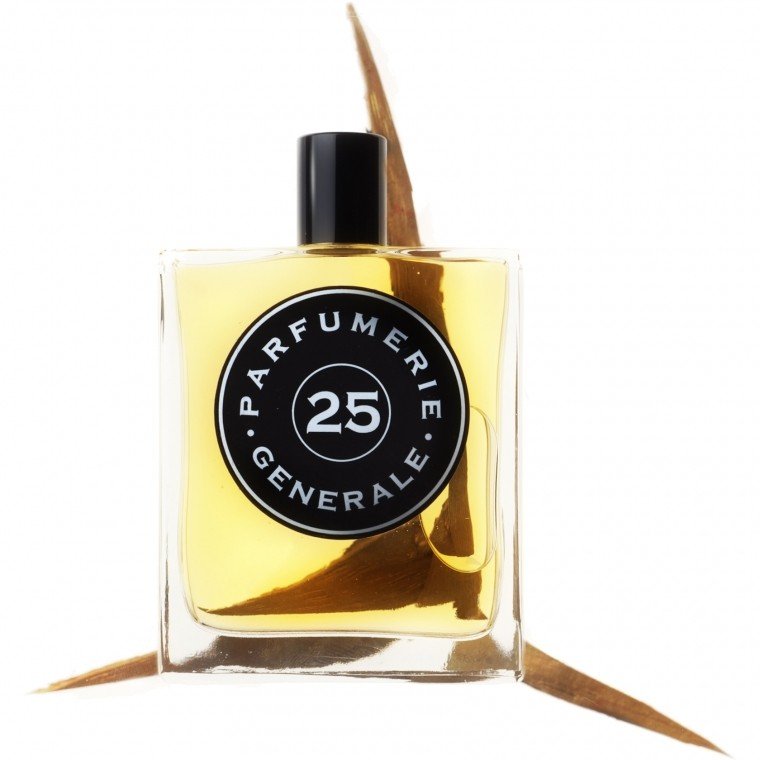
 Top Notes
  Sri Lankan cardamom
 Cambodian pepper
 Heart Notes
  Laotian honey
 Thanaka wood
 Base Notes
  Siam benzoin









 Schalkerin
 Luwa
Luwa Verbena
 FvSpee
 Leloup
 UntermWert
 SchatzSucher
 Gold
Gold Pollita
 Tabla
Tabla