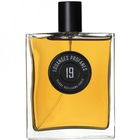


 Top Notes
  Citrus fruits
 Heart Notes
  Liatris spicata
 Sage
Sage Spices
 Base Notes
  Sandarac
09/26/2025

Intersport
117 Reviews
Translated · Show original

Intersport
Top Review
21
Citrus Rex ?! …Pierre's Fantasy
A good portion of my fragrances comes from times when scent notes were communicated or discussed far less publicly than in the last 25 years. Of course, there were also corresponding indications in the 80s and 90s that served as sales and orientation aids, and of course there were salespeople who engaged with the respective scent profiles. However, the actual classification was still somewhat closer to the image of the brands: Those who were happy with a Guerlain scent likely reached for Guerlain again; the same was true for the other major houses. Additionally, there was the influence of often elaborate print and film advertising.
With the increasing practice of listing scent notes in detail, or suggesting them, or condensing them into a few buzzwords [cf. my text on Ellena's Équipage Géranium (2015)], the so-called fantasy notes became more and more fashionable. The fantasy note as a unique selling point of a fragrance. An early, interesting example of this was Odeur 53 (1998) by Comme des Garçons, which ignored the mention of all previously common natural ingredients and note names.
If you take a closer look at Pierre Guillaume's releases, a pattern emerges: In recent years, Guillaume has increasingly relied on fantasy notes and exotic-sounding, rarely heard ingredients: mostly mere metaphors that perhaps claim more than they are actually perceivable. For instance, with the just announced Volupté Noire (2025): Wolf's milk honey… an excerpt from Guillaume's collection:
Albizia blossom, Ambery rum, Animalic sandalwood, Ardent spices, Ashanti pepper leaves, Assam moss, Buddleia (butterfly tree), Chevrone, Chocolate flower, Cinchona bark, Coffee Santos, Coffee wood, Gaiac milk accord, Indian hemp, Ivy leaf, Jurema flower, Liquorice wood, Magnolia mirabilis, Mojito strawberry, Okoumé, Pacific algae, Pineapple leaves, Red sandalwood, Rocky beach accord, Sea lavender, Sea sprays, Seringat (mock orange), Tanakha, Uganda vanilla, Vincotte, Violet wood, White cocoa, etc.
There are no limits to fantasy here. The terms already oscillate between the concrete and the vague, as it is primarily about naming something that allows for as tangible associations as possible. And also: usually, it remains at the mention of a single quirky ingredient, while the rest always sounds familiar.
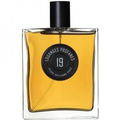
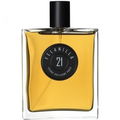
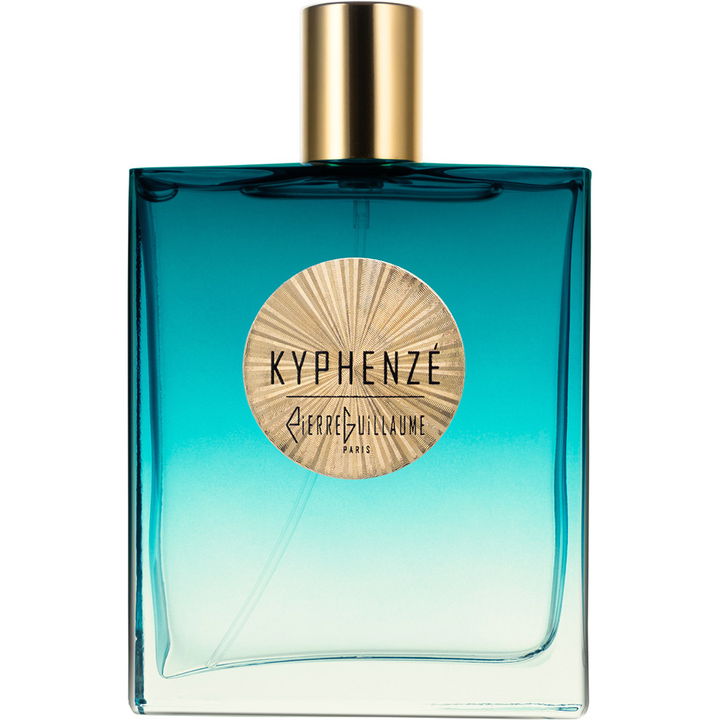
So when Kyphenzé mentioned Sandarak tree and Prachtscharte, I was curious - especially since the fragrance was additionally advertised with "A dry heat, almost sacred. Scorching stones, the sun at its zenith, and in the air, a vibration of herbs, blazing citrus, and ancient resins." So once again the currently popular sparse heat theme. But despite so many descriptions, I still wonder: What is Kyphenzé actually?
According to the brand, it is a neologism: "a portmanteau, a world-word. It evokes both a timeless elsewhere (kyphi, the sacred incense of ancient Egypt), and a modernity freed from its roots. It is a creation of meaning, a name without ties, but full of echoes." And further: "Citrus Rex. A citrus with authority."
Well, Kyphenzé is not a citrus scent of royal class. If you are looking for that, I recommend saving up for the old Monsieur Balmain (1964) - reference & authority included.
That the opening of Kyphenzé is citrusy-artificial, like many of Guillaume's fresher perfumes, I almost expected. Here it also comes across as somewhat sharp, harsh, but primarily very, very thin-lipped. All of this is immediately accompanied by a bit of musky haze and an indefinable fruit note - perhaps a hybrid of orange and pineapple, reminiscent of the first edition of This is not a Blue Bottle (2015). Spices, sage, and Prachtscharte (Liatrix; described by Firmenich as "sweet, coumarinic, herbal, tobacco-like and offering a pleasant, vanilla-like scent") possibly merge into that facet described here as aftershave-like, which I cannot quite recognize in this form. A minimal, slightly balsamic resin note hovers beneath this citrus - could this, along with the sharpness, come from the resin of the Sandarak tree, which is also used for varnishing and impregnating furniture and canvases? All of this leaves me with an undecided fragrance that, in its thinness, almost seems incomplete, lacking in expressiveness or that certain something.
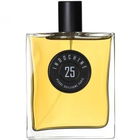
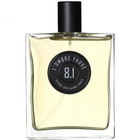
Admittedly: Pierre Guillaume's perfumes do not have it easy with me. I often suspect them of a noticeable proximity to other releases - and the perfumer, that he creates very good interpretations of a theme [such as 25 Indochine (2011) or L'Ombre Fauve (2008)], but usually does not appear particularly original, aside from the fantasy notes. But there must be room for that too.
Kyphenzé ≠ Citrus Rex
With the increasing practice of listing scent notes in detail, or suggesting them, or condensing them into a few buzzwords [cf. my text on Ellena's Équipage Géranium (2015)], the so-called fantasy notes became more and more fashionable. The fantasy note as a unique selling point of a fragrance. An early, interesting example of this was Odeur 53 (1998) by Comme des Garçons, which ignored the mention of all previously common natural ingredients and note names.
If you take a closer look at Pierre Guillaume's releases, a pattern emerges: In recent years, Guillaume has increasingly relied on fantasy notes and exotic-sounding, rarely heard ingredients: mostly mere metaphors that perhaps claim more than they are actually perceivable. For instance, with the just announced Volupté Noire (2025): Wolf's milk honey… an excerpt from Guillaume's collection:
Albizia blossom, Ambery rum, Animalic sandalwood, Ardent spices, Ashanti pepper leaves, Assam moss, Buddleia (butterfly tree), Chevrone, Chocolate flower, Cinchona bark, Coffee Santos, Coffee wood, Gaiac milk accord, Indian hemp, Ivy leaf, Jurema flower, Liquorice wood, Magnolia mirabilis, Mojito strawberry, Okoumé, Pacific algae, Pineapple leaves, Red sandalwood, Rocky beach accord, Sea lavender, Sea sprays, Seringat (mock orange), Tanakha, Uganda vanilla, Vincotte, Violet wood, White cocoa, etc.
There are no limits to fantasy here. The terms already oscillate between the concrete and the vague, as it is primarily about naming something that allows for as tangible associations as possible. And also: usually, it remains at the mention of a single quirky ingredient, while the rest always sounds familiar.
So when Kyphenzé mentioned Sandarak tree and Prachtscharte, I was curious - especially since the fragrance was additionally advertised with "A dry heat, almost sacred. Scorching stones, the sun at its zenith, and in the air, a vibration of herbs, blazing citrus, and ancient resins." So once again the currently popular sparse heat theme. But despite so many descriptions, I still wonder: What is Kyphenzé actually?
According to the brand, it is a neologism: "a portmanteau, a world-word. It evokes both a timeless elsewhere (kyphi, the sacred incense of ancient Egypt), and a modernity freed from its roots. It is a creation of meaning, a name without ties, but full of echoes." And further: "Citrus Rex. A citrus with authority."
Well, Kyphenzé is not a citrus scent of royal class. If you are looking for that, I recommend saving up for the old Monsieur Balmain (1964) - reference & authority included.
That the opening of Kyphenzé is citrusy-artificial, like many of Guillaume's fresher perfumes, I almost expected. Here it also comes across as somewhat sharp, harsh, but primarily very, very thin-lipped. All of this is immediately accompanied by a bit of musky haze and an indefinable fruit note - perhaps a hybrid of orange and pineapple, reminiscent of the first edition of This is not a Blue Bottle (2015). Spices, sage, and Prachtscharte (Liatrix; described by Firmenich as "sweet, coumarinic, herbal, tobacco-like and offering a pleasant, vanilla-like scent") possibly merge into that facet described here as aftershave-like, which I cannot quite recognize in this form. A minimal, slightly balsamic resin note hovers beneath this citrus - could this, along with the sharpness, come from the resin of the Sandarak tree, which is also used for varnishing and impregnating furniture and canvases? All of this leaves me with an undecided fragrance that, in its thinness, almost seems incomplete, lacking in expressiveness or that certain something.
Admittedly: Pierre Guillaume's perfumes do not have it easy with me. I often suspect them of a noticeable proximity to other releases - and the perfumer, that he creates very good interpretations of a theme [such as 25 Indochine (2011) or L'Ombre Fauve (2008)], but usually does not appear particularly original, aside from the fantasy notes. But there must be room for that too.
Kyphenzé ≠ Citrus Rex
Updated on 09/26/2025
13 Comments
 Yatagan
 Gold
Gold Ergoproxy
 Kankuro
 SaGa
SaGa Emeraldstar
 OceanDrive
 ANDESSE