


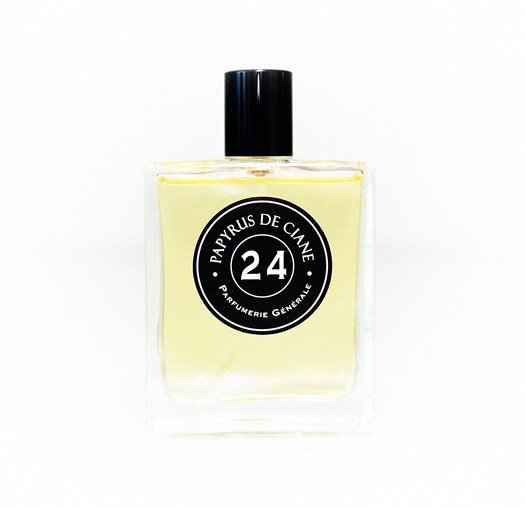
 Top Notes
  Galbanum
 Broom
Broom Heart Notes
  Green notes
 Frankincense
 Base Notes
  Mousse de Saxe
 Musk
Musk

Apicius
1328 Reviews

Apicius
Top Review
6
A Promenade To Sicily
Some perfumes seem to follow a different pace. No matter how contemporary they are, they point back in time at the origins of European perfumery. With a little bit of fantasy, they conjure up pictures of ages long past.
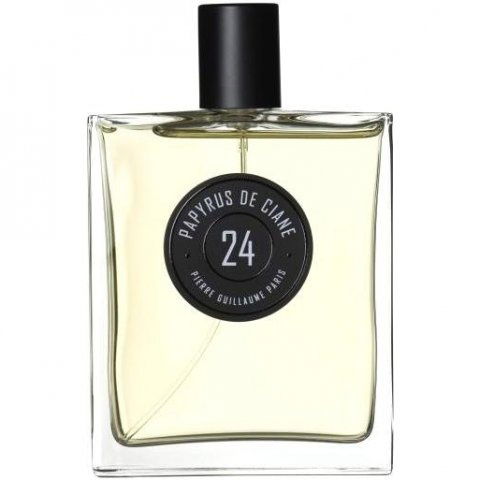
When I wear Pierre Guillaume's Papyrus de Ciane my imagination takes me back to the life and times of the Saxonian poet Johann Gottfried Seume (1763 – 1810) and his beautiful book "Spaziergang von Leipzig nach Syrakus" - promenade from Leipzig to Syracuse.
Seume cannot be called a lucky man. Belonging to the majority of the less privileged, he was drafted by the Landgrave of Hessen-Kassel and literally sold to England to fight in the American Independence war. After his safe return, he nevertheless developed a preference for travelling abroad – but this time only according to his own free will.
There was no tourism in 1805 as we know it. The roads were dangerous. Italy was struck with poverty and travelling there was adventurous, especially by foot. I remember one particular chapter in this book where Seume explains why he takes all the effort and danger: for the simple reason that he wanted to promenade along the South coast of Sicily, holding an orange in his hands and enjoying the taste and scent of this exotic fruit!
You will find that orange in Pierre Guillaumes Papyrus de Ciane. It is orange blossom and neroli that according to my perception must have stood at the very beginning of perfumery. We find it today in the old-fashioned, age-old Eaux de Colognes that are still available – and that is what Papyrus de Ciane actually is. With its rather poor longevity, it comes close to this concept - yet, there is more in it: smoky and something that aims to be called mossy.
The "mossy" part is not the restricted oakmoss but Pierre Guillaume's version of mousse de Saxe - Saxonian moss. I have learned that mousse de Saxe originally was a ready-made base of geranium, licorice, a leather note, iodine and vanillin. It must have been invented in the late 19th century, and for a few decades, it apparently went into several perfumes. The version by Pierre Guillaume may differ from the original. His take on mousse de Saxe may add something greenish and mossy to the fragrance, but most of all a good portion of noteworthiness.
I have no idea why this base was called mousse de Saxe, and so any link to our Saxonian poet is arbitrary. Much more than mossyness I get smoke. The smoke is the kind of smoke that can be smelled at an open camp fire. Blending beautifully with the wafts of neroli it becomes clear that this fire must have been lit under a southern sky, maybe at night in a blooming orange grove. I want to imagine that such a scent sensation was also experienced by our poet somewhere in Sicily, sharing his thoughts, food and time with the peasants.
When Seume hiked along the Sicilian coast, he must have crossed the river Ciane which borrowed its name here. The Ciane delta in the south of Sicily is known as the only place in Europe where papyrus grows. A paper or straw like aspect can be found indeed – blending with the smoke and providing more liveliness to the camp fire than simple wood notes could possibly do.
Seume was anything but a normal contemporary of his times, and also Papyrus de Ciane follows a rather individualistic concept. Eaux with beautifully neroli and other citric notes are usually supposed to provide an air of freshness. As a summer or travel fragrance such might have come in handy also for Seume, but the smoky notes set Papyrus de Ciane well apart from that concept. I think one has to grow into it a little to appreciate its qualities. (At least I had to.) A light neroli-centered summer eau with smoky notes? Yes, it does work! It keeps the beauty and lightness of the orange, yet it contains the respectability and seriousness of a regular perfume.
Papyrus de Ciane may not be the most nose-catching fragrance of the Pierre Guillaume universe but it has the quality to please its wearers in the long run. Unfortunately, the Spaziergang to Syrakus is not available in English, but you can get a whiff of it with Papyrus de Ciane. Seume showed us that it is possible to act out a lot of freedom provided that one has a good insight into the human nature. These words of Seume have become common ground:
"Where people are singing you may settle down
and no fear of the land's conventions
Where people are singing no man is robbed
Evildoers have no songs"
When I wear Pierre Guillaume's Papyrus de Ciane my imagination takes me back to the life and times of the Saxonian poet Johann Gottfried Seume (1763 – 1810) and his beautiful book "Spaziergang von Leipzig nach Syrakus" - promenade from Leipzig to Syracuse.
Seume cannot be called a lucky man. Belonging to the majority of the less privileged, he was drafted by the Landgrave of Hessen-Kassel and literally sold to England to fight in the American Independence war. After his safe return, he nevertheless developed a preference for travelling abroad – but this time only according to his own free will.
There was no tourism in 1805 as we know it. The roads were dangerous. Italy was struck with poverty and travelling there was adventurous, especially by foot. I remember one particular chapter in this book where Seume explains why he takes all the effort and danger: for the simple reason that he wanted to promenade along the South coast of Sicily, holding an orange in his hands and enjoying the taste and scent of this exotic fruit!
You will find that orange in Pierre Guillaumes Papyrus de Ciane. It is orange blossom and neroli that according to my perception must have stood at the very beginning of perfumery. We find it today in the old-fashioned, age-old Eaux de Colognes that are still available – and that is what Papyrus de Ciane actually is. With its rather poor longevity, it comes close to this concept - yet, there is more in it: smoky and something that aims to be called mossy.
The "mossy" part is not the restricted oakmoss but Pierre Guillaume's version of mousse de Saxe - Saxonian moss. I have learned that mousse de Saxe originally was a ready-made base of geranium, licorice, a leather note, iodine and vanillin. It must have been invented in the late 19th century, and for a few decades, it apparently went into several perfumes. The version by Pierre Guillaume may differ from the original. His take on mousse de Saxe may add something greenish and mossy to the fragrance, but most of all a good portion of noteworthiness.
I have no idea why this base was called mousse de Saxe, and so any link to our Saxonian poet is arbitrary. Much more than mossyness I get smoke. The smoke is the kind of smoke that can be smelled at an open camp fire. Blending beautifully with the wafts of neroli it becomes clear that this fire must have been lit under a southern sky, maybe at night in a blooming orange grove. I want to imagine that such a scent sensation was also experienced by our poet somewhere in Sicily, sharing his thoughts, food and time with the peasants.
When Seume hiked along the Sicilian coast, he must have crossed the river Ciane which borrowed its name here. The Ciane delta in the south of Sicily is known as the only place in Europe where papyrus grows. A paper or straw like aspect can be found indeed – blending with the smoke and providing more liveliness to the camp fire than simple wood notes could possibly do.
Seume was anything but a normal contemporary of his times, and also Papyrus de Ciane follows a rather individualistic concept. Eaux with beautifully neroli and other citric notes are usually supposed to provide an air of freshness. As a summer or travel fragrance such might have come in handy also for Seume, but the smoky notes set Papyrus de Ciane well apart from that concept. I think one has to grow into it a little to appreciate its qualities. (At least I had to.) A light neroli-centered summer eau with smoky notes? Yes, it does work! It keeps the beauty and lightness of the orange, yet it contains the respectability and seriousness of a regular perfume.
Papyrus de Ciane may not be the most nose-catching fragrance of the Pierre Guillaume universe but it has the quality to please its wearers in the long run. Unfortunately, the Spaziergang to Syrakus is not available in English, but you can get a whiff of it with Papyrus de Ciane. Seume showed us that it is possible to act out a lot of freedom provided that one has a good insight into the human nature. These words of Seume have become common ground:
"Where people are singing you may settle down
and no fear of the land's conventions
Where people are singing no man is robbed
Evildoers have no songs"
2 Comments




 Genoveva
 SchatzSucher
 Yatagan
 ParfumAholic
 Heikeso
 MaKr
MaKr Mustang69
 Stulle
 NikEy
NikEy Skjomi