Colognes are back in: 4711 is experiencing a renaissance with the modern Acqua-Colonia line, the young brand Atelier Cologne sees its perfumes inspired by the original cologne, and (it seems like every) bestseller is being launched with the corresponding Cologne, Eau, or Eau Fraîche.
However: Eau de Colognes were never really out. A classic concept that every perfumer must try again and again during their training is just as timeless as Chypre or Fougère.
All brands that hold some esteem (not just the Italian ones in their Acqua tradition) have at least one Eau de Cologne in their portfolio. At Guerlain, it is an unwritten law that every house perfumer must launch at least one new one. At Dior and Chanel, they are part of the exclusive lines, and Hermès has established a Cologne series based on Françoise Caron’s “Eau de Cologne” (which continues in “Eau d’Orange Verte”) that is among the most innovative offerings from the house.
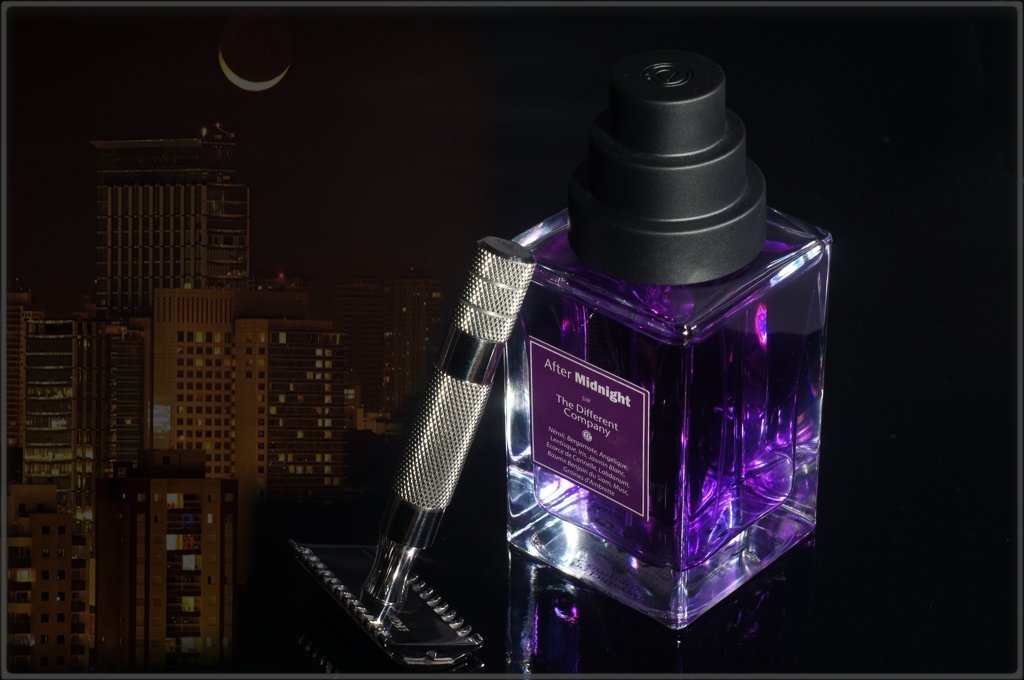
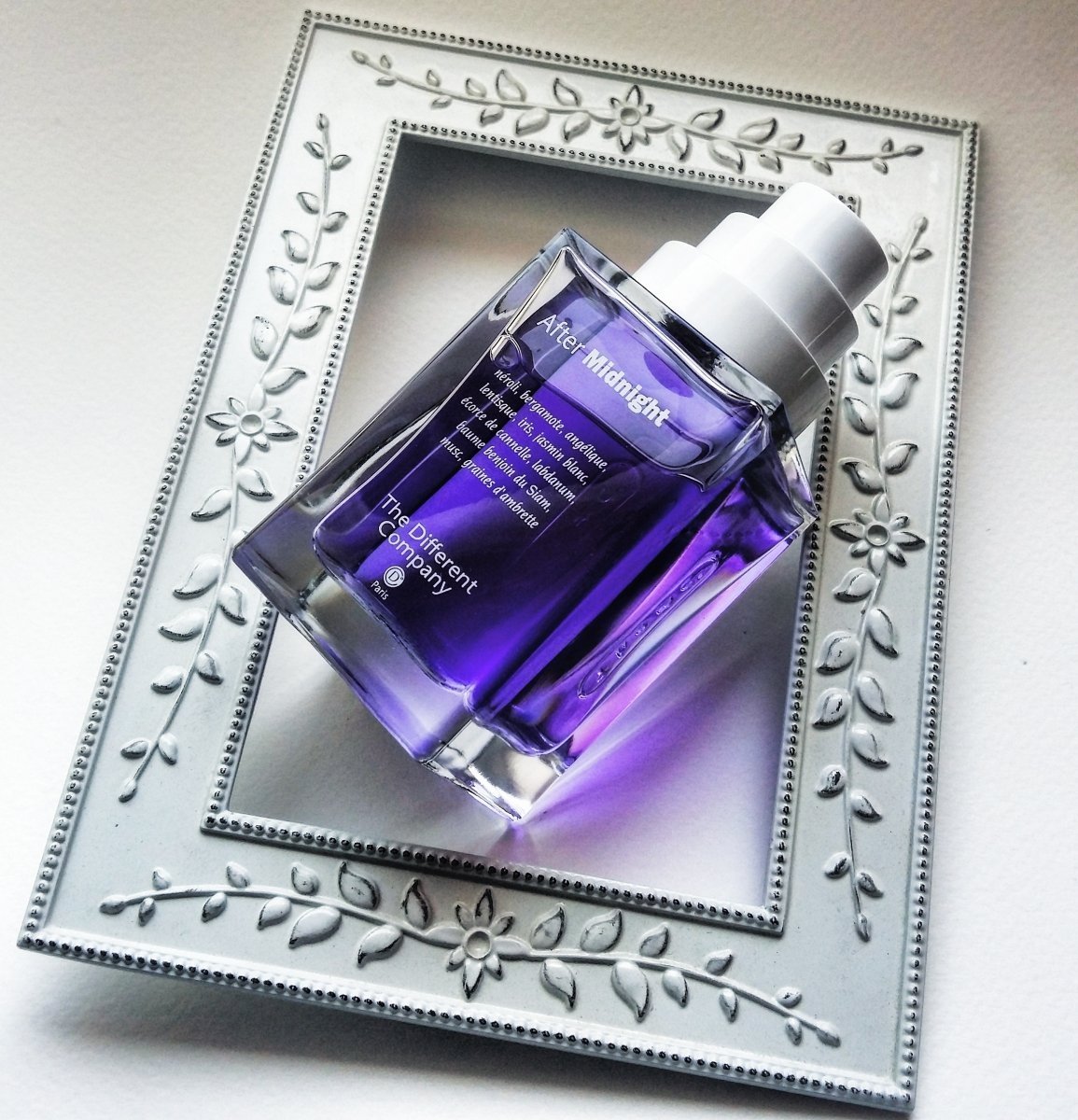
The Different Company also has its own series called “L’Esprit Cologne,” which refers back to the original from the 18th century. The name suggests it, the Esprit - spirit, wit, character - of the archetype is being reinterpreted. The perfume oil content of the “concentration class” EdC is not adopted; all scents in this series are EdT. This fits better with modern wearing habits: it is expected that the scent does not vanish after just 3 hours, but lasts 8 or more (a claim that “After Midnight” easily meets - even though it is quite close to the skin, the longevity is at least 10 hours). At the same time, a scent with Cologne in the name is supposed to provide refreshment in summer. The fragrance must be able to be splashed on generously and (whenever cooling is desired) reapplied vigorously without the refreshment seeker or the environment gasping for air. The combination of these two demands is not easy. If the perfume oil concentration of 4711 Echt Kölnisch Wasser (which is not the very first pioneer, that would be the Farina EdC, but certainly the most famous) is simply cranked up, an impressive longevity is achieved … but then the scent no longer “flies” - all freshness and lightness is lost. Neroli, with its character between the lush, sweet orange blossom and the citrus-green of petit grains, turns completely sticky floral (small digression: when talking about the note of orange blossom, an absolute, meaning a gently extracted essence of the orange blossom, is usually meant. Neroli, on the other hand, usually refers to an oil obtained through distillation from bitter orange blossoms, with some green leaves included in the distillation). Not only does the neroli mutation into density and sweetness oppose an increased oil concentration, but the resulting lack of contrast would also rob the perfume of its liveliness. A scent without contrast needs development to remain exciting. The static nature caused by increasing the fragrance oil concentration prevents this. What remains is annoying monotony. Those thinking of “Neroli Portofino” are spot on, as this perfume is nothing more than the formula of 4711 at an enormous concentration … and exactly what has been described happens there.
“Mugler Cologne” takes a charming approach to combine the fresh, splashy character with longevity: in EdT concentration, an overdose of white laundry musk (and presumably some cis-hexenol and dihydromyrcenol) is added to the 4711 bergamot-neroli combination. The result: laundry freshness perfectly complements 4711 freshness and provides profound longevity without sacrificing lightness. So far, so good. Nevertheless, I only like “Mugler Cologne” to a limited extent. The opening is very reminiscent of 4711. It should be, but for me, it is associated with childhood memories of older ladies. Furthermore, I am not particularly fond of the type of musk used. Smelled too often, in perfumes or indeed in laundry detergents.
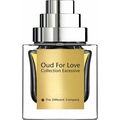
Emilie Bevierre-Coppermann, of course, knew nothing of my feelings when she composed “After Midnight” - responsible for the entire “L’Esprit Cologne” series. She may not have had “Mugler Cologne” in mind, but rather came up with the idea to quote classic cologne and complement it with musk. The trick is not that original. What is interesting is that she chooses a different compositional concept: instead of following a 4711 opening with musk, the musk line is also built vertically, meaning it starts in the head and is composed through to the base: angelica as a kind of herbal head note musk with a bitter green touch marks the start of this line, which is picked up by the herbal base musk ambrette with its creamy character and facets of ripe apples. To prevent the whole thing from drying out too much, benzoin and labdanum contribute resinous qualities and broaden the musk line towards the base.
I like angelica anyway; here it provides a counterweight to the bergamot-neroli start and (at least for me) no 4711 association arises - although the quote is clearly recognizable. The bitter green rootiness of the angelica additionally enhances the freshness kick at the start, and it is very pleasant to reapply repeatedly in high temperatures (small tip: the spray head is removable, so nothing stands in the way of splashing). In the first tests, I was surprised at how long I could still smell neroli in the fragrance; even after 8 hours, it seemed to be a main note. Close sniffing revealed: oops, I actually smell jasmine with neroli remnants, slightly greenish likely due to mastic (which I deduce from the pyramid). Jasmine and orange blossom/neroli have a significant olfactory overlap, so I thought I was still smelling neroli, even though it was just an echo carried further into the perfume by jasmine. Thus, analogous to the musk line, the neroli line is also structured like an interwoven, broadening fragrance cone: the bitter citrus of the neroli is first hinted at by the bergamot opening, then becomes broader and more complete with the actual neroli note, and finally is elevated with the help of jasmine and mastic.
This vertical technique of composition - initially clearly defined fragrance notes placed on broader bases - is masterfully executed by Bertrand Duchaufour. It may be coincidence or not that he was long Coppermann's mentor and she now also masters this technique well. This does not mean, of course, that all her works are composed in this way. At least I cannot easily assign this compositional technique to the other two “L’Esprit Cologne” scents that I know well (“South Bay,” “Limon de Cordoza”). These are also worth testing. Overall, the entire line is a very playful, light approach to the theme of cologne, and perhaps it is this light touch that is characteristic of Coppermann's works, more than a compositional technique. One can enjoy going on a discovery tour and sniffing out what is likely quoted from the original Kölnisch Wasser. Or simply enjoy. Because that is what Coppermann's colognes invite you to do: to carefree enjoyment.
No Fougère strictness. No Oriental weight. No Chypre drama.
Cologne spirit.




 Top Notes
  Neroli
 Bergamot
 Angelica root
 Heart Notes
  Iris
Iris Jasmine
 Cinnamon
 Mastic
 Base Notes
  White musk
 Ambrette seed
 Balsam
 Siam benzoin
 Labdanum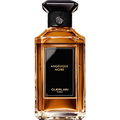










 Itchynose
 Rieke2021
 Augusto
 Elisa1000
 Mefunx
 Parma
Parma Julia142
 Blauemaus
 Ajlizea
 Caligari