As Eddie Bulliqi recently wrote in regards to
Story of your Life:
> “ Personally, I find it is generally a positive and complimentary attribute to a fragrance when my evaluation notes contain many different possible reference points for what the project was trying, or could, connect to across past releases.”
I tend to agree with this idea. As I recently reviewed
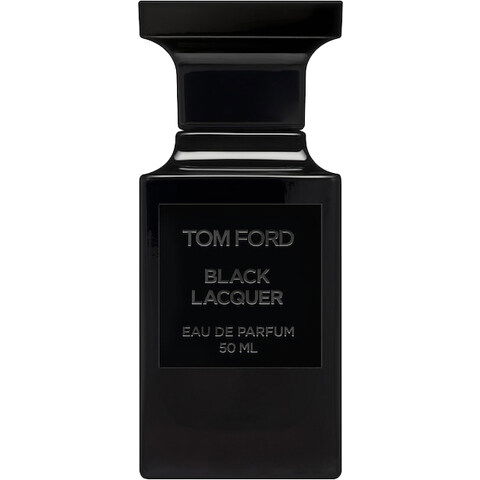
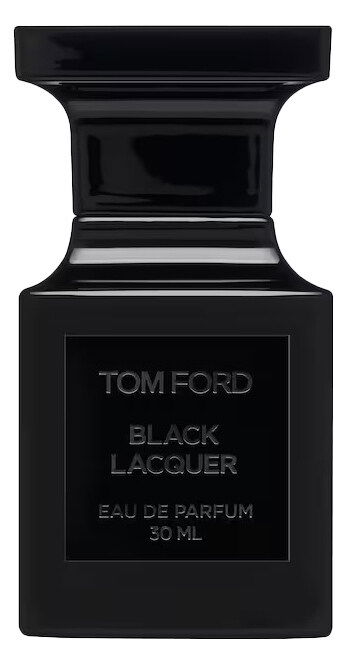
Uncut Gem, I took great pleasure in picking apart the referential ideas across not only Malle’s own range, but also of the early and later 21st century fragrances that dominated both niche and commercial. Tom Ford’s latest release, Black Lacquer, broadly follows referential ideas but approaches at a conclusion a little more differently than both ELdO and Malle manages.
Black Lacquer, as a scent, synthesises the various concepts put forward by Tom Ford in its previous woody scents. That’s not to say that the fragrance is a redux or an uninspired churn of drafts and submissions, but rather that it distills various philosophies contained in the range. What are they, exactly?
Ébène Fumé Eau de Parfum is the obvious first leaping point, primarily because both scents revolve around dark, charry wood tones. Mr Flores-Roux in Ébène made use of ebanol as a central material and built various resinous aspects to support and diffuse the composition. It’s a curious thing, indeed, particularly because it seems to maximise impact for such a note list that, historically, has been used in perfumes that are dense but close to the skin, silent assassins that cover the wearer like a cloak rather than a forcefield. Unsweetened and nebulous. I imagine that it was designed as a release to be as maximally projecting as possible, to shock and to turn heads.
Black Lacquer, therefore, is perhaps an interesting riposte to that idea, primarily for the fact that it lacks slamming amberwoods and synthetic sandalwood overdosing. Perhaps it’s this “Macassar wood” accord that achieves this effect of being a glossy, charry ebony without resorting to the ebanols, the norlimbanols, the dark materials with their perhaps more unpalatable tradeoffs. A shared commonality is the image of ebony, but the execution uses very different brushstrokes (which is to be expected, we have Mr. Flavigny at the helm instead).
We also have
Santal Blush, a fragrance that to me comes across as peachy and buttery. Mr. Vasnier achieved something that at the time was perceptibly different: a sort of
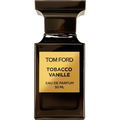
Bois des Îles Eau de Toilette remodelling, its structure turned on its head and swirled with masala chai. A definite gem of the entire collection, and Black Lacquer appropriates this usage of fruit, spices and dairy to construct the peach-rum-frankincense trio. If the fragrance was a perfectly polished sphere, the edges that disappear into the back would be where these fruity and jam-like nuances would be found. They also provide a vehicle for the spicy-woodiness of the perfume to diffuse into the air without being repulsive or oppressive. This effect reminds me of the shapeshifting
Tuscan Leather Eau de Parfum, which appropriates a jammy, candied raspberry note to convey the idea of tanned leather in the air. Up close, on the shallows and troughs of the scent, you can smell this sort of synthetically artificial accord, but as a whole it serves to illustrate toothsome leathery goodness.
And there is some merit to the attribution of
Black Comme des Garçons to this fragrance, however I would only stipulate that the top notes of elemi and black pepper resemble it. The wonderful Black very quickly sidesteps into a liquorice-tar accord that forms a sort of dark shroud upon the wearer–fog, perhaps? It’s substantially different from the Tom Ford release, which emphasises gloss and sheen. Indeed, the “wood lacquer” accord does not only hint at elements of turpentine, but also the artistic vision of glossy, seamless wood that dries and hardens during wear.
There’s also a watery floral core, though it is almost completely covered in sawdust and soot. Tom Ford names this as a “black peony” accord–I think it’s an accurate description, if we take
Delina Eau de Parfum or
Fleur Narcotique Eau de Parfum as brushstrokes of what peony is supposed to smell like in fragrances. Both of Mr. Bisch’s realisations of the flower focus around a watery transparent nature, sort of nondescript but also impossible to fully place your finger upon. The effect is similar here, undoubtedly drier but not as bold as a rose or violet note. It’s a similar effect to how rose-oud combinations produce things that don’t quite smell like either of the two individually.
These are some of my thoughts about the fragrance. I view the piece as a modern classic, and perhaps a monolith of what this genre is going to look like. A very, very good job, and a bravo to Mr. Flavigny for something so enjoyable.




 Wood lacquer
 Elemi resin
 Frankincense
 Macassar wood
 Vinyl
 Fir needle
 Styrax
 Black peony
 Cedarwood
 Rum
 Apricot
 Black pepper
 Vetiver











 Omnipotato
 tonethebone
 DRKSHDW
 Erswan
 Ineed1936