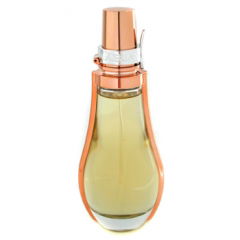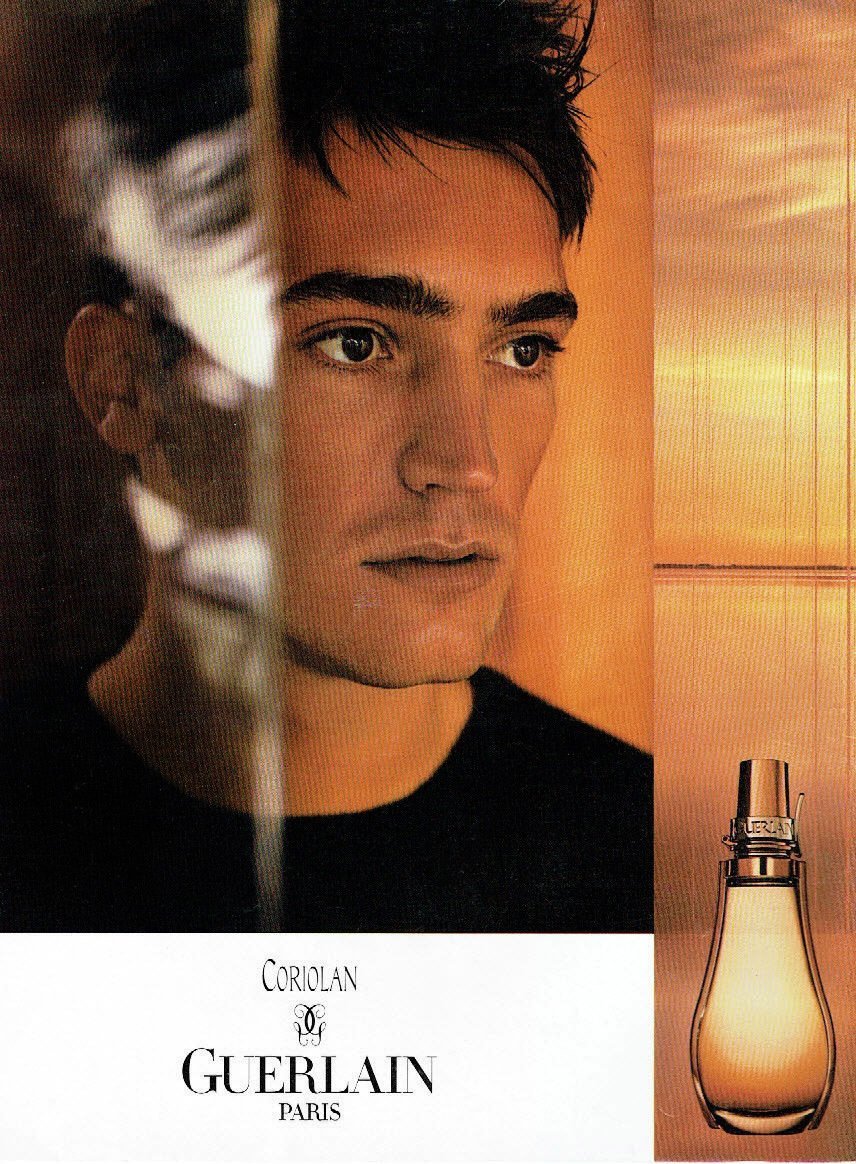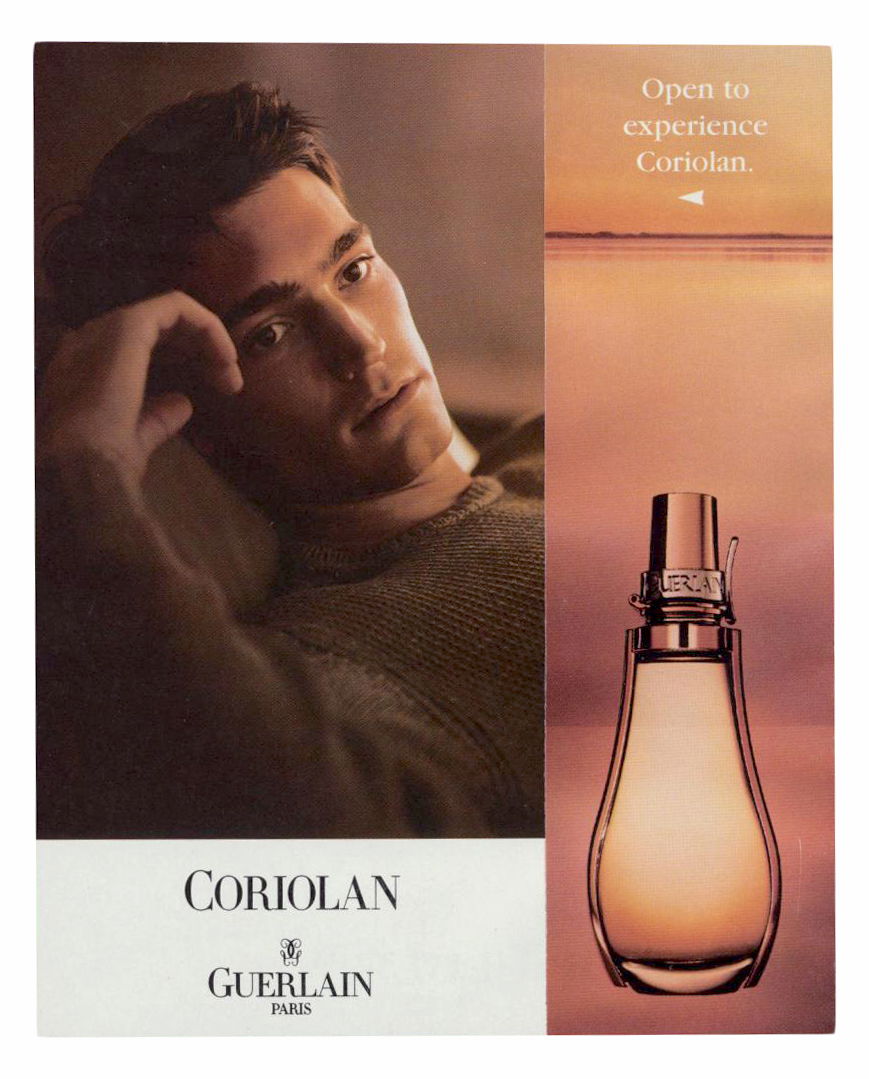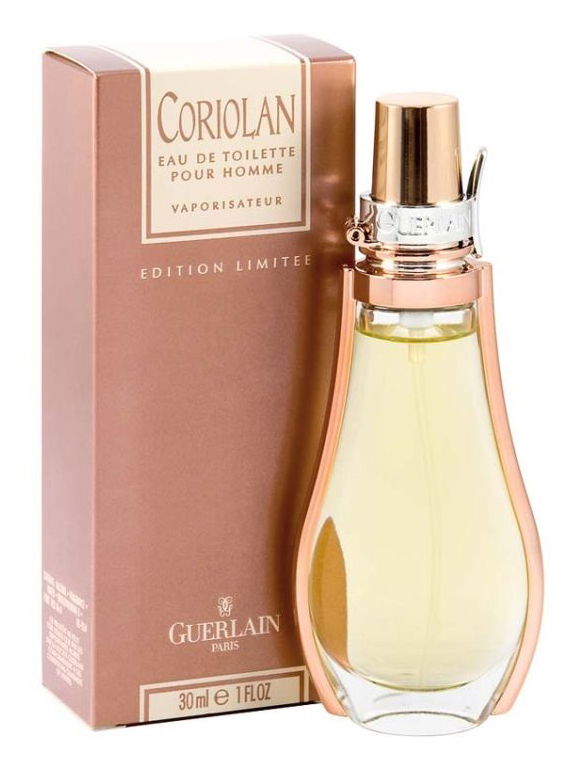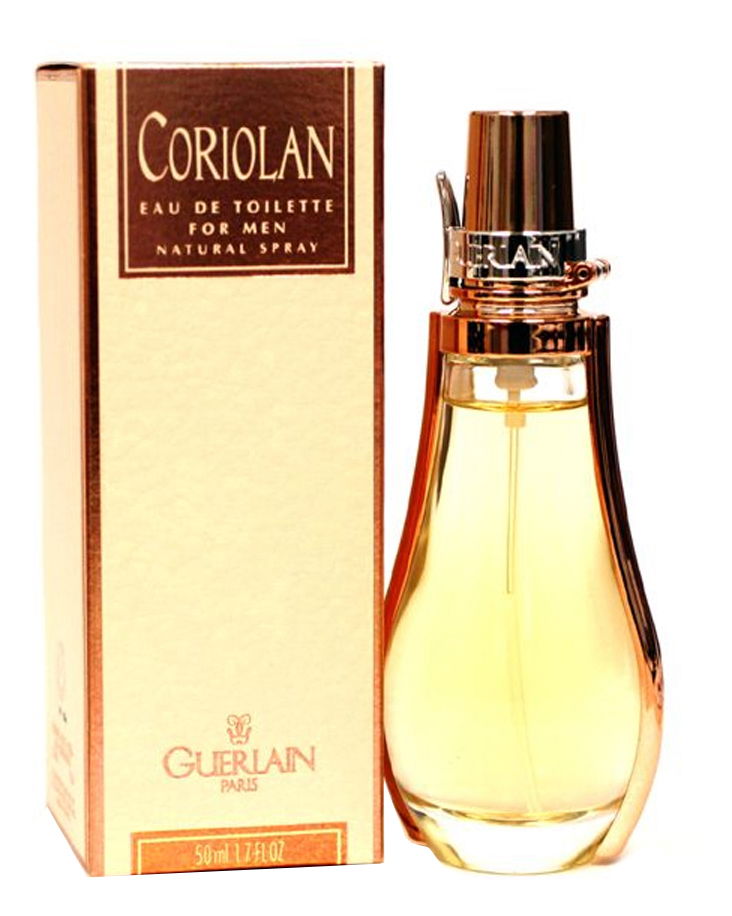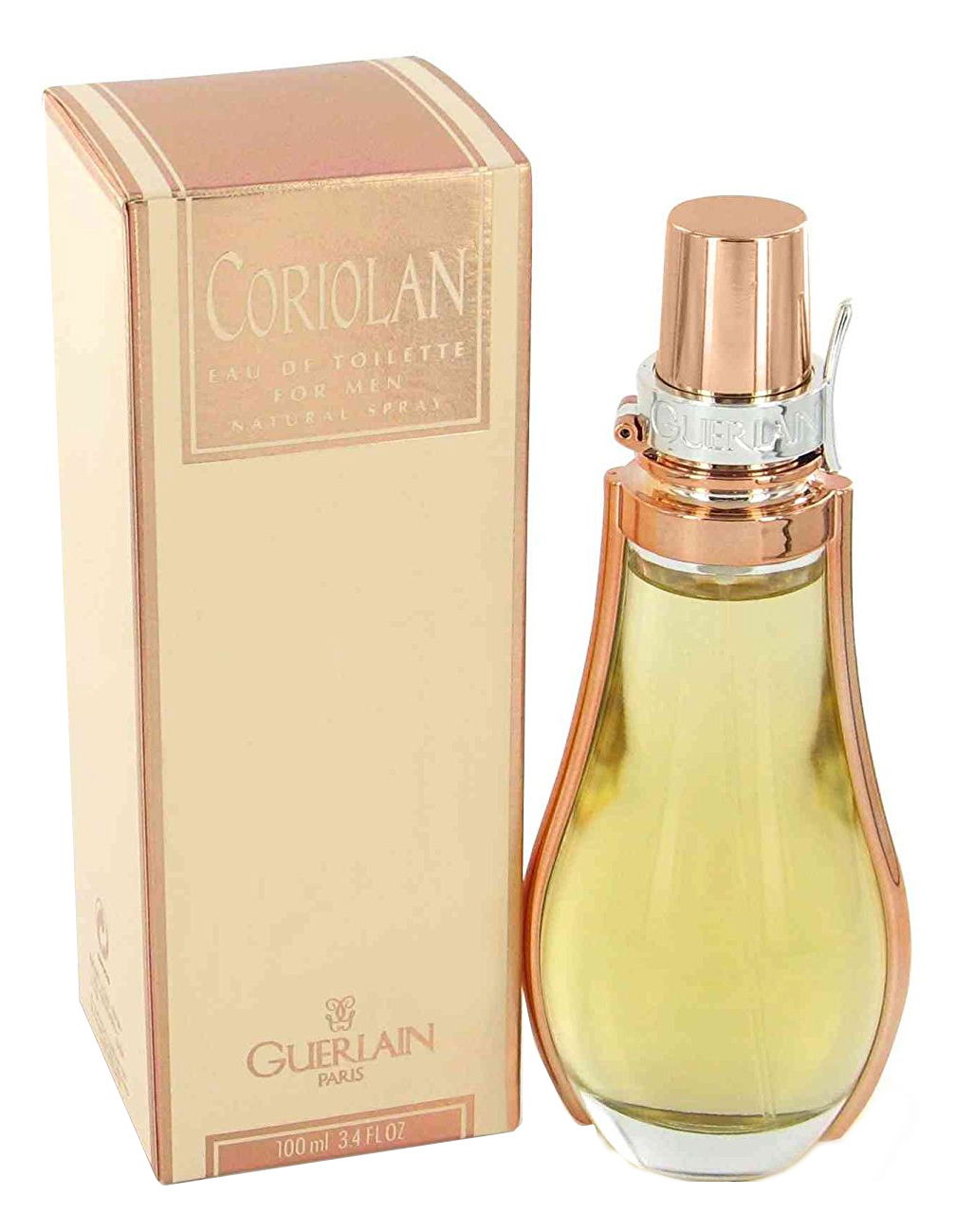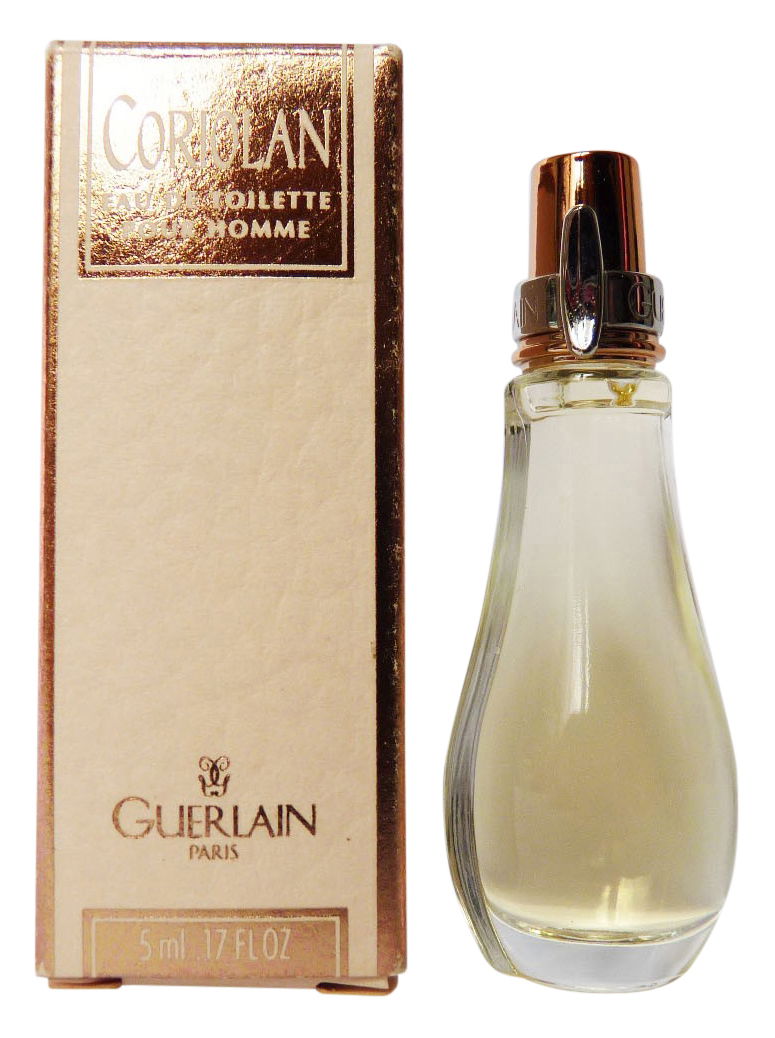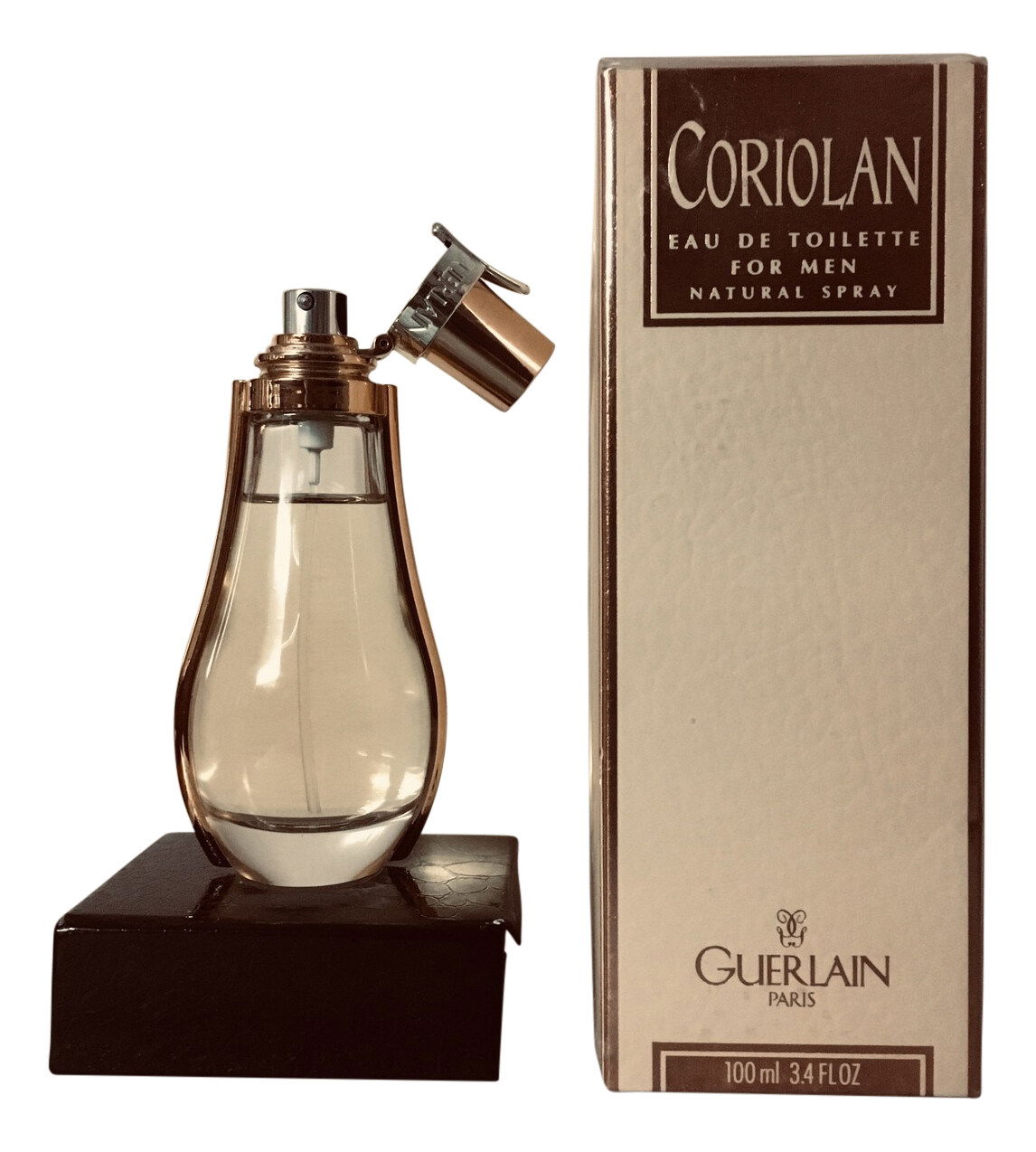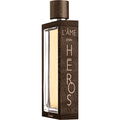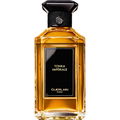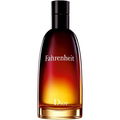
In both a literal and metaphorical sense, this title applies to Coriolan. A few days ago, I found a well-preserved bottle of this fragrance in my younger son's closet, which I had gifted him a few years ago and subsequently forgotten. Recently, however, my sons asked me for two men's fragrances, which I happily handed over to them - pleased with this educational success. In return, my younger son handed me the old bottle of Coriolan, as he had never used the fragrance. Which Guerlain enthusiast would be surprised by that?
And yet, I was overjoyed by this unexpected reunion, this mutually satisfying exchange. For years, the small, extraordinarily uniquely shaped bottle had been waiting in the shadow of a closet in my son's room, until it was to be brought back to light. Since it had always been kept in the darkest corner, I believe the fragrance has held up well. A comparison was possible not only from memory but also due to a similarly well-preserved miniature that I also own and used as a reference. In a few days, I will likely receive a sample of the hardly reformulated reissue L’Ame d’un Héros, so a final comparison should be possible.
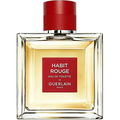
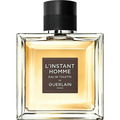
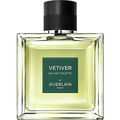
The metaphorical aspect of the title also holds true: Coriolan has always stood in the shadow of its significantly more successful sibling fragrances Habit Rouge, Vetiver, Héritage, and recently L’Instant de Guerlain and Homme. The stories of these fragrances have been wonderfully described by my predecessors, so no further explanations are necessary.
Approaching the fragrance, the scent itself once again, describing Coriolan has indeed intrigued me, as the fragrance is one of the most complex representatives on the market, revealing itself only slowly or not at all, and thus challenges the wearer to keep trying anew with it. One might understand this as a compliment, but it is not necessary, as for me, a good fragrance also includes love at first, or at least second glance, something like an initial fascination. Nevertheless, it can also be exciting to wrest a fragrance from the shadows, to discover it anew individually, thus not reaching an end with the scent. While this may ultimately apply to many fragrances, it applies to very few to such a high degree as it does to Coriolan.
As already described by other commentators, the top note of Coriolan is decidedly challenging, initially even a disappointment. When I received the fragrance many years ago, I could hardly relate to it precisely because of this top note. As a fan of hesperidic fragrances or top notes, I am still dissatisfied with the opening, in which so little of the many citrus components mentioned in the fragrance pyramid can be perceived: Where is the lemon, the neroli, petitgrain, bergamot? They are probably perceptible, but dosed so subtly as in no other fragrance with these components. Instead, the herbal components immediately come to the forefront, presumably primarily the sage, which seems to be the main theme of this fragrance along with the juniper berry; perhaps ginger also plays an important role, but it cannot quite assert itself against the herbal accents.
At this point, Coriolan somewhat reminds me of Lem by Galimard, certainly not a good comparison, as this fragrance is likely little known, and the clear lemony top note in Lem provides a much more harmonious start. This conclusion should actually speak for Coriolan: an original, unique fragrance? On one hand, yes: Coriolan had no predecessors and hardly any successors. On the other hand, this realization naturally speaks against the fragrance, as Coriolan remains anxious, shy, and pale; it has something almost touching about it, lacking the confident presence of the other aforementioned Guerlain fragrances, something that sticks and settles in the scent memory.
The sour-bitter tint of the fragrance has already been mentioned multiple times, which is noticeable from the top note through the heart note, actually even into the base note. For this, it seems to me that the idiosyncratic combination of sage and juniper on one hand and the subtly citrus tones on the other is responsible.
In the base, a kinship to the aforementioned Lem emerges again, as from my perspective, it is primarily the moss that is perceptible, certainly also vetiver (but not only in the base note, rather much earlier: also a cause of bitter and sour tones at the same time), less the leather, it seems to me. This may have to do with the fact that when I think of a leather base note, I quickly think of hefty fragrances from the 80s or the classic Knize Ten and wonder where the leather note in Coriolan might be. It is certainly present, albeit only subtly.
Subtle: That is probably the shortest formula for describing Coriolan, the image of the shadow another. The fragrance is fleeting, has no striking presence, is merely the shadow image on the wall, just like in Plato's Allegory of the Cave, the semblance of the true world. That the shadow also has its charm, because it cannot be grasped, it continually eludes, and is sometimes more interesting than all the things that confidently stand in the light, is a different matter altogether, but it can serve as an explanation for why this fragrance still fascinates me after so many years.
Postscript: The sample of L'Ame d'un Héros has arrived. Many thanks to Nérée! I can only echo the judgment of other knowledgeable commentators. The difference between the fragrances is at most marginal - and both are beautiful.